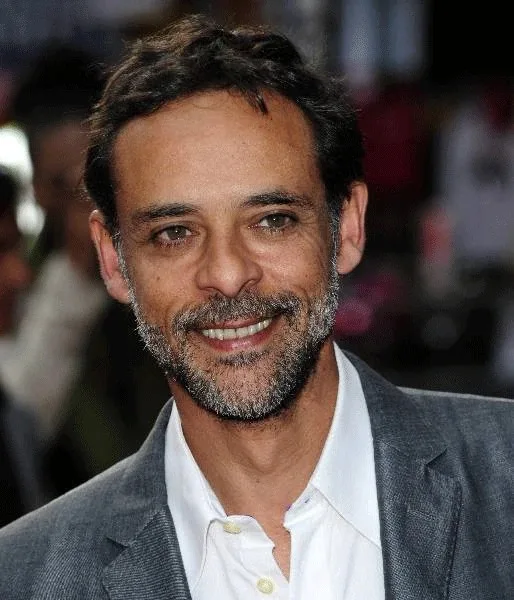
Actor Alexander Siddig possesses a rich, multicultural background comprising Sudanese paternal heritage and English maternal lineage. Born in Sudan as Siddig El Tahir El Fadil El Siddig Abderrahman Mohammed Ahmed Abdel Karim El Mahdi, he combines a historic Sudanese political lineage—including direct ties to Sudan’s historical Mahdi movement—with prominent British cinematic royalty through his maternal uncle, Malcolm McDowell.
Early Life and Birthplace: From Wad Madani to London
Alexander Siddig was born on November 21, 1965, in Wad Madani, a city situated along the Blue Nile in east-central Sudan. His early childhood unfolded during a period of significant political evolution in North Africa. His mother, an Englishwoman named Patricia Taylor, had moved to Sudan, where she met his father, Tahir El Fadil El Siddig El Mahdi.
When Siddig was roughly two years old, his mother returned with him to the United Kingdom. This transition marked the beginning of a life spent navigating two distinct cultural worlds. Growing up primarily in Britain during the 1970s and 1980s, Siddig experienced an English upbringing while retaining strong ancestral ties to North Africa and the Arab world.
His formal education took place in England, where he attended St Lawrence College in Ramsgate, Kent. After initially pursuing studies in geography and anthropology at University College London, he pivoted toward the dramatic arts, enrolling at the London Academy of Music and Dramatic Art (LAMDA). This classical British theatrical education laid the structural foundation for his acting career, equipping him with the voice, poise, and technique that later defined his high-profile television and film roles.
Paternal Lineage: Deep Historical Roots in Sudanese Politics
On his father's side, Alexander Siddig descends from one of the most historically significant families in Sudan. His paternal lineage connects directly to the Mahdi dynasty, a prominent political and religious family that shaped modern Sudanese history.
- Sudanese Paternal Lineage:
- Muhammad Ahmad al-Mahdi (19th-Century Religious Leader)
- Sadiq al-Mahdi (Prime Minister of Sudan)
- Tahir El Fadil El Mahdi
- Alexander Siddig
- Tahir El Fadil El Mahdi
Siddig’s great-great-grandfather was Muhammad Ahmad bin Abd Allah, a 19th-century religious leader who proclaimed himself the Mahdi ("Guided One") in 1881. Muhammad Ahmad led the Mahdist War against Ottoman-Egyptian rule and British forces, leading to the capture of Khartoum in 1885 and the establishment of an independent Mahdist state in Sudan. This period remains a cornerstone of Sudanese national identity and history.
Furthermore, Siddig's paternal uncle was Sadiq al-Mahdi, a prominent political figure who served twice as the Prime Minister of Sudan (first from 1966 to 1967, and again from 1986 to 1989). Sadiq al-Mahdi also headed the National Umma Party, one of Sudan's major political organizations, until his passing in 2020. Consequently, Siddig's paternal heritage carries substantial historical weight, linking him to the high-level governance, leadership, and independence struggles of North Africa.
Despite this prominent political background, Siddig was raised largely detached from active Sudanese party politics due to his primary residence in London. However, he has consistently acknowledged the profound influence his Sudanese lineage has had on his identity, worldview, and perspective on global affairs.
Maternal Lineage: English Heritage and Classical Acting Connections
While Siddig’s paternal line connects to African and Arab political history, his maternal branch links him directly to British theatrical and cinematic history. His mother, Patricia Taylor, worked as a theatrical press agent and publicist in the United Kingdom, immersing young Siddig in the performing arts from an early age.
Through his mother, Siddig is the nephew of acclaimed English actor Malcolm McDowell. Known internationally for his landmark roles in films such as A Clockwork Orange (1971), O Lucky Man! (1973), and Star Trek: Generations (1994), McDowell served as an artistic inspiration and uncle to Siddig. McDowell’s success in both classical stage theater and major Hollywood cinema demonstrated a clear career path for Siddig when he decided to leave university to pursue acting full-time.
This maternal connection meant that Siddig grew up exposed to English artistic traditions, performance discipline, and industry insider perspectives. The blend of a heritage steeped in Sudan's political history on one side and British dramatic arts on the other gave Siddig a unique vantage point rarely found in mainstream entertainment.
Detailed Summary of Family Lineage and Heritage
To clearly illustrate how Alexander Siddig's paternal and maternal sides contribute to his heritage, the table below outlines the key figures, cultural lineages, and historical contexts of his ancestry.
| Ancestral Branch | Key Family Figures | Geographic & Cultural Origin | Historic Context & Professional Significance |
|---|---|---|---|
| Paternal (Father's Side) | Tahir El Fadil El Siddig El Mahdi (Father)Muhammad Ahmad al-Mahdi (Great-Great-Grandfather)Sadiq al-Mahdi (Uncle) | Wad Madani and Khartoum, Sudan (Arab / Nubian Sudanese) | Historical leadership of the 19th-century Mahdiyah movement; political leadership including the Prime Ministership of Sudan. |
| Maternal (Mother's Side) | Patricia Taylor (Mother)Malcolm McDowell (Maternal Uncle) | England, United Kingdom (British / English) | Public relations, theatrical press representation, and international film and classical stage acting royalty. |
Professional Name Evolution: From Siddig El Fadil to Alexander Siddig
Understanding Alexander Siddig's ethnicity and public identity also requires examining his professional name changes over his career.
His full birth name—Siddig El Tahir El Fadil El Siddig Abderrahman Mohammed Ahmed Abdel Karim El Mahdi—follows traditional Arabic patronymic naming conventions, incorporating ancestral lines and honored names. Early in his professional career, he shortened his working name to Siddig El Fadil.
Under the name Siddig El Fadil, he landed his breakout television roles:
- Playing King Faisal II in the 1992 television movie A Dangerous Man: Lawrence After Arabia.
- Starring as Dr. Julian Bashir in the iconic science-fiction series Star Trek: Deep Space Nine starting in 1993.
- 1965–1992: Siddig El Tahir El Fadil El Siddig... (Birth Name)
- 1992–1995: Siddig El Fadil (Early Screen Credit / DS9 Seasons 1–3)
- 1995–Present: Alexander Siddig (Adopted Stage Name / DS9 Seasons 4–7+)
During the mid-1990s, while filming the fourth season of Star Trek: Deep Space Nine in 1995, he decided to adopt the stage name Alexander Siddig. He cited several practical reasons for the change:
- Pronunciation and Recognition: Western television audiences, casting directors, and interviewers frequently mispronounced "Fadil" or struggled with its spelling.
- Casting Flexibility: In the 1990s, Western media often pigeonholed actors with strictly Arabic-sounding names into narrow, stereotyped roles. Adding "Alexander"—a name familiar across Western and Eastern histories—helped mitigate casting biases while preserving "Siddig" (an Arabic name meaning "truthful" or "righteous") to honor his heritage.
Since 1995, he has been credited professionally as Alexander Siddig, though fans and colleagues often affectionately call him "Sid."
Impact of Cultural Background on His Acting Career
Alexander Siddig’s mixed ethnicity and multicultural background have shaped his career trajectory, allowing him to take on complex international and multi-layered characters across drama, science fiction, and historical epics.
Breaking Stereotypes in Science Fiction
When executive producer Rick Berman cast Siddig as Dr. Julian Bashir in Star Trek: Deep Space Nine, it represented a major step forward for North African and Arab representation on American television. Bashir was not written as a ethnic stereotype, but rather as a brilliant, compassionate, and highly capable Starfleet medical officer. Siddig’s natural British accent combined with his distinct heritage provided a cosmopolitan quality that fit the post-scarcity, diverse universe of Star Trek.
Historical Epics and Complex Geopolitical Dramas
Siddig’s unique look, classical training, and cultural fluidity made him a prime choice for directors seeking authentic, nuanced portrayals of Middle Eastern, North African, and Mediterranean figures:
- Imad ad-Din al-Isfahani in Kingdom of Heaven (2005): Directed by Ridley Scott, this historical epic featured Siddig as a wise, honorable commander and scholar assisting Saladin during the Crusades. His performance was widely praised for avoiding Western caricature and presenting a balanced, dignified portrayal of Islamic leadership.
- Prince Nasir Al-Subaai in Syriana (2005): In Stephen Gaghan’s geopolitical thriller, Siddig played an idealist, reform-minded Arab prince attempting to modernize his country's oil industry and government. His performance earned critical acclaim for highlighting the complex political realpolitik of the Middle East.
- Prince Doran Martell in Game of Thrones (2015–2016): Siddig brought a calm, strategic authority to the ruler of Dorne, a region of Westeros heavily inspired by historic Moorish Spain and Mediterranean culture.
- Ra's al Ghul in Gotham (2017–2018): He portrayed the enigmatic, immortal comic-book villain, using his theatrical training and commanding voice to deliver a memorable antagonist.
Siddig has frequently spoken about the nuances of navigating Hollywood as an actor of Arab and African descent. He has consciously chosen roles that elevate the dignity of non-Western characters, resisting industry pressure to accept flattened or villainized portrayals of Middle Eastern people.
Frequently Asked Questions
Is Alexander Siddig related to Malcolm McDowell?
Yes, Alexander Siddig is the nephew of British actor Malcolm McDowell. McDowell is the brother of Siddig's mother, Patricia Taylor.
What is Alexander Siddig's ethnic background?
Alexander Siddig is of mixed ethnicity, possessing Sudanese heritage on his father's side and English heritage on his mother's side. His father belonged to a prominent Sudanese Arab family, while his mother is English.
Where was Alexander Siddig born and raised?
Siddig was born in Wad Madani, Sudan. He moved to the United Kingdom at around two years old and was raised and educated in England, attending St Lawrence College in Kent and LAMDA in London.
Why did he change his screen name from Siddig El Fadil to Alexander Siddig?
He changed his professional stage name in 1995 to make it easier for English-speaking audiences and casting directors to pronounce his name, and to avoid being narrowcasted into stereotypical roles during auditions in Hollywood.
Is Alexander Siddig related to the Mahdi of Sudan?
Yes, Siddig is a direct descendant of Muhammad Ahmad al-Mahdi, the 19th-century Sudanese religious leader who established the Mahdist State. Additionally, former Sudanese Prime Minister Sadiq al-Mahdi was his paternal uncle.
What languages does Alexander Siddig speak?
Alexander Siddig speaks fluent English with a British accent (Received Pronunciation) and has spoken conversational and classical Arabic in various film roles throughout his career.
Appreciating Alexander Siddig's Work Through His Heritage
For audience members, fans, and media scholars, viewing Alexander Siddig’s performances with an understanding of his background reveals the depth he brings to his screen work. His unique position at the intersection of Sudanese political history and classical British theater has allowed him to bridge cultural gaps in global media.
To fully appreciate his range and artistic identity:
- Compare Early and Later Performances: Watch his work as Dr. Julian Bashir in early seasons of Star Trek: Deep Space Nine alongside his work in later films like Syriana or Kingdom of Heaven to observe how he balances British classical technique with complex international roles.
- Examine Post-9/11 Cinema: Study his mid-2000s filmography (Syriana, Kingdom of Heaven) to understand how actor choice and performance nuance helped challenge simplistic Hollywood portrayals of the Arab and Muslim world during a volatile era in international relations.
- Explore Beyond Mainstream Media: Look into his audio drama projects and theater work, where his vocal agility—honed at LAMDA and encouraged by his maternal theatrical roots—takes center stage.
Alexander Siddig remains one of international television and cinema's most distinct figures, carrying a dual heritage that connects ancient North African history with modern global storytelling.