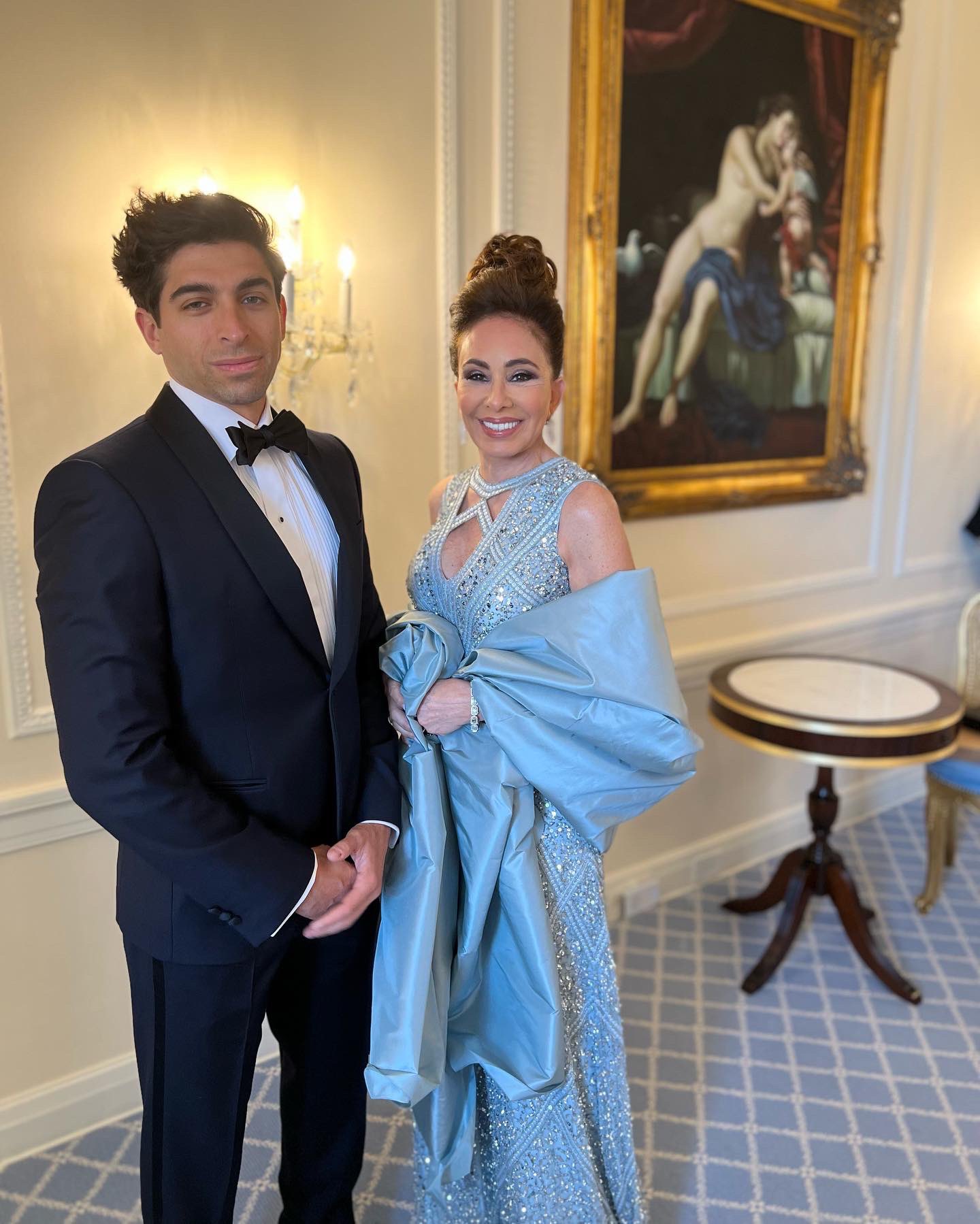
Alexander Pirro is an American real estate professional and attorney, best known publicly as the son of television personality, author, and former New York prosecutor Jeanine Pirro and the late real estate attorney Albert J. Pirro Jr. Professionally, he has established a distinct corporate career focused on commercial real estate, acquisitions, and finance across New York.
Despite growing up in a household frequently positioned at the center of New York politics and national media, Alexander Pirro has deliberately maintained a low personal profile. While his mother transitioned from a prominent career as Westchester County District Attorney and state judge to a high-visibility host on cable news, Alexander chose to channel his legal education into corporate transactions, commercial asset management, and development. Understanding his background provides insight into how members of prominent political and media families navigate the intersection of legacy, public scrutiny, and private corporate achievement.
Early Life and Family Background
Alexander Pirro was born in the late 1980s and raised in Westchester County, New York, alongside his sister, Christi Pirro. His upbringing coincided with a transformative period in his parents' respective careers, during which both figures were influential participants in New York's legal and political arenas.
His mother, Jeanine Pirro, made history in Westchester County as an assistant district attorney before becoming a county court judge in 1990 and later winning election as Westchester County District Attorney in 1993—the first woman to hold the post. Her tenure placed the household under substantial public attention, as she frequently handled high-profile criminal prosecutions, pioneered specialized domestic violence units, and regularly appeared on national television programs.
His father, Albert J. Pirro Jr., was an influential real estate attorney, lobbyist, and close associate of numerous New York real estate developers, including Donald Trump during his expansion across Westchester and suburban New York. Albert Pirro’s legal practice specialized in land use, zoning, and municipal approvals, shaping significant commercial and residential developments across the region. However, this prominence also brought legal challenges: in 2000, Albert Pirro was convicted on federal tax evasion charges related to business deductions, a high-profile case that dominated New York headlines during Alexander’s formative years.
Growing up amid intense public scrutiny, both Alexander and his sister learned early on how to separate private familial life from the sensationalism of political journalism. The Pirro siblings attended private schools in New York, insulated from the immediate media glare, while being exposed to rigorous legal discussions, contract negotiations, and the complexities of public service from an early age.
Academic Trajectory: From Undergraduate Study to Law School
Alexander Pirro pursued an academic path grounded in economics, business fundamentals, and jurisprudence, mirroring the legal traditions of his family while shaping his own specialization.
- Wake Forest University
- Bachelor of Arts (BA)
- Fordham University School of Law
- Juris Doctor (JD)
- Admission to the New York State Bar
Undergraduate Education
Pirro enrolled at Wake Forest University in Winston-Salem, North Carolina, where he completed his undergraduate studies. During his collegiate tenure, he focused on business and political science coursework, establishing analytical foundations in market behavior, institutional governance, and financial evaluation. Unlike individuals aspiring to broadcast media or electoral politics, Pirro avoided public-facing campus campaigns, focusing instead on academics and building a network outside the geographic footprint of New York media.
Legal Education and Bar Admission
Following his graduation from Wake Forest, Pirro returned to New York to pursue formal legal training at Fordham University School of Law, one of the nation's premier institutions for commercial, banking, and real estate jurisprudence.
At Fordham, Pirro focused his studies on:
- Real Property Law: Land use regulation, conveyancing, commercial leasing, and construction agreements.
- Corporate Transactions: Entity formation, corporate governance, joint ventures, and fiduciary duty standards.
- Structured Finance: Secured transactions, mortgage loan origination, debt restructuring, and mezzanine financing.
After earning his Juris Doctor (JD), Alexander Pirro sat for and passed the New York State Bar Examination. His admission to the New York bar certified him to practice law within the state, giving him a formal credential that would underpin his subsequent career in property acquisitions and real estate finance.
Professional Career: Real Estate Finance and Law
Rather than entering civil litigation, prosecution, or criminal defense—the arenas in which his mother built her early reputation—Alexander Pirro aligned his professional pursuits with the commercial property sector that had defined his father's private practice.
The Bridge Between Legal Analysis and Capital Markets
Modern commercial real estate requires an intricate understanding of both municipal regulatory frameworks and complex debt instruments. With his legal training from Fordham and his bar admission, Pirro possessed the skills necessary to analyze property titles, negotiate purchase and sale agreements, evaluate zoning covenants, and assess environmental liabilities.
Throughout his career, Pirro has held roles within real estate development and investment firms operating in the Greater New York metropolitan area. His responsibilities have primarily centered on:
- Underwriting and Acquisitions: Assessing the financial viability of multifamily residential assets, mixed-use commercial properties, and redevelopment sites. This involves projecting net operating income (NOI), calculating internal rates of return (IRR), and evaluating market cap rates.
- Contract Structuring and Due Diligence: Reviewing municipal filings, verifying title encumbrances, and drafting partnership agreements between equity partners, institutional lenders, and developers.
- Affordable Housing and Development Initiatives: Working alongside development groups engaged in New York state and municipal housing programs, navigating tax credit allocations (such as Low-Income Housing Tax Credits, or LIHTC), and addressing complex zoning approval procedures.
By operating in the back-office and transactional realms of commercial property rather than courtroom litigation, Pirro built an independent professional identity insulated from partisan political cycles.
Comparative Profile: The Pirro Family Enterprise
The Pirro family presents a case study in how legal training can be applied across divergent fields—from television broadcasting and criminal justice to corporate restructuring and real estate investment. The table below delineates the distinct professional trajectories of the family members:
| Family Member | Primary Profession | Key Educational Credentials | Primary Industry / Arena | Public Profile Level |
|---|---|---|---|---|
| Jeanine Pirro | Judge, District Attorney, TV Host, Author | Notre Dame (BA), Albany Law School (JD) | Criminal Law, Cable News Broadcast, Politics | Very High (National) |
| Albert J. Pirro Jr. (d. 2021) | Real Estate Attorney, Lobbyist | St. Bonaventure (BA), Albany Law School (JD) | Real Estate Zoning, Land Use, Municipal Affairs | High (Regional / State) |
| Christi Pirro | Attorney, Restructuring Specialist | University of Pennsylvania (BA), Penn Law (JD) | Corporate Bankruptcy, Debt Restructuring | Moderate / Professional |
| Alexander Pirro | Real Estate Executive, Attorney | Wake Forest (BA), Fordham Law School (JD) | Commercial Real Estate, Acquisitions, Finance | Low / Private Corporate |
While Jeanine Pirro utilized her legal background as a platform for judicial administration, public prosecution, and eventual media commentary on Fox News, her children channeled their legal educations into private-sector legal and financial operations. Alexander’s sister, Christi Pirro, established herself as a partner at leading corporate law firms focusing on bankruptcy, debt restructurings, and distressed financial situations, complementing Alexander’s focus on asset acquisition and capital underwriting.
Navigating the Public Eye: Privacy as a Strategic Choice
In contemporary professional environments, the children of prominent political or media personalities frequently face challenges concerning identity and professional credibility. Alexander Pirro’s approach is characterized by deliberate discretion.
Digital Footprint Management
Unlike many media-adjacent figures, Alexander Pirro maintains a strictly guarded digital footprint. He does not maintain public social media accounts designed for audience monetization, self-promotion, or commentary on current affairs. His online visibility is limited primarily to professional business registers, state bar records, and corporate transaction filings.
This strategic privacy serves several distinct functions:
- Client and Institutional Confidence: Commercial real estate transactions involve institutional lenders, private equity funds, and government agencies where stability, confidentiality, and discretion are prized above public visibility.
- Insulation from Partisan Media: Given his mother’s high-profile status in national political debates, maintaining a neutral, non-public persona prevents his commercial transactions from becoming politicized.
- Separation of Professional Merit: By avoiding the spotlight, Pirro ensures that his work in underwriting, acquisitions, and property negotiation is judged based on deal execution rather than family affiliation.
The Broader Context of Commercial Real Estate in New York
To understand Alexander Pirro’s professional domain, it is essential to consider the economic environment of New York real estate. The market is one of the most heavily regulated and capital-intensive environments globally, characterized by:
- Zoning and Land Use Rigidity: The New York City Uniform Land Use Review Procedure (ULURP) and comparable municipal processes across Westchester and Long Island require extensive legal knowledge to navigate successfully.
- Financing Pressures: Market dynamics require developers and acquisitions teams to structure layered capital stacks, combining senior bank debt, mezzanine loans, private equity, and state-subsidized development bonds.
- Housing Affordability Mandates: In the multifamily sector, operating successfully requires an understanding of rent-stabilization frameworks, tax incentives, and compliance requirements mandated by state agencies such as the New York State Homes and Community Renewal (HCR).
Professionals operating in this niche, like Alexander Pirro, must possess dual competency in legal compliance and quantitative underwriting. The ability to identify discrepancies in building codes or municipal zoning plans prior to acquisition can save real estate firms millions of dollars in unexpected compliance expenses.
Frequently Asked Questions
What does Alexander Pirro do for a living?
Alexander Pirro is a licensed attorney and commercial real estate professional specializing in property acquisitions, financial underwriting, and asset development. Rather than practicing courtroom litigation, he applies his legal background to structuring corporate real estate transactions, managing due diligence processes, and securing regulatory approvals for housing and commercial projects in the New York area.
Who are Alexander Pirro’s parents?
His parents are Jeanine Pirro and the late Albert J. Pirro Jr. Jeanine Pirro served as an assistant district attorney, a Westchester County Court judge, and the elected Westchester County District Attorney before becoming a nationally recognized television host, legal analyst, and author. Albert J. Pirro Jr., who passed away in 2021, was a prominent New York real estate attorney, municipal lobbyist, and legal counselor to major property developers.
Is Alexander Pirro an attorney?
Yes. Alexander Pirro completed his Juris Doctor at Fordham University School of Law after earning his undergraduate degree from Wake Forest University. Following the completion of his legal studies, he passed the New York State Bar Examination and was admitted to practice law in the State of New York, utilizing his credentials to support corporate and real estate transactional work.
Does Alexander Pirro appear on television or in the media?
No. Unlike his mother, Alexander Pirro has chosen to remain outside the media and entertainment industries. He does not appear as an on-air commentator, has not pursued electoral office, and rarely attends public red-carpet events, choosing instead to focus entirely on his private-sector business career.
Does Alexander Pirro have any siblings?
Yes, he has one sister, Christi Pirro. Christi is also a corporate attorney who earned her law degree from the University of Pennsylvania Law School. She specializes in corporate restructuring, bankruptcy proceedings, and distressed company advising, practicing as a partner at prominent corporate law firms.
Evaluating Private Careers in High-Profile Families
Alexander Pirro’s career illustrates how individuals born into public-facing families can establish independent professional reputations away from the media spotlight. While public curiosity naturally surrounds the families of prominent media personalities, Pirro's trajectory demonstrates the value of private-sector specialization.
For professionals navigating similar dynamics—whether managing family business legacies or carving out independent careers under public scrutiny—the most effective strategy remains consistent:
- Focus on technical competencies: Developing specialized, tangible skills (such as legal analysis, financial modeling, or engineering) ensures that professional credibility rests on measurable output rather than name recognition.
- Maintain rigorous discretion: In transactional sectors such as real estate, corporate law, and private capital, maintaining confidentiality and avoiding unnecessary publicity reinforces institutional trust with partners and clients alike.
- Separate personal heritage from corporate practice: By maintaining clean boundaries between family public profiles and business responsibilities, professionals can navigate commercial markets with integrity and sustained autonomy.