Director and screenwriter Alexander Payne has won two Academy Awards, both for Best Adapted Screenplay—for Sideways (2004) and The Descendants (2011). Payne's career is defined by tragicomedy and an affinity for his home state of Nebraska, which serves as the setting for his acclaimed regional works Citizen Ruth, Election, About Schmidt, and Nebraska.
Across more than three decades in American cinema, Payne has established a distinct authorial signature: satirical character studies of flawed, ordinary men navigating existential crises, grounded in authentic American landscapes. Born and raised in Omaha, Nebraska, Payne attended Creighton Preparatory School, studied history and Spanish at Stanford University, and earned his MFA in film directing from UCLA. Rather than abandoning his Midwestern roots for stylized Hollywood backdrops, Payne turned his lens toward the plains, strip malls, and suburban dining rooms of Middle America.
Understanding Payne’s filmography requires examining two parallel threads: his recurring triumphs at the Academy Awards and his geographic devotion to Nebraska, a dynamic that reached its pinnacle with his black-and-white road drama, Nebraska (2013).
Alexander Payne’s Academy Award Record: Wins and Major Nominations
Alexander Payne’s relationship with the Academy of Motion Picture Arts and Sciences spans across decades and categories, including nominations for Best Director, Best Picture, and both screenplay categories. His two competitive Oscar wins highlight his primary strength: dialogue-driven, character-centric adaptation.
The Oscar Wins: Sideways and The Descendants
Payne’s first Oscar victory arrived at the 77th Academy Awards for Sideways (2004), an adaptation of Rex Pickett’s novel co-written with longtime creative collaborator Jim Taylor. The comedy-drama follows Miles Raymond (Paul Giamatti), a depressed, unpublished novelist, and his hedonistic friend Jack (Thomas Haden Church) on a week-long road trip through the Santa Ynez Valley wine country. The script balances biting humor with midlife grief. In addition to winning Best Adapted Screenplay, Sideways earned nominations for Best Picture, Best Director (Payne), Best Supporting Actor (Church), and Best Supporting Actress (Virginia Madsen).
Seven years later, Payne secured his second Oscar for The Descendants (2011), adapted from Kaui Hart Hemmings’ novel alongside screenwriters Nat Faxon and Jim Rash. Starring George Clooney as Matt King, a Honolulu attorney grappling with a comatose wife, a secret infidelity, and a family land trust, the film captured the complex social fabric of modern Hawaii. Payne, Faxon, and Rash were awarded the Oscar for Best Adapted Screenplay at the 84th Academy Awards. The film also received nominations for Best Picture, Best Director, Best Actor (Clooney), and Best Film Editing.
Directorial Nominations and Directing Actors to Oscar Acclaim
While Payne's statuettes are for screenwriting, his directing has consistently landed in the Academy's top tier. He has earned three nominations for Best Director:
- Sideways (2004)
- The Descendants (2011)
- Nebraska (2013)
Under Payne’s direction, actors frequently secure career-defining Oscar nominations. Beyond George Clooney, Thomas Haden Church, and Virginia Madsen, Payne guided Bruce Dern (Best Actor) and June Squibb (Best Supporting Actress) to Academy Award nominations for Nebraska. Most recently, in The Holdovers (2023)—which reunited Payne with Paul Giamatti—Payne directed Da’Vine Joy Randolph to the Academy Award for Best Supporting Actress, while Giamatti earned a nomination for Best Actor.
The Nebraska Canvas: Exploring Payne's Midwestern Roots
Four of Payne’s feature films are set directly in Nebraska, capturing the socio-economic realities, architectural textures, and emotional reserve of the American heartland. Payne avoids coastal condescension, choosing instead to portray Midwestern eccentricity with anthropological care.
- Alexander Payne's Nebraska Filmography
- Citizen Ruth (1996): Satirical Omaha Abortion Wars
- Election (1999): High School Civic Politics Satire
- About Schmidt (2002): Suburban Melancholy & Retirement Crisis
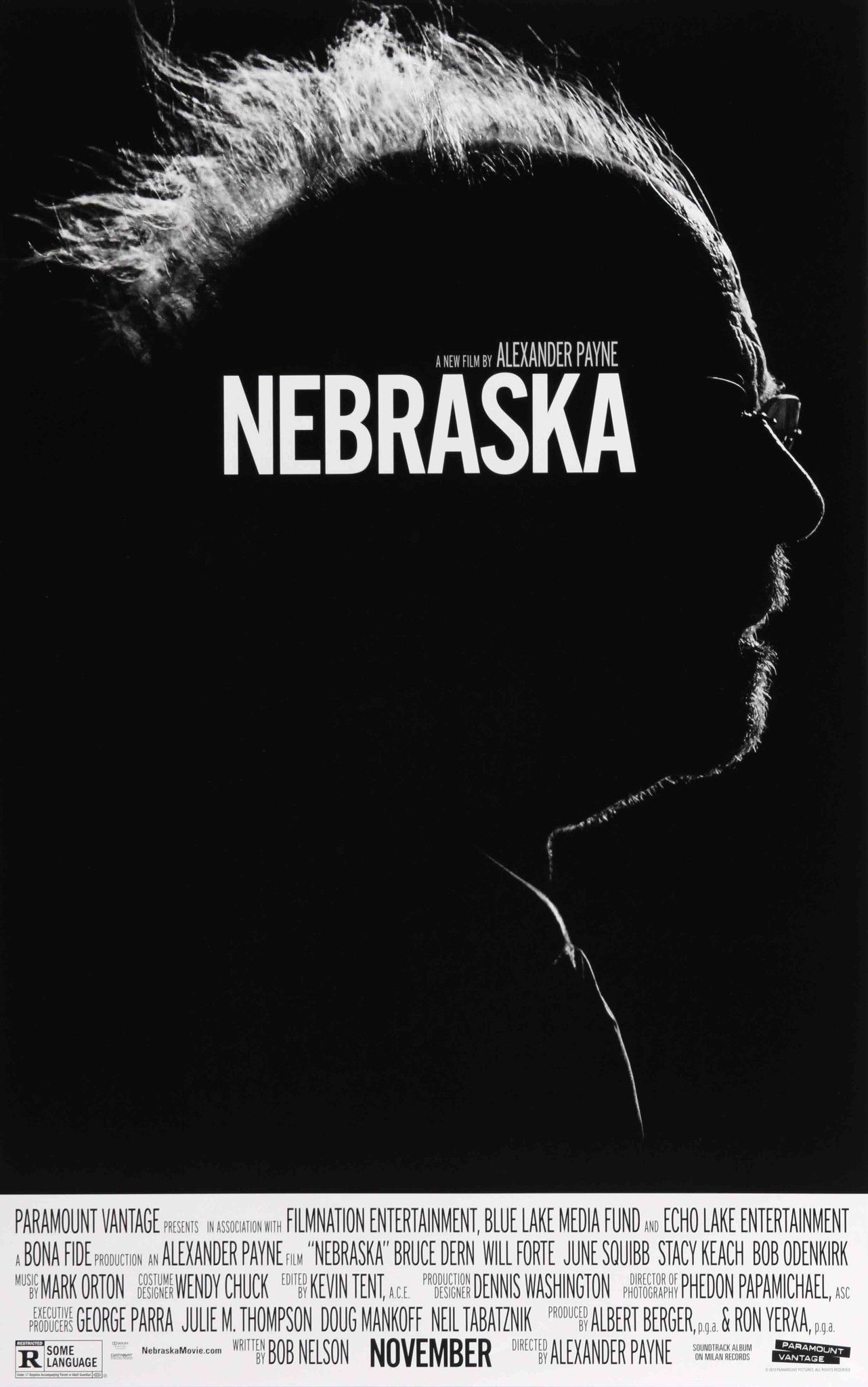
- Nebraska (2013): Black-and-White Family Road Drama
Citizen Ruth (1996)
Payne’s feature debut, co-written with Jim Taylor, stars Laura Dern as Ruth Stoops, an indigent inhalant addict who finds herself pregnant and trapped in the crossfire of the national abortion debate. Set in Omaha, the film skewers both militant anti-abortion activists and dogmatic pro-choice organizers. Payne used real Omaha locations to anchor the film’s political absurdism in everyday Middle American banality. Citizen Ruth established Payne’s recurring focus: a morally compromised protagonist pursued by self-righteous ideologues.
Election (1999)
Set in the fictional suburban enclave of Millard, Nebraska (a neighborhood within Omaha), Election adapted Tom Perrotta’s novel about a contested high school student council race. The film juxtaposes overachieving student Tracy Flick (Reese Witherspoon) against disillusioned social studies teacher Jim McAllister (Matthew Broderick). Filmed on location at Papillion-La Vista High School, Payne turned high school governance into an allegory for national political corruption, self-delusion, and moral collapse. Election earned Payne and Taylor their first Oscar nomination for Best Adapted Screenplay.
About Schmidt (2002)
In About Schmidt, Payne relocated Louis Begley’s novel from the Hamptons to Omaha. Jack Nicholson stars as Warren Schmidt, a recently retired actuary at Woodmen of the World life insurance company. After his wife passes away, Schmidt sets out across Nebraska in a 35-foot Winnebago to stop his daughter’s marriage in Denver. Payne captures the quiet dread of Midwestern retirement—the sterile corporate farewell dinners, beige split-level homes, and vast, flat horizons. The film earned Nicholson an Oscar nomination for Best Actor and Kathy Bates a nomination for Best Supporting Actress.
Nebraska (2013)
Rather than a suburban or urban Omaha story, Nebraska journeys through rural, depopulated prairie towns. Shot on location in Norfolk, Plainview, and Hooper, the film addresses post-industrial decline, dementia, and family reconciliation.
Complete Filmography: Oscar Nominations, Wins, and Settings
The following table provides a complete breakdown of Alexander Payne’s directed feature films, detailing their geographic focus, Academy Award nominations, and competitive wins.
| Film Title | Release Year | Nebraska Connection | Personal Nominations | Key Oscar Wins | Total Academy Nominations |
|---|---|---|---|---|---|
| Citizen Ruth | 1996 | Primary setting (Omaha) | None | None | 0 |
| Election | 1999 | Primary setting (Omaha suburbs) | Adapted Screenplay | None | 1 |
| About Schmidt | 2002 | Primary setting (Omaha, central NE) | None | None | 2 |
| Sideways | 2004 | None (California Wine Country) | Director, Adapted Screenplay | Best Adapted Screenplay | 5 |
| The Descendants | 2011 | None (Oahu and Kauai, Hawaii) | Picture, Director, Adapted Screenplay | Best Adapted Screenplay | 5 |
| Nebraska | 2013 | Titular setting and primary route | Picture, Director | None | 6 |
| Downsizing | 2017 | Partial setting (Omaha opening) | None | None | 0 |
| The Holdovers | 2023 | None (New England boarding school) | None (Picture nomination as Producer) | Best Supporting Actress (Randolph) | 5 |
Deconstructing Nebraska (2013): Themes, Visuals, and Award Impact
Nebraska represents the formal synthesis of Payne’s technical mastery and his cultural roots. Written by Bob Nelson, it remains the only feature directed by Payne that he did not co-write.
Plot Mechanics and Character Dynamics
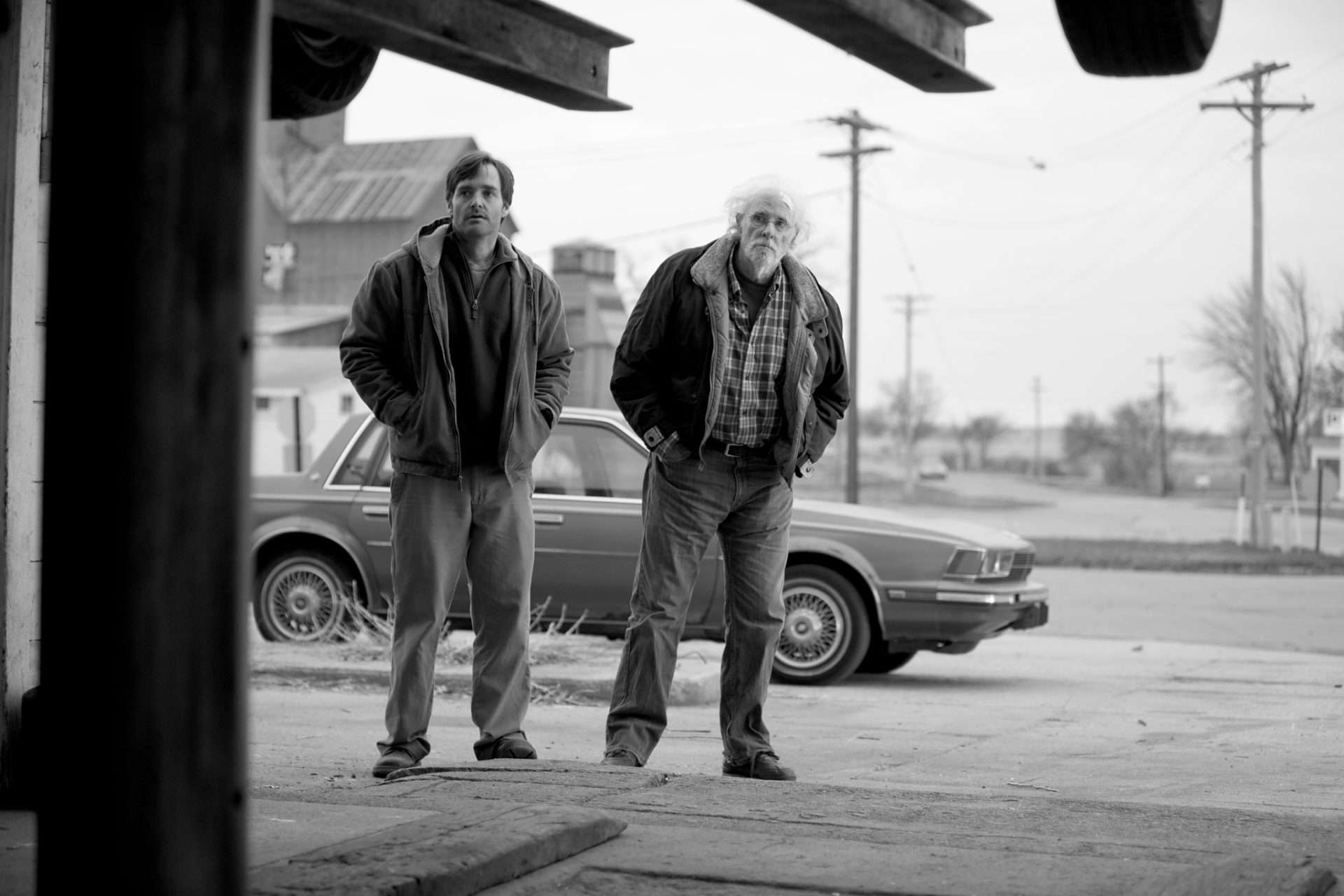
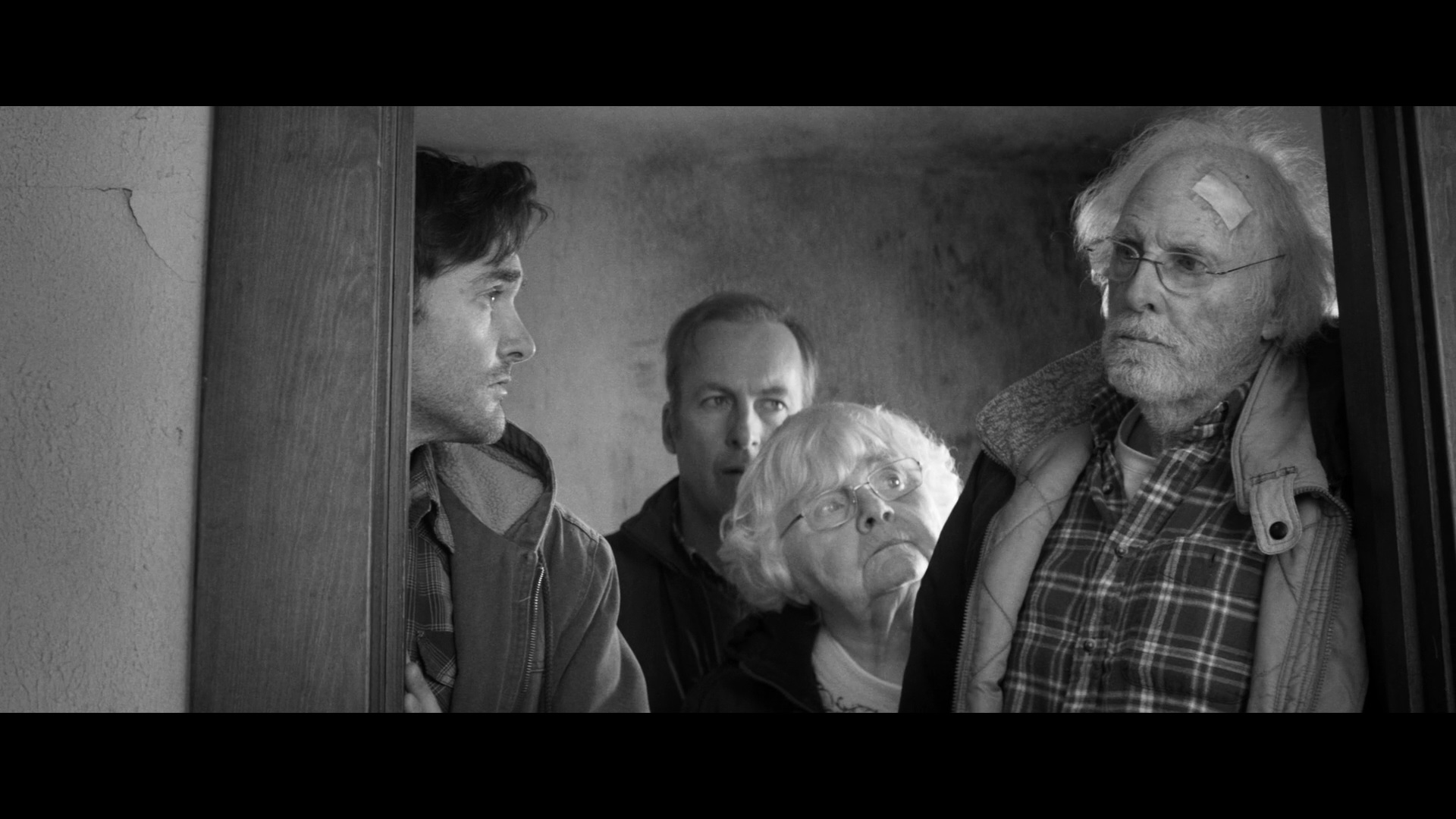
The narrative begins when aging, taciturn Woody Grant (Bruce Dern) receives a sweepstakes letter in Billings, Montana, claiming he has won one million dollars. Despite knowing it is a marketing scam, Woody’s estranged son David (Will Forte) agrees to drive his father to Lincoln, Nebraska, to collect the fictional prize. En route, they stall in Woody’s fictional hometown of Hawthorne, Nebraska (filmed in Plainview). There, word of Woody's supposed wealth spreads, exposing the quiet financial desperation, jealousy, and unpaid debts of his extended family and former business associates.
Visual Aesthetic: Phedon Papamichael’s Black-and-White Cinematography
Payne insisted on shooting Nebraska in high-contrast black-and-white, a creative choice that met resistance from Paramount Vantage. Cinematographer Phedon Papamichael employed digital Arri Alexa cameras equipped with anamorphic lenses, converting the footage into a monochrome palette. The stark aesthetic serves several functions:
- It mirrors the emotional austerity and emotional withholding of the Grant family.
- It documents the crumbling architecture of depopulated main streets, empty grain elevators, and abandoned homesteads.
- It avoids the nostalgic romanticism often applied to rural American landscapes, presenting the Great Plains as weathered, wind-swept, and stark.
Critical and Oscar Reception
Premiering at the 2013 Cannes Film Festival, where Bruce Dern won the Best Actor Award, Nebraska became one of the key critical hits of Payne's career. At the 86th Academy Awards, the film picked up six nominations:
- Best Picture (producers Albert Berger and Ron Yerxa)
- Best Director (Alexander Payne)
- Best Actor (Bruce Dern)
- Best Supporting Actress (June Squibb)
- Best Original Screenplay (Bob Nelson)
- Best Cinematography (Phedon Papamichael)
Although it faced formidable competition from 12 Years a Slave and Alfonso Cuarón's Gravity—leaving the ceremony without an Oscar statuette—Nebraska solidified Payne's status as the preeminent cinematic portraitist of the contemporary American Midwest.
Directorial Signatures in Payne’s Midwestern Cinema
Payne’s work stands apart from contemporary Hollywood indie cinema through specific screenwriting disciplines and production methods:
1. The Casting of Local Non-Actors
To preserve regional authenticity, Payne regularly supplements seasoned actors with non-professionals cast directly from the filming locations. In About Schmidt, members of local Omaha social organizations were cast as wedding guests and retirement party attendees. In Nebraska, the men gathered around the television in Woody’s brother’s living room were local farmers, lending genuine regional cadence and silences to the dialogue.
2. Micro-Satire Without Cruelty
Payne walks a fine line between satire and empathy. In Election, Tracy Flick’s hyper-ambition is unmasked, yet the narrative reveals the patriarchal condescension of the adults attempting to diminish her. In Nebraska, June Squibb’s character, Kate Grant, delivers blunt, profane assessments of deceased relatives at a local cemetery, cutting through rural sanctimony while remaining loyal to her husband.
3. Road Odysseys as Psychological Audits
Physical journeys across roads and highways frequently mirror internal self-evaluations. Miles’ drive through Santa Barbara county in Sideways, Warren Schmidt's Winnebago expedition across Interstate 80 in About Schmidt, and David and Woody’s journey down Highway 20 in Nebraska function as structured interrogations of wasted potential, aging, and generational disconnect.
Frequently Asked Questions
How many Oscars has Alexander Payne won?
Alexander Payne has won two Academy Awards. Both wins were for Best Adapted Screenplay: first for Sideways (shared with Jim Taylor) at the 2005 ceremony, and second for The Descendants (shared with Nat Faxon and Jim Rash) at the 2012 ceremony.
Did the movie Nebraska win any Academy Awards?
No. Despite earning six Academy Award nominations at the 86th Academy Awards—including Best Picture, Best Director for Payne, Best Actor for Bruce Dern, and Best Supporting Actress for June Squibb—the film did not win in any category.
Why does Alexander Payne set so many movies in Nebraska?
Payne was born and raised in Omaha, Nebraska, and understands the state's cultural, architectural, and socioeconomic realities. Setting films like Citizen Ruth, Election, About Schmidt, and Nebraska in his home state allows him to capture regional dialogue and working-to-middle-class environments often overlooked by coastal productions.
Which actors have won Oscars working with Alexander Payne?
Da’Vine Joy Randolph won the Academy Award for Best Supporting Actress for her performance as Mary Lamb in Payne's 2023 film The Holdovers. Several other actors have received Oscar nominations under his direction, including Jack Nicholson, Kathy Bates, Thomas Haden Church, Virginia Madsen, George Clooney, Bruce Dern, June Squibb, and Paul Giamatti.
Was the movie Nebraska actually filmed in Nebraska?
Yes. Principal photography took place across rural communities in Nebraska, primarily within Madison, Antelope, and Dodge counties. Key filming sites included Plainview, Norfolk, Elgin, Hooper, and Lincoln, alongside driving sequences shot in Montana, South Dakota, and Wyoming.
Recommended Viewing Progression for Alexander Payne’s Cinema
To understand Alexander Payne's thematic arc and regional styling, approach his filmography through a structured three-phase sequence:
- The Early Nebraska Satire (Election): Start here to observe Payne's razor-sharp screenwriting pacing, editing rhythm, and ability to turn a local Midwestern school election into a study of political psychology.
- The Academy Recognition Phase (Sideways): Move to his first Oscar-winning script to see how his satirical voice adapts to different geographies while developing deeper dramatic vulnerability.
- The Heartland Peak (Nebraska): Conclude with this monochrome drama to observe how Payne synthesizes decades of observations about his native state, offering a spare, unsentimental look at aging, rural legacy, and family closure.