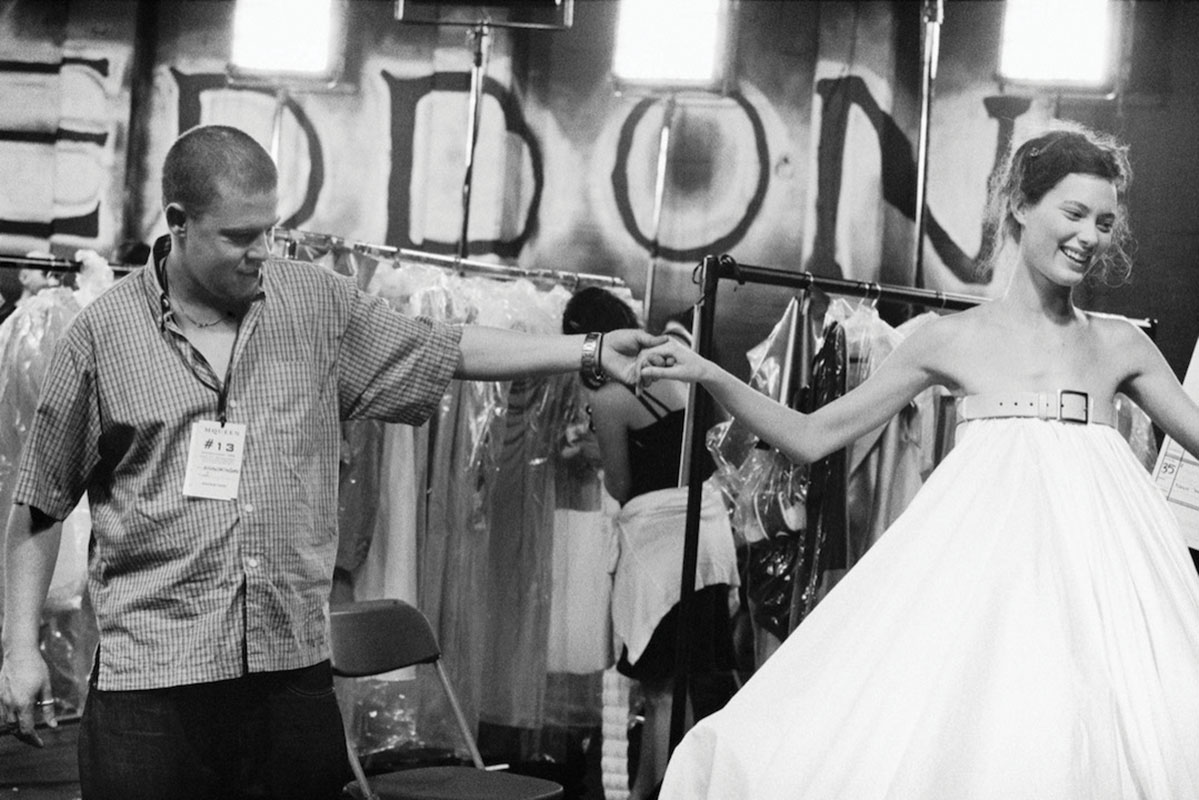
Alexander McQueen stands as one of the most influential figures in modern fashion history, renowned for merging uncompromising technical tailoring with a dark, often macabre romanticism. His legacy is defined by a paradoxical mastery that balanced brutal, avant-garde runway theatrics with the disciplined precision of Savile Row, effectively altering the trajectory of contemporary luxury design.
The Foundations of a Singular Vision
Lee Alexander McQueen, born in London in 1969, emerged from a working-class background to become an icon of high fashion. His formal education began at Anderson & Sheppard and Gieves & Hawkes, the bastions of traditional Savile Row tailoring. This rigorous technical foundation served as the bedrock of his career. Unlike many of his contemporaries who focused solely on aesthetic trends, McQueen viewed clothing as a structural challenge. He possessed an innate ability to deconstruct and reconstruct the human silhouette, a skill that allowed him to push the boundaries of what was considered "wearable" while maintaining a distinct, high-fashion finish.
The "dark and edgy" reputation of his work was not merely a stylistic choice; it was a deeply personal reflection of his interest in the grotesque, the historical, and the psychological. Whether drawing inspiration from the Victorian era, Celtic mythology, or the brutal realities of nature, McQueen channeled his emotions into his collections. He sought to provoke, choosing to elicit visceral reactions rather than safe, polite appreciation. By the time he established his eponymous label, the fashion world recognized him as a provocateur, yet his work remained anchored by the sheer quality of his construction.
Technical Mastery and the Art of Deconstruction
The "genius" often attributed to McQueen lies in his ability to translate abstract, nightmarish concepts into precise garments. His approach to pattern-cutting was revolutionary. He utilized high-contrast materials—leather, lace, tartan, and feathers—to create shapes that challenged the traditional geometry of the body. For instance, his signature "bumster" trousers were designed to elongate the torso and emphasize the lower spine, a move that was initially scandalous but eventually shifted the standard of low-rise cuts in mainstream fashion.
McQueen’s work often featured recurring themes of life, death, and metamorphosis. His mastery of tailoring allowed him to execute complex conceptual pieces, such as jackets with extreme architectural shoulders or dresses featuring intricate, hand-stitched detailing that mirrored organic textures. Even in his most "edgy" designs—such as the iconic 1999 spray-paint dress—the garment remained functional and impeccably fitted. His technical depth ensured that even when he was experimenting with modern technology, like robotic arms or holographic projections on the runway, the clothes themselves adhered to the highest standards of couture production.
Establishing a Legacy Through Runway Performance
While the clothing was technically exquisite, the global fascination with Alexander McQueen was equally fueled by his legendary runway shows. Throughout the 1990s and 2000s, McQueen transformed the catwalk into a theater of the surreal. These presentations were not simply displays of inventory; they were narrative performances that synthesized the "dark" thematic elements of his designs.
Notable examples include his Spring/Summer 1999 show, where model Shalom Harlow was rotated on a wooden platform while being spray-painted by industrial robots, and the Autumn/Winter 2006 "Widows of Culloden" show, which featured a ghostly, floating hologram of Kate Moss. These moments served to contextualize his design philosophy. The drama, the horror, and the ethereal beauty present in these shows provided a necessary lens through which to view his darker collections. The staging forced the audience to engage with the intensity of his vision, grounding his edgy aesthetic in a profound sense of human experience.
Comparative Influence of McQueen’s Design Pillars
The following table outlines the distinct pillars that defined the Alexander McQueen aesthetic, illustrating how he balanced technical expertise with thematic darkness.
| Design Pillar | Technical Requirement | Thematic Focus |
|---|---|---|
| Savile Row Tailoring | Precision cut, heavy wools, structural lining | Historical authority and strength |
| Gothic Romanticism | Layered tulle, corsetry, lace applique | Melancholy, death, and beauty |
| Avant-Garde Sculpture | Resin, metal, laser-cut leather | Futurity and the grotesque |
| Naturalism | Silk screen printing, embroidery, taxidermy | Environmental decay and nature |
Maintaining the Integrity of the Brand
Following McQueen’s death in 2010, the brand faced the significant challenge of continuing his legacy without compromising the "dark and edgy" core of his vision. Under the creative direction of Sarah Burton, the house successfully transitioned into a new era while honoring the house’s archival roots. The brand has maintained its identity by prioritizing the same dedication to craft, intricate embellishment, and dark, romantic storytelling that characterized its founder’s work.
For collectors and historians, the primary task remains the identification of authentic pieces. Because McQueen’s designs are highly technical, verification relies on inspecting the quality of the finish—the internal construction of the jackets, the specificity of the fabric blends, and the consistency of the branding labels, which evolved over the brand’s timeline. The house continues to influence modern design by showing that fashion can be both a lucrative luxury venture and a medium for genuine, challenging artistic expression.
Frequently Asked Questions
What makes Alexander McQueen's designs considered "dark"?
The designation arises from his frequent use of macabre and gothic themes. McQueen often explored concepts like death, decay, and the darker side of history, using his runway shows to depict scenes that challenged societal norms and comfort zones, effectively blending fear with high-fashion allure.
How did his Savile Row training impact his work?
His apprenticeship at Savile Row provided him with the structural vocabulary necessary to execute impossible-looking designs. Because he understood how to build a garment from the inside out, he could distort shapes—such as creating extreme silhouettes—while ensuring the clothes remained balanced and wearable.
Can I still acquire vintage Alexander McQueen pieces?
Yes, vintage McQueen pieces remain highly sought after in the luxury resale market. Collectors typically look for items from the late 1990s through the mid-2000s, as these collections best represent the peak of his creative volatility and the emergence of his most iconic runway silhouettes.
How do I verify the authenticity of a McQueen piece?
Verification requires checking the inner garment labels, the quality of the stitching (which should be exceptionally precise given his background), and the specific hardware used on the garment. In cases of significant vintage items, sourcing provenance from established luxury auction houses or reputable archives is the standard procedure.
What is the most iconic element of his design style?
While subjective, his signature fusion of sharp, masculine tailoring with delicate, feminine, or sometimes aggressive details is his most iconic trait. The "bumster" pant and the skull motif—though later mass-produced—originated from his desire to explore the human anatomy and the darker aspects of mortality.
Engaging with the McQueen Aesthetic Today
To truly understand the genius of Alexander McQueen, one must move beyond the surface of the "dark" aesthetic and examine the construction of the garments. Whether you are a collector looking to acquire pieces from his archives or an enthusiast studying his impact, the best approach is to visit institutional exhibitions or view high-resolution archives of his runway shows. When evaluating a potential piece, prioritize items that feature his signature architectural construction, such as structured blazers or corset-detailed gowns. His work is a masterclass in the balance between technical rigidity and emotional fluidity; observing these two opposing forces in harmony is the key to appreciating his permanent influence on the fashion industry.