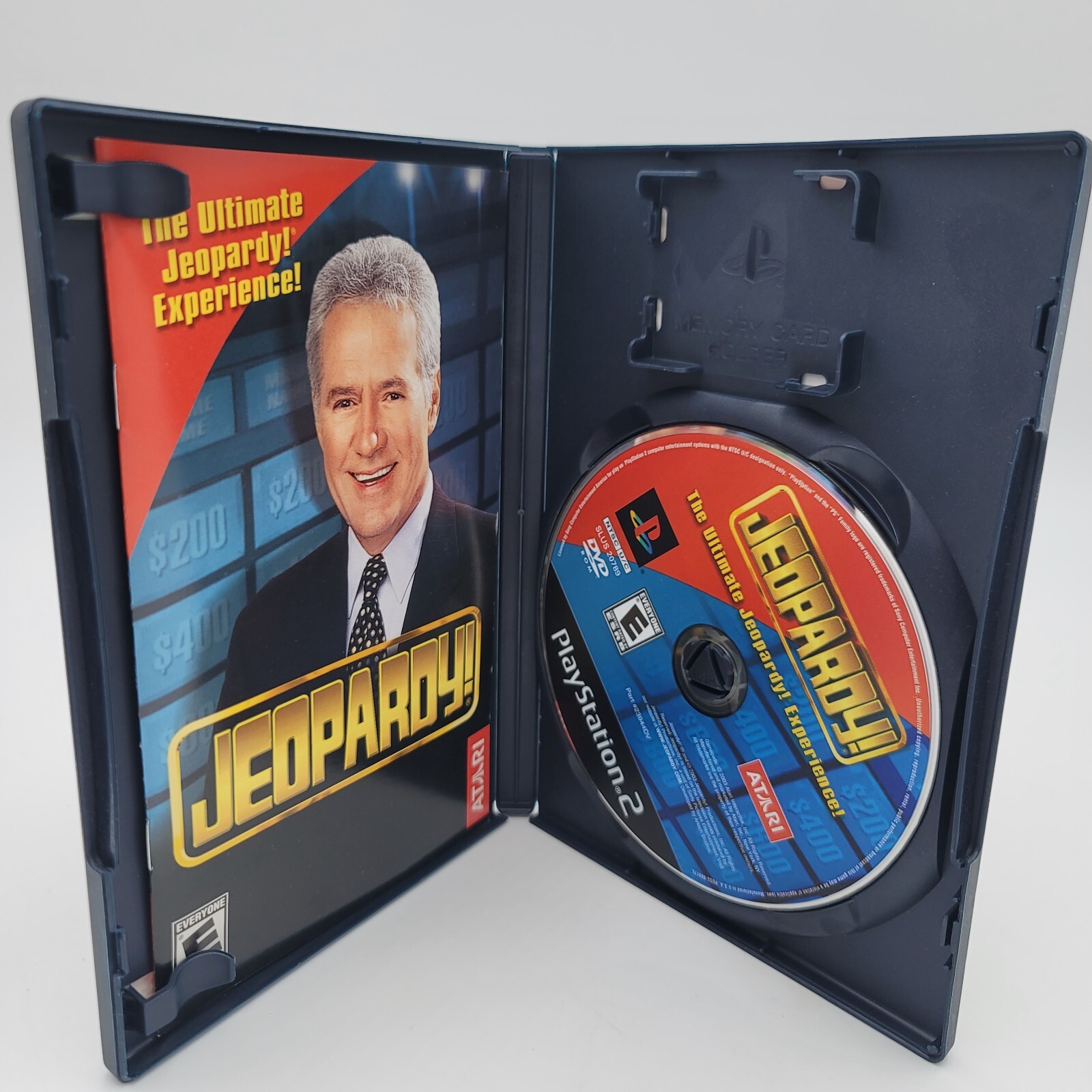
Alex Trebek Jeopardy The Ultimate Trivia Challenge represents a definitive intersection of television history, interactive gaming, and trivia culture, capturing the essence of North America's premier quiz show under the stewardship of its iconic, long-standing host. Released as a dedicated interactive software title during an era when console and PC trivia games sought to replicate the polished, high-stakes atmosphere of broadcast television, this adaptation translates the familiar audio-visual cues, rapid-fire wagering mechanics, and intellectual rigor of the syndicated series into a playable format. For enthusiasts of the franchise, the title serves both as a nostalgic artifact honoring Alex Trebek's decades-long tenure at the podium and as a rigorous test of general knowledge across diverse academic and pop-culture categories.
Understanding the Legacy of Alex Trebek and the Jeopardy Format
The enduring cultural footprint of the television program stems from a carefully structured game design that rewards broad intellectual curiosity, rapid recall, and strategic risk management. Created by Merv Griffin in 1964 and revitalized in its modern syndicated iteration in 1984, the show inverted the traditional question-and-answer dynamic by presenting contestants with clues framed as answers and demanding responses phrased in the form of questions. Alex Trebek, who hosted the program from 1984 until his passing in 2020, anchored this format with an unwavering commitment to precise pronunciation, dignified decorum, and an authoritative yet approachable demeanor.
Translating this intricate broadcast ecosystem into an interactive trivia challenge required software developers to respect the pacing and intellectual integrity that fans expected. Unlike casual parlor games that rely purely on luck or superficial pop trivia, the source material draws from a vast taxonomy of knowledge ranging from classical literature and world history to contemporary science and wordplay. The digital adaptations bearing Trebek's name sought to encapsulate this depth, utilizing text-based clues, simulated studio environments, and progressive difficulty curves to simulate the genuine pressure of stepping onto the Sony Pictures stage.
Gameplay Mechanics and Structural Rounds
Playing an authentic trivia simulation modeled after the broadcast version requires mastering a distinct multi-tiered progression system. The standard match structure faithfully recreates the television experience by dividing competition into three primary phases, each governed by specific rules regarding point values, board control, and wagering strategy.
[ Jeopardy! Round ] ---> [ Double Jeopardy! Round ] ---> [ Final Jeopardy! ] (Standard Clues) (Double Value Clues) (Strategic Wager)
The opening phase, known simply as the Jeopardy! round, features a grid containing six distinct categorical columns, each housing five clues arranged in ascending order of financial value. Players select a category and value, prompting the system to reveal a clue. The first participant to successfully activate the input mechanism gains the floor to provide a response phrased correctly. Correct answers award the corresponding dollar amount to the player's cumulative score, while incorrect responses deduct an equivalent value, creating an immediate penalty for reckless guessing.
The second phase, Double Jeopardy!, doubles the monetary value of all clues on the board and introduces two hidden Daily Double spaces. These special squares allow the active contestant to wager any portion of their accumulated score—or up to the maximum allowable limit if their score is trailing—independent of the standard board values. Navigating Daily Doubles successfully represents a primary statistical turning point in both the television program and its interactive adaptations, often dictating whether a competitor enters the final round with a commanding lead or facing an insurmountable deficit.
Core Features of the Ultimate Trivia Adaptation
Interactive versions of the franchise distinguish themselves from generic trivia applications through specific design choices that mirror the broadcast production. Understanding these features helps players maximize their scoring potential and appreciate the technical design of the software.
- Authentic Presentation: The inclusion of digitized or synthesized voice samples from Alex Trebek, signature theme music, and the iconic blue game board establishes immediate immersion.
- Adaptive AI Competitors: Single-player modes pit users against simulated opponents programmed with varying tiers of knowledge retrieval speed and accuracy, simulating the unpredictable buzzer dynamics of human competition.
- Comprehensive Clue Database: Robust software iterations draw from vast archives of historical clues, ensuring minimal repetition across multiple playthroughs and maintaining high replay value.
- Wagering Logic Engines: The game evaluates player risk profiles during Daily Double and Final Jeopardy segments, rewarding mathematically sound wagers that account for mathematical blockades against trailing opponents.
Comparative Overview of Digital Trivia Adaptations
Over the decades, the franchise has transitioned through numerous technological mediums, from early computer floppy disks and cartridge-based home consoles to modern mobile applications and voice-activated digital assistants. The table below outlines the evolutionary trajectory of how these interactive trivia titles have delivered the core experience across different eras.
| Platform Era | Primary Input Method | Audio-Visual Fidelity | Key Gameplay Focus |
|---|---|---|---|
| Early PC / 8-Bit Consoles | Keyboard / D-Pad | Text-heavy, basic 8-bit sprites | Pure trivia recall and basic text parsing |
| 16-Bit to 32-Bit Era | Dedicated Controller | Digitized speech, early 3D studio sets | Pacing replication and buzzer timing practice |
| Modern Console / PC | Handheld Controller / Touch | High-definition graphics, authentic host clips | Deep category diversity and multiplayer matchmaking |
| Mobile & Voice Assistants | Touchscreen / Voice Commands | Streamlined interface, dynamic updates | Casual accessibility and daily challenge loops |
Mastering Final Jeopardy and Advanced Wagering Strategies
The climax of any competitive match centers on Final Jeopardy, a single wagering round where all surviving contestants face one final, complex clue drawn from a specialized category. Before the clue is revealed, participants must lock in a secret wager ranging from zero dollars up to their total accumulated score. This mechanic introduces advanced game theory into what would otherwise be a pure test of knowledge.
To maximize success in this final phase, players must calculate wagers based on the principle of blocking opponents. If a leading contestant holds a score greater than the combined total of the second-place player multiplied by two, the leader can secure victory by wagering an amount that leaves them with one dollar more than double the second-place opponent's current score, provided they answer correctly. Conversely, trailing players often employ a zero-wager strategy or bet everything, anticipating that the leader will miss the clue. Mastering these mathematical probabilities is just as vital to winning the ultimate challenge as possessing a broad command of world facts.
Frequently Asked Questions
How does the buzzer mechanic work in digital adaptations?
Digital adaptations simulate the physical buzzer of the television show by requiring players to press a designated button or key only after the host finishes reading the clue. Pressing too early locks the player out for a brief penalty period, mirroring the broadcast rules where premature activation forfeits the chance to respond.
Are the questions pulled directly from actual television episodes?
Many software iterations incorporate verified archives containing thousands of clues used in past broadcast episodes, supplemented by professionally written clues designed to match the stylistic tone, difficulty curve, and phrasing conventions of the show's official writer's room.
Can multiple players compete in local or online multiplayer modes?
Depending on the specific platform and release version, these titles typically support local turn-based or simultaneous buzzer multiplayer modes, allowing friends and family to replicate a three-person studio matchup directly in a home setting.
What is the best strategy for selecting categories on the game board?
Experienced players generally target categories aligned with their specific academic or cultural strengths early in the round to build a secure financial cushion, while leaving unfamiliar categories for later or relying on opponents to clear out dangerous territory.
How are spelling errors handled during text input phases?
Modern software solutions often utilize algorithmic tolerance thresholds or multiple-choice formats to account for minor typographical errors in text entry, ensuring that a correct intellectual answer is not penalized purely due to a misplaced keystroke.
Practical Recommendations for Trivia Competitors
Approaching this title with a competitive mindset requires cultivating a balanced knowledge base rather than hyper-specializing in isolated subjects. Focus study efforts on recurring foundational categories found in broadcast history, including American history, world geography, classical arts, and scientific nomenclature. Practice reading clues rapidly to isolate key context markers—such as specific historical dates, literary titles, or etymological hints—which often point directly to the required response before the full text is digested. By combining rigorous fact retention with disciplined wagering mathematics, players can successfully master the ultimate trivia challenge and honor the intellectual legacy fostered by Alex Trebek for decades.