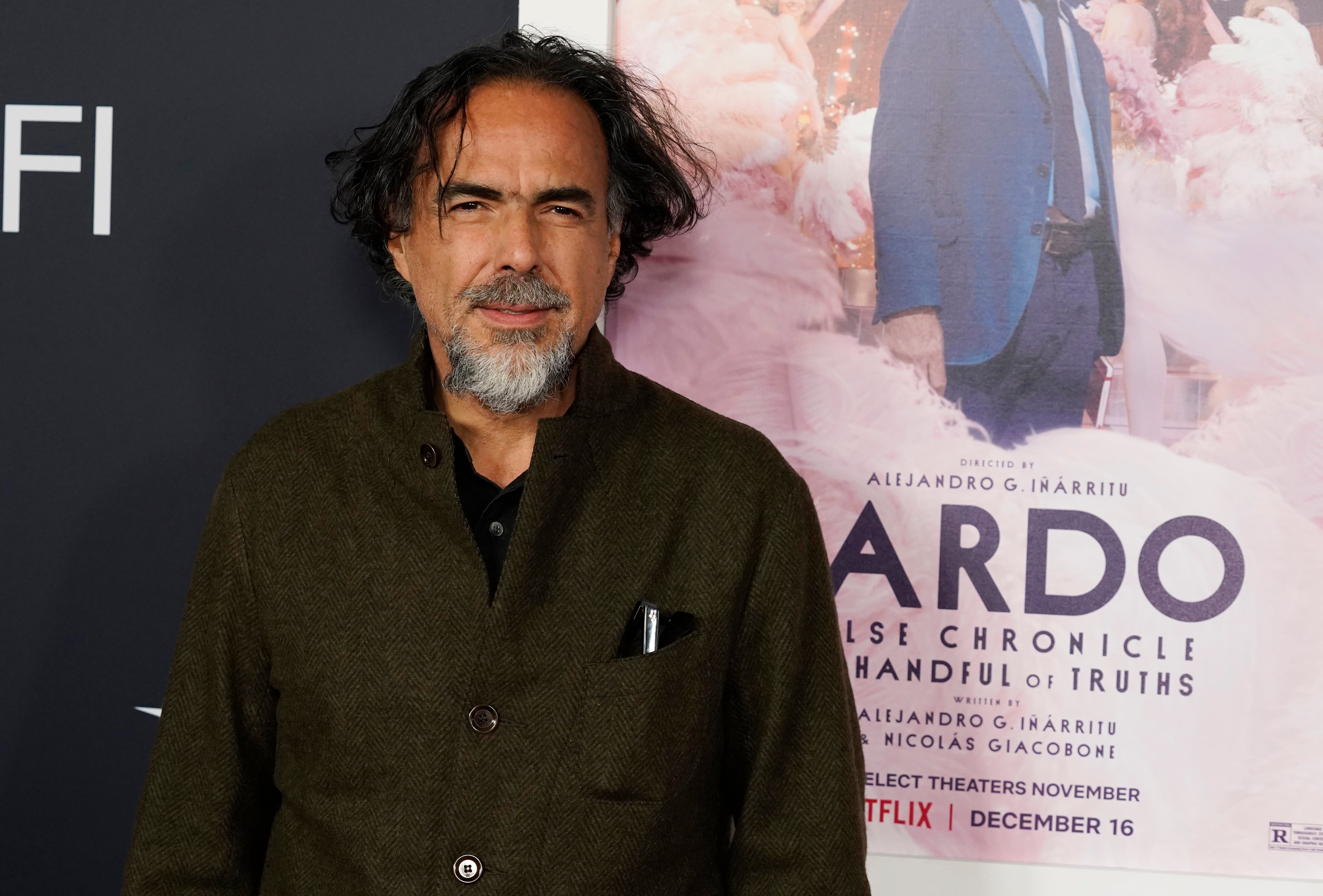
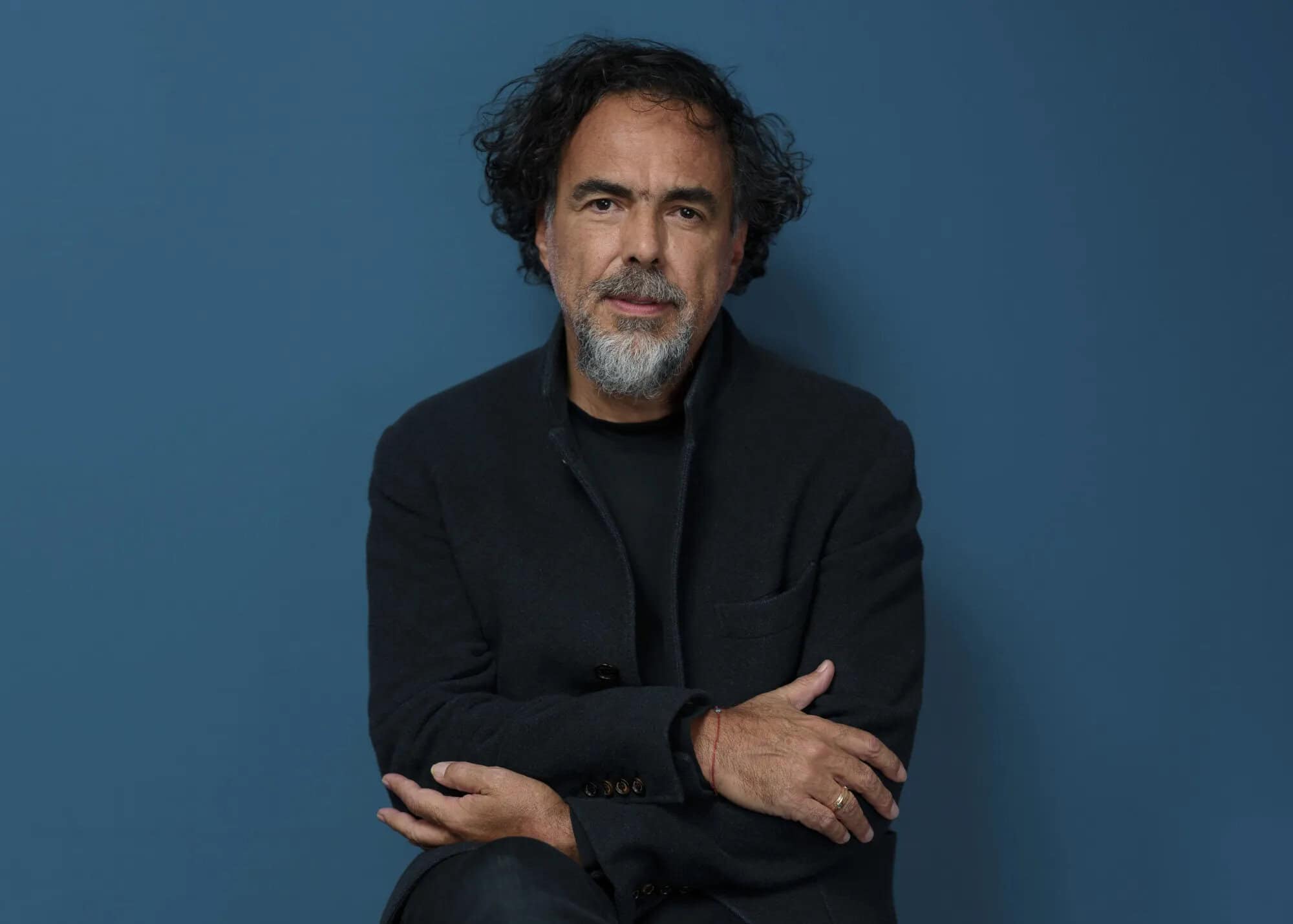
Alejandro González Iñárritu is a multi-Academy Award-winning director, producer, and screenwriter whose work has fundamentally reshaped the landscape of global filmmaking. Known for his intense psychological depth, non-linear narratives, and technical bravado, he remains a central figure in the "Three Amigos" of Mexican cinema, alongside Guillermo del Toro and Alfonso Cuarón.
As of 2026, Alejandro González Iñárritu continues to be celebrated as a definitive master of modern cinema. His journey from a radio DJ in Mexico City to the first Mexican director to receive a Best Director Academy Award—and subsequently one of the few to win it back-to-back—represents a seismic shift in how international filmmakers are integrated into the Hollywood ecosystem. Iñárritu’s filmography is not merely a collection of stories but a series of visceral, immersive experiences that challenge the boundaries of time, perspective, and the human spirit.
The Genesis of a Visionary: From Amores Perros to Global Acclaim
The world first took notice of Iñárritu’s raw power in 2000 with the release of Amores Perros. This film didn't just revitalize Mexican cinema; it redefined the possibilities of hyperlink cinema—a narrative style where multiple storylines intersect through a single event. Collaborating with screenwriter Guillermo Arriaga, Iñárritu used a horrific car accident in Mexico City to weave together three distinct lives, exploring themes of loss, social inequality, and the primal bond between humans and dogs.
The impact of Amores Perros cannot be overstated. It earned an Oscar nomination for Best Foreign Language Film and signaled the arrival of a director who refused to play by conventional rules. The film’s "dirty" aesthetic, characterized by high-contrast film stock and shaky, handheld cameras, created an immediacy that would become a hallmark of his early work. This period established his reputation for extracting hauntingly authentic performances from both seasoned actors and newcomers, a skill that would later lead to numerous Academy Award wins for his leads.
The Death Trilogy and the Architecture of Grief
Following his debut, Iñárritu and Arriaga completed what is now known as the "Death Trilogy," consisting of Amores Perros, 21 Grams (2003), and Babel (2006). These films solidified his mastery of non-linear storytelling. In 21 Grams, Iñárritu fragmented time so aggressively that the audience had to reconstruct the emotional beats of the story themselves. This approach wasn't a mere gimmick; it mirrored the fractured psyche of characters dealing with profound trauma.
Babel expanded this vision to a global scale, connecting stories in Morocco, Japan, Mexico, and the United States. It served as a commentary on the failure of communication in a hyper-connected world. By the time Babel won the Golden Globe for Best Motion Picture – Drama, Iñárritu had proved that his thematic concerns—mortality, the fragility of the body, and the complexity of family—transcended linguistic and cultural barriers. This era of his career was defined by a heavy, almost suffocating realism that demanded total emotional investment from the viewer.
Technical Mastery: The Revolution of the Long Take
The mid-2010s marked a pivot in Iñárritu’s style, moving from the gritty, multi-strand narratives of his early career toward a more singular, technically audacious form of storytelling. Birdman or (The Unexpected Virtue of Ignorance) (2014) was a turning point. Filmed and edited to appear as one continuous shot, the movie captured the claustrophobia of a Broadway theater and the crumbling mind of its protagonist.
This technical feat, achieved alongside cinematographer Emmanuel "Chivo" Lubezki, was more than a stunt. It allowed the audience to exist within the rhythmic flow of the characters' lives, blurring the line between reality and the protagonist's delusions. The film won four Academy Awards, including Best Picture and Best Director, cementing Iñárritu’s status as a top-tier "auteur" capable of merging high art with commercial success.
He followed Birdman with the even more grueling production of The Revenant (2015). By choosing to shoot only in natural light and in chronological order in the remote wilderness of Canada and Argentina, Iñárritu pushed his cast and crew to their physical limits. The result was a masterpiece of "immersive realism" that finally earned Leonardo DiCaprio his first Oscar. Iñárritu’s back-to-back wins for Best Director (2014 and 2015) put him in an elite category of filmmakers, shared only by legends like John Ford and Joseph L. Mankiewicz.
Recurrent Themes: Faith, Mortality, and the Human Condition
While his technical prowess often takes center stage, the core of Iñárritu’s work is deeply philosophical. He frequently explores the concept of the "throwness" of human existence—the idea that we are cast into circumstances beyond our control and must find meaning within them. Whether it is the terminal illness in Biutiful (2010) or the survival instinct in The Revenant, his characters are often at their breaking points.
- Parenthood and Legacy: Many of his films center on the desperate need of a father to provide for or reconnect with his children.
- The Physicality of Pain: He does not shy away from the brutality of the human body. Suffering is portrayed not for shock value, but as a gateway to spiritual or psychological clarity.
- The Inevitability of Death: Mortality is the silent protagonist in nearly all his films, serving as the ultimate equalizer that strips away social status and ego.
In his more recent work, such as Bardo, False Chronicle of a Handful of Truths (2022), Iñárritu turned the camera inward. This semi-autobiographical epic delved into the "liminal space" of the immigrant experience—someone who belongs to two countries but is fully at home in neither. By 2026, Bardo is viewed as a vital companion piece to his earlier works, shifting the focus from external struggle to internal, surrealist reflection.
Collaborative Genius: Lubezki, Prieto, and Santaolalla
A master is often defined by the company they keep, and Iñárritu’s career is a testament to the power of creative collaboration. His visual language was initially shaped by Rodrigo Prieto, whose grainy, intense cinematography defined the "Death Trilogy." Later, his partnership with Emmanuel Lubezki pushed the boundaries of digital cinematography and natural lighting, creating some of the most iconic images in modern film.
Sound is equally important in an Iñárritu film. The minimalist, string-heavy scores of Gustavo Santaolalla provided the emotional heartbeat for his early movies, while the percussion-only score of Birdman by Antonio Sánchez drove the film’s frantic energy. These collaborations demonstrate Iñárritu’s ability to orchestrate different artistic disciplines into a singular, cohesive vision.
| Film | Year | Key Technical/Narrative Innovation | Primary Awards/Recognition |
|---|---|---|---|
| Amores Perros | 2000 | Hyperlink cinema; Non-linear editing | BAFTA Best Foreign Film; Oscar Nominee |
| 21 Grams | 2003 | Extreme chronological fragmentation | Venice Film Festival Best Actor (Sean Penn) |
| Babel | 2006 | Global multi-narrative structure | Golden Globe Best Drama; Cannes Best Director |
| Biutiful | 2010 | Linear psychological portraiture | Oscar Nominee Best Foreign Film |
| Birdman | 2014 | Simulated "single-take" long shot | Academy Award for Best Picture & Director |
| The Revenant | 2015 | Natural light only; Extreme location shooting | Academy Award for Best Director |
| Carne y Arena | 2017 | Virtual Reality (VR) as an art form | Special Achievement Academy Award |
| Bardo | 2022 | Surrealist, non-narrative autobiography | Silver Ariel for Best Director |
Beyond Traditional Film: Carne y Arena and the Future of Storytelling
Iñárritu’s mastery extends beyond the silver screen. In 2017, he released Carne y Arena (Virtually Present, Physically Invisible), a virtual reality installation that allowed users to experience the journey of immigrants crossing the U.S.-Mexico border. This was not just a tech demo; it was a profound empathy machine that used haptic feedback and 360-degree visuals to break the "fourth wall" entirely.
The Academy of Motion Picture Arts and Sciences recognized this as a watershed moment in the history of cinema, awarding him a Special Achievement Oscar. By 2026, this project is cited as a foundational text for how directors can use emerging technology to tell stories that are socially relevant and emotionally devastating. It proves that Iñárritu’s interest lies not in the medium itself, but in the most effective way to transmit the human experience to an audience.
Why is Iñárritu considered a "master" of cinema?
He is considered a master because he successfully bridges the gap between commercial Hollywood success and uncompromising European-style "auteur" filmmaking. His ability to innovate technically (the long takes in Birdman) while maintaining deep emotional resonance is rare. He has consistently influenced how stories are structured and how cinematography is utilized to create an immersive atmosphere.
What is the "Death Trilogy"?
The "Death Trilogy" refers to Iñárritu's first three films: Amores Perros, 21 Grams, and Babel. They are grouped together because they were all written by Guillermo Arriaga and share a non-linear narrative structure centered around themes of tragedy, interconnectedness, and the consequences of death.
How did Birdman change modern filmmaking?
Birdman popularized the "simulated one-shot" technique, which has since been used in various forms in other films and television episodes. More importantly, it demonstrated that highly stylized, theatrical storytelling could still win the industry's highest honors, encouraging other directors to take significant formal risks.
What is Iñárritu’s relationship with the "Three Amigos"?
Alejandro González Iñárritu, Alfonso Cuarón, and Guillermo del Toro are known as the "Three Amigos" of cinema. They are close friends who often review each other's scripts and rough cuts. Collectively, they are credited with the "Mexican Wave" in Hollywood, having won numerous Oscars and transformed Mexican representation in the global film industry.
What are the best films to start with for a new viewer?
For those new to his work, Amores Perros is the best starting point to understand his roots in gritty realism. Birdman is recommended for those interested in technical mastery and dark comedy, while The Revenant is the definitive choice for viewers who appreciate epic, visual storytelling and survival dramas.
Exploring the Legacy of a Cinematic Icon
To truly appreciate Alejandro González Iñárritu’s mastery, one must look beyond the accolades and examine the emotional "texture" of his films. His work encourages a deep, often uncomfortable introspection. For aspiring filmmakers, his career serves as a roadmap for maintaining artistic integrity within a high-pressure industry. For audiences, his films are reminders of our shared vulnerability.
To engage further with his work in 2026, consider watching the "Three Amigos" collection, which often features commentary tracks and behind-the-scenes documentaries detailing his rigorous process. Whether he is exploring the streets of Mexico City or the surreal landscapes of the mind, Iñárritu remains an essential voice in modern cinema, reminding us that the most profound journeys are often the ones that take us into the depths of the human heart.