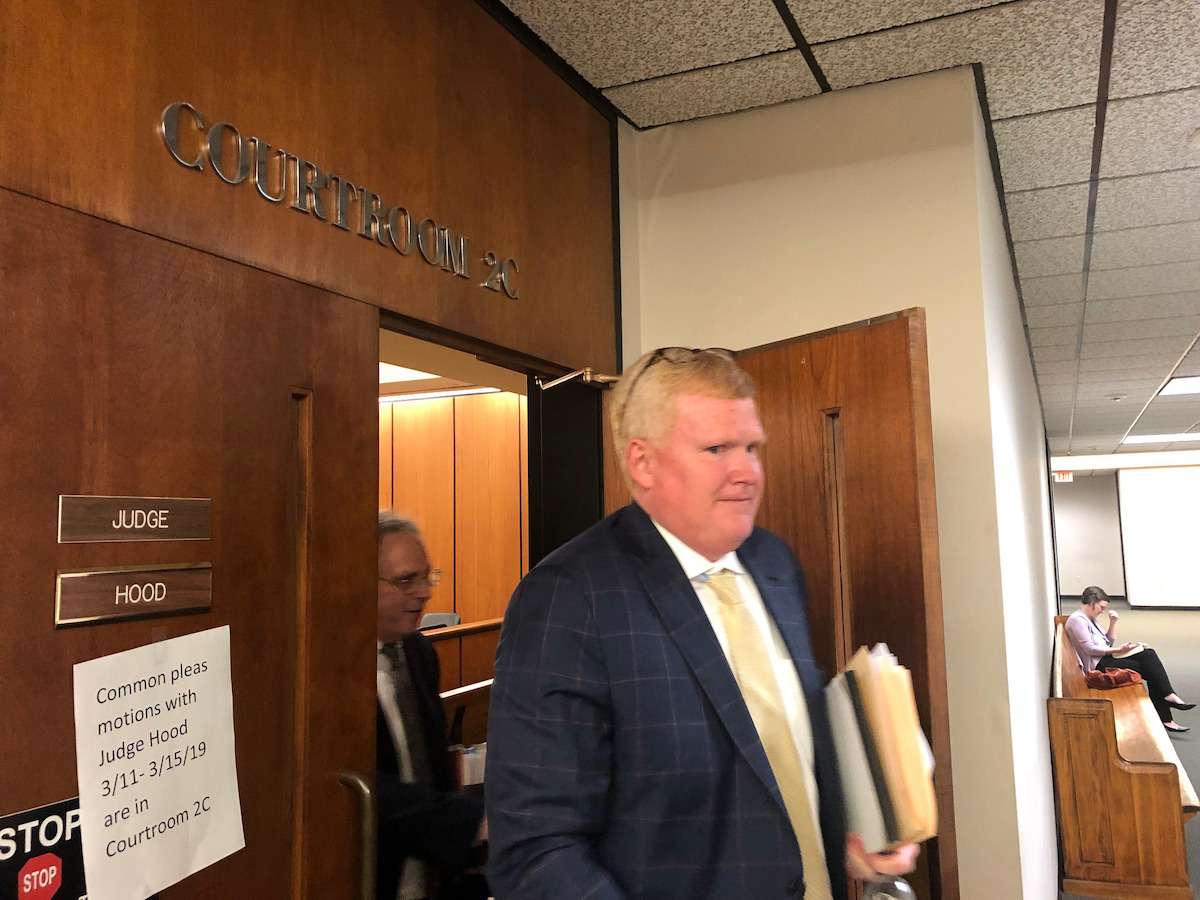
As of 2026, the legal saga of Richard Alexander "Alec" Murdaugh remains one of the most complex and scrutinized chapters in American jurisprudence. While Murdaugh is currently serving multiple life sentences for the 2021 murders of his wife, Maggie, and son, Paul, the legal proceedings have shifted toward exhaustive appellate reviews regarding jury tampering and the finalization of federal and state financial restitution orders.
Current Appellate Status of the Murder Convictions
The primary focus of the Murdaugh legal team in 2026 continues to be the appeal of the double murder convictions handed down in March 2023. The crux of the appeal rests on allegations of jury tampering involving former Colleton County Clerk of Court Becky Hill. Following an evidentiary hearing in early 2024, where Retired South Carolina Supreme Court Chief Justice Jean Toal presided, the motion for a new trial was initially denied. However, the subsequent years have seen rigorous filings in the South Carolina Court of Appeals and the South Carolina Supreme Court.
The defense argues that the legal standard applied during the 2024 hearing was too narrow. They contend that any contact by a court official that touches upon the merits of the case should be presumed prejudicial, necessitating a new trial regardless of whether individual jurors admit to being influenced. The State, conversely, maintains that Justice Toal correctly identified that the jurors' testimony—stating that Hill’s comments did not change their verdict—upheld the integrity of the original conviction.
As of this 2026 update, the South Carolina Supreme Court has provided the definitive ruling on these procedural questions, clarifying the "presumption of prejudice" standard for future high-profile cases in the state. This ruling is significant not just for Murdaugh, but for the broader application of the Sixth Amendment right to an impartial jury within South Carolina’s jurisdiction.
Federal and State Financial Sentencing Outcomes
Parallel to the murder case, Alec Murdaugh’s extensive financial crimes have reached their final sentencing and restitution phases. Murdaugh’s path through the financial justice system involved two distinct tracks: South Carolina state charges and federal wire fraud and money laundering charges.
Federal Sentencing and Incarceration
In April 2024, Murdaugh was sentenced to 40 years in federal prison for nearly two dozen counts of financial crimes, including conspiracy to commit wire fraud and bank fraud. This sentence was ordered to run concurrently with his state sentences. The federal court emphasized the "unprecedented" nature of the betrayal of trust, given Murdaugh’s former status as a prominent personal injury attorney.
State Financial Sentences
In the state system, Murdaugh pleaded guilty to numerous counts of financial fraud and was sentenced to 27 years in prison. Under South Carolina law, those convicted of "no-parole" offenses must serve at least 85% of their sentence. Because the financial sentences are concurrent with his life sentences for murder, they effectively ensure he remains in the custody of the South Carolina Department of Corrections (SCDC) regardless of the outcome of the murder appeals.
The Becky Hill Investigation and Legal Fallout
The "Becky Hill" variable remains a pivotal element of the Murdaugh case. Hill, who served as the Clerk of Court during the initial murder trial, became the center of a South Carolina Law Enforcement Division (SLED) investigation into allegations of professional misconduct and jury tampering.
The legal fallout involved several key developments:
- Ethics Complaints: Hill faced multiple ethics violations regarding the use of her office for personal gain, specifically related to her book, "Behind the Doors of Justice."
- Resignation: Her resignation in early 2024 did not halt the investigations but did shift the focus to potential criminal charges related to obstruction of justice.
- Impact on Jury Secrecy: The case has prompted the South Carolina legislature to review the protocols for sequestering juries and the limits of interaction between court staff and jurors in capital cases.
The 2026 legal environment reflects a more rigid set of guidelines for court personnel, a direct response to the vulnerabilities exposed by the Murdaugh trial.
Civil Litigation and the Distribution of Assets
While the criminal cases have dominated headlines, the civil litigation landscape has been equally active. The "Murdaugh Liquidation" has involved the sale of the Moselle estate, the family’s beach house, and various liquidated investments to compensate a long list of victims.
The primary beneficiaries of these settlements include:
- The Satterfield Family: The estate of Gloria Satterfield, the Murdaughs' long-time housekeeper, received significant settlements following the exposure of Murdaugh’s scheme to steal their insurance payout.
- The Mallory Beach Estate: The 2019 boat crash that claimed the life of Mallory Beach was the catalyst for the downfall of the Murdaugh dynasty. In 2023 and 2024, multi-million dollar settlements were reached involving the Beach family and Parker’s Kitchen, the convenience store that sold alcohol to an underage Paul Murdaugh.
- Former Clients and Law Firm: The PMPED firm (now renamed Parker Law Group) has undergone extensive internal restructuring and has been involved in complex litigation to recover funds stolen from client trust accounts.
| Legal Entity/Case | Status as of 2026 | Key Outcome |
|---|---|---|
| Murder Conviction Appeal | Final Ruling Issued | Clarification of "Presumed Prejudice" |
| Federal Financial Crimes | Sentence Active | 40-year term (Concurrent) |
| State Financial Crimes | Sentence Active | 27-year term (85% required) |
| Becky Hill Investigation | Concluded | Resulted in systemic court reforms |
| Mallory Beach Civil Suit | Settled | Multi-party global settlement reached |
| Satterfield Restitution | Distributed | Full recovery of misappropriated insurance funds |
Technical Depth: The Legal Mechanics of the Appeal
To understand the latest legal news, one must grasp the technical distinction between a direct appeal and a Post-Conviction Relief (PCR) application.
- Direct Appeal: This is the current stage of the murder case. It focuses on errors made by the trial judge (Judge Clifton Newman) or procedural violations that occurred during the trial itself. The defense’s focus on the "Hill jury tampering" is part of this process because the motion for a new trial was filed while the trial court still had jurisdiction or via a remanded hearing.
- Post-Conviction Relief (PCR): If the direct appeals fail, Murdaugh will likely file for PCR. This is a civil action against the state where the defendant argues "ineffective assistance of counsel." Given the high profile of Dick Harpootlian and Jim Griffin, a PCR claim would be difficult to prove, but it is a standard step in the exhaustion of legal remedies.
The 2026 legal posture shows that the defense is exhausting every avenue to trigger a "structural error" finding. A structural error is a flaw so fundamental to the trial process—such as a biased judge or a tampered jury—that the verdict must be overturned regardless of the strength of the evidence against the defendant.
Impact on South Carolina Criminal Procedure
The Alec Murdaugh case has led to significant shifts in how South Carolina handles high-profile criminal litigation. The South Carolina Supreme Court has taken a proactive role in managing the conduct of attorneys and the transparency of the court.
- Cameras in the Courtroom: Following the intense global interest, the court has refined Rule 605 of the South Carolina Appellate Court Rules to better balance public access with the privacy of jurors and witnesses.
- Asset Freezing (Lis Pendens): The use of "receiverships" to manage a defendant's assets before a conviction has been more clearly defined, preventing others from hiding assets in the wake of criminal allegations.
- Jury Protection: New protocols are now in place to ensure that communication between court staff and jurors is strictly logged and monitored, reducing the risk of "ex parte" communications that plagued the Murdaugh trial.
FAQ: Common Questions Regarding the Murdaugh Case in 2026
Is Alec Murdaugh eligible for parole?
No. In South Carolina, a sentence of life imprisonment for murder is without the possibility of parole. Furthermore, his federal financial sentence does not offer parole, only a slight reduction (up to 15%) for "good time" behavior, which is irrelevant given the state life sentence.
Where is Alec Murdaugh currently being held?
Murdaugh is housed within the South Carolina Department of Corrections system. For security reasons, his exact location is often kept confidential or he is housed in a high-security unit, away from the general population, due to his former status as a lawyer and the high profile of his case.
What happened to the Moselle property?
The 1,700-acre Moselle estate was sold in early 2023 for approximately $3.9 million. The proceeds were distributed among the victims of the boat crash and the surviving son, Buster Murdaugh, as part of a court-approved settlement agreement.
Can Alec Murdaugh still practice law?
No. The South Carolina Supreme Court formally disbarred Alec Murdaugh in 2022. This is a permanent administrative action, and he is barred from ever practicing law in the state again, regardless of the outcome of his appeals.
Did Buster Murdaugh ever face charges?
As of 2026, Buster Murdaugh has not been charged with any crimes related to his father's financial dealings or the murders of his mother and brother. He has remained largely out of the public eye, except for his participation in the 2023 trial and subsequent limited media appearances.
Future Legal Outlook and Next Steps
The legal journey for Alec Murdaugh in 2026 is nearing its procedural end. The exhaustion of state-level appeals typically leads to a petition for a Writ of Certiorari to the United States Supreme Court. While the U.S. Supreme Court accepts very few cases, the Murdaugh team may argue that the jury tampering issues involve fundamental federal constitutional questions.
For legal professionals and the public, the case serves as a landmark study in the intersection of "old South" power dynamics and modern forensic technology. The 2026 status confirms that while the headlines have slowed, the judicial system is still meticulously processing the remnants of the Murdaugh legacy, ensuring that restitution is finalized and that the appellate record is closed with absolute certainty.
Readers following the case should monitor official updates from the South Carolina Judicial Department and the South Carolina Department of Corrections for the most accurate and up-to-date information regarding his incarceration status and any future court dates.