Decades of neuroscientific research demonstrate that alcohol acts as a potent neurotoxin capable of altering brain structure, cognitive function, and cellular integrity across both short-term exposure and chronic consumption. While cultural norms often treat moderate drinking as benign, modern neuroimaging studies, longitudinal population cohorts, and toxicological evaluations show that ethanol and its primary metabolite, acetaldehyde, disrupt neurotransmitter systems, reduce overall brain volume, and impair white matter tract coherence over time.
Understanding these neurological impacts requires looking past anecdotal experiences of intoxication to examine peer-reviewed data from institutions such as the National Institute on Alcohol Abuse and Alcoholism (NIAAA), the World Health Organization (WHO), and major international medical journals. This guide explores the biological mechanisms of alcohol-induced neurotoxicity, regional brain vulnerabilities, the distinction between moderate and heavy use, and the potential for neurological recovery following cessation.
Neurological Mechanisms: How Ethanol Interacts with Neural Tissue
To understand why alcohol is bad for the brain, one must examine its direct biochemical interactions at the cellular and synaptic levels. Ethanol is a small, amphiphilic molecule capable of crossing the blood-brain barrier almost instantaneously. Once inside the central nervous system, it modulates neuronal membrane fluidity and directly targets key neurotransmitter receptor complexes.
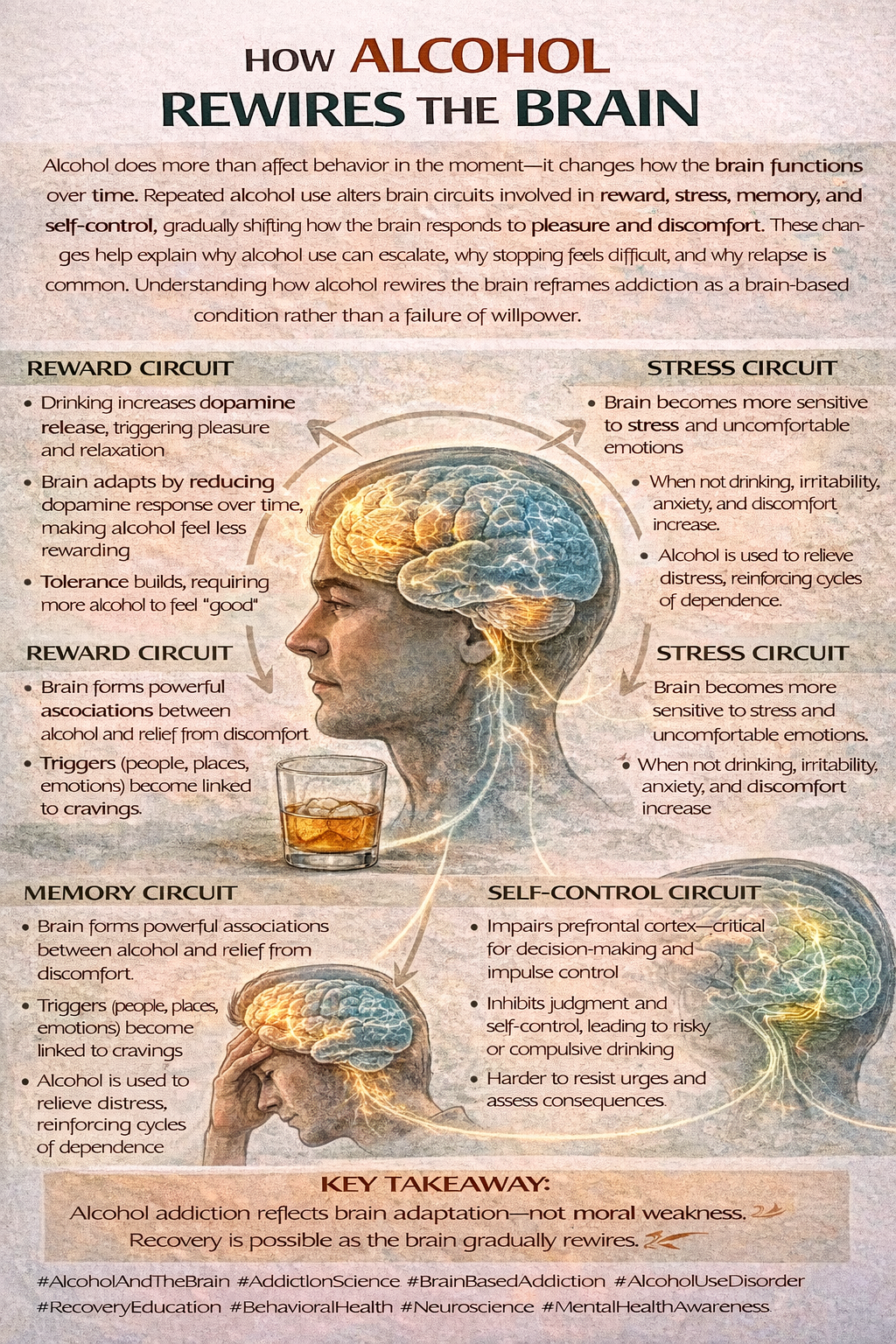
The primary mechanism of acute intoxication involves the enhancement of gamma-aminobutyric acid (GABA) activity at $GABA_A$ receptors. GABA is the brain’s principal inhibitory neurotransmitter; when alcohol binds to these receptors, it hyperpolarizes neurons, suppressing electrical activity and producing the sedation, anxiolysis, and motor slowing characteristic of intoxication. Simultaneously, alcohol acts as an antagonist at N-methyl-D-aspartate (NMDA) glutamate receptors. Glutamate is the central nervous system's primary excitatory neurotransmitter. By blocking NMDA receptors, alcohol further dampens neural signaling, disrupting memory formation and cognitive processing.
Long-term exposure triggers neuroadaptive compensations. The brain attempts to restore homeostasis by downregulating inhibitory $GABA_A$ receptors and upregulating excitatory NMDA receptors. When an individual with chronic alcohol dependence abruptly stops drinking, this neurochemical imbalance results in a dangerous surge of unchecked excitatory signaling. This hyperexcitable state manifests clinically as alcohol withdrawal symptoms, ranging from tremors and autonomic instability to seizures and delirium tremens.
Furthermore, the metabolic breakdown of alcohol generates reactive oxygen species (ROS) and acetaldehyde, a highly reactive compound that damages DNA, proteins, and cellular membranes. Chronic heavy drinking compromises the brain’s endogenous antioxidant defenses, leading to oxidative stress, chronic neuroinflammation driven by activated microglial cells, and eventual neuronal apoptosis (programmed cell death).
Structural and Volumetric Brain Changes
Advancements in magnetic resonance imaging (MRI) and diffusion tensor imaging (DTI) have allowed researchers to map the structural degradation associated with alcohol consumption with high precision. Large-scale population studies, including analyses of the UK Biobank involving tens of thousands of participants, demonstrate a negative linear relationship between habitual alcohol intake and overall brain volume, even at levels previously considered moderate.
| Brain Region | Primary Observed Structural Impact |
|---|---|
| Prefrontal Cortex | Gray matter reduction, executive decline |
| Hippocampus | Volume loss, severe memory impairment |
| Cerebellum | Purkinje cell loss, ataxia, balance loss |
| Corpus Callosum | White matter degradation, slowed scaling |
As detailed in the comparison table above, specific structures exhibit distinct vulnerabilities to sustained alcohol exposure:
- The Prefrontal Cortex: Responsible for executive functions such as impulse control, planning, decision-making, and emotional regulation. Alcohol-induced damage in this region weakens top-down cognitive control, facilitating addictive behaviors and risky decision-making.
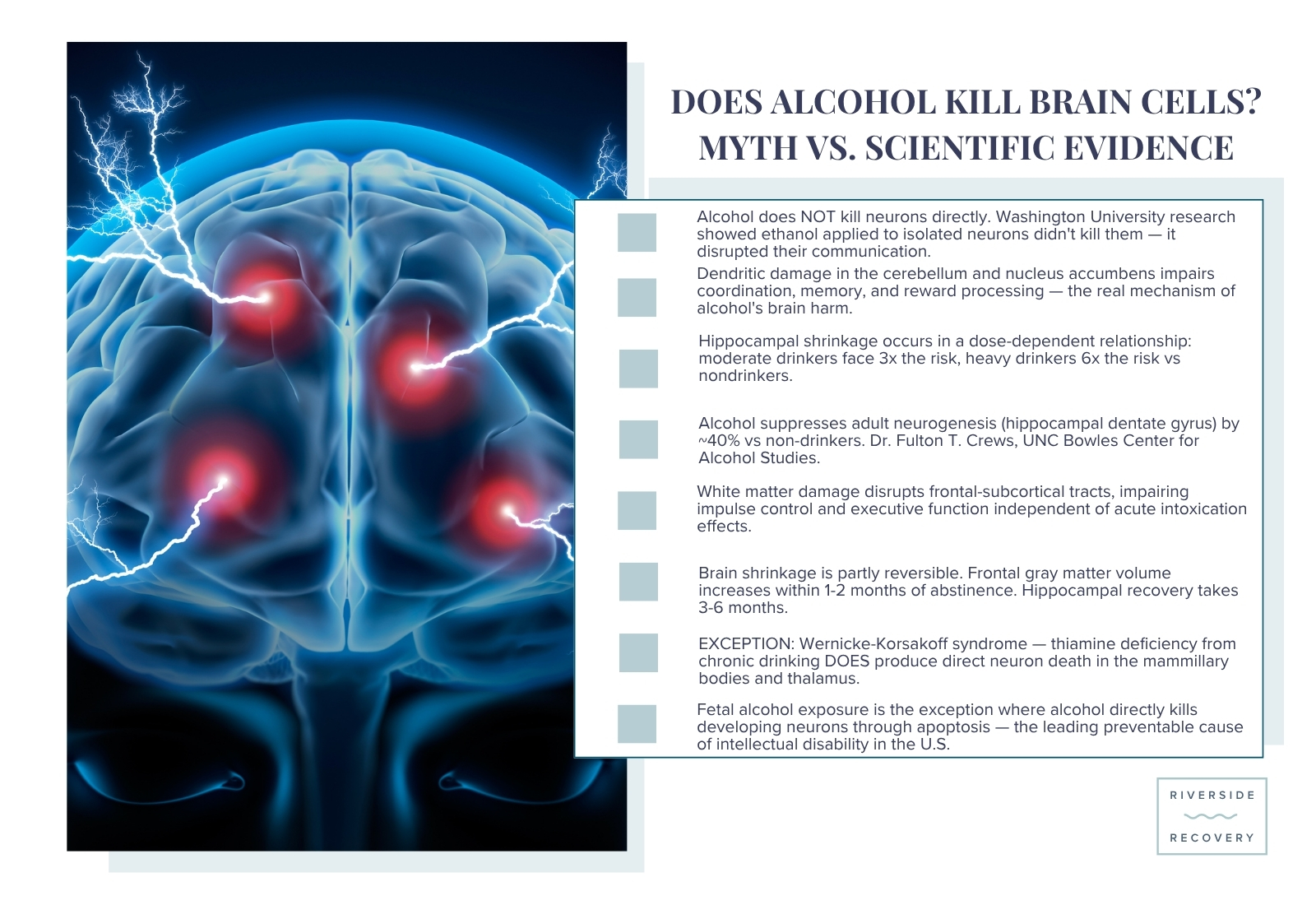
- The Hippocampus: Critical for declarative memory consolidation and spatial navigation. Neurogenesis within the hippocampus is suppressed by chronic ethanol exposure, leading to the characteristic memory lapses, blackouts, and deficits in learning seen in heavy drinkers.
- The Cerebellum: Essential for motor coordination, balance, and fine motor skills. Prolonged exposure leads to the degeneration of Purkinje cells, resulting in the gait disturbances and impaired coordination associated with chronic abuse.
- White Matter Tracts: Axonal pathways wrapped in myelin that facilitate communication between different brain regions. DTI studies show that heavy drinking degrades white matter integrity, slowing neural transmission speeds across the brain's networks.
The Moderate Drinking Debate: What the Large-Scale Data Shows
For decades, observational studies suggested a J-shaped curve regarding alcohol and health, implying that light-to-moderate consumption (such as one glass of wine per day) might offer cardiovascular or cognitive benefits compared to complete abstinence. However, contemporary methodological evaluations and Mendelian randomization studies have heavily challenged these assumptions.
Modern epidemiological reviews frequently cite residual confounding factors in older studies. Often, moderate drinkers in cohort studies possessed higher socioeconomic status, better baseline nutrition, and access to superior healthcare compared to abstainers, factors that independently correlated with better health outcomes. When researchers utilize genetic variants as instrumental variables to isolate the causal effects of alcohol consumption—a technique known as Mendelian randomization—the apparent protective effects largely disappear.
In 2023, the World Health Organization released an explicit statement clarifying that no level of alcohol consumption is entirely safe for health, noting that the risk of cognitive decline and various cancers increases from the very first drop. Similarly, extensive analyses published in journals such as The Lancet indicate that even moderate drinking contributes to net reductions in total brain volume over time, challenging the notion of a safe threshold for neuroprotection.
Severe Neurological Complications of Chronic Abuse
Beyond gradual volumetric decline, chronic heavy alcohol use can trigger acute and severe neurological syndromes resulting from a combination of direct neurotoxicity and secondary nutritional deficiencies.
Wernicke-Korsakoff Syndrome
Wernicke-Korsakoff Syndrome (WKS) represents a devastating neurological disorder divided into two phases. Wernicke's encephalopathy is an acute medical emergency caused by a deficiency in vitamin B1 (thiamine), which is frequently induced by chronic alcohol dependence due to poor dietary intake, impaired gastrointestinal absorption, and altered hepatic metabolism. Symptoms include acute confusion, ophthalmoplegia (paralysis of eye movements), and ataxia. If untreated, Wernicke's encephalopathy can progress to Korsakoff's psychosis, a chronic and irreversible memory disorder characterized by profound anterograde amnesia (the inability to form new memories) and confabulation (fabricating memories to fill gaps without conscious intent).
Hepatic Encephalopathy
Chronic alcohol consumption frequently leads to alcoholic liver disease, cirrhosis, and hepatic failure. When the liver can no longer filter toxins effectively, neurotoxic substances—chiefly ammonia—accumulate in the systemic circulation and cross the blood-brain barrier. This causes hepatic encephalopathy, a spectrum of neuropsychiatric abnormalities ranging from mild sleep disturbances and personality changes to asterixis (flapping tremor), stupor, and hepatic coma.
Neurological Recovery: Can the Brain Heal After Quitting?
A critical question for clinicians and individuals recovering from alcohol use disorder is whether the structural and functional damage inflicted upon the brain is permanent. Neuroplasticity—the brain’s ability to reorganize itself by forming new neural connections—offers a framework for understanding recovery.
Longitudinal neuroimaging studies tracking individuals through abstinence reveal encouraging evidence of neural repair. Over weeks, months, and years of sobriety, studies utilizing MRI scans demonstrate partial recovery of grey matter volume and progressive restoration of white matter microstructural integrity. Cognitive domains such as attention, visuospatial processing, and executive function frequently show marked improvement within the first several months of sustained abstinence.
However, the degree of recovery is contingent upon several variables:
- Duration and Severity of Abuse: Younger individuals and those with shorter histories of heavy drinking typically experience more complete structural and functional restoration.
- Nutritional Status: Aggressive thiamine supplementation and nutritional rehabilitation during early recovery can mitigate or prevent permanent deficits associated with Wernicke's encephalopathy.
- Genetics and Overall Health: Co-occurring medical conditions, cardiovascular health, and genetic factors influence the brain's regenerative capacity.
Practical Guidance for Assessing and Reducing Neurotoxic Risk
For individuals evaluating their own alcohol consumption or supporting someone through behavior change, practical steps grounded in clinical evidence can reduce long-term neurological risk.
- Track Consumption Accurately: Standard drink definitions vary globally, but in the United States, a standard drink contains roughly 14 grams of pure alcohol (equivalent to 12 ounces of regular beer, 5 ounces of wine, or 1.5 ounces of distilled spirits). Monitoring actual intake often reveals consumption levels exceeding public health guidelines.
- Consult Medical Professionals Before Cessation: For chronic, heavy daily drinkers, abrupt cessation without medical supervision can trigger severe alcohol withdrawal syndrome, including life-threatening seizures and delirium tremens. Medical detoxification programs provide necessary pharmacological stabilization using benzodiazepines and supportive care.
- Prioritize Nutritional Support: Addressing foundational nutritional deficits—particularly thiamine, folate, and B-complex vitamins—is critical for anyone reducing or stopping heavy alcohol use to protect peripheral and central nervous system tissue.
- Establish Measurable Reduction Goals: For individuals not presenting with severe dependence, utilizing structured reduction frameworks, engaging with behavioral support groups, or establishing consecutive alcohol-free days per week helps lower cumulative neurotoxic exposure.
Disclaimer: This article is for informational and educational purposes only and does not constitute medical advice, diagnosis, or treatment. Individuals struggling with alcohol consumption or experiencing withdrawal symptoms should consult a qualified healthcare provider or addiction medicine specialist.
Frequently Asked Questions
Does moderate drinking actually shrink the brain?
Yes, recent large-scale neuroimaging studies utilizing cohorts like the UK Biobank indicate that even moderate alcohol consumption correlates with reductions in overall brain volume. The data shows a continuous, negative association between alcohol intake and grey and white matter volume, suggesting that no threshold exists where alcohol is entirely without structural impact on neural tissue.
What is the difference between a blackout and passing out?
A blackout involves an anterograde amnesia state where an individual remains conscious and capable of complex actions (such as talking or driving) while their hippocampus temporarily halts the formation of new long-term memories. Passing out, by contrast, is a state of sedation or loss of consciousness driven by excessive central nervous system depression, where the individual falls asleep and cannot be easily awakened.
Can brain damage from alcohol be reversed by quitting?
Partial structural recovery and significant functional improvement occur following sustained abstinence due to the brain's neuroplasticity. While long-term heavy abuse can cause lasting deficits—particularly if complicated by Wernicke-Korsakoff syndrome—abstinence allows white matter tracts to repair and grey matter volumes to partially rebound over months and years.
How does alcohol cause memory loss?
Alcohol disrupts memory formation primarily by interfering with NMDA glutamate receptors in the hippocampus, a brain structure vital for encoding new declarative memories. By blocking excitatory signaling necessary for synaptic plasticity, heavy drinking prevents short-term experiences from converting into permanent memory traces.
Why do some people experience seizures during alcohol withdrawal?
Chronic alcohol use depresses the central nervous system by enhancing inhibitory GABA activity and suppressing excitatory glutamate activity. When alcohol is abruptly removed, the brain's neuroadaptive response—which upregulated glutamate receptors to compensate—results in a dangerous surge of unchecked excitation, triggering motor hyperactivity and potential withdrawal seizures.
Is wine less harmful to the brain than spirits or beer?
From a neurotoxicological standpoint, the primary active agent is ethanol. While red wine contains antioxidants such as resveratrol, epidemiological and neuroimaging studies show that the ethanol content itself drives the negative structural impacts on the brain, meaning that the type of alcoholic beverage does not eliminate neurotoxic risk.