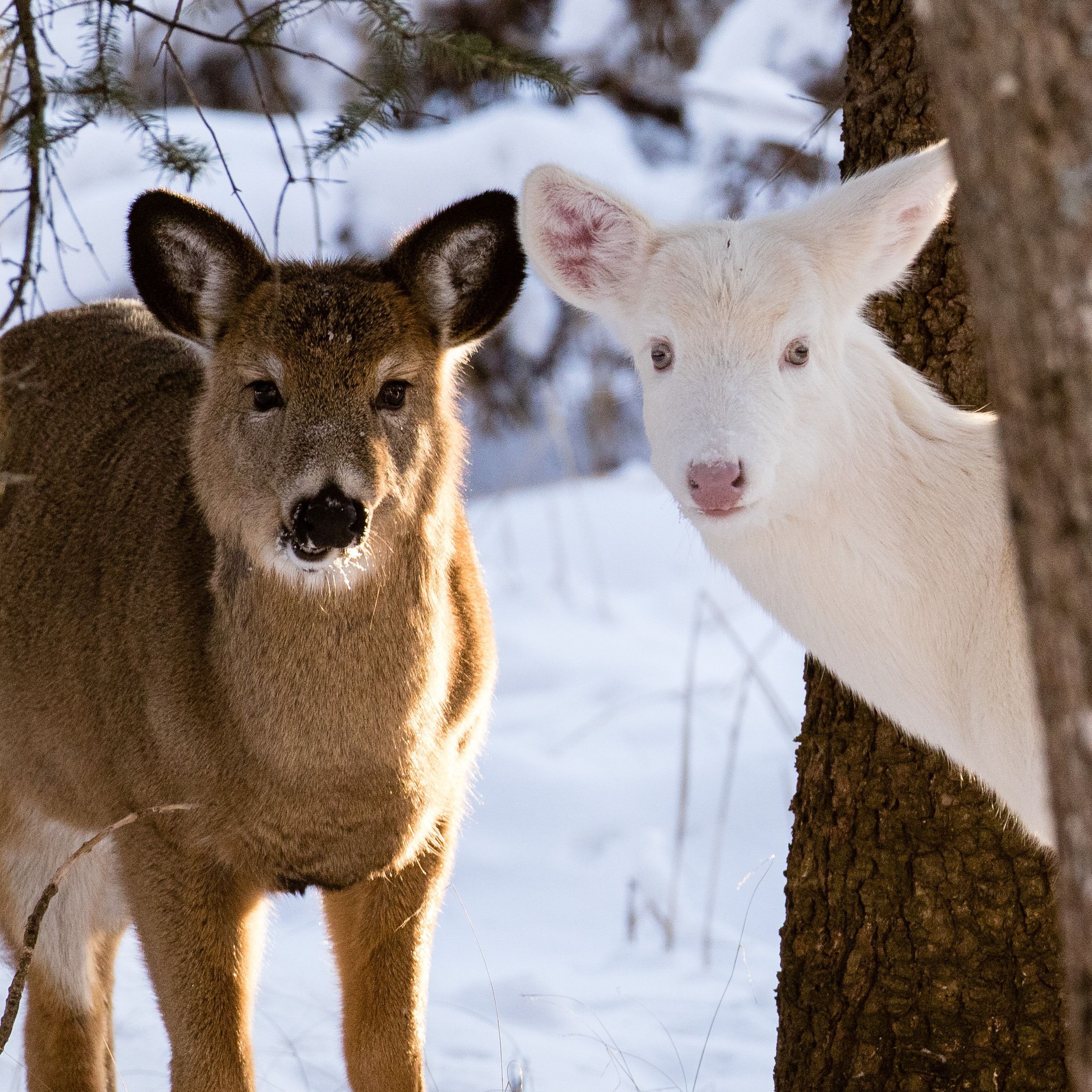
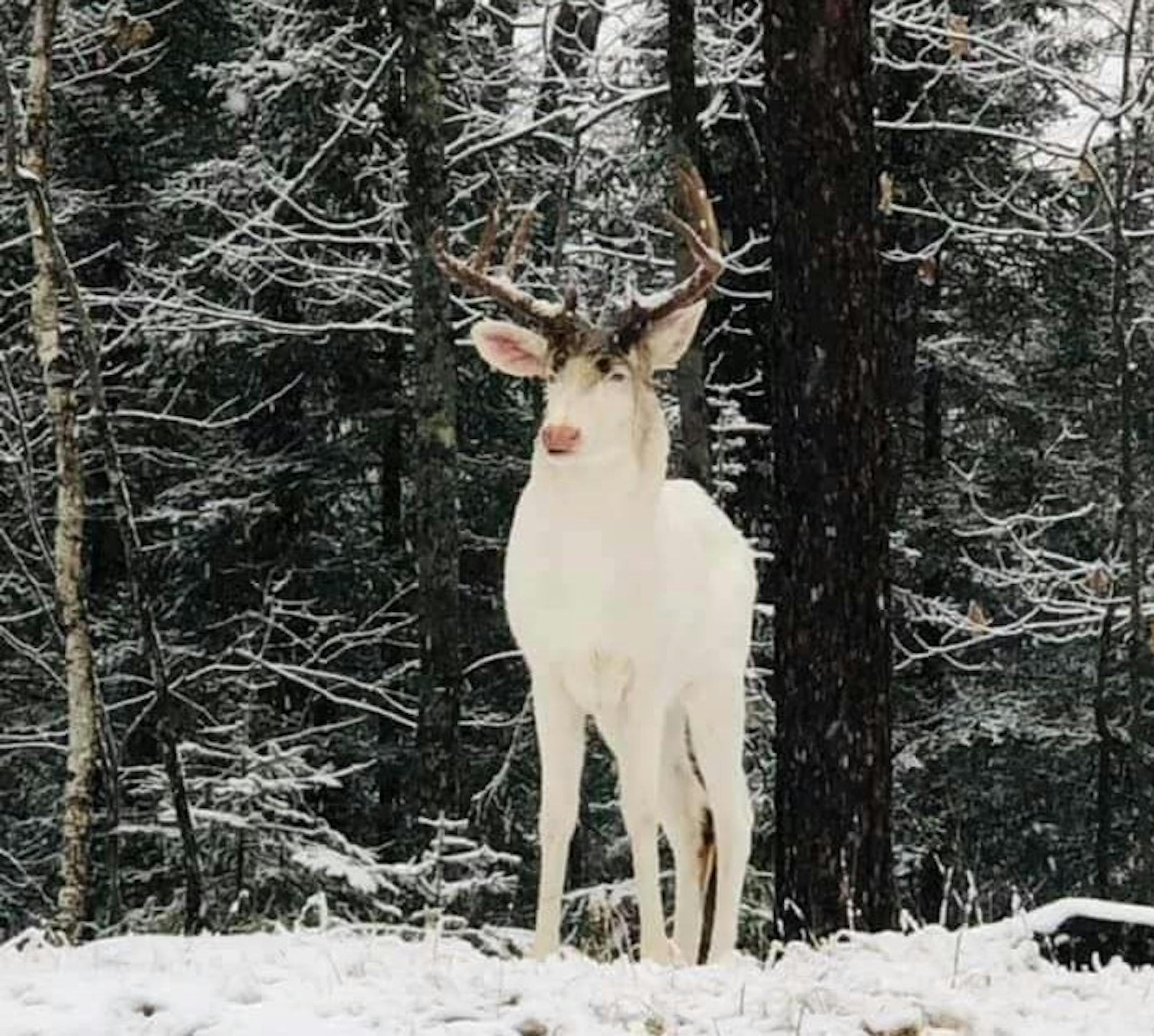
An albino deer is a rare white-coated cervid completely lacking melanin pigmentation due to a genetic mutation, resulting in pure white fur, pink or red eyes, and pale hooves. These animals occur in roughly one out of every 30,000 births, making them an extraordinary sighting in the wild.
Understanding Albinism in Cervids
Albinism is a congenital, hereditary condition characterized by the total absence of melanin, the pigment responsible for coloring skin, hair, and eyes in mammals. In white-tailed deer (Odocoileus virginianus) and other cervid species, this condition arises from a recessive gene mutation. For a fawn to be born albino, both parents must carry the recessive trait, even if they exhibit normal coloration themselves.
The physiological impacts extend far beyond coat color. Because melanin plays a crucial role in the development of the optical system, true albino deer typically possess impaired vision. Their eyes often appear pink or red because the lack of pigmentation in the iris allows blood vessels at the back of the eye to show through. This visual deficit can significantly hinder their ability to detect predators, forage efficiently, and navigate dense forest environments, contributing to a lower survival rate compared to normally pigmented herd members.
Distinguishing True Albinism from Leucism and Pied Traits
Mistakes are frequently made when identifying white deer in the wild, as true albinism is often confused with leucism or the piebald condition. Understanding these genetic variations is essential for accurate wildlife observation and ecological assessment.
Leucism is a condition resulting in a partial or total reduction of all types of skin and hair pigment, not just melanin. Leucistic deer often have white or pale coats, but they typically retain normal eye color, dark noses, and sometimes retain patches of standard brown fur. Their vision is usually unaffected by the condition, providing them with a distinct evolutionary advantage over true albinos.
Piebald deer exhibit a genetic anomaly that causes irregular patches of white and brown hair, often accompanied by skeletal deformations such as a bowed spine, short legs, or a Roman nose. Unlike albinos, piebald deer have normal pigmentation in their eyes and skin outside of the white patches.
| Genetic Trait | Coat Appearance | Eye Color | Vision Quality | Associated Deformities |
|---|---|---|---|---|
| True Albino | Pure white uniformly | Pink, red, or pale blue | Impaired due to lack of ocular melanin | None directly linked to the gene |
| Leucistic | Solid white or pale | Normal dark coloration | Normal | None directly linked to the gene |
| Piebald | Mottled white and brown | Normal dark coloration | Normal | Often accompanied by skeletal variations |
Ecological Challenges and Survival Factors
The white coat that makes an albino deer so mesmerizing to human observers also presents a severe disadvantage in the natural world. Camouflage is a primary defense mechanism for deer, allowing them to blend into woodland backgrounds to evade predators such as wolves, coyotes, and cougars. A bright white silhouette stands out against dark underbrush, snow-free forests, and summer foliage, making these animals highly visible targets.
Furthermore, social dynamics within herds can impact an albino deer's daily life. While deer are generally gregarious, unusual variations can sometimes trigger aggression or ostracization from other herd members. Combined with impaired vision and heightened vulnerability to solar radiation—which can lead to severe sunburns and skin cancers on unpigmented areas—the average lifespan of a wild albino deer is typically shorter than that of standard deer.
Legal Protections and Conservation Status
Due to their extreme rarity and cultural fascination, albino deer occupy a unique status in wildlife management and hunting regulations. Game laws regarding the harvest of white deer vary significantly by jurisdiction, reflecting differing public sentiments and conservation priorities.
In several U.S. states and Canadian provinces, hunting regulations explicitly protect albino deer. For instance, states like Tennessee, Iowa, Montana, and Wisconsin have historically enacted complete bans on shooting white deer to preserve their unique presence in the local ecosystem. Conversely, other regions treat them under standard big-game regulations, allowing hunters to take them during established seasons. Conservation agencies emphasize that protecting these animals does not stem from a separate biological classification—as they belong to the same species as brown white-tailed deer—but rather from aesthetic, ethical, and local heritage considerations.
Factors Influencing Sighting Frequencies
The geographic distribution of albino deer is random, governed entirely by recessive gene pooling within isolated or semi-isolated populations. However, certain areas report higher concentrations of sightings due to specific local management practices.
- Selective Protection: In regions where laws protect white deer, individuals survive longer, allowing them to reproduce and pass the recessive gene to subsequent generations.
- Inbreeding Depression: In smaller, fragmented habitats surrounded by human development, gene pools shrink, increasing the mathematical probability that two carriers will mate and produce an albino offspring.
- Reporting Bias: Areas with high human population density overlapping with deer habitats yield more casual sightings and photographs, creating an illusion of higher regional prevalence.
Frequently Asked Questions
Are albino deer blind?
True albino deer are not entirely blind, but they suffer from severe visual impairments. The lack of melanin in their eyes causes photophobia, which is extreme sensitivity to bright light, and reduced visual acuity, making it difficult for them to judge distances and spot movement quickly.
Can an albino deer have normal-colored offspring?
Yes, an albino deer can produce normal-colored offspring if it mates with a deer that carries no copies of the recessive albinism gene. However, all offspring will inherit at least one copy of the recessive gene, making them carriers who could pass the trait to future generations.
Are all white deer considered albino?
No, most white deer encountered in the wild are leucistic or piebald rather than true albinos. Checking the eye color is the most reliable way to differentiate; if the eyes are dark, the deer is leucistic or piebald, whereas pink or red eyes indicate true albinism.
Do albino deer live as long as normal deer?
Albino deer generally have a significantly shorter lifespan in the wild. Their stark white coats eliminate natural camouflage, making them easy targets for predators, while their poor eyesight and vulnerability to skin damage further reduce their chances of long-term survival.
Why are albino deer illegal to hunt in some areas?
Certain states and municipalities protect albino deer because of their immense rarity, high aesthetic value to local communities, and public demand for non-consumptive wildlife viewing opportunities. Wildlife agencies use these localized protections to balance hunting traditions with public conservation interests.
Responsible Wildlife Observation and Photography
Observing or photographing an albino deer in its natural habitat requires patience, ethical restraint, and an understanding of animal behavior. Because these animals already struggle with heightened vulnerability and sensory deficits, human interference can induce dangerous levels of stress.
Wildlife experts recommend maintaining a respectful distance, utilizing telephoto lenses rather than approaching on foot, and avoiding the use of artificial lights or baiting stations that could disrupt their natural foraging patterns or attract predators to their location. Respecting their space ensures that these rare creatures can navigate their challenging environment with minimal human-induced pressure.