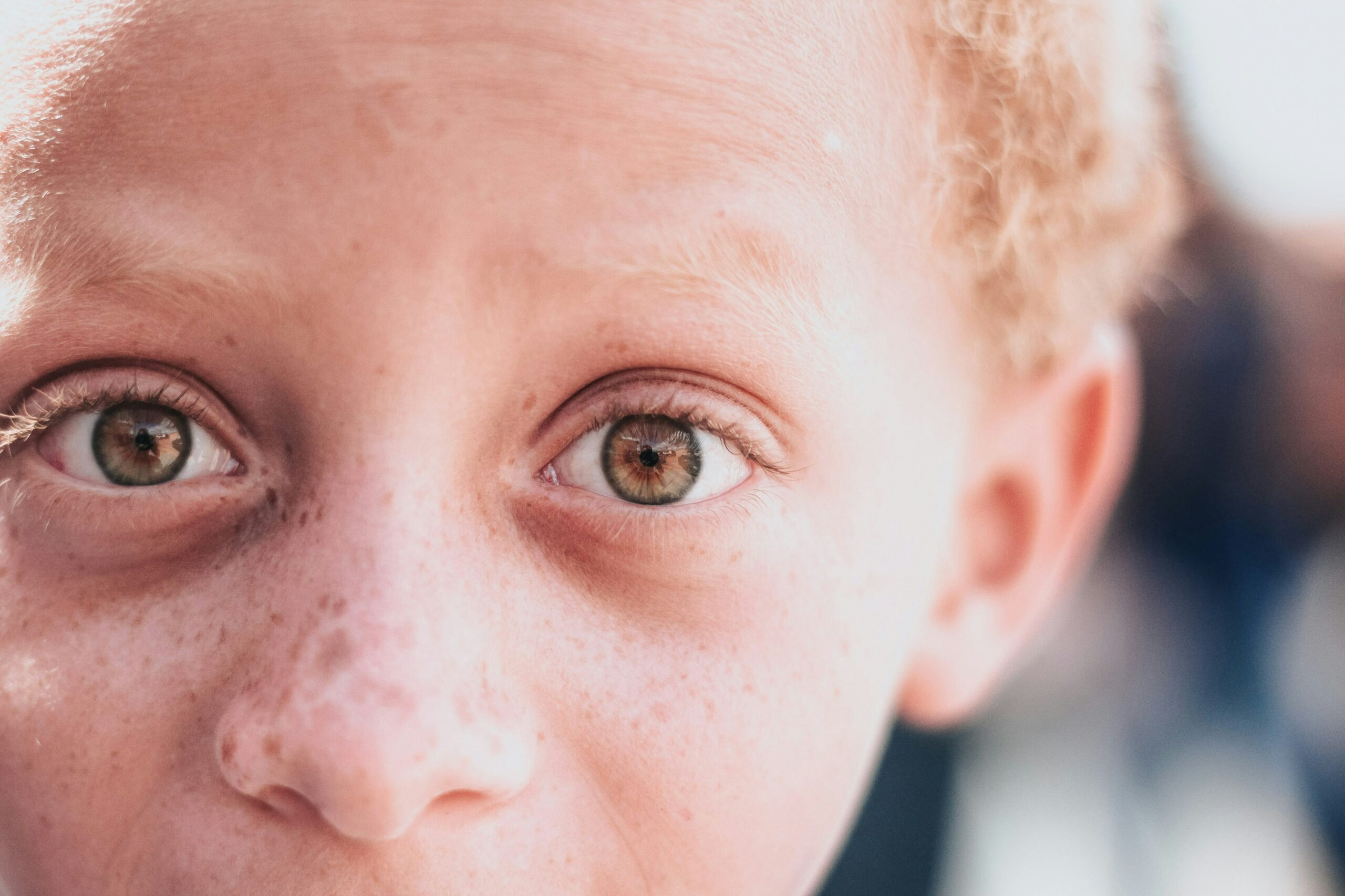
Albinism is a rare, non-contagious, genetically inherited condition characterized by a deficit or total absence of melanin in the skin, hair, and eyes. This physiological difference affects individuals across all ethnic backgrounds worldwide, presenting distinct medical considerations, visual impairments, and social experiences that require comprehensive public understanding and accommodation.
The Biological Foundation of Albinism
To understand life with no skin pigment, one must first examine the genetic and biochemical mechanisms that govern melanin production. Melanin is the natural pigment responsible for determining the color of human skin, hair, and eyes. In healthy individuals, specialized cells called melanocytes utilize the amino acid tyrosine to produce melanin through a complex series of enzymatic reactions driven primarily by the enzyme tyrosinase.
When a person has albinism, their body is either entirely unable to produce melanin or has a significantly reduced capacity to do so. This occurs due to mutations in specific genes that instruct the body on how to synthesize or distribute this pigment. Because these genetic changes are autosomal recessive—meaning a child must inherit one altered copy of the gene from each parent to exhibit the condition—many individuals with albinism are born to parents who possess typical pigmentation but carry the recessive trait without showing physical signs of it.
The absence of melanin extends beyond superficial appearance. Melanin plays an essential role in the structural development of the eyes and the central nervous system pathways that connect the eyes to the brain. Consequently, the physiological footprint of albinism is deeply intertwined with optical health, separating the condition from mere cosmetic variations in skin tone.
Types and Medical Classifications of Albinism
Albinism is broadly categorized into several distinct clinical types, each defined by the specific gene mutation involved and the severity of the pigment reduction.
Oculocutaneous albinism (OCA) is the most common form, affecting the skin, hair, and eyes simultaneously. Subtypes of OCA include OCA1, which is caused by a genetic defect in the tyrosinase enzyme pathway and typically results in complete absence of pigment from birth. Individuals with OCA1 often have stark white hair, very pale skin, and light-colored eyes. Other subtypes, such as OCA2, OCA3, and OCA4, stem from mutations in different genes and can allow for some minor pigment accumulation over time, meaning individuals might develop slightly darker hair or tan lines as they age.
Another primary category is ocular albinism (OA), which predominantly affects the eyes while leaving skin and hair color at or near normal levels. Because the external indicators are minimal or absent, ocular albinism is frequently diagnosed through specialized ophthalmological examinations. Additionally, extremely rare, complex systemic syndromes involving albinism can occur, such as Hermansky-Pudlak syndrome and Chediak-Higashi syndrome. These conditions include the classic lack of pigmentation but are compounded by serious medical complications involving bleeding disorders, immune deficiencies, or pulmonary issues.
| Albinism Type | Primary Affected Areas | Common Visual Symptoms | Pigmentation Characteristics |
|---|---|---|---|
| OCA1 | Skin, Hair, Eyes | Nystagmus, Photophobia, Reduced Acuity | Complete lack of melanin; stark white hair, very pale skin. |
| OCA2 | Skin, Hair, Eyes | Nystagmus, Photophobia, Reduced Acuity | Mild pigment accumulation possible with age; slightly cream skin. |
| Ocular Albinism | Eyes Only | Nystagmus, Reduced Acuity | Skin and hair appear typical; internal eye structures lack pigment. |
| Hermansky-Pudlak | Skin, Hair, Eyes, Lungs, Blood | Nystagmus, Photophobia, Bleeding Tendencies | Variable pigment deficiency combined with systemic organ impacts. |
Visual Implications and Clinical Management
The most significant physical challenge faced by individuals with albinism is not the lack of skin pigment, but rather the associated visual impairments. Melanin is critically required during embryogenesis for the normal development of the retina and the optic nerve. Without it, the fovea—the small area of the retina responsible for sharp, central vision—fails to develop properly.
This abnormal retinal development leads to a constellation of visual characteristics that are universally present in individuals with albinism. Chief among these is reduced visual acuity, which typically ranges from 20/200 to 20/40's best corrected vision, qualifying many individuals for legal blindness despite wearing corrective lenses. Other common ocular signs include nystagmus (involuntary, rapid eye movements), strabismus (misalignment of the eyes), and photophobia (extreme sensitivity to bright light and glare).
Managing these visual differences requires a multidisciplinary approach involving pediatricians, genetic counselors, and specialized ophthalmologists or optometrists. While corrective eyeglasses or contact lenses cannot fully resolve structural retinal anomalies, they help address secondary refractive errors like astigmatism, nearsightedness, or farsightedness. Low-vision aids, including specialized tinted lenses, anti-reflective coatings, monocular telescopes, and electronic magnification tools, are frequently utilized to enhance functional independence in educational and professional settings.
Dermatological Care and Sun Protection
In the absence of melanin, human skin loses its natural defense mechanism against ultraviolet (UV) radiation. Melanin acts as a biological sunscreen by absorbing harmful UV rays and protecting cellular DNA from damage. Without this protection, individuals with albinism face an exponentially higher risk of severe sunburns, actinic damage, and skin cancers, including squamous cell carcinoma and basal cell carcinoma, often at an early age.
Dermatological management focuses heavily on strict, proactive sun protection strategies. Recommended daily routines include:
- Applying broad-spectrum sunscreens with a high Sun Protection Factor (SPF 30 or higher) consistently to all exposed skin.
- Wearing tightly woven, dark, or ultraviolet-protection factor (UPF) clothing that physically blocks radiation.
- Utilizing wide-brimmed hats and UV-blocking sunglasses to shield sensitive facial skin and reduce ocular discomfort from glare.
- Seeking shade during peak solar hours, typically between 10 a.m. and 4 p.m., to minimize direct exposure.
Regular skin self-examinations and annual or semi-annual clinical skin checks by a dermatologist are essential components of long-term healthcare for anyone living with albinism. Early detection of suspicious lesions allows for prompt, effective intervention before minor cellular changes progress into malignant disease.
Social Realities, Stigma, and Advocacy
Beyond the physiological and medical realities, living with albinism often involves navigating significant social obstacles. Because the condition is visually distinct, individuals frequently encounter public curiosity, staring, and ignorance. In many Western societies, social challenges manifest as everyday microaggressions, peer isolation, or misconceptions about intellectual capacity based on visual impairments.
Globally, the social landscape varies dramatically and can sometimes present severe human rights challenges. In certain regions, particularly parts of East Africa, deep-seated cultural superstitions and false beliefs perpetuated by illicit practitioners have led to severe discrimination, physical attacks, and targeted violence against people with albinism. These human rights violations stem from dangerous myths claiming that body parts of individuals with albinism can bring wealth or good fortune.
International human rights organizations, local advocacy groups, and the United Nations have worked extensively to combat these atrocities through public awareness campaigns, legal protections, and community education. Albinism awareness initiatives emphasize that individuals with the condition share identical human potential, capabilities, and rights. Grassroots organizations provide vital peer support networks, connecting families and individuals to share resources, build confidence, and promote societal integration.
Frequently Asked Questions
What causes albinism?
Albinism is caused by a genetic mutation that affects the body's ability to produce or distribute melanin. It is an inherited condition passed down through an autosomal recessive pattern, meaning both parents must carry the altered gene for a child to be born with the condition.
Can vision associated with albinism be corrected with surgery?
While surgeries can sometimes address specific co-occurring conditions like severe strabismus or cataracts, they cannot correct the underlying structural underdevelopment of the retina and optic nerve caused by the lack of melanin. Management relies primarily on low-vision aids, lenses, and environmental adaptations.
Is albinism contagious or progressive?
No, albinism is neither contagious nor progressive. It is a congenital genetic condition present from birth, and while some individuals may experience minor increases in skin or hair pigment over time depending on their specific subtype, the condition itself does not worsen or spread.
Do people with albinism have health problems other than vision and skin issues?
Most individuals with common forms of albinism live long, healthy lives with normal life expectancies, experiencing medical challenges limited to vision impairment and sun sensitivity. However, rare systemic variations, such as Hermansky-Pudlak syndrome, can involve internal organ complications requiring specialized medical management.
How can communities support individuals with albinism?
Communities can support individuals with albinism by fostering inclusive educational and work environments, providing necessary low-vision and sun-protection accommodations, challenging harmful cultural myths through active education, and ensuring robust legal protections against discrimination and violence.
Fostering Inclusion and Understanding
Navigating life with no skin pigment requires a blend of rigorous medical vigilance, adaptive visual strategies, and resilient self-advocacy. By prioritizing comprehensive sun protection, utilizing advanced low-vision tools, and challenging societal misconceptions, individuals with albinism lead full, independent, and vibrant lives. Broader public education remains the most effective tool in replacing fear and curiosity with genuine empathy, ensuring that people with albinism are recognized, respected, and fully included across every facet of society.