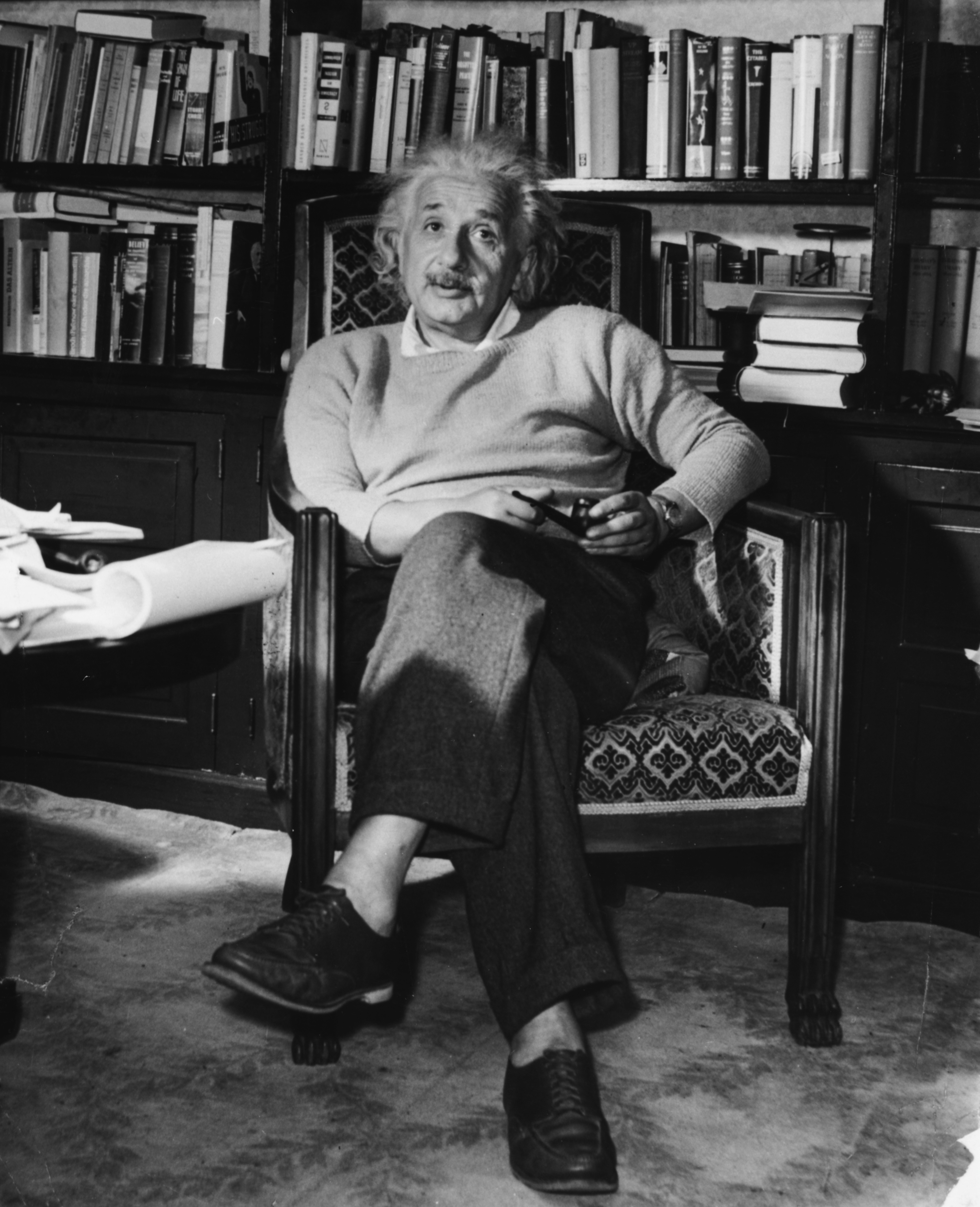
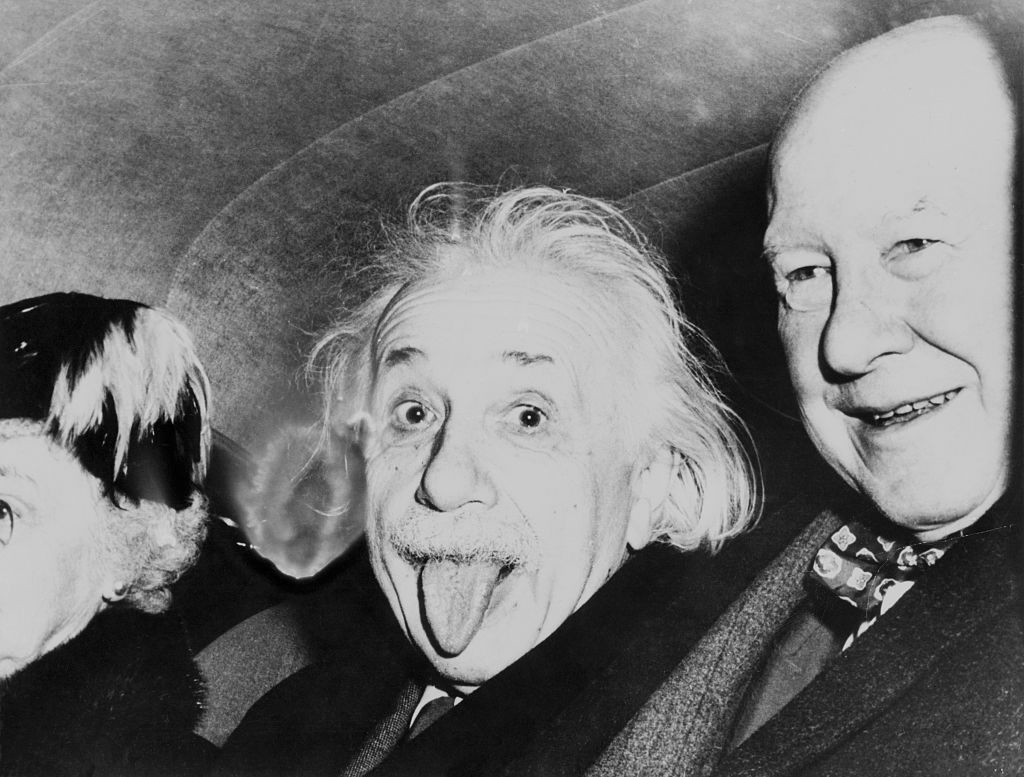
When Albert Einstein passed away on April 18, 1955, his estimated probated net worth was approximately $65,000 in cash and liquid assets. Adjusted for inflation, this sum equals roughly $750,000 to $800,000 in modern purchasing power. Though comfortable, Einstein was never a multi-millionaire during his lifetime, choosing academic stability over commercial gain.
Historical Context: Einstein’s View on Wealth and Personal Assets
Albert Einstein maintained a well-documented indifference to material wealth throughout his life. Unlike modern celebrity intellectuals or commercial inventors, Einstein viewed financial accumulation as a secondary concern, often treating monetary compensation merely as a tool to secure quiet academic independence and support his family.
In his 1930 essay What I Believe, Einstein reflected on personal fortune: "Possessions, outward success, publicity, luxury—to me these have always been contemptible. I believe that a simple and unassuming manner of life is best for everyone, best both for the body and the mind."
This personal philosophy directly dictated his financial standing. He lived in modest accommodations, dressed simply, and frequently turned down lucrative endorsement deals, public appearances, and corporate consultancies. Consequently, his personal fortune at any given period reflected the salary of a senior university professor rather than the commercial value of his global fame.
Key Sources of Income During Einstein’s Lifetime
To understand how Einstein accumulated his financial estate, it is necessary to examine his career trajectory across Europe and North America. His income transitioned through three major economic phases: early government employment, European academic appointments, and his final tenure at Princeton, New Jersey.
Einstein's Financial Life Progression
- 1902-1909: Bern Patent Office (~3,500 CHF/yr) - Financial Struggle
- 1909-1933: European Academia (Zurich, Prague, Berlin) - Solid Income
- 1922: Nobel Prize Money (~$32,000 USD) - Transferred to Divorce Trust
- 1933-1955: IAS Princeton ($10,000/yr base) - Upper-Middle-Class Stability
- 1955: Estate Probated at Death (~$65,000 USD / ~$780,000 modern USD)
1. The Bern Patent Office (1902–1909)
During his early career in Switzerland, Einstein struggled financially. Unable to secure an academic post after graduating from the Federal Polytechnic School in Zurich, he took a job as a Technical Expert Class III at the Swiss Patent Office in Bern.
- Annual Salary: Approximately 3,500 Swiss francs per year (later raised to 4,500 Swiss francs).
- Financial Impact: This income provided basic financial stability for his early family life with his first wife, Mileva Marić, while he authored his groundbreaking 1905 "Annus Mirabilis" papers in theoretical physics.
2. European Academic Appointments (1909–1933)
As his scientific reputation grew, Einstein moved through academic roles at the University of Zurich, the Charles University in Prague, and ETH Zurich, culminating in a prestigious appointment in Germany.
- Kaiser Wilhelm Institute (Berlin): In 1914, he became director of the Kaiser Wilhelm Institute for Physics and a professor at the Humboldt University of Berlin.
- Financial Impact: He received a generous salary unfettered by heavy teaching obligations, placing him comfortably in the upper-middle class of Weimar-era Europe. However, hyperinflation in 1920s Germany periodically eroded the purchasing power of his savings.
3. The Institute for Advanced Study in Princeton (1933–1955)
After fleeing Nazi-controlled Germany in 1933, Einstein accepted a permanent position at the newly formed Institute for Advanced Study (IAS) in Princeton, New Jersey.
The salary negotiation for this position remains a famous anecdote in academic history. When IAS Director Abraham Flexner asked Einstein what salary he required, Einstein requested $3,000 per year. Recognizing that this sum was far below market rate for a scholar of his stature, Flexner insisted on paying him an annual salary of $10,000.
An annual salary of $10,000 in 1933 was substantial—equivalent to over $230,000 per year in contemporary terms—ensuring Einstein maintained financial security through his final two decades.
The 1921 Nobel Prize Money and Divorce Settlement
One of the largest lump-sum payments Einstein received in his lifetime was the monetary award attached to the 1921 Nobel Prize in Physics (awarded in 1922).
The prize amounted to 121,572 Swedish kronor, which converted to approximately $32,000 USD at the time. In modern purchasing power, this single award represents roughly $550,000 to $600,000.
However, this capital did not contribute to Einstein's final personal net worth. As part of his 1919 legal divorce agreement from his first wife, Mileva Marić, Einstein had committed to transferring the full monetary award of any future Nobel Prize directly to a Swiss bank account held in trust for Mileva and their two sons, Hans Albert and Eduard.
Under the terms of the agreement:
- The principal capital remained in trust.
- Mileva Marić was permitted to draw upon the interest for personal living expenses and the care of their children.
- She eventually used portions of the capital, with Einstein's consent, to purchase real estate in Zurich.
Because of this legally binding agreement, Einstein never retained the Nobel Prize funds for his own personal capital building.
Quantitative Breakdown of Einstein's Financial Metrics
The following table summarizes the key financial milestones, earnings, and valuation metrics associated with Albert Einstein during his lifetime and at the time of his estate probation.
| Financial Milestone / Asset Class | Historical Value (Period Currency) | Year / Period | Estimated Equivalent Value (Modern USD) | Notes & Context |
|---|---|---|---|---|
| Swiss Patent Office Salary | 3,500 – 4,500 CHF/yr | 1902–1909 | ~$35,000 – $45,000/yr | Basic entry-level civil service income in Switzerland. |
| Nobel Prize Monetary Award | 121,572 SEK (~$32,000 USD) | 1922 | ~$570,000 | Placed entirely into a trust for Mileva Marić and children per 1919 divorce contract. |
| IAS Princeton Base Salary | $10,000 USD/yr | 1933 | ~$235,000/yr | Negotiated upward by IAS Director Abraham Flexner. |
| Princeton Real Estate (Mercer St.) | ~$10,000 – $15,000 USD | Purchased 1935 | ~$220,000 – $300,000 | Modest two-story residence at 112 Mercer Street, Princeton, NJ. |
| Probated Estate at Death | ~$65,000 USD | 1955 | ~$750,000 – $800,000 | Total liquid cash, savings accounts, and minor personal securities at death. |
Detailed Valuation of Einstein’s Estate at Death (1955)
Upon his death at Penn Medicine Princeton Medical Center on April 18, 1955, Einstein’s will was filed and probated in Mercer County, New Jersey.
Liquid Assets and Personal Property
The probated value of his cash balances, savings accounts, and personal belongings totaled approximately $65,000. The primary components of this valuation included:
- Bank Deposits and Bonds: Accumulated earnings from his Princeton salary, minor royalties from published academic texts, and U.S. Savings Bonds.
- Real Estate: The single-family residence at 112 Mercer Street, Princeton, New Jersey. In his will, Einstein bequeathed the house to his stepdaughter, Margot Einstein, for the remainder of her life, specifying that the home should never be turned into a museum or public shrine.
- Personal Belongings: Basic household furniture, books, his beloved violin ("Lina"), and personal correspondence.
Intellectual Property and Literary Rights
While the physical estate was modest, the long-term value of Einstein’s estate lay in his intellectual property. Einstein appointed his long-time personal secretary, Helen Dukas, and economist Otto Nathan as corporate executors and trustees of his estate.
His will stipulated that:
- Helen Dukas and Margot Einstein would receive life rights to live at the Mercer Street home and draw income from the estate trust for living expenses.
- Upon their deaths, all of Einstein's literary rights, personal manuscripts, scientific papers, and copyright interests were to pass entirely to the Hebrew University of Jerusalem, an institution he helped found in 1918.
Why Posthumous Brand Value Differs From His Lifetime Net Worth
A common source of confusion regarding Albert Einstein’s net worth is the distinction between his financial status while alive versus the modern commercial earnings of his brand.
Today, Albert Einstein routinely appears on rankings of top-earning deceased celebrities. His name, image, likeness, and quotes generate millions of dollars annually in commercial licensing agreements for products ranging from educational software and electronics to apparel and advertising campaigns.
However, this commercial monetization did not exist during his lifetime:
- No Commercial Endorsements: Einstein explicitly declined commercial monetization of his image while alive.
- Posthumous Licensing Rights: The rights to market his image were established decades after his death through legal precedents defending the right of publicity for historical figures.
- Beneficiary of Commercial Revenues: The revenue generated by modern licensing goes directly to support educational research and archival preservation at the Hebrew University of Jerusalem, not to private living heirs.
Therefore, while the "Albert Einstein Brand" is valued in tens of millions of dollars today, his actual personal financial estate when he was alive remained strictly reflective of an upper-middle-class academic profile.
Humanitarian Contributions and Financial Disinterest
Einstein’s net worth was also kept modest by his extensive personal philanthropy. Throughout the 1930s and 1940s, he allocated significant portions of his personal funds to humanitarian causes:
- Assisting Refugees: Einstein personally signed affidavit guaranties and paid application fees to help hundreds of Jewish scientists, scholars, and families escape Nazi persecution in Europe.
- Civil Rights Support: He frequently donated to early U.S. civil rights organizations, co-founding initiatives to end lynching and supporting institutions such as Lincoln University in Pennsylvania.
- War Bond Auctions: During World War II, Einstein hand-wrote a copy of his 1905 special relativity paper, which was auctioned to raise $6 million for U.S. War Bonds. Einstein kept none of these funds.
Frequently Asked Questions
How much is $65,000 from 1955 worth in modern money?
Adjusted for cumulative inflation, $65,000 in 1955 has the purchasing power of approximately $750,000 to $800,000 in contemporary U.S. dollars. This purchasing power represents comfortable personal savings but falls well short of modern multi-millionaire status.
Did Albert Einstein keep the money from his Nobel Prize?
No. Under the terms of his 1919 divorce agreement from his first wife, Mileva Marić, the entire financial sum of the 1921 Nobel Prize in Physics (~$32,000 USD at the time) was placed into a Swiss trust fund. Mileva drew the interest to support herself and their sons, Hans Albert and Eduard.
Who inherited Albert Einstein’s money and property after he died?
Einstein’s stepdaughter, Margot Einstein, received the right to reside in his Princeton home at 112 Mercer Street until her death. His secretary, Helen Dukas, and Margot received financial support through an estate trust. The ultimate residual beneficiary of his entire literary estate, personal archives, and scientific copyrights was the Hebrew University of Jerusalem.
What was Albert Einstein's salary at Princeton University?
When Albert Einstein joined the Institute for Advanced Study in Princeton in 1933, he was paid an annual salary of $10,000. In contemporary terms, this income is equivalent to over $230,000 per year, providing him with financial stability until his death in 1955.
Was Albert Einstein considered wealthy during his lifetime?
Einstein was considered financially comfortable and secure, occupying an upper-middle-class bracket. However, he was never wealthy by commercial standards because he systematically refused lucrative endorsement deals, gave away substantial income to charitable causes, and prioritized academic research over personal financial accumulation.
Analyzing Historical Wealth Records
When evaluating historical financial profiles like Albert Einstein's, researchers must distinguish between liquid cash assets, real estate property, and non-monetized intellectual property.
To conduct accurate comparative analysis of historical scientific figures:
- Convert Historical Values Accurately: Always adjust period currency figures using official Consumer Price Index (CPI) metrics or real wage indices rather than simple nominal comparisons.
- Review Probated Wills and Legal Records: Trust court probate filings, such as those from the Mercer County Surrogate’s Court, over sensationalized media reports regarding celebrity fortunes.
- Separate Lifetime Earnings from Posthumous Monetization: Distinguish an individual's personal cash flow while living from corporate licensing earnings accrued decades after their death.