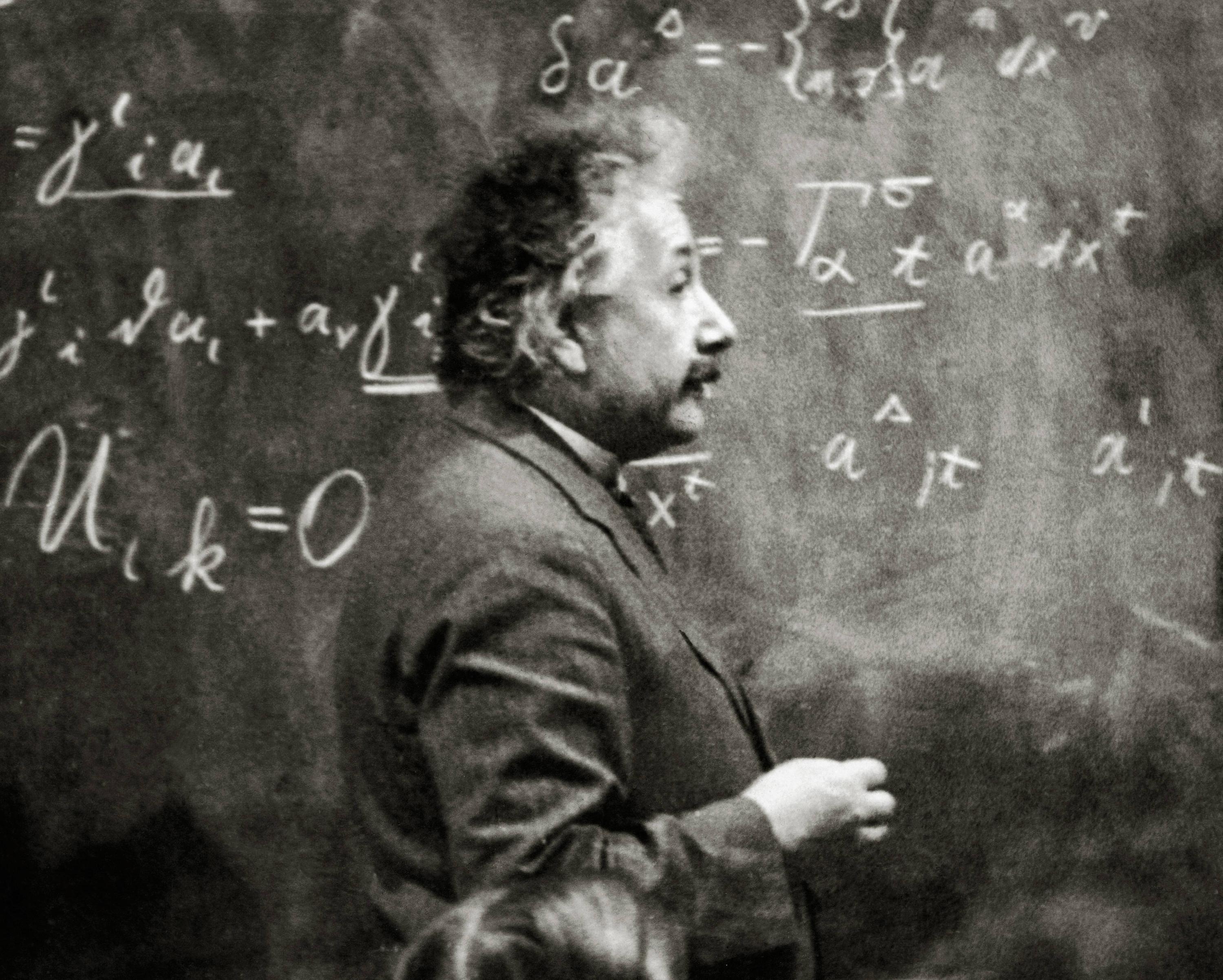
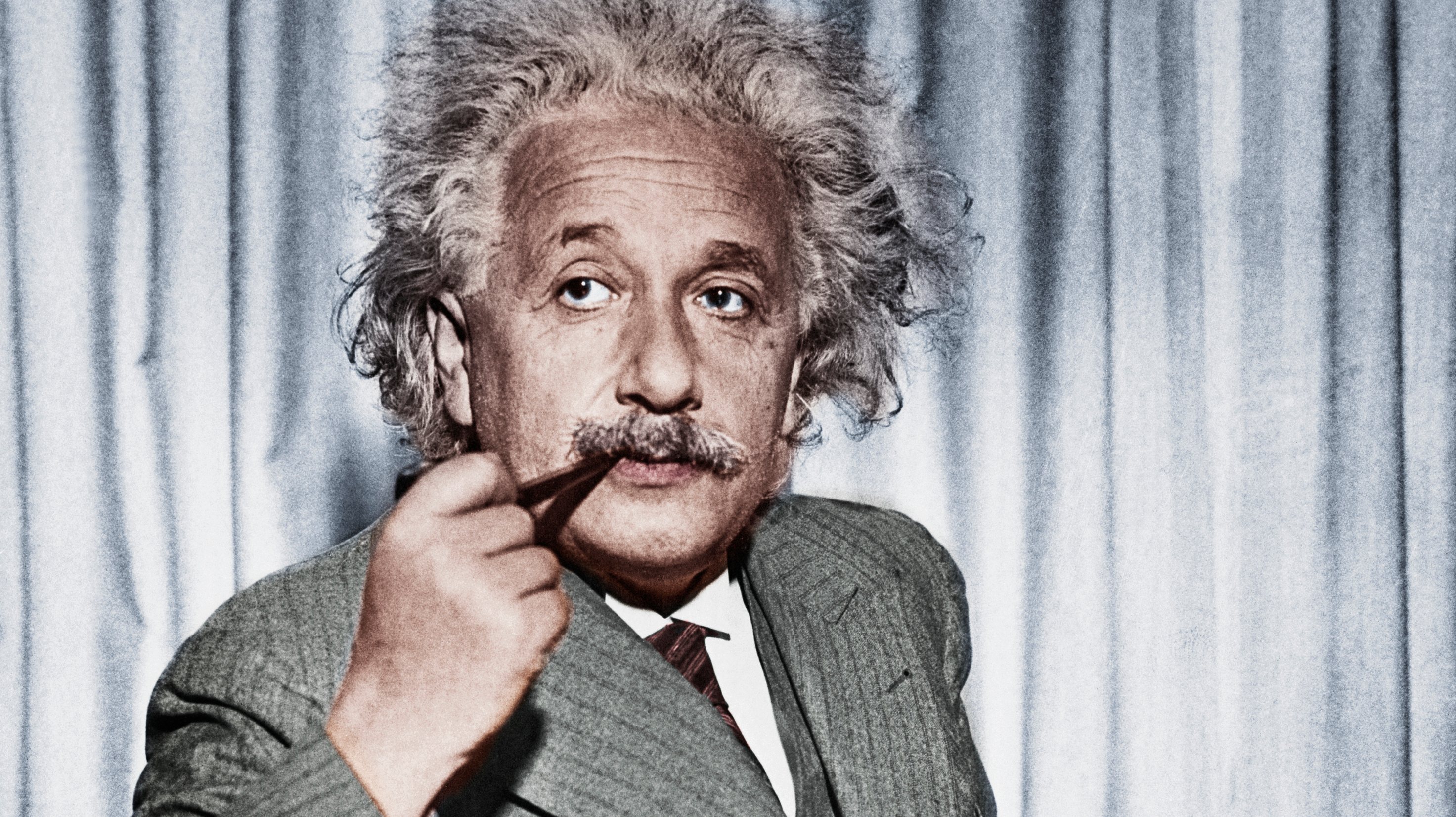
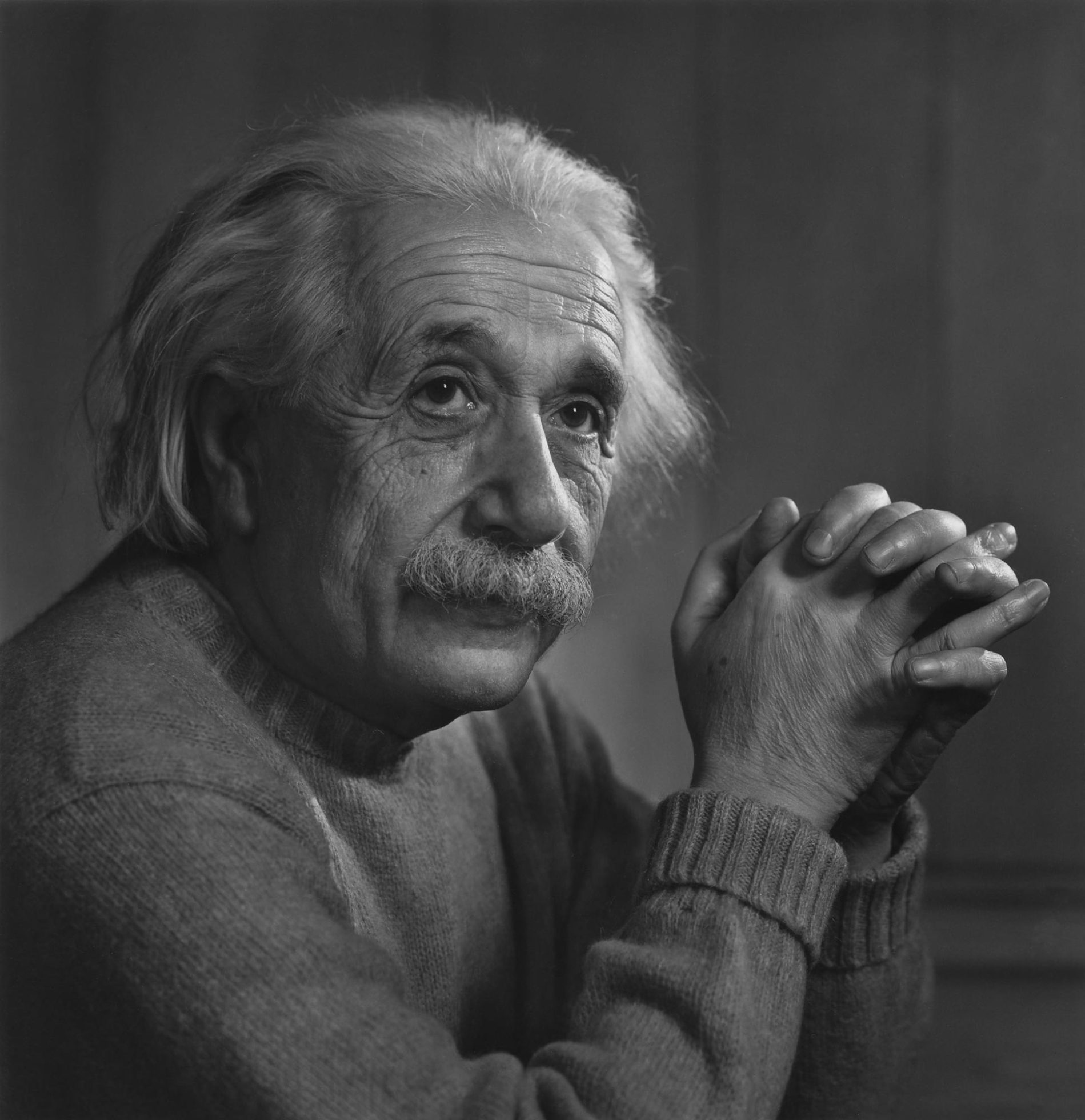
Albert Einstein remains one of the most influential theoretical physicists in human history, fundamentally reshaping our understanding of space, time, gravity, and the universe's operational rules. Born in Germany in 1879, Einstein developed the special and general theories of relativity, explained the photoelectric effect—for which he received the 1921 Nobel Prize in Physics—and contributed foundational concepts to quantum mechanics and statistical physics. His work shifted human thought away from Newtonian mechanics into a dynamic, relativistic universe where mass, energy, space, and time are inextricably linked.
Early Life, Education, and Intellectual Development
Albert Einstein was born on March 14, 1879, in Ulm, in the Kingdom of Württemberg in the German Empire, to secular Jewish parents Hermann Einstein and Pauline Koch. His early years in Munich were marked by an intense curiosity about nature, famously sparked by a pocket compass given to him at age five, which demonstrated that invisible forces were guiding the needle. Although childhood myth often portrays him as a poor student, archival school records from the Luitpold Gymnasium show that Einstein excelled in mathematics and science, though he chafed under the strict, authoritarian teaching methods favored by the Prussian school system.
In 1894, financial pressures led the family to move to Milan, Italy, while Einstein remained in Munich to finish his education. Disliking the schooling, he soon left and joined his family in Italy. He subsequently applied for direct admission to the Swiss Federal Polytechnic School in Zürich (Eidgenössische Technische Hochschule, or ETH) in 1895. Although he failed the general portion of the entrance examination due to deficiencies in languages and zoology, his exceptional mathematics and physics scores prompted the school director to recommend he complete his secondary education at the cantonal school in Aarau, Switzerland.
Einstein earned his diploma in Aarau in 1896 and enrolled at ETH Zürich, where he qualified as a teacher of mathematics and physics in 1900. Lacking an academic position after graduation, he struggled for two years until his friend Marcel Grossmann secured him a position as a technical assistant at the Federal Office for Intellectual Property (the Swiss Patent Office) in Bern in 1902. Working at the patent office provided Einstein with stable financial footing and sufficient free time to mentally explore the fundamental problems of theoretical physics that occupied his thoughts.
The Miracle Year of 1905
The year 1905, often referred to as Einstein’s annus mirabilis (miracle year), stands as one of the most productive periods in the history of science. While working full-time at the Swiss Patent Office, Einstein published four groundbreaking papers in the German physics journal Annalen der Physik. These papers challenged foundational assumptions in physics and set the stage for modern quantum mechanics and relativity.
The first paper, published in March 1905, proposed the quantum theory of light, suggesting that light exists as discrete packets of energy known as photons. This work explained the photoelectric effect—the emission of electrons from metal surfaces when illuminated by light—which classical wave theory could not resolve. For this revolutionary insight, Einstein was awarded the 1921 Nobel Prize in Physics.
His second and third papers, completed for his doctoral dissertation at ETH Zürich and published later that year, focused on molecular dimensions and statistical mechanics. By analyzing the diffusion of sugar molecules in water and the erratic, random movement of microscopic particles suspended in a fluid (Brownian motion), Einstein provided empirical evidence for the physical reality of atoms and molecules at a time when many prominent scientists still doubted their existence.
The fourth paper, published in June 1905, introduced the special theory of relativity. Einstein posited that the laws of physics are identical for all non-accelerating observers and that the speed of vacuum light is constant regardless of the motion of all observers. This dismantled the long-standing Newtonian concept of absolute space and time, demonstrating that time dilation and length contraction occur relative to an observer's frame of reference. In a subsequent September 1905 paper, he derived the mass-energy equivalence formula, $E = mc^2$, showing that mass and energy are interchangeable manifestations of the same underlying physical property.
| Year | Publication / Event | Core Scientific Significance |
|---|---|---|
| 1905 | Annalen der Physik (Photoelectric Effect) | Proved light behaves as discrete energy packets (photons); laid the groundwork for quantum theory. |
| 1905 | Annalen der Physik (Brownian Motion) | Supplied undeniable statistical and empirical evidence confirming the existence of atoms and molecules. |
| 1905 | Annalen der Physik (Special Relativity) | Established that the speed of light is constant and time and space are relative to the observer. |
| 1905 | Annalen der Physik ($E = mc^2$) | Demonstrated that mass and energy are equivalent, unlocking nuclear physics principles. |
| 1915 | Prussian Academy of Sciences (General Relativity) | Redefined gravity not as a force, but as the curvature of spacetime caused by mass and energy. |
The Development of General Relativity (1915)
Following the success of special relativity, Einstein spent a decade seeking to expand his framework to include accelerating frames of reference and gravity. In 1907, he formulated the "happiest thought of his life": if a person falls freely, they would not feel their own weight. This equivalence principle—stating that the gravitational mass and inertial mass of an object are identical—became the foundational stepping stone for general relativity.
Working alongside mathematician Marcel Grossmann, Einstein utilized non-Euclidean geometry and tensor calculus to formulate field equations that described gravity geometrically. By November 1915, he presented a series of lectures to the Prussian Academy of Sciences detailing the final field equations of general relativity.
General relativity proposed that massive objects like stars and planets warp the fabric of spacetime. What we perceive as gravitational pull is actually objects moving along the shortest paths (geodesics) in this curved spacetime geometry. The theory successfully explained anomalies in Mercury's orbit that Newtonian physics could not resolve and predicted that starlight would bend when passing close to massive bodies like the Sun.
Confirmation and International Stardom
The definitive test of general relativity occurred during the solar eclipse of May 29, 1919. British expeditions led by Arthur Eddington traveled to Príncipe Island off the coast of West Africa and to Sobral in Brazil to measure the apparent deflection of stars passing near the Sun's limb. The observational data matched the precise deflections predicted by Einstein's general relativity equations.
On November 6, 1919, the Royal Society of London and the Royal Astronomical Society formally announced the verification of the theory during a joint meeting. Major newspapers published headlines celebrating the overthrow of Newtonian physics, transforming Einstein into a global icon. His name quickly entered popular culture as a universal synonym for supreme intellect.
Despite his fame, Einstein maintained a modest, unassuming lifestyle. He was an accomplished amateur violinist, a passionate sailor, and an outspoken advocate for pacifism, civil rights, and international cooperation. Following the rise of the Nazi regime in Germany in 1933, Einstein—who was Jewish and had been targeted by nationalist propaganda—renounced his German citizenship while visiting the United States and accepted a permanent research position at the Institute for Advanced Study in Princeton, New Jersey, where he lived and worked for the remainder of his life.
Later Years and Unified Field Theory
During his final decades at the Institute for Advanced Study in Princeton, Einstein pursued a unified field theory. He sought to combine general relativity (the physics of the very large) with electromagnetism into a single, comprehensive mathematical framework that could explain all physical forces in the universe.
Concurrently, he grew increasingly skeptical of the probabilistic interpretations emerging within quantum mechanics, famously stating in correspondence with Max Born that "God does not play dice with the universe." While quantum mechanics advanced rapidly through the work of physicists like Werner Heisenberg, Erwin Schrödinger, and Niels Bohr, Einstein’s search for a deterministic unified theory isolated him from mainstream developments in particle physics. Despite decades of intense mathematical labor, he left the unified field theory unfinished at his death.
Einstein passed away on April 18, 1955, at Princeton Hospital following an abdominal aortic aneurysm. True to his character, he requested a simple, unpretentious cremation without a formal funeral service, leaving behind a legacy that continues to direct modern astrophysics, cosmology, and technological innovations such as global positioning systems (GPS) that rely on relativistic time corrections.
Frequently Asked Questions About Albert Einstein
What is Albert Einstein best known for?
Albert Einstein is best known for developing the theory of relativity (special and general relativity) and the mass-energy equivalence formula, $E = mc^2$. He was also awarded the 1921 Nobel Prize in Physics for his explanation of the photoelectric effect, which proved foundational to the development of quantum mechanics.
Did Einstein fail mathematics in school?
No, the common belief that Einstein failed mathematics is a persistent historical myth. School records from his youth in Germany and Switzerland indicate that he excelled in mathematics and physics from an early age, regularly earning top grades in both subjects.
How did Einstein prove general relativity?
General relativity was famously confirmed during the total solar eclipse of May 1919. British astronomers Arthur Eddington and Andrew Crommelin measured the deflection of starlight passing close to the Sun, confirming that the observed bending matched the precise mathematical predictions of Einstein's gravitational field equations.
Why did Einstein move to the United States?
Einstein immigrated to the United States in 1933 to escape the Nazi regime in Germany. Recognizing the severe dangers posed by the rise of National Socialism, he resigned from the Prussian Academy of Sciences, surrendered his German citizenship, and accepted a faculty position at the Institute for Advanced Study in Princeton, New Jersey.
What is the meaning of $E = mc^2$?
The equation $E = mc^2$ expresses mass-energy equivalence, stating that energy ($E$) equals mass ($m$) multiplied by the speed of light squared ($c^2$). Because the speed of light is an exceptionally large number, the equation demonstrates that even a small amount of physical mass contains an immense amount of latent energy, a principle fundamental to nuclear physics.
Exploring Modern Physics Through Historical Insights
To deepen your understanding of modern theoretical physics, begin by reviewing primary source translations of Einstein's 1905 papers published in Annalen der Physik. Examining the mathematical derivations of special relativity and studying the conceptual shifts from Newtonian mechanics to spacetime geometry provides an essential foundation for exploring contemporary astrophysics, cosmology, and quantum field theory.