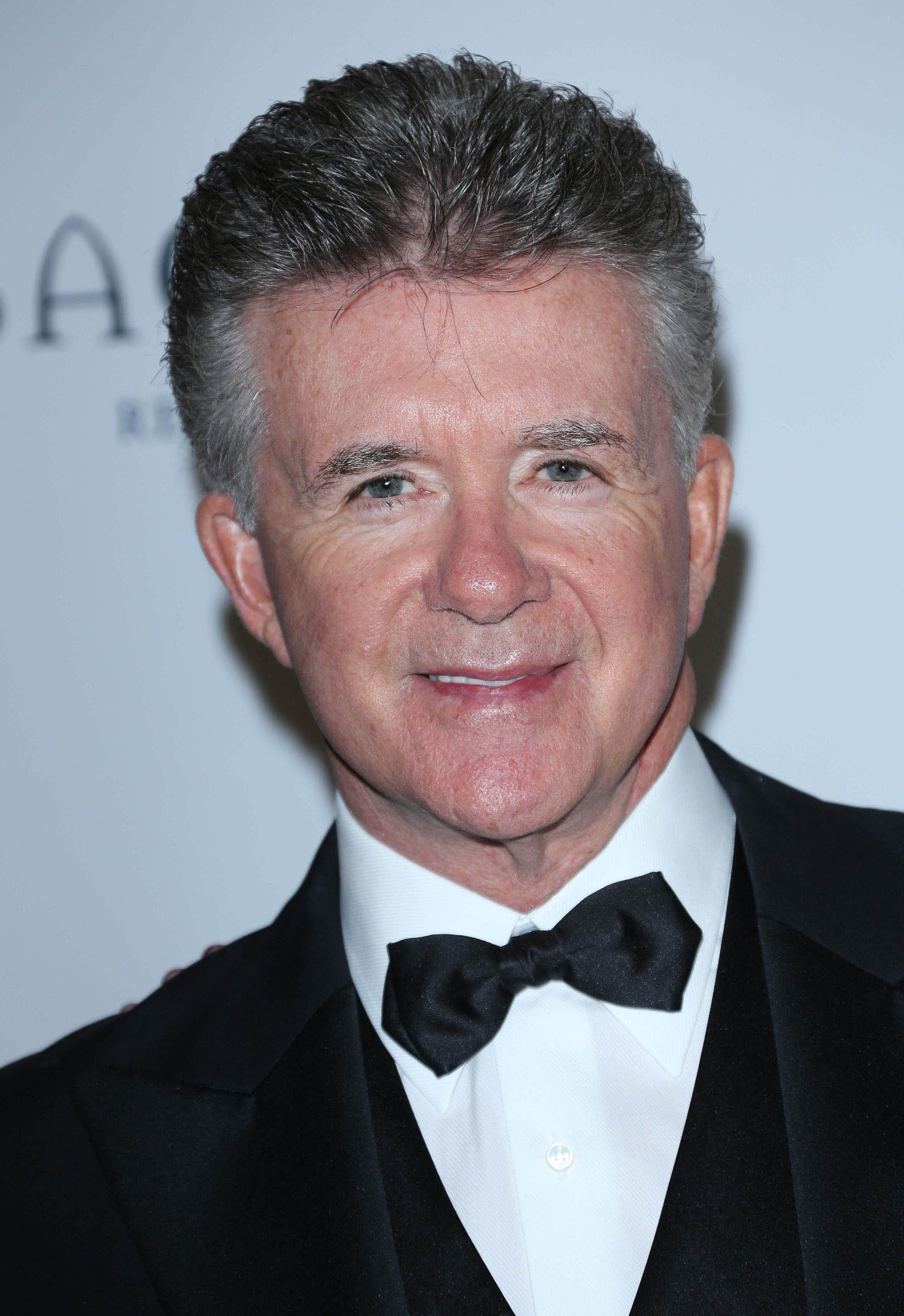
Alan Thicke was a multi-talented Canadian icon whose career spanned acting, songwriting, and hosting. Best known as the quintessential TV father, Dr. Jason Seaver, on the sitcom Growing Pains, he also composed some of television's most recognizable theme songs and hosted numerous talk and game shows throughout his decades-long career.
Early Life and the Canadian Roots of a Renaissance Man
Alan Thicke was born Alan Willis Jeffrey on March 1, 1947, in Kirkland Lake, Ontario, Canada. His upbringing in a small mining town provided a grounded perspective that he maintained even at the height of his Hollywood fame. Thicke’s journey into the entertainment world began not on camera, but through his sharp wit and academic prowess. He attended the University of Western Ontario, where he was a member of the Delta Upsilon fraternity and developed the social and performing skills that would later define his "smooth" persona.
In the late 1960s and early 1970s, Thicke began carving out a niche in Canadian media. He worked as a disc jockey and eventually moved into television production. His early Canadian work was remarkably diverse; he was involved in writing for variety specials and even produced for the Canadian Broadcasting Corporation (CBC). This period was crucial because it allowed Thicke to understand the mechanics of television from the inside out. Unlike many actors who simply "show up" for a role, Thicke was a creator, a writer, and a producer before he was a household name. This multifaceted background gave him a unique longevity in an industry often known for its volatility.
By the mid-1970s, Thicke had moved to Los Angeles, bringing his Canadian sensibilities to the American market. He quickly found work as a writer for high-profile performers like Richard Pryor and Barry Manilow. His ability to blend humor with a professional, polished delivery made him an invaluable asset behind the scenes, long before he became a staple of primetime television.
The Architect of Television Soundtracks
One of the most overlooked aspects of Alan Thicke's career is his immense contribution to the "Golden Age" of television theme songs. Long before he was Jason Seaver, Thicke was the man responsible for the earworms that defined 1980s television. Working alongside his first wife, Gloria Loring, Thicke composed more than 40 television themes.
His most notable works include the themes for Diff'rent Strokes and The Facts of Life. These songs were more than just introductory music; they were narrative devices that set the emotional tone for the shows. For instance, the lyrics to The Facts of Life—"You take the good, you take the bad, you take them both and there you have the facts of life"—became a cultural shorthand for the adolescent experience.
Thicke’s influence extended to game shows as well. He composed the original theme for Wheel of Fortune, known as "Big Wheels," and themes for The Joker's Wild and Celebrity Sweepstakes. His approach to songwriting was commercial yet melodic, focusing on hooks that could remain in a viewer's head for hours. This segment of his career highlights a technical proficiency in music theory and commercial branding that few other actors of his era possessed. Even as late as 2026, these themes are frequently cited in musicology studies regarding the impact of short-form composition on brand recognition.
Growing Pains and the Archetype of the Modern TV Dad
In 1985, Alan Thicke landed the role that would define his legacy: Dr. Jason Seaver on the ABC sitcom Growing Pains. The show arrived during a transition in American television, where the "ideal" father figure was evolving from the stern, distant provider of the 1950s to the empathetic, involved mentor of the 1980s.
As Jason Seaver, a psychiatrist who worked from home to help raise his children while his wife returned to the workforce, Thicke embodied this shift. He brought a blend of humor, patience, and vulnerability to the role. The chemistry between Thicke and his co-star Joanna Kerns was central to the show's success, providing a grounded portrayal of a modern marriage. The show ran for seven seasons, ending in 1992, and established Thicke as one of "America's Favorite Dads."
The success of Growing Pains was not just due to its writing, but to Thicke’s ability to handle the "straight man" role while still being charismatic. He mentored his younger co-stars, including Kirk Cameron, Tracey Gold, and a young Leonardo DiCaprio, who joined the cast in the final season. Thicke’s off-screen reputation mirrored his on-screen persona; he was widely regarded as a supportive, professional, and kind presence on set, qualities that are often rare in the high-pressure environment of a hit network sitcom.
Career Diversification: Hosting and the Late-Night Gamble
Despite the massive success of Growing Pains, Thicke’s career was marked by a relentless drive to diversify. In 1983, he attempted to enter the late-night television arena with Thicke of the Night. The show was heavily promoted as a direct competitor to Johnny Carson’s The Tonight Show. It featured a mix of comedy, music, and interviews, aiming for a younger, hipper audience.
The show was ultimately a commercial failure and was canceled after one season. However, Thicke’s response to this failure became a hallmark of his character. Rather than retreating, he used the experience as a punchline, often joking about the show's poor ratings in later interviews. This resilience allowed him to transition back into acting and hosting without the "stigma" of a failed project.
Throughout the 1990s and 2000s, Thicke remained a constant presence on television. He hosted various game shows, including Pictionary and Three's a Crowd, and made numerous guest appearances on shows like How I Met Your Mother, where he played a fictionalized, self-deprecating version of himself. This willingness to poke fun at his own celebrity status endeared him to a new generation of viewers and cemented his status as a versatile entertainer.
The Thicke Family Dynasty and Personal Life
Alan Thicke's personal life was as high-profile as his career. He was married three times: first to actress and singer Gloria Loring (1970–1984), then to Miss World 1991 Gina Tolleson (1994–1999), and finally to Tanya Callau from 2005 until his death.
He was the father of three sons: Brennan, Robin, and Carter. His middle son, Robin Thicke, achieved international stardom as a singer-songwriter, perhaps most famous for the 2013 hit "Blurred Lines." Alan was famously proud of Robin’s success, often noting that the musical talent in the family had been passed down and amplified.
In his later years, Thicke starred in a reality television parody titled Unusually Thicke, which aired on TVGN (and later Pop). The show combined elements of a sitcom with reality TV tropes, featuring his wife Tanya and son Carter. It provided a glimpse into his life as a "working legend" in Hollywood, balancing family obligations with the demands of an enduring career. Thicke’s devotion to his family was well-documented, and he was frequently seen attending hockey games—a lifelong passion—with his youngest son, Carter.
The Tragic Passing and Medical Legacy
On December 13, 2016, the entertainment world was shocked by the news of Alan Thicke’s sudden death. He was 69 years old. Thicke was playing hockey with his son Carter at an ice rink in Burbank, California, when he collapsed. He was rushed to Providence Saint Joseph Medical Center, where he was pronounced dead.
The cause of death was later confirmed as a type A aortic dissection. This medical condition occurs when the inner layer of the aorta tears, causing blood to surge through the tear and separate the layers of the aortic wall. In the years following his passing, his death served as a major point of awareness for heart health and the importance of regular cardiovascular screenings.
The outpouring of grief from colleagues and fans was immense. Many noted the poetic, if tragic, nature of his passing—doing something he loved (playing hockey) with someone he loved (his son). His legacy in 2026 is viewed through the lens of a man who maximized every minute of his career, leaving behind a body of work that continues to entertain through syndication and streaming platforms.
Career Milestones and Key Contributions
The following table summarizes the significant phases of Alan Thicke's career and his primary contributions to the entertainment industry.
| Era | Primary Role | Notable Projects | Impact |
|---|---|---|---|
| 1970s | Writer/Producer | The Richard Pryor Show, The Alan Thicke Show | Established him as a creative force in variety television. |
| 1980s | Songwriter | Diff'rent Strokes, The Facts of Life | Defined the sound of 1980s sitcoms and game shows. |
| 1985–1992 | Lead Actor | Growing Pains (Dr. Jason Seaver) | Created the archetype for the modern, empathetic TV father. |
| 1990s–2000s | Host/Guest Star | Pictionary, How I Met Your Mother | Demonstrated versatility and a sense of humor about his own fame. |
| 2014–2016 | Reality/Parody | Unusually Thicke | Pioneered the "docu-comedy" format blending fiction and reality. |
Frequently Asked Questions
What is Alan Thicke best known for?
Alan Thicke is most widely recognized for his role as Dr. Jason Seaver on the hit sitcom Growing Pains, which aired from 1985 to 1992. He is also famous for composing several iconic television theme songs, including those for Diff'rent Strokes and The Facts of Life.
Which famous singer is Alan Thicke’s son?
Alan Thicke is the father of R&B singer Robin Thicke, known for hits like "Blurred Lines" and "Lost Without U." The two shared a close relationship and occasionally appeared together in media interviews and at industry events.
Did Alan Thicke write the theme song for Wheel of Fortune?
Yes, Alan Thicke composed the original theme song for Wheel of Fortune, titled "Big Wheels." He was a prolific composer of game show music, also providing themes for The Joker's Wild and Celebrity Sweepstakes.
How did Alan Thicke pass away?
Alan Thicke died on December 13, 2016, due to a ruptured aorta (type A aortic dissection). The incident occurred while he was playing hockey with his youngest son, Carter, at a rink in California.
Was Alan Thicke involved in Canadian television?
Before moving to the United States, Thicke was a prominent figure in Canadian media. He hosted The Alan Thicke Show and worked extensively as a producer and writer for the CBC, helping to shape the variety show landscape in Canada during the late 70s.
Exploring the Thicke Catalog in the Streaming Era
For those looking to revisit Alan Thicke's work in 2026, his filmography is more accessible than ever. Growing Pains remains a staple on various classic television streaming platforms, offering a nostalgic look at 1980s family dynamics. Additionally, his work as a songwriter can be explored through digital music archives that catalog television history.
Beyond the screen, Thicke’s legacy as a "professional’s professional" serves as a blueprint for modern entertainers. He proved that one does not need to be confined to a single lane; he was equally comfortable writing a joke, composing a melody, or leading a sitcom. To truly appreciate his impact, viewers should look past the "TV Dad" persona and recognize the technical craftsmanship he brought to every facet of the entertainment industry. Whether you are a student of television history or a casual fan of 80s culture, Alan Thicke’s body of work offers a masterclass in versatility and enduring charm.