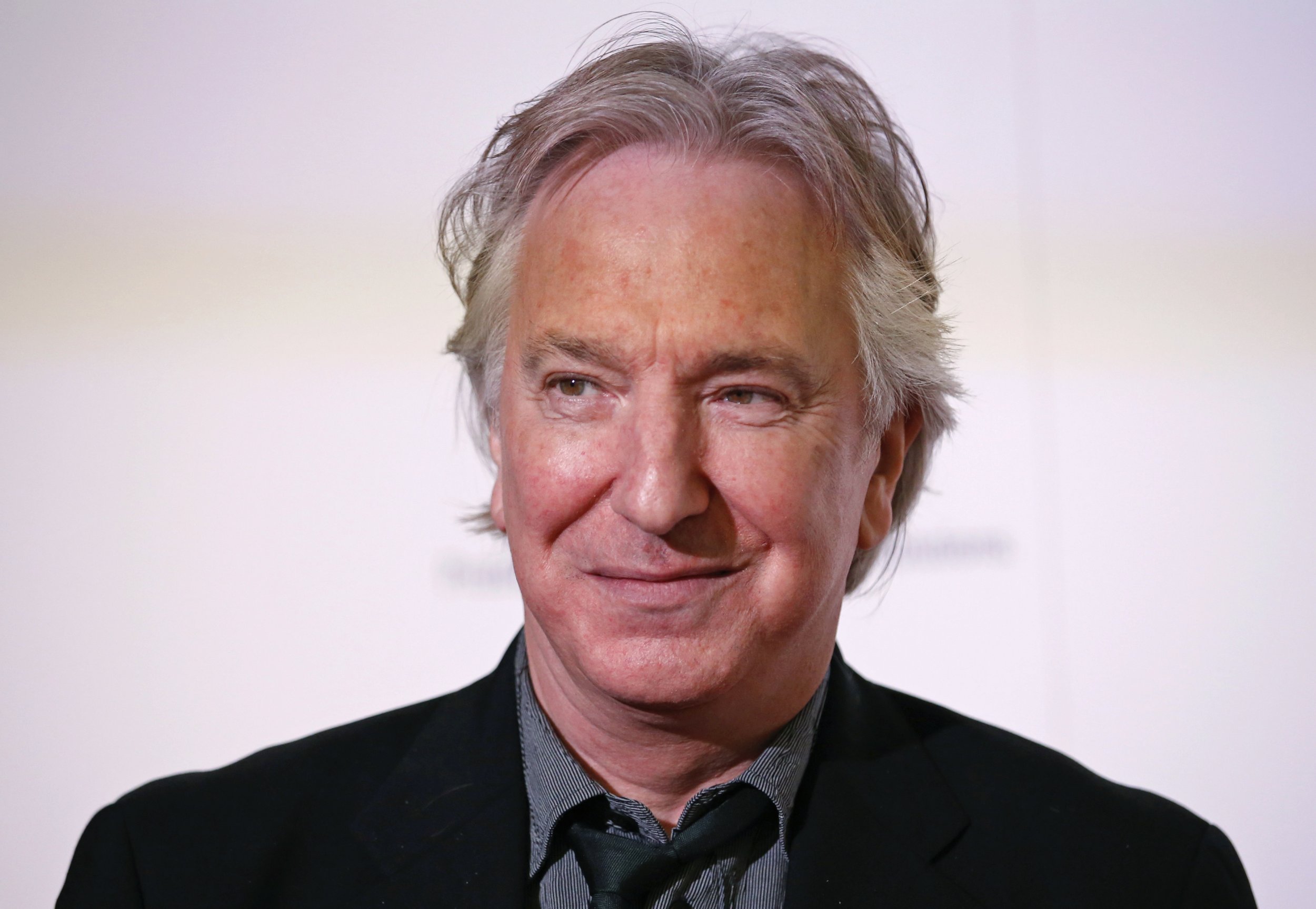
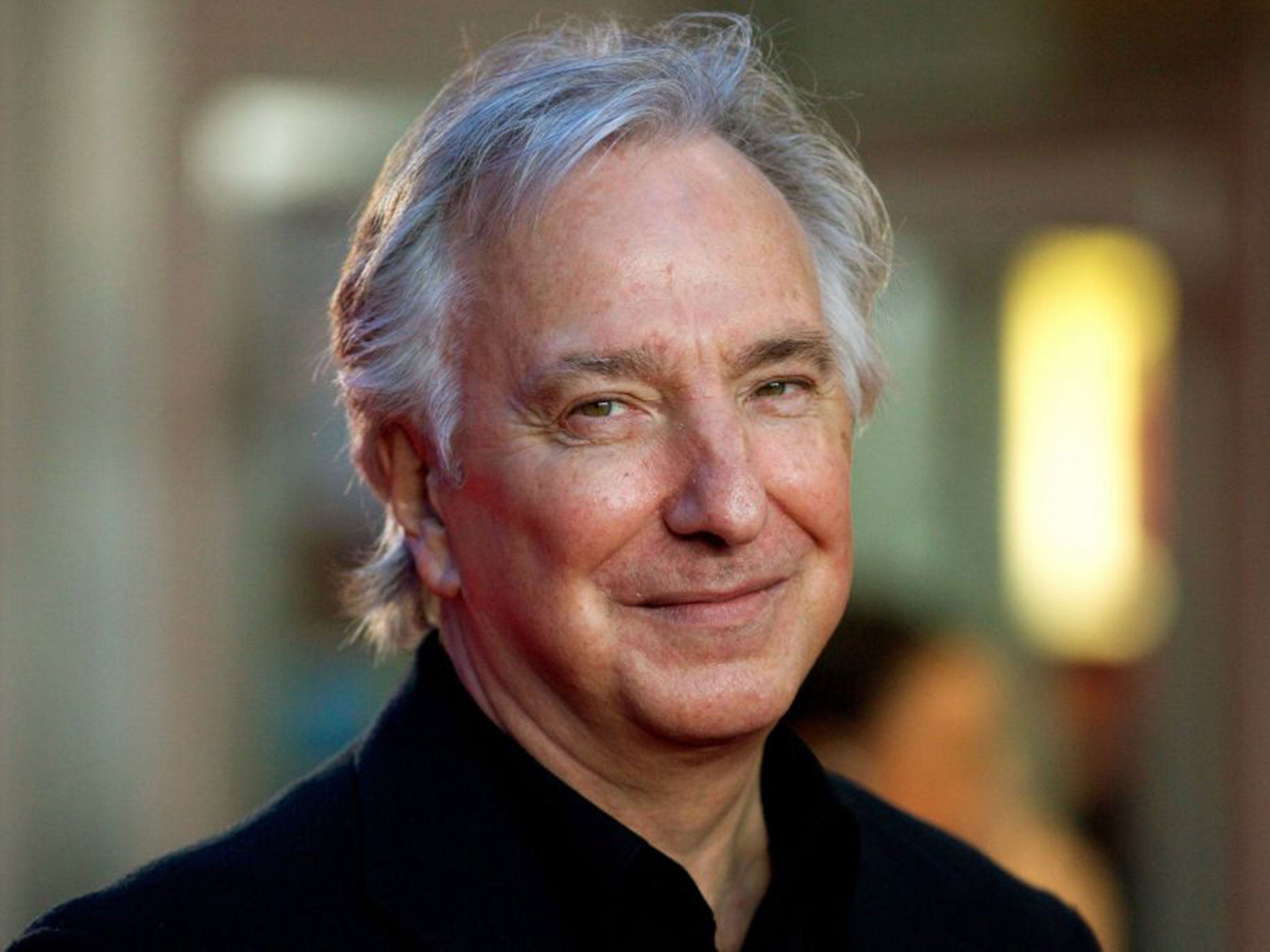
Alan Rickman was a seminal British actor and director whose career spanned four decades, characterized by his unmistakable baritone voice and extraordinary range. Most recognized for portraying Hans Gruber in Die Hard and Severus Snape in the Harry Potter film franchise, Rickman was a master of both stage and screen, earning numerous accolades including a BAFTA, an Emmy, and a Golden Globe before his passing in 2016.
The Formative Years and Artistic Foundation
Born Alan Sidney Patrick Rickman on February 21, 1946, in Hammersmith, London, his journey to the pinnacle of the acting profession was neither immediate nor conventional. Growing up in a working-class family, Rickman initially demonstrated a profound talent for graphic design. This led him to attend the Chelsea College of Art and Design and later the Royal College of Art. Before fully committing to the stage, he co-founded a successful graphic design studio called Graphiti, which he operated for several years.
It was not until the age of 26 that Rickman decided to pursue acting as a full-time career. He requested an audition with the Royal Academy of Dramatic Art (RADA), where he was accepted and studied from 1972 to 1974. During his time at RADA, he supported himself by working as a dresser for established actors, gaining a "behind-the-curtain" perspective on the industry. This late start—at least by Hollywood standards—endowed Rickman with a maturity and gravitational pull that became his signature. His training at RADA was rigorous, grounding him in classical theater and providing the technical foundation for his unique vocal delivery and physical presence.
Breakthrough and the Archetypal Villain
Alan Rickman’s transition from the British stage to international stardom is often cited as one of the most successful "cross-overs" in cinematic history. Although he had worked extensively with the Royal Shakespeare Company (RSC), it was his performance as the manipulative Vicomte de Valmont in the 1985 RSC production of Les Liaisons Dangereuses that caught the attention of Broadway and Hollywood producers.
In 1988, Rickman made his feature film debut in Die Hard. His portrayal of Hans Gruber redefined the action movie antagonist. Rather than a stereotypical "thug," Rickman’s Gruber was intellectual, sophisticated, and impeccably dressed. This performance set a new standard for film villains, leading to his casting as the Sheriff of Nottingham in Robin Hood: Prince of Thieves (1991). For this role, Rickman famously turned down the script twice until he was given creative freedom to interpret the character with a comedic, almost manic edge. This decision earned him a BAFTA Award for Best Actor in a Supporting Role, cementing his status as a performer who could elevate genre material into something memorable and complex.
The Severus Snape Legacy and Cultural Impact
Perhaps no role in Rickman’s filmography carries as much weight as Severus Snape in the Harry Potter series (2001–2011). Rickman was hand-picked by author J.K. Rowling to play the Potions Master, a role he inhabited across eight films.
The complexity of Snape required an actor capable of maintaining a "double-agent" ambiguity for over a decade. Rickman was one of the few individuals Rowling trusted with the secret of Snape’s ultimate motivation—his enduring love for Lily Potter—long before the final book was published. This knowledge allowed Rickman to infuse his early performances with subtle nuances that only became clear to the audience upon the series' conclusion. His delivery of the word "Always" remains one of the most iconic moments in 21st-century cinema, symbolizing the depth of his contribution to the franchise.
As of 2026, the performance is still studied in film schools as a masterclass in long-term character development and internal consistency. Rickman’s ability to command a scene with a simple pause or a slight shift in gaze became a hallmark of the series, influencing a generation of younger actors who worked alongside him.
Artistic Range: Beyond the Antagonist
While his "villainous" roles garnered significant attention, Rickman’s true strength lay in his versatility. He resisted being pigeonholed, frequently seeking roles that showcased his capacity for tenderness, wit, and romanticism.
- Sense and Sensibility (1995): As Colonel Brandon, Rickman displayed a quiet, soulful longing that stood in stark contrast to his more aggressive roles. His performance was lauded for its restraint and gentlemanly grace.
- Truly, Madly, Deeply (1990): In this supernatural drama, Rickman played a ghost returning to comfort his grieving partner. The role demonstrated his ability to handle intimate, emotionally raw material.
- Galaxy Quest (1999): Playing Alexander Dane, a Shakespearean actor trapped in a sci-fi trope, Rickman showcased his impeccable comedic timing and his ability to parody his own "serious actor" persona.
- Love Actually (2003): As Harry, a husband tempted by an affair, he portrayed a deeply flawed, relatable man, proving he could master domestic drama as effectively as high-stakes fantasy.
Directorial Ventures and Theatrical Contributions
Rickman’s artistic vision extended behind the camera. He directed two feature films, both of which emphasized character-driven narratives and atmospheric storytelling. His directorial debut, The Winter Guest (1997), starring Phyllida Law and Emma Thompson, received critical acclaim for its stark beauty and emotional resonance. He followed this years later with A Little Chaos (2014), a period drama centered on the gardens of Versailles, in which he also starred as King Louis XIV.
Throughout his cinematic success, Rickman never abandoned the theater. He returned to the stage frequently, notably in Antony and Cleopatra (1998) and Private Lives (2001–2002). His commitment to the craft was further evidenced by his service as Vice-Chairman of the Royal Academy of Dramatic Art. He was known for being a mentor to younger actors, often quietly attending small theater productions to support emerging talent.
Key Career Milestones and Recognition
The following table summarizes the most significant achievements and milestones in Alan Rickman’s career. These entries represent the verified highlights of his professional journey.
| Year | Title | Role | Recognition/Award |
|---|---|---|---|
| 1985 | Les Liaisons Dangereuses | Vicomte de Valmont | Tony Award Nomination |
| 1988 | Die Hard | Hans Gruber | Breakthrough Hollywood Role |
| 1991 | Robin Hood: Prince of Thieves | Sheriff of Nottingham | BAFTA Award: Best Supporting Actor |
| 1991 | Truly, Madly, Deeply | Jamie | BAFTA Nomination: Best Actor |
| 1995 | Sense and Sensibility | Colonel Brandon | BAFTA Nomination: Best Supporting Actor |
| 1996 | Rasputin: Dark Servant of Destiny | Grigori Rasputin | Emmy, Golden Globe, and SAG Award |
| 2001-2011 | Harry Potter Series | Severus Snape | People's Choice Award (2011) |
| 2014 | A Little Chaos | King Louis XIV | Director and Lead Actor |
Personal Life and Enduring Advocacy
Alan Rickman was known for his intense privacy and his unwavering loyalty to his friends and family. He met Rima Horton in 1965, when they were both teenagers. They lived together for decades before privately marrying in 2012. Horton was a lecturer in economics and a local councilor, and their partnership was often described by those close to them as a grounding force in Rickman’s life.
Rickman was also an active supporter of several charities. He was a patron of Saving Faces, an organization dedicated to helping those with facial disfigurements, and served as the president of the International Performers' Aid Trust, which works to alleviate poverty among artists worldwide. His philanthropic work was rarely publicized, reflecting his preference for action over accolades.
In January 2016, the world was shocked by the news of his death at age 69 from pancreatic cancer. His passing was met with a global outpouring of grief from colleagues and fans alike. Even in 2026, his influence remains palpable in the industry. His voice, often described as "honey over gravel," is frequently cited as one of the most distinctive in the history of the English language—a result of a slight speech impediment in childhood that he turned into a professional asset.
Frequently Asked Questions
What was Alan Rickman’s first major movie role?
His first major movie role was Hans Gruber in the 1988 action film Die Hard. Before this, Rickman was primarily known as a stage actor in the United Kingdom. Despite being his first feature film, his performance is widely considered one of the greatest movie villain portrayals of all time.
Did Alan Rickman ever win an Oscar?
No, Alan Rickman never won an Academy Award (Oscar), which is often cited as one of the most significant omissions by the Academy. However, he did win a BAFTA for Robin Hood: Prince of Thieves, and a Golden Globe, an Emmy, and a SAG Award for his title role in the television film Rasputin: Dark Servant of Destiny.
How did Alan Rickman influence the Severus Snape character?
Rickman influenced Snape by bringing a layer of hidden vulnerability to the character long before the audience knew his backstory. By working closely with J.K. Rowling, he ensured that every sneer and silence was grounded in the character's secret history, making the eventual revelation of Snape's loyalty one of the most satisfying arcs in literature and film.
What was unique about Alan Rickman’s voice?
His voice was characterized by a deep, resonant tone and a languid delivery. Scientifically, it was often described as the "perfect" male voice due to its frequency and pitch. This was partly due to Rickman’s mastery of breathing and his ability to use pauses to create tension, a skill honed during his years of classical theater training.
What were Alan Rickman's last films?
Rickman's final on-screen appearance was in the thriller Eye in the Sky (2015). His final film contribution overall was providing the voice of Absolem the Caterpillar in Alice Through the Looking Glass (2016), which was released posthumously.
Preserving the Rickman Legacy in 2026
To truly appreciate Alan Rickman’s contribution to the arts, viewers are encouraged to look beyond his most famous roles. While the Harry Potter series and Die Hard offer a glimpse into his brilliance, his work in independent films like Snow Cake or his directorial efforts reveals a more introspective artist.
As we reflect on his career in 2026, the best way to honor his legacy is to support the organizations he championed, such as the Royal Academy of Dramatic Art (RADA) or the International Performers' Aid Trust. Rickman believed that "actors are agents of change," and his body of work continues to serve as a testament to the power of storytelling to challenge, comfort, and inspire.