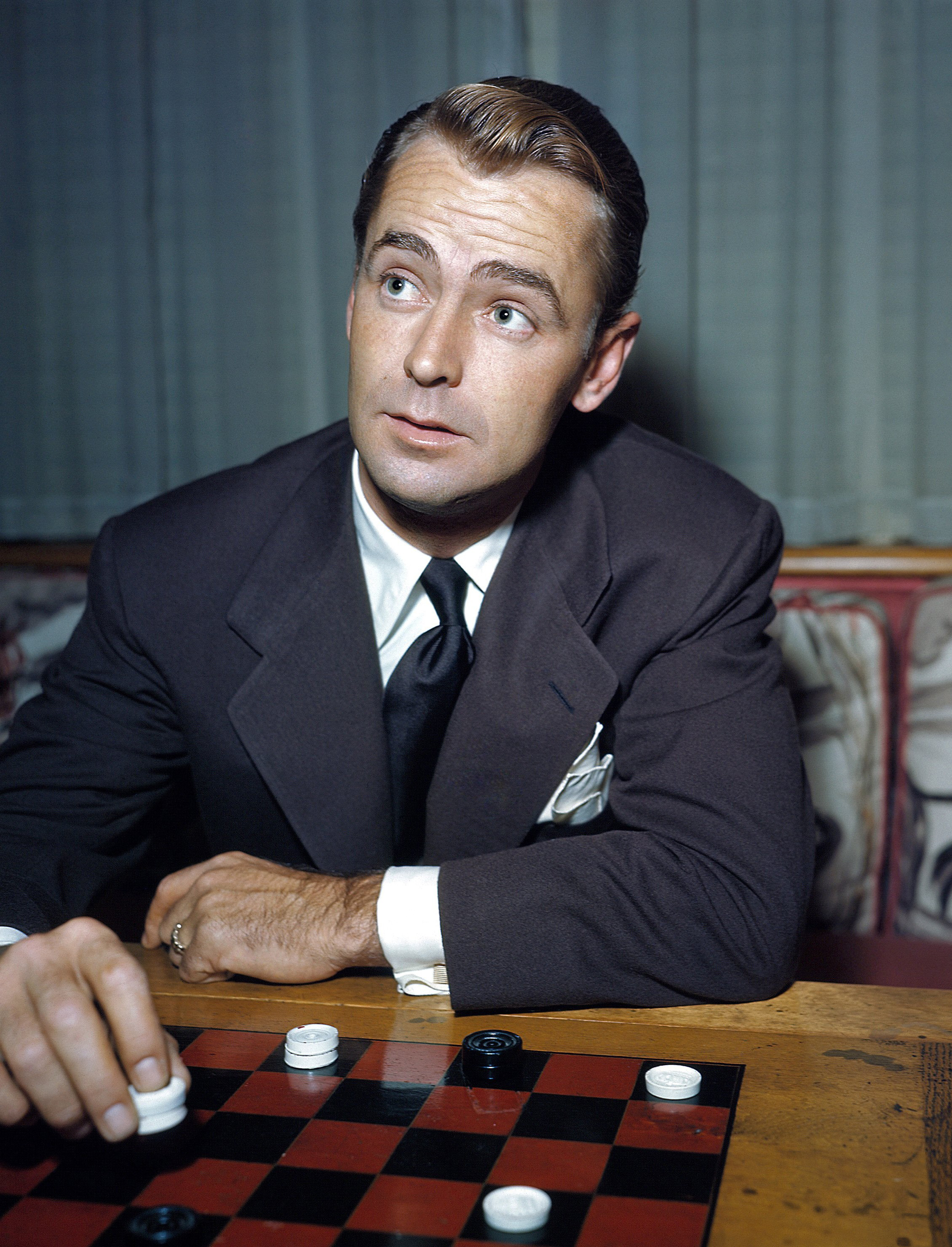
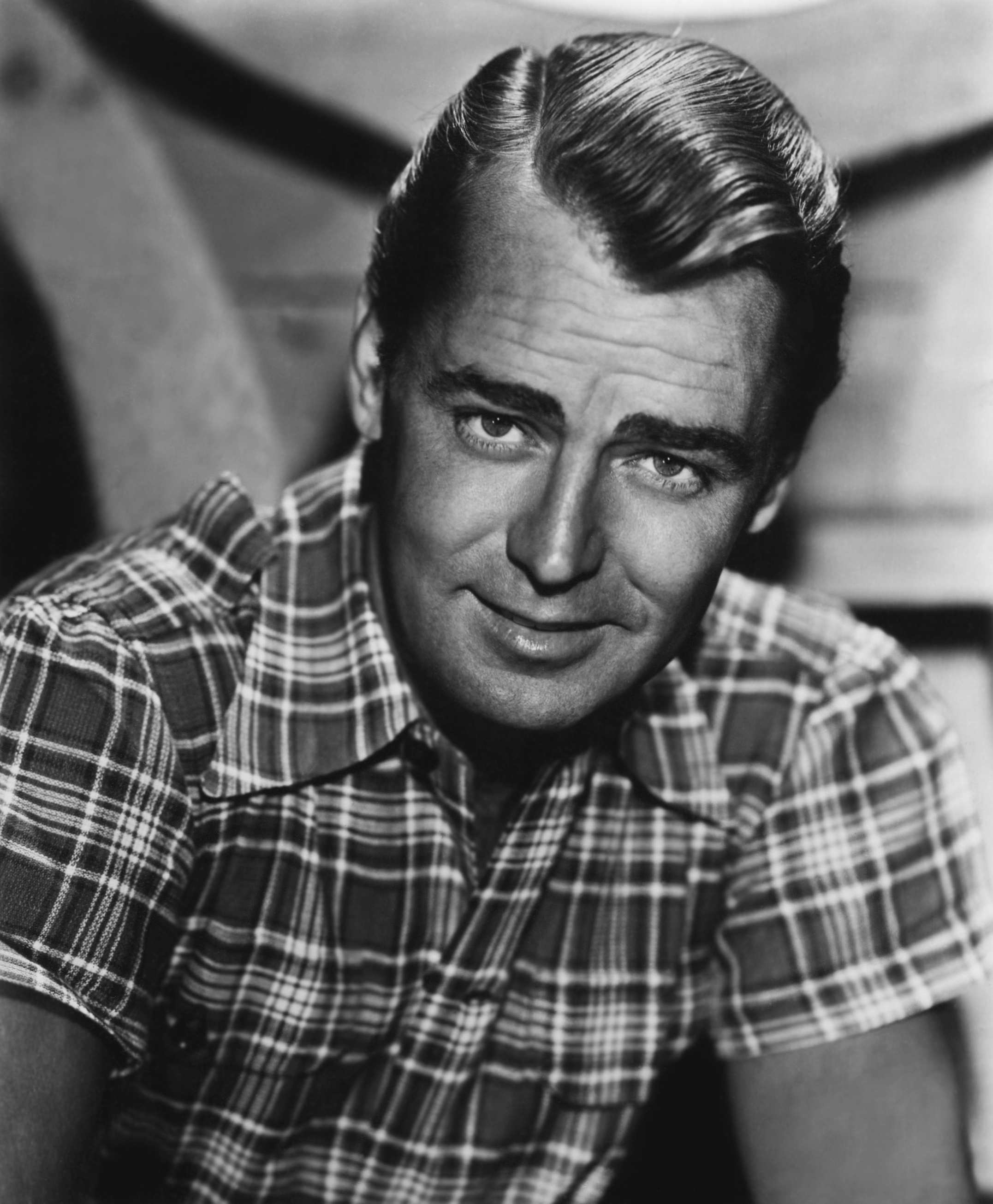
Alan Ladd was a preeminent American actor and film producer who became one of the most bankable stars of the 1940s and early 1950s. Best known for his stoic, "cool" screen persona and his legendary performance in the 1953 Western Shane, Ladd redefined the cinematic anti-hero through a series of gritty film noirs alongside actress Veronica Lake. As of 2026, his influence persists as a foundational figure in the development of understated, naturalistic acting in Hollywood.
The Formative Years and the Struggle for Stardom
Born Alan Walbridge Ladd on September 3, 1913, in Hot Springs, Arkansas, the future star’s early life was marked by significant hardship and tragedy. His father, a traveling salesman, died of a heart attack when Ladd was only four years old. Following a devastating apartment fire started by a young Alan playing with matches, his mother moved the family to Oklahoma City and eventually to California. The "Dust Bowl" migration experience deeply influenced Ladd’s later portrayals of outsiders and weary travelers.
In North Hollywood, Ladd excelled in athletics, particularly swimming and diving, but his small stature—often cited as being between 5'5" and 5'6"—was initially viewed as a barrier to traditional leading-man roles. Before finding success in front of the camera, Ladd worked a variety of odd jobs, including operating a hot dog stand, working as a grip at Warner Bros., and performing in local radio.
His entry into the film industry was a slow burn. Throughout the late 1930s, Ladd appeared in dozens of uncredited or minor roles. It was not until he met Sue Carol, a former silent film star turned talent agent, that his career trajectory shifted. Carol recognized that Ladd’s photogenic features and distinctive, resonant voice were perfectly suited for the burgeoning medium of sound cinema. The two married in 1942, and Carol remained his most steadfast advocate and manager throughout his professional life.
The Noir Breakthrough: "This Gun for Hire" and the "Cool" Persona
Ladd’s definitive break came in 1942 with the Paramount Pictures release of This Gun for Hire. Playing the role of Philip Raven, a professional assassin with a soft spot for cats and a deep-seated hatred for "rats," Ladd became an overnight sensation. This performance is widely credited with establishing the archetype of the "cool" noir protagonist—men who were dangerous, emotionally detached, yet possessed an internal moral compass.
The film also marked the first of seven collaborations with Veronica Lake. The pairing was a masterstroke of studio casting; Lake’s "peek-a-boo" hairstyle and ethereal presence complemented Ladd’s laconic intensity. Furthermore, Lake’s diminutive height allowed Paramount to film the duo without the elaborate camera tricks or platforms (sometimes jokingly referred to as "Ladders") often used to make Ladd appear taller than his female co-stars.
The chemistry between Ladd and Lake was central to several major successes, including:
- The Glass Key (1942): A gritty adaptation of Dashiell Hammett’s novel.
- The Blue Dahlia (1946): Written by Raymond Chandler, featuring Ladd as a returning war veteran caught in a murder mystery.
- Saigon (1948): A post-war adventure that capitalized on their established screen dynamic.
During this era, Ladd’s popularity was immense. By 1947, he was consistently ranked among the top ten box office attractions in the United States. His "menace beneath the surface" style paved the way for future stars like Clint Eastwood and Steve McQueen, who similarly utilized silence and stillness as powerful acting tools.
Shane and the Apex of the Hollywood Western
While his noir work established his stardom, Alan Ladd’s most enduring contribution to cinema is undoubtedly the 1953 masterpiece Shane. Directed by George Stevens, the film is often cited as one of the greatest Westerns ever made, transcending the genre to become a mythic exploration of the American frontier.
Ladd played the titular character, a weary gunfighter attempting to settle down as a farmhand for the Starrett family. The film’s narrative—the conflict between honest homesteaders and ruthless cattle barons—was elevated by Ladd’s portrayal of a man who desperately wants to escape his violent past but realizes that his skills are the only thing that can protect the innocent.
The Impact of the "Shane" Performance
The technical and emotional depth Ladd brought to Shane was revolutionary for the time. Clad in a distinctive fringed buckskin outfit, Ladd’s Shane was a "white knight" figure, but one burdened by the psychological weight of his profession. The film’s climax and the famous final scene—where the young boy Joey cries out, "Shane! Shane! Come back!"—remain among the most iconic moments in movie history.
Despite the film’s massive critical and commercial success, Ladd was famously snubbed by the Academy Awards, failing to receive a Best Actor nomination. However, the film solidified his status as a cultural icon, proving he could carry a prestige epic just as easily as a low-budget crime thriller.
Navigating the Challenges of Stardom and Physical Stature
Throughout his career, Alan Ladd’s height was a subject of intense public and industry scrutiny. While it is a common Hollywood legend that he stood on boxes for every scene, the reality was more nuanced. Directors used creative blocking, low camera angles, and trenches to manage the height difference between Ladd and his taller co-stars, such as Sophia Loren in Boy on a Dolphin (1957).
Ladd himself was reportedly sensitive about his height, which contributed to his reputation for being shy and introverted on set. This insecurity, however, may have fueled the very intensity that made him a star. By focusing on his facial expressions and the modulation of his voice, he commanded the screen in a way that made his physical dimensions irrelevant to his perceived power.
Comparative Filmography: Essential Alan Ladd Works
The following table highlights the pivotal films that defined Ladd's career across different genres and eras.
| Year | Title | Genre | Role | Historical Significance |
|---|---|---|---|---|
| 1942 | This Gun for Hire | Film Noir | Philip Raven | Established the "cool killer" archetype and his stardom. |
| 1942 | The Glass Key | Noir/Mystery | Ed Beaumont | Cemented his partnership with Veronica Lake. |
| 1946 | Two Years Before the Mast | Adventure | Charles Stewart | Proved his viability in big-budget period pieces. |
| 1946 | The Blue Dahlia | Film Noir | Johnny Morrison | A quintessential Raymond Chandler hard-boiled thriller. |
| 1949 | The Great Gatsby | Drama | Jay Gatsby | An early, albeit controversial, adaptation of the Fitzgerald classic. |
| 1953 | Shane | Western | Shane | His most critically acclaimed and enduring role. |
| 1958 | The Badlanders | Western | Peter Van Hoek | Featured Ladd alongside Ernest Borgnine in a heist Western. |
| 1964 | The Carpetbaggers | Drama | Nevada Smith | His final film role, released posthumously. |
The Later Career and Jaguar Productions
As the 1950s progressed, the Hollywood studio system began to fracture. Ladd, seeking more creative control and a larger share of the profits, formed his own production company, Jaguar Productions. Through Jaguar, he produced and starred in several films, including Drum Beat (1954) and The McConnell Story (1955).
While these films were often profitable, they rarely reached the artistic heights of his earlier work at Paramount. By the late 1950s, Ladd’s health began to decline, exacerbated by a long-standing struggle with depression and alcohol. Despite these personal challenges, he continued to work steadily, transitioning into more "elder statesman" roles. His final performance in The Carpetbaggers (1964) as Nevada Smith was a box office smash and earned him some of the best reviews of his later career, hinting at a potential resurgence that was tragically cut short.
Death and the Ladd Family Legacy
Alan Ladd passed away on January 29, 1964, at the age of 50. The cause of death was determined to be an accidental overdose of alcohol and sedative medication. His death marked the end of an era for the classic Hollywood leading man.
However, the Ladd name remained prominent in the industry. His son, Alan Ladd Jr., became one of the most influential film executives in history. As the head of 20th Century Fox and later MGM/UA, "Laddie" (as he was known) greenlit Star Wars, Alien, and Braveheart. This multi-generational impact ensures that the Ladd family's contribution to cinema spans from the Golden Age to the modern blockbuster era.
Frequently Asked Questions
How tall was Alan Ladd really?
Alan Ladd was approximately 5 feet 6 inches tall (168 cm). While his height was slightly below the average for leading men of his era, it was frequently exaggerated in tabloid reports. Studios employed various techniques, such as having co-stars stand in trenches or having Ladd stand on "apple boxes," to maintain the illusion of a more traditional height on screen.
Did Alan Ladd do his own stunts in Shane?
Ladd performed many of his own scenes involving horse riding and basic physicality, but like most stars of the 1950s, a professional stunt double was used for the more dangerous sequences, particularly the complex fight scenes and falls. His proficiency with a firearm, however, was noted by the director as being exceptionally fast and fluid.
Why did he stop making movies with Veronica Lake?
The Ladd-Lake partnership ended primarily because their individual career paths diverged. Lake’s popularity declined in the late 1940s due to a combination of personal issues and changing audience tastes, while Ladd remained a top-tier star. Paramount eventually decided to pair Ladd with other actresses to freshen his screen image.
What happened to Alan Ladd at the end of his life?
In his final years, Ladd struggled with psychosomatic illnesses and a gunshot wound in 1962 that was officially ruled an accident, though many speculated it was a suicide attempt. He died in 1964 due to a lethal combination of alcohol and barbiturates, which the coroner ruled as accidental.
Where is Alan Ladd buried?
Alan Ladd is interred in the Forest Lawn Memorial Park in Glendale, California. He is buried in the Freedom Mausoleum, a resting place for many other icons of the Golden Age of Hollywood.
Recognizing the Alan Ladd Style Today
For modern viewers and film students in 2026, studying Alan Ladd offers a masterclass in the "less is more" philosophy of acting. To fully appreciate his contribution to the arts, one should start with a curated viewing of his "Big Three": This Gun for Hire, The Blue Dahlia, and Shane.
When watching these films, pay close attention to his eyes and the stillness of his posture. Unlike the theatrical, high-energy performances common in the 1930s, Ladd’s work is characterized by a modern, internalized tension. His ability to convey complex emotions—fear, longing, and resolve—through a single steady gaze remains his most potent legacy. For those interested in the evolution of the American Western or the stylistic roots of Neo-Noir, Alan Ladd’s filmography provides the essential blueprint.