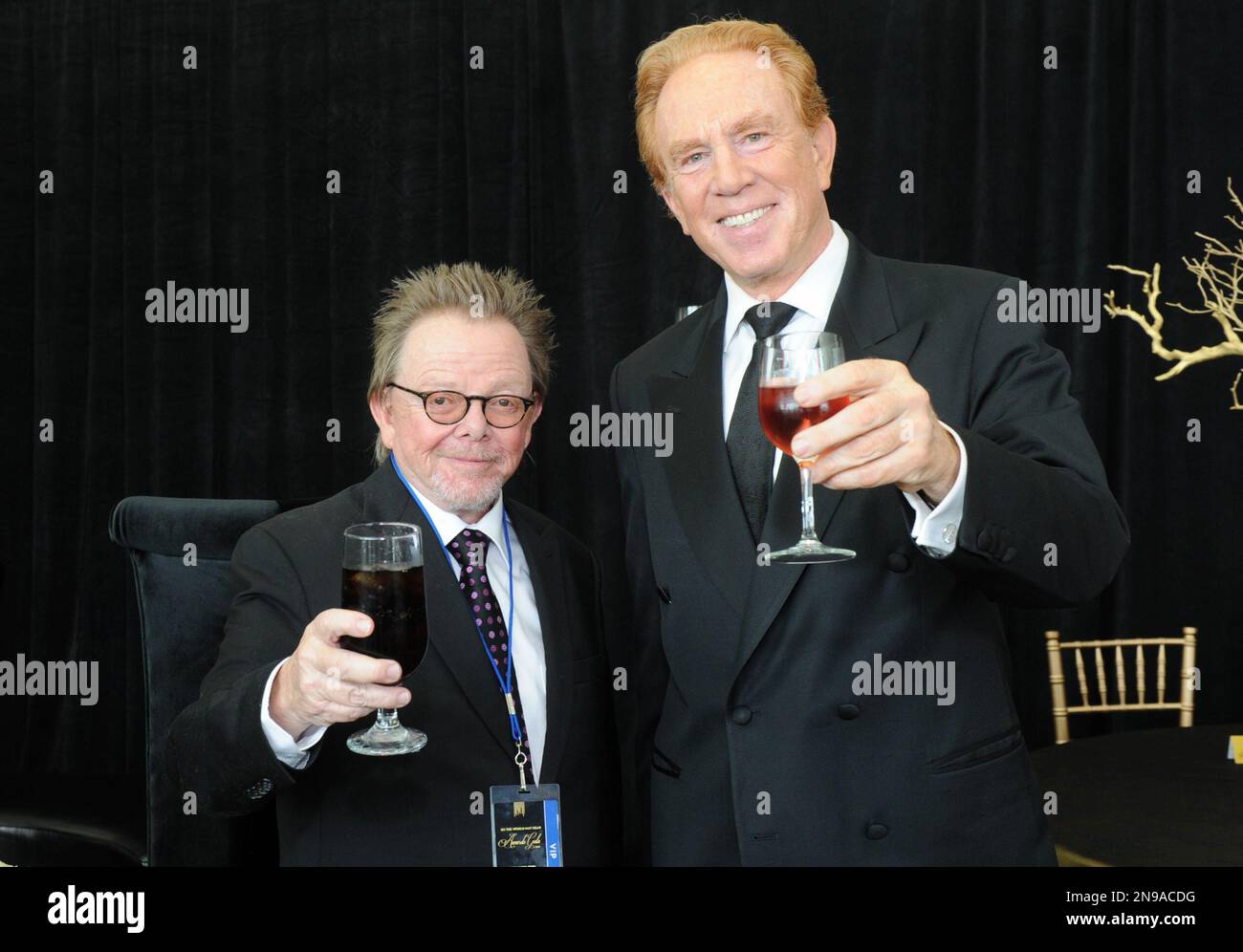
Alan Kalter was the iconic voice of the Late Show with David Letterman for twenty years, from 1995 until the show’s conclusion in 2015. Beyond his booming baritone, Kalter became a beloved comedic presence, known for his "Big Red" persona, satirical outbursts, and versatile voice-over work that spanned decades of American broadcasting history.
Throughout the golden age of late-night television, few figures bridged the gap between traditional broadcasting professionalism and absurdist comedy as effectively as Alan Kalter. While many announcers remained safely tucked behind a microphone in a booth, Kalter was frequently thrust into the spotlight of the Ed Sullivan Theater. He was a performer who embraced self-deprecation, high-concept satire, and physical comedy, all while maintaining the vocal gravitas required for a major network production. As we look back from 2026, Kalter’s contributions remain a blueprint for how secondary television personalities can define the identity of a long-running franchise.
Early Life and the Transition from Classroom to Camera
Born in Brooklyn, New York, in 1943, Alan Kalter did not initially set out to become a television legend. His early career path was grounded in academia; he spent several years working as a high school English and public speaking teacher on Long Island. This background in education likely contributed to his impeccable diction and his ability to command an audience, even before he had a national platform.
Kalter’s transition into the world of entertainment began in the late 1960s and early 1970s. He started in local radio, working at stations like WHN in New York City. His resonant, authoritative voice quickly made him a sought-after talent for commercials and industrial narrations. By the mid-1970s, he had broken into television as the announcer for the short-lived but memorable game show The Money Maze (1974–1975). He also provided the voice for dozens of products, becoming the signature sound for brands like Michelin and the USA Network.
His versatility was his greatest asset during these formative years. Kalter could sound like the "voice of God" for a serious news promo or provide a warm, inviting tone for a consumer product. This range caught the attention of producers at CBS and beyond, eventually leading him to one of the most coveted seats in broadcasting history.
The Late Show Era: Redefining the Role of the Announcer
In 1995, Alan Kalter replaced the departing Bill Wendell as the announcer for the Late Show with David Letterman. While Wendell had been a legendary figure in his own right, his style was more aligned with the "old school" of broadcasting—formal and somewhat detached from the comedy. Kalter’s arrival signaled a shift in the show’s dynamic. Letterman and his writers quickly realized that Kalter was not just a voice; he was a comedic goldmine.
Kalter, soon nicknamed "Big Red" due to his distinctive hair, became a central character in the show’s sketches. Unlike many announcers who might have felt uncomfortable with the often-bizarre requests of the Late Show writing staff, Kalter jumped in with total commitment. He became known for several recurring "bits" that defined the Letterman era:
- The Alan Kalter Outbursts: Kalter would often begin a segment with a professional announcement, only to be "interrupted" or "offended" by something Letterman said. He would then launch into a scripted, high-decibel rant, often ending with him storming out of the theater and into the streets of Manhattan.
- The Crooner: Kalter frequently performed satirical songs. Despite his speaking voice being deep and commanding, he would often adopt a high-pitched, lounge-singer persona for comedic effect, usually singing lyrics that were wildly inappropriate or nonsensical.
- The "Victim" of Ed Sullivan Theater Lore: Kalter was often the subject of mock-abuse or strange backstage rituals, portraying a version of himself that was simultaneously dignified and completely unhinged.
This willingness to be the butt of the joke endeared him to millions of viewers. By the time the Late Show aired its final episode in May 2015, Kalter had announced over 3,000 episodes, making him an inseparable part of the program's legacy.
Career Milestones and Professional Versatility
While the Late Show was his most visible role, Kalter’s career was remarkably broad. He was a "voice-over artist’s voice-over artist," respected within the industry for his technical precision and his ability to take direction. He was the announcer for the legendary game show To Tell the Truth during its 1990–1991 revival and served as the voice for the Grammy Awards and the Tony Awards on multiple occasions.
His work extended into the world of theater and live events. Kalter’s presence was often requested for high-profile galas and award ceremonies because he possessed the rare ability to maintain the "prestige" of an event while knowing exactly when to inject a hint of irony.
| Feature/Role | Period | Key Contribution |
|---|---|---|
| Late Show with David Letterman | 1995–2015 | Primary announcer and comedic sketch performer. |
| The Money Maze | 1974–1975 | Game show announcer; early career break. |
| To Tell the Truth | 1990–1991 | Announcer for the syndicated revival. |
| USA Network | 1980s–1990s | Promotional voice for various programming blocks. |
| Michelin Tires | Various | Signature commercial voice-over artist. |
| Broadway/Live Events | 1990s–2010s | Announcer for the Tony Awards and various galas. |
The "Big Red" Persona: Why It Worked
The success of Alan Kalter as a television personality can be attributed to the contrast between his physical appearance and his vocal delivery. Standing with a sturdy build and sporting a shock of red hair, Kalter looked like a friendly uncle or a reliable local newsman. When he opened his mouth and a booming, authoritative voice emerged, it created a sense of established order.
The comedy worked because the Late Show writers would systematically dismantle that order. Watching a man who sounded like the "official voice of CBS" suddenly strip off his shirt and run into traffic, or break into a falsetto song about his love for a specific brand of ham, was inherently funny.
Kalter’s "angry" persona was another masterclass in comedic timing. He could pivot from a warm "And now, David Letterman!" to a vein-popping scream about a perceived slight in less than a second. This "mercurial announcer" trope has been imitated by many in the years since, but few have matched Kalter’s dedication to the bit. He never broke character, and he never signaled to the audience that he was "in on the joke," which made the comedy even more effective.
Legacy and Impact on Modern Broadcasting
Alan Kalter passed away in October 2021 at the age of 78. In the years since his passing, his influence on late-night television has only become more apparent. Today, in 2026, we see the evolution of the "announcer as a character" in almost every major talk show. From the way announcers interact with hosts like Stephen Colbert or Jimmy Fallon, the DNA of Kalter’s performance is present.
He proved that the announcer's booth was not a cage, but a platform. He showed that a secondary cast member could have a "narrative arc" within a variety show format. Fans remember him not just for the way he said the names of the guests, but for the specific joy he brought to the screen.
Beyond the laughter, Kalter is remembered by his colleagues as a consummate professional. In numerous tributes, former Late Show writers and producers have noted that Kalter was the kind of performer who would do anything for the show. Whether it was being pelted with food, dressed in ridiculous costumes, or being "fired" multiple times a year for comedic effect, Kalter approached every script with the same level of seriousness he applied to his award-winning commercial work.
Understanding the Technical Mastery of Kalter’s Voice
For those interested in the technical aspects of broadcasting, Alan Kalter remains a subject of study. His vocal technique involved a deep diaphragmatic support that allowed him to maintain a consistent "chest voice" even when shouting. This is what gave his announcements their "punch."
In the recording booth, Kalter was known for his "one-take" capability. His experience as an English teacher gave him a profound understanding of emphasis and phrasing. He knew exactly which word in a sentence carried the most weight and how to modulate his tone to lead the listener's ear. This technical skill is what allowed him to transition so seamlessly between the world of serious voice-overs and the chaotic world of David Letterman.
What made Alan Kalter's voice so distinctive?
Kalter possessed a natural bass-baritone with a very "bright" resonance, meaning his voice could cut through background music and studio noise without sounding muddy. His training in public speaking and his years in radio allowed him to master "projection," which is the ability to speak loudly and clearly without straining the vocal cords. This durability allowed him to perform high-energy sketches night after night for two decades.
Was Alan Kalter really "angry" as he appeared in sketches?
No, the "angry announcer" was a carefully crafted comedic persona. In reality, Kalter was known by his colleagues and fans as a remarkably kind, gentle, and soft-spoken man. His ability to play a version of himself that was volatile and prone to tantrums was a testament to his acting range. He often expressed great gratitude for the opportunity to play such a ridiculous character on a national stage.
Did Alan Kalter do his own singing on the Late Show?
Yes, Kalter performed all of his own musical bits. While he was not a professional singer in the traditional sense, he had an excellent ear for pitch and a surprising vocal range. His "crooning" bits were successful because he could actually carry a tune, which made the absurdity of the lyrics even more prominent.
How did Alan Kalter get the nickname "Big Red"?
The nickname was bestowed upon him by David Letterman, referring to Kalter’s height and his thinning but vibrantly red hair. Letterman often used nicknames for his staff to create a sense of "family" (or a mock-dysfunctional family) on air. The name stuck and became a shorthand for Kalter among the show’s fanbase.
What did Alan Kalter do after the Late Show ended in 2015?
Following the retirement of David Letterman and the conclusion of the Late Show, Kalter largely stepped back from the grueling schedule of daily television. He continued to do occasional voice-over work and made appearances at fan conventions and retrospective events. He spent much of his time with his family in Connecticut, enjoying a well-earned retirement after nearly 50 years in the industry.
Accessing the Alan Kalter Archive
For viewers who wish to revisit the legendary career of Alan Kalter, the best course of action is to explore the extensive digital archives of the Late Show with David Letterman. While the show is no longer on the air, thousands of clips featuring Kalter’s most famous sketches and announcements are preserved through official CBS retrospective channels and fan-curated archives.
Searching for "Alan Kalter’s Big Show" or "Alan Kalter singing" will yield hours of content that showcases his range. For those interested in the history of broadcasting, listening to his early radio work or his voice-overs for the USA Network provides a fascinating look at the development of one of the most recognizable voices in American history. As we celebrate his legacy in 2026, it is clear that Alan Kalter was much more than an announcer; he was a master of his craft who taught us that even the most professional voice can find room for a little bit of beautiful, red-headed chaos.