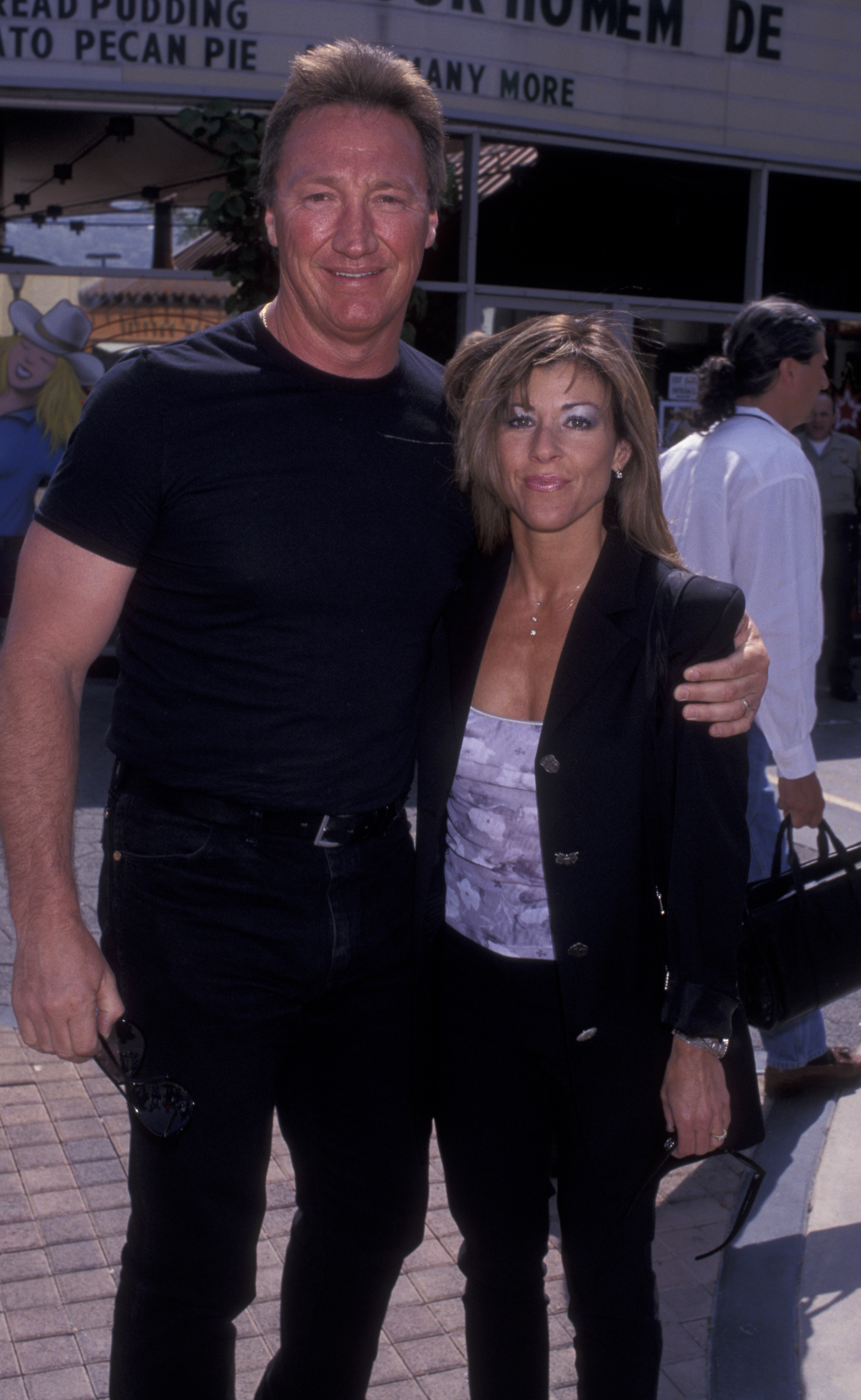
Alan Autry is an American actor, former professional football player, politician, and media personality who achieved national recognition through three distinct careers. He played quarterback in the NFL under his birth name Carlos Brown, starred as Captain Bubba Skinner on the hit television series In the Heat of the Night, and served two terms as Mayor of Fresno, California, from 2001 to 2009.
Early Life and Athletic Career: From College Football to the NFL
Alan Autry was born Carlos Brown on July 10, 1952, in Shreveport, Louisiana. Following his parents' separation when he was very young, his mother relocated the family to California's Central Valley, where Autry spent his childhood working in agricultural fields alongside his family in Riverdale, California. This early background in crop harvesting and rural labor deeply influenced his work ethic and later political platform, grounding him in the economic realities of California's agricultural heartland.
In high school, Autry emerged as an exceptional multi-sport athlete, excelsior in football. His athletic talent earned him a sports scholarship to the University of the Pacific in Stockton, California, where he starred as quarterback for the Pacific Tigers. During his collegiate tenure, his arm strength, size, and pocket leadership attracted the attention of National Football League scouts.
In the 1975 NFL Draft, the Green Bay Packers selected Autry—then competing under the name Carlos Brown—in the third round as the 62nd overall pick. He played for the Packers during the 1975 season, starting three games at quarterback. However, his professional football career encountered turbulence due to team restructuring and personal transitions. After being cut by Green Bay, Autry had a brief trial with the CFL’s BC Lions in 1976 before ultimately deciding to retire from professional athletics to pursue a career in the performing arts.
Transitioning to Hollywood: Finding His Voice and Signature Roles
After leaving professional sports, Autry relocated to Los Angeles to study acting. During this transitional phase, he made the deliberate decision to drop his athletic alias, Carlos Brown, and adopt his birth father’s surname, Autry, taking the professional stage name Alan Autry. Gene Autry, the famed singing cowboy, was a distant cousin, though Alan built his acting career independently through auditions and character roles in film and television.
His early acting credits in the late 1970s and early 1980s leveraged his imposing physical presence—standing 6 feet 3 inches with a broad athletic frame. Autry made his feature film debut in Walter Hill’s acclaimed survival thriller Southern Comfort (1981), playing Bowden alongside actors Keith Carradine and Powers Boothe. Shortly thereafter, he appeared in high-profile feature films such as First Blood (1982), where he played a local police officer, and the comedy Brewster’s Millions (1985).
Timeline of Alan Autry's Career Transitions:
- 1975: Drafted into the NFL by the Green Bay Packers (as Carlos Brown)
- 1981: Major film debut in "Southern Comfort" (adopting the name Alan Autry)
- 1988–1995: Starred as Captain Bubba Skinner in "In the Heat of the Night"
- 2001–2009: Served two terms as the Mayor of Fresno, California
- 2009–Present: Independent filmmaking, Christian ministry, and radio hosting
Autry achieved widespread television stardom in 1988 when he was cast as Captain Bubba Skinner in the crime drama series In the Heat of the Night, based on the 1967 film of the same name. Playing opposite veteran actor Carroll O'Connor (Chief Bill Gillespie) and Howard Rollins (Virgil Tibbs), Autry’s portrayal of the tough, loyal, and deeply empathetic Southern lawman became a cornerstone of the show's seven-season run. Beyond his acting contributions, Autry expanded his creative involvement by writing and directing several episodes of the series, earning respect within the production community for his storyteller’s vision.
Following In the Heat of the Night, Autry continued to work regularly in network television. He co-starred in the sitcom Grace Under Fire from 1995 to 1996 and later landed a leading role in the Walker, Texas Ranger spin-off series Sons of Thunder (1999), reinforcing his status as a popular screen presence in action and drama genres.
Political Career: Serving as Mayor of Fresno (2001–2009)
In the late 1990s, Autry returned to California's Central Valley, where he established deep community ties and began engaging in local civic discussions. In 2000, he announced his candidacy for Mayor of Fresno, California—the fifth-largest city in the state. Running as a political outsider without prior elected experience, Autry leveraged his name recognition, populist rhetoric, and fiscal conservatism to defeat former Fresno County Supervisor Juan Aramburu in the nonpartisan mayoral election.
Taking office in January 2001, Mayor Autry focused his administration on several municipal priorities:
- Fiscal Management and Budget Stability: Autry advocated for balanced municipal budgets, seeking to streamline city operations and build fiscal reserves amidst statewide economic volatility.
- Public Safety and Crime Reduction: Capitalizing on his public association with law enforcement themes, he prioritized funding for the Fresno Police Department, expanding officer hiring and backing anti-gang initiatives.
- Downtown Revitalization: The Autry administration supported infrastructure investments and public-private partnerships intended to jumpstart commercial and cultural activity in Downtown Fresno.
- Homelessness and Community Outreach: Autry established initiatives aimed at addressing chronic vagrancy while supporting faith-based shelters and community assistance networks throughout Fresno County.
Autry’s leadership style resonated strongly with the electorate. In 2004, he won re-election to a second four-year term in a landslide victory, securing over 72% of the vote. Prevented from running for a third consecutive term due to municipal term limits, Autry vacated office in January 2009, leaving behind a legacy as one of Fresno's most prominent modern political leaders.
Post-Political Ventures: Media, Ministry, and Independent Filmmaking
Upon concluding his political career in 2009, Autry transitioned back into media production and public commentary. He hosted a popular local talk radio program on KYNO in Fresno, where he discussed regional political issues, national news, and community development.
In addition to broadcasting, Autry expanded his work in faith-based broadcasting and independent cinema. He established the Autry Entertainment Group, producing local film projects, documentaries, and religious programming. As a devout Christian, Autry frequently engages in ministry work, speaking at church leadership conferences and community events regarding ethics, public service, and personal redemption.
Comparative Overview of Career Stages
The following table summarizes the primary phases of Alan Autry’s professional life, detailing the roles, primary fields, and key achievements associated with each era:
| Career Phase | Primary Field | Key Roles / Titles | Era / Years Active | Notable Achievements |
|---|---|---|---|---|
| Athletic Career | Professional Football | Quarterback / Punter | 1972–1976 | Drafted 62nd overall in 1975 NFL Draft by Green Bay Packers; college starter at University of the Pacific. |
| Entertainment Career | Film & Television | Actor, Director, Writer | 1978–2000s | Co-starred as Captain Bubba Skinner on In the Heat of the Night; roles in Southern Comfort, First Blood, and Sons of Thunder. |
| Municipal Governance | Public Policy & Politics | Mayor of Fresno, CA | 2001–2009 | Elected to two terms; managed city growth, supported police department expansion, led downtown redevelopment efforts. |
| Media & Ministry | Media, Radio & Ministry | Radio Host, Producer, Minister | 2009–Present | Hosted talk radio programs; founded Autry Entertainment Group; led faith-based film and community projects. |
Critical Success Factors Across Multiple Disciplines
Analyzing Alan Autry’s transition between sports, Hollywood, and government highlights several strategic and personal factors that facilitated his multi-industry accomplishments:
- Versatile Public Communication: Autry translated skills developed in dramatic acting into compelling public speaking. His ability to connect with audiences through accessible, unvarnished discourse aided both his screen appeal and his electoral victories.
- Authentic Geographic Alignment: Unlike political figures who relocate specifically for electoral advantage, Autry raised his profile in the region where he spent his youth. His agricultural roots in Fresno County lent credibility to his local campaign promises.
- Adaptability and Re-invention: Transitioning from an NFL athletic career cut short by team cuts to an entry-level actor required significant resilience. Autry repeatedly redefined his professional persona—from Carlos Brown the athlete to Alan Autry the dramatic star, and finally Mayor Autry the civic manager.
How to Explore Alan Autry’s Work and Archival Records
For fans of classic television, film historians, and political researchers examining Central Valley governance, several avenues exist to review Alan Autry’s contributions across media and public service:
Television and Film Archival Viewing:
- In the Heat of the Night: Available across major digital streaming networks and syndication platforms. Viewers interested in Autry's directorial contributions should examine later-season episodes, such as those in Seasons 6 and 7.
- Feature Films: Classical survival action films like Southern Comfort (1981) present Autry’s early ensemble dramatic work.
Municipal Policy Archives:
- Researchers analyzing Fresno city politics between 2001 and 2009 can access city council records, official mayoral proclamations, and redevelopment project reports through the Fresno City Clerk’s official historical archives.
Media and Radio Broadcast Archives:
- Local California media repositories and regional broadcasting archives retain recordings of Autry’s radio commentary work post-2009, reflecting Central Valley political sentiment during the late 2000s and early 2010s.
Frequently Asked Questions About Alan Autry
What is Alan Autry’s birth name and why did he change it?
Alan Autry was born Carlos Brown. Early in his life and sports career—including his time in the NFL with the Green Bay Packers—he used the name Carlos Brown. When he transitioned into acting in the late 1970s, he chose to adopt his birth father’s surname, Autry, using the stage and public name Alan Autry.
Was Alan Autry related to Gene Autry?
Yes, Alan Autry is a distant cousin of the famous singing cowboy and media entrepreneur Gene Autry. However, Alan built his acting and political careers independently through standard auditions and local civic engagement.
What position did Alan Autry play in the NFL?
Alan Autry played quarterback (and occasionally punter) during his football career at the University of the Pacific and professionally for the Green Bay Packers, who drafted him in the third round of the 1975 NFL Draft.
What character did Alan Autry play on In the Heat of the Night?
Autry portrayed Captain Bubba Skinner, a core law enforcement character who served as a primary lieutenant to Chief Bill Gillespie (played by Carroll O'Connor). Autry starred in the role throughout the show's run from 1988 to 1995.
When was Alan Autry the Mayor of Fresno?
Alan Autry served two consecutive terms as the Mayor of Fresno, California, taking office in January 2001 and finishing his second term in January 2009.
Summary and Key Takeaways
Alan Autry’s career represents a rare cross-industry arc in American public life, moving seamlessly from professional sports to mainstream television and municipal governance. His journey from working in agricultural fields to playing quarterback in the NFL, starring on network television, and ultimately running the city of Fresno illustrates a remarkable capacity for professional adaptation. For students of television history and local governance alike, Autry's work provides a compelling case study in public leadership, dramatic media presence, and regional community advocacy.