Choosing a path toward a professional career in bodywork requires evaluating regional educational pathways, state-specific regulatory frameworks, and curriculum quality. When investigating alabama michigan massage therapy schools top programs training, prospective students encounter two distinct legal and educational landscapes. Alabama and Michigan enforce entirely different state licensure mandates, clock-hour prerequisites, and examination standards, meaning that education completed in one state does not automatically transfer its licensure eligibility to the other without supplemental steps.
Understanding the Regulatory Landscape: Alabama Versus Michigan
Licensure requirements for professional bodyworkers are established at the state level, creating fundamental differences between how Alabama and Michigan regulate the profession. In Alabama, the Alabama Board of Massage Therapy oversees practitioner licensing. The state requires applicants to complete a minimum number of supervised classroom hours from an approved institution, typically set at 650 hours, alongside passing a nationally recognized competency examination such as the Massage and Bodywork Licensing Examination (MBLEx) administered by the Federation of State Massage Therapy Boards (FSMTB).
Conversely, Michigan operates under the Michigan Board of Massage Therapy, which functions within the Michigan Department of Licensing and Regulatory Affairs (LARA). Michigan mandates a minimum of 500 hours of education in specific subjects, including anatomy, physiology, kinesiology, pathology, massage therapy theory, and business ethics. While both states utilize the MBLEx as their primary testing benchmark, their continuing education rules, local municipal licensing ordinances, and school approval processes vary significantly. Prospective students must verify that their chosen program holds proper state accreditation and programmatic approval from agencies recognized by the U.S. Department of Education, such as the Commission on Massage Therapy Accreditation (COMTA), to ensure future licensure eligibility.
Core Curriculum and Clinical Training Standards
A rigorous massage therapy training program balances theoretical knowledge with hands-on clinical practice. Whether evaluating schools in the American South or the Midwest, students must master foundational biomedical sciences before progressing to specialized modalities. Curricula across reputable institutions are structured to build competency systematically, ensuring graduates can safely treat diverse client populations while accounting for medical contraindications.
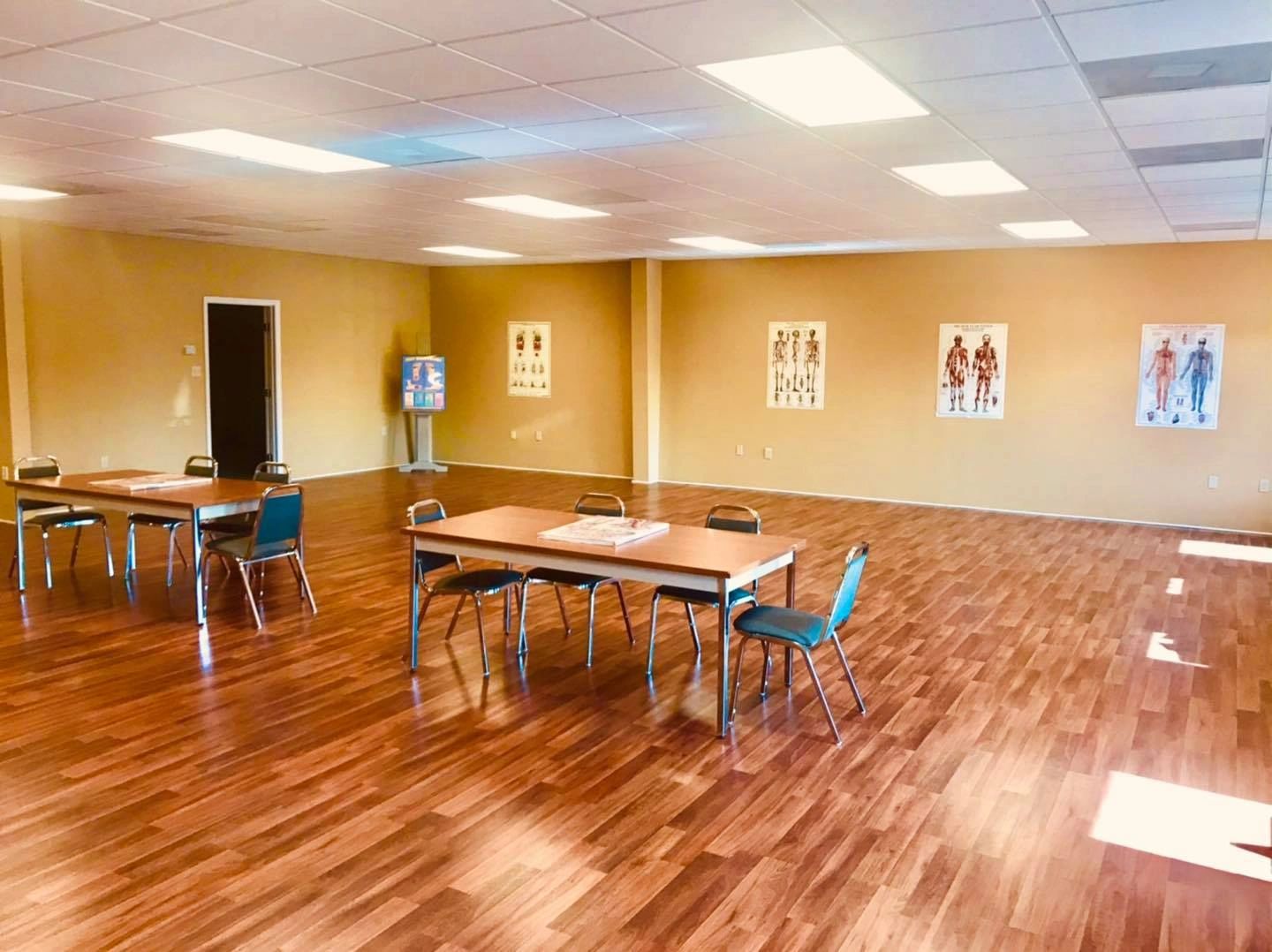
Biomedical instruction forms the backbone of accredited programs. Students spend hundreds of hours studying human anatomy, skeletal and muscular systems, kinesiology, and pathology. This academic foundation ensures that practitioners understand how soft-tissue manipulation impacts the circulatory, nervous, and lymphatic systems. Clinical training typically occurs in a student-run clinic or supervised public setting, allowing learners to log practical hours while performing Swedish massage, deep tissue therapy, trigger point work, and hydrotherapy under licensed instructor supervision.
Essential Curriculum Components
- Anatomy, Physiology, and Kinesiology: Detailed mapping of muscle origins, insertions, actions, and pathological conditions requiring treatment modification.
- Massage Theory and Technique: Instruction in effleurage, petrissage, friction, tapotement, and compression, alongside orthopedic assessment.
- Ethics, Boundaries, and Business Practices: Training in client confidentiality, professional boundaries, local health department sanitation codes, and practice management.
- Supervised Clinical Practicum: Real-world client intake, postural assessment, treatment planning, and charting completed within a supervised environment.
Comparing Educational Pathways and Program Structures
| Feature / Requirement | Alabama Massage Programs | Michigan Massage Programs |
|---|---|---|
| Minimum Training Hours | Typically 650 hours | Minimum 500 hours |
| State Regulatory Body | Alabama Board of Massage Therapy | Michigan Board of Massage Therapy (LARA) |
| Required Exam | MBLEx (FSMTB) | MBLEx (FSMTB) |
| Primary Accreditation | State Board Approval / COMTA | State Board Approval / COMTA |
| Continuing Education (CEUs) | Required biennially for license renewal | Required biennially for license renewal |
Evaluating program structures requires looking beyond raw clock hours to examine schedule flexibility, faculty credentials, and student-to-teacher ratios in clinical settings. Many institutions offer both daytime and evening cohorts to accommodate working adults, with program lengths varying from six months in an accelerated format to eighteen months for part-time evening schedules.
Financial Considerations and Return on Investment
Enrolling in a massage therapy training program involves tuition, textbooks, liability insurance, background checks, and board examination fees. Total program costs vary widely based on whether the institution is a public community college, a specialized private vocational school, or a comprehensive wellness institute. Financial aid, payment plans, and veterans' educational benefits may be available for programs that hold institutional accreditation through nationally recognized accrediting bodies.
Beyond initial tuition expenses, students should factor in the cost of licensure application fees, state board registration, and professional liability insurance required for clinical internships. Because professional bodywork can be physically demanding, calculating the return on investment involves balancing upfront educational expenditures against projected hourly wages, self-employment overhead costs, and opportunities for specialization in fields like sports massage, oncology support, or clinical orthopedics.
Practical Steps to Enroll in a Qualified Training Program
Securing admission to a reputable massage therapy school involves a structured sequence of administrative and academic preparations. Prospective students should begin by verifying that their target institution is officially recognized by their state regulatory board. Enrolling in an unapproved school can permanently bar an applicant from sitting for the MBLEx or obtaining a state license to practice legally.
Application Checklist
- Verify State Board Approval: Cross-reference the school's name directly on the Alabama Board of Massage Therapy or Michigan LARA registry to confirm active institutional status.
- Review Admission Prerequisites: Ensure completion of a high school diploma or GED equivalent, along with any mandatory immunizations or criminal background check requirements.
- Tour the Facility and Clinic: Visit the campus to inspect table spacing, sanitation equipment, hydrotherapy stations, and the student-operated public clinic.
- Examine Graduation Rates and Pass Rates: Request institutional data regarding MBLEx first-time pass rates and job placement percentages for recent graduates.
- Meet with Financial Aid Advisors: Discuss out-of-pocket costs, payment schedules, and available grant or loan opportunities before signing enrollment agreements.
Frequently Asked Questions
Can I transfer my massage therapy license between Alabama and Michigan?
Neither state offers automatic license reciprocity. Practitioners moving between Alabama and Michigan must submit an application for licensure by endorsement, verify their original education and exam scores, and fulfill any supplemental coursework or continuing education requirements mandated by the receiving state's regulatory board.
What is the MBLEx and why is it mandatory?
The Massage and Bodywork Licensing Examination (MBLEx) is a standardized, entry-level competency exam administered by the Federation of State Massage Therapy Boards. Passing this exam is a universal prerequisite for obtaining professional licensure in nearly all U.S. states that regulate the profession.
How many clinical hours are typically required during training?
While total program hours range from 500 to 650 hours depending on state mandates, supervised hands-on clinical practice usually accounts for 100 to 200 hours of the total curriculum, allowing students to refine stroke mechanics and client communication under expert supervision.
Are financial aid and scholarships available for massage school?
Federal financial aid, including Pell Grants and federal student loans, is available only at accredited institutions that participate in U.S. Department of Education title IV programs. Private vocational schools may offer institutional payment plans, military veteran benefits, or localized career training grants.
What are the physical demands of working as a professional massage therapist?
Bodywork is a physically active profession requiring core strength, proper ergonomic posture, and joint stability. Practitioners must learn body mechanics that utilize their entire body weight rather than relying solely on finger and wrist strength, which helps prevent repetitive strain injuries over a long-term career.
Next Actions for Prospective Students
Begin your professional journey by contacting at least three state-approved schools in your preferred region to request course catalogs, tuition schedules, and campus tour dates. Prepare a list of targeted questions for admissions advisors regarding board exam pass rates and clinical internship requirements. Verifying these administrative details early ensures that your chosen educational path fully aligns with your long-term career objectives in professional bodywork.