Navigating the aftermath of a car accident in Alabama requires a clear understanding of state-specific legal frameworks, insurance protocols, and statutory deadlines. Knowing your rights and the obligations associated with filing a claim helps protect your financial well-being and ensures compliance with Alabama's unique contributory negligence laws.
Understanding Alabama Legal Frameworks for Motor Vehicle Collisions
The state of Alabama operates under a fault-based tort system for motor vehicle collisions. This means that the individual who causes a crash is financially responsible for the resulting damages, including medical expenses, vehicle repair costs, and lost wages. To recover compensation, an injured party typically files a claim against the at-fault driver’s auto insurance policy or initiates a personal injury lawsuit in civil court. However, unlike many other states that utilize comparative fault systems, Alabama adheres to the strict doctrine of contributory negligence.
Under Alabama contributory negligence law, if an injured plaintiff is found to be even one percent at fault for the accident, they are completely barred from recovering any financial compensation. This harsh rule makes establishing liability critically important from the very beginning of an insurance claim or legal proceeding. Insurance adjusters and defense attorneys frequently attempt to use this doctrine to minimize payouts or deny claims entirely by shifting a fraction of the blame onto the victim. Consequently, compiling robust evidence right after a collision is essential to demonstrate that the other party bore 100 percent of the fault.
Another vital component of Alabama's legal landscape is the statute of limitations for personal injury and property damage claims. According to the Code of Alabama, individuals generally have two years from the date of the crash to file a personal injury lawsuit against the responsible party. For property damage claims, such as the cost of repairing or replacing a vehicle, the statute of limitations is typically six years. Failing to file a lawsuit within these designated timeframes almost always results in the permanent loss of the right to pursue compensation through the courts.
Immediate Steps to Take After an Accident in Alabama
The moments immediately following a motor vehicle collision are chaotic, but taking the correct steps safeguards both your physical health and your legal rights. State law mandates certain actions immediately upon being involved in an accident, while other steps serve practical and evidentiary purposes for future claims.
First, you must stop your vehicle immediately and remain at the scene, as leaving an accident involving injury or property damage can lead to severe criminal penalties under Alabama law. Check yourself and your passengers for injuries, and immediately call 911 if medical attention is required. If the vehicles are drivable and obstructing traffic, move them safely to the shoulder to prevent secondary collisions, provided it is safe to do so.
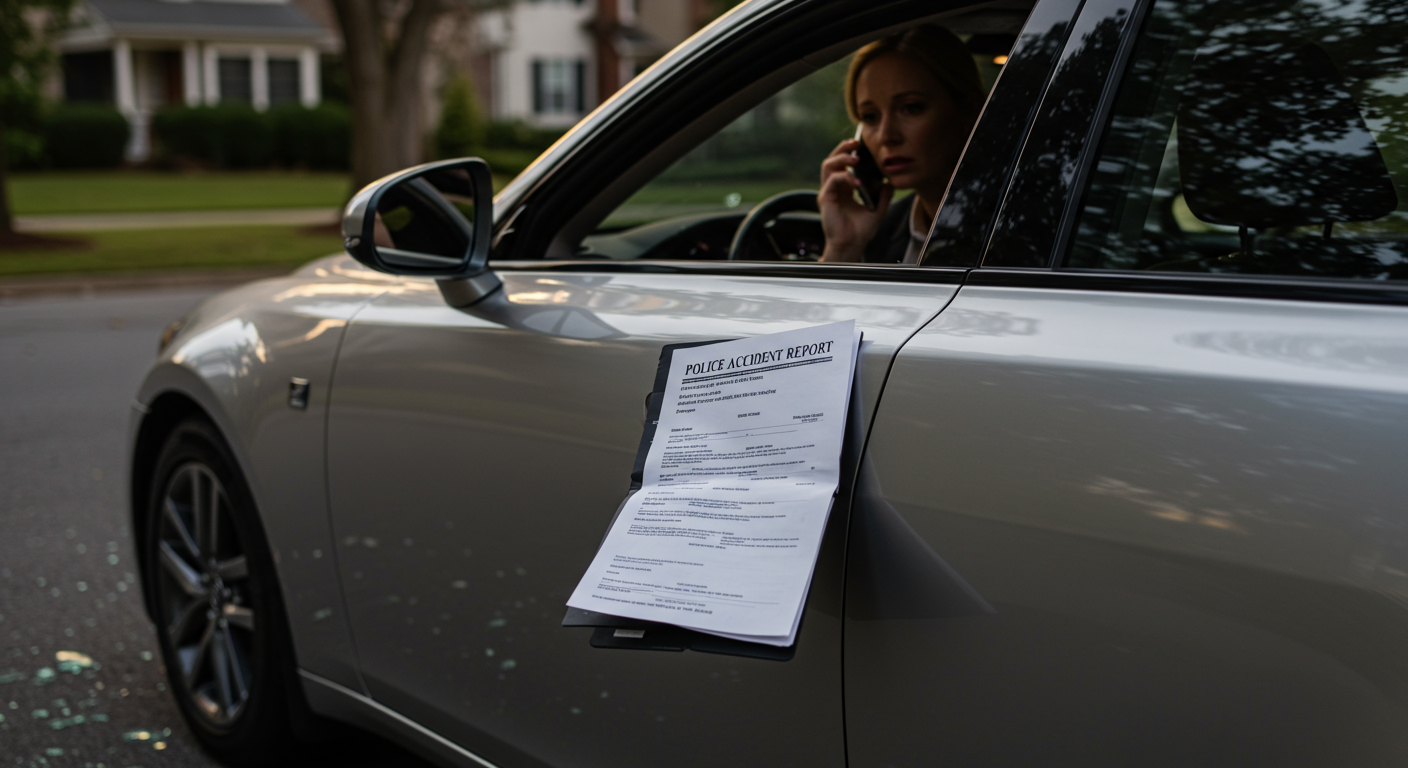
Once safety is established, you should contact local law enforcement to report the incident. Having an official police report generated by an officer is a cornerstone of any insurance claim or legal case. When law enforcement arrives, provide a factual, objective account of what happened, but avoid admitting fault, apologizing, or speculating about the causes of the collision.
Gathering evidence at the scene significantly strengthens your position when dealing with insurance companies. Take clear photographs and videos of vehicle damage, skid marks, road conditions, traffic signs, and any visible injuries. Exchange contact information, driver's license details, and insurance policy numbers with all involved drivers. If there are eyewitnesses, obtain their names and telephone numbers, as independent testimony often proves decisive when liability is contested.
Navigating Insurance Claims and Dealing with Adjusters
Dealing with insurance companies after a crash requires caution and strategic communication. Whether you are filing a claim with your own insurer or pursuing compensation through the at-fault driver's carrier, insurance adjusters are trained to protect their employer's bottom line. Their primary objective is often to minimize the payout or find a legal basis to deny the claim under Alabama's strict contributory negligence rules.
When reporting the accident to your own insurance company, provide the basic facts of the incident promptly, as most policies require timely notification. However, exercise extreme caution when speaking with the opposing driver’s insurance adjuster. You are under no legal obligation to give a recorded statement immediately without preparation, and you should decline requests to sign blanket medical authorization forms that give the insurer unlimited access to your entire medical history. Adjusters frequently use pre-existing medical conditions to argue that your current injuries were not caused by the accident.
| Claim Type | Statute of Limitations | Primary Evidence Required | Common Insurer Defense |
|---|---|---|---|
| Personal Injury | 2 Years | Police report, medical records, bills, witness statements | Pre-existing conditions, contributory negligence |
| Property Damage | 6 Years | Repair estimates, photos, vehicle title, salvage valuations | Pre-existing damage, depreciation disputes |
| Uninsured Motorist | 2 Years (typically) | Policy documents, proof of uninsured status, medical records | Policy exclusion limits, lack of notification |
Insurance negotiations often involve back-and-forth settlement offers. It is advisable to compile a comprehensive damages package that includes all medical bills, rehabilitation expenses, lost earnings documentation, and repair estimates before evaluating any settlement proposals. Once you accept a settlement and sign a release, you cannot reopen the claim or seek additional funds if your medical condition worsens later.
Evaluating Damages and Compensation Categories
When pursuing a claim for an Alabama car accident, understanding the full scope of recoverable damages ensures you do not settle for an amount that falls short of your actual losses. Compensation in personal injury claims is generally divided into economic and non-economic categories, each serving a distinct purpose in making the injured party whole.
Economic damages represent quantifiable financial losses stemming directly from the collision. These include past and future medical expenses, ranging from emergency room visits and surgeries to physical therapy and prescription medications. Lost wages form another major component of economic damages, covering time missed from work during recovery. If the injuries result in long-term disability or a reduced capacity to earn income in the future, economic damages may also account for this future financial shortfall. Property damage, including vehicle repairs or total loss compensation and rental car costs, is also classified under economic losses.
Non-economic damages compensate for subjective, non-financial impacts of the accident. These include physical pain and suffering, mental anguish, emotional distress, and loss of enjoyment of life. Unlike some states that have statutory caps on non-economic damages in standard personal injury cases, Alabama law generally does not cap compensatory damages for personal injuries, though punitive damages are subject to specific statutory limits. Punitive damages are reserved for cases involving egregious conduct, wantonness, or intentional misconduct, rather than simple negligence.
When to Seek Professional Legal Guidance
While minor fender-benders involving only property damage can often be resolved directly with insurance companies, many Alabama car accident scenarios warrant consulting an experienced personal injury attorney. Navigating complex legal doctrines like contributory negligence without professional representation can result in the complete forfeiture of your right to compensation.
You should strongly consider hiring legal counsel if the accident resulted in severe injuries, permanent disability, or wrongful death. Cases involving disputed liability, multiple vehicle pile-ups, or commercial vehicle involvement also introduce significant legal and factual complexities that require thorough investigation, expert witness testimony, and formal litigation procedures. Furthermore, if an insurance company acts in bad faith—such as unreasonably delaying a claim investigation, denying valid coverage, or making lowball offers without justification—an attorney can take legal action to hold the insurer accountable.
Most personal injury attorneys in Alabama operate on a contingency fee basis. This payment structure means the client pays no upfront legal fees; instead, the attorney receives an agreed-upon percentage of the final settlement or court award. If the case does not result in a recovery, the client owes no attorney fees. This arrangement allows injured individuals to access skilled legal representation regardless of their current financial situation.
Frequently Asked Questions
What should I do if the other driver does not have insurance?
If you are hit by an uninsured or underinsured driver in Alabama, your primary avenue for compensation is through your own auto insurance policy if you carry Uninsured/Underinsured Motorist (UM/UIM) coverage. While Alabama law mandates that insurance companies offer UM coverage, policyholders have the right to reject it in writing. If you have UM coverage, your insurer steps into the shoes of the at-fault driver to pay for your medical bills and property damage up to your policy limits.
How is fault determined in a multi-car pile-up in Alabama?
Determining fault in multi-car pile-ups requires a detailed investigation by law enforcement, accident reconstruction experts, and insurance investigators. Because Alabama enforces contributory negligence, investigators analyze police reports, black box data, dashcam footage, and witness statements to establish the precise sequence of events. Multiple drivers may share varying degrees of liability, and establishing which impact caused specific injuries is vital for resolving related claims.
Can I still recover damages if I was partially at fault for the crash?
Under Alabama's strict contributory negligence rule, you cannot recover any financial compensation if you were even one percent at fault for the accident. This is why insurance adjusters frequently look for any admission of partial blame, such as speeding by a fraction or being momentarily distracted. Overcoming this defense requires compelling evidence that places 100 percent of the legal responsibility on the other party.
What is a diminished value claim for vehicle damage?
A diminished value claim seeks compensation for the loss in market value your vehicle suffers after being involved in an accident, even after it has been fully and professionally repaired. Many buyers are reluctant to purchase a car with a documented accident history, meaning the vehicle is worth less than an identical car with a clean history. In Alabama, vehicle owners can pursue diminished value claims against the at-fault driver's insurance company under specific circumstances.
How long does it usually take to resolve an Alabama car accident claim?
The timeline for resolving a car accident claim varies significantly based on the severity of the injuries, the clarity of liability, and the willingness of the insurance company to negotiate fairly. Simple claims involving minor property damage may settle within a few weeks. Conversely, cases involving complex medical treatments, permanent injuries, or disputed liability often take several months or even years, especially if the matter proceeds to a formal lawsuit in court.
Protecting Your Legal Interests Moving Forward
Securing your rights after a motor vehicle collision in Alabama depends on acting deliberately and methodically. Prioritize your medical recovery, preserve all documentation related to the crash, and remain vigilant in your interactions with insurance companies. By understanding statutory deadlines and the profound implications of state negligence laws, you position yourself to navigate the claims process effectively and secure the financial recovery you deserve.