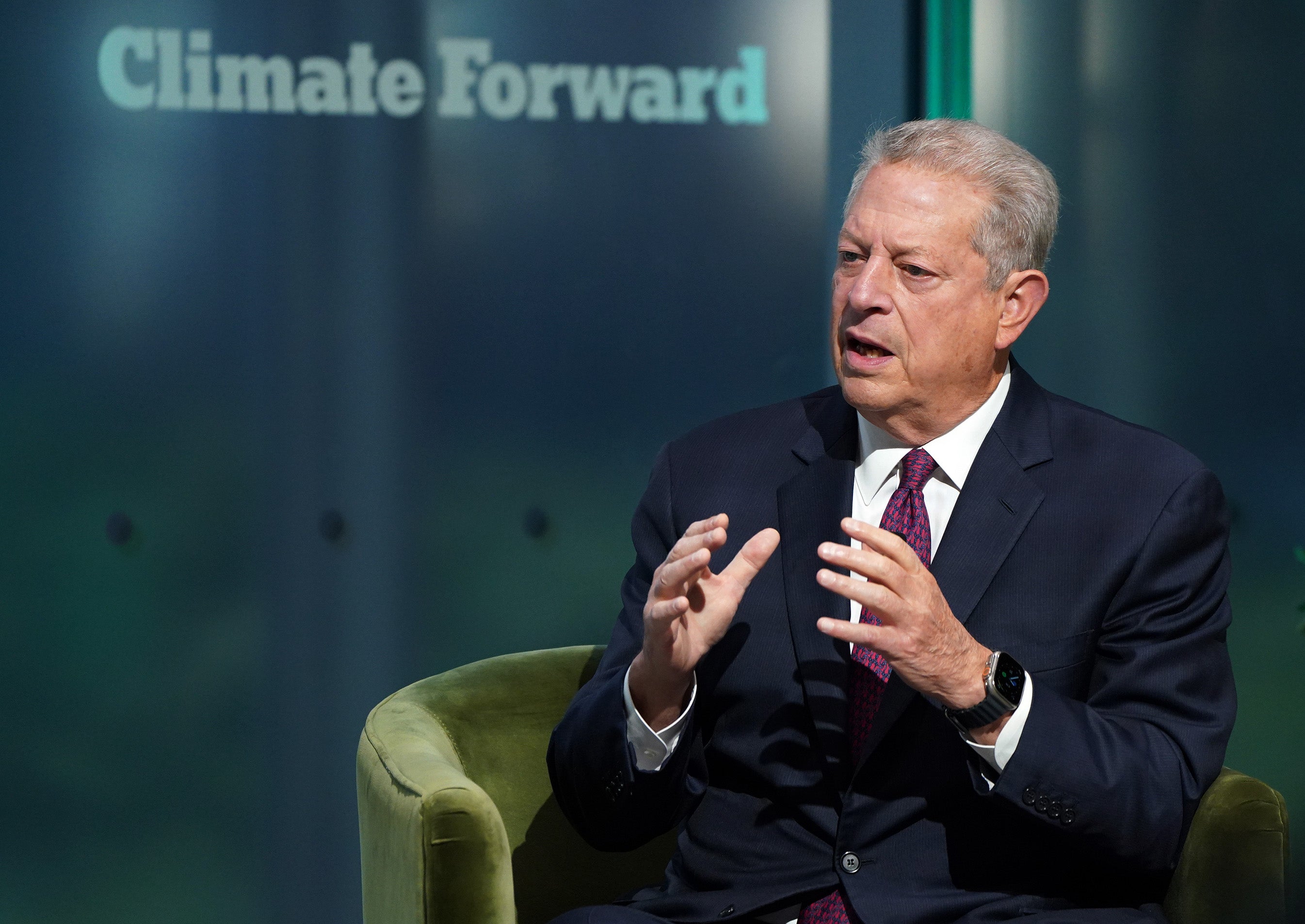
Al Gore is the 45th Vice President of the United States, a Nobel Peace Prize laureate, and a pioneering environmental activist. In 2026, he continues to lead the global conversation on the climate crisis through the Climate Reality Project and his influential work in sustainable investment and green technology.
The Political Architecture of the Clinton-Gore Era
Al Gore’s tenure as Vice President from 1993 to 2001 was defined by a pivot toward modernization and technological foresight. Unlike many of his predecessors, Gore was given a wide-ranging portfolio by President Bill Clinton, which included the "National Partnership for Reinventing Government." This initiative sought to streamline federal bureaucracy, reducing the size of the federal workforce while attempting to increase efficiency through the adoption of new information technologies.
Gore was an early and vocal proponent of the "Information Superhighway," a term he popularized to describe the burgeoning internet. His legislative support for the High Performance Computing Act of 1991—often referred to as the "Gore Bill"—laid the groundwork for the commercial and educational expansion of the World Wide Web. While political opponents later caricatured his role in "inventing" the internet, computer scientists like Vint Cerf and Bob Kahn have noted that Gore was the first political leader to recognize the importance of networking technology and to provide the legislative momentum required for its public infrastructure.
Beyond technology, Gore’s political legacy was inextricably linked to environmental policy. He led the U.S. delegation to the 1997 Kyoto Protocol negotiations. Although the treaty faced significant opposition in the U.S. Senate and was never ratified by the United States, Gore’s involvement signaled a shift in how the executive branch viewed environmental protection—not merely as a domestic regulatory issue, but as a core component of national security and international diplomacy.
The 2000 Election and Jurisprudential Finality
The 2000 United States Presidential Election remains one of the most significant events in American political and legal history. The race between Al Gore and George W. Bush culminated in a razor-thin margin in the state of Florida, leading to weeks of manual recounts and intense legal battles. The dispute eventually reached the U.S. Supreme Court in the landmark case Bush v. Gore.
The Court’s 5-4 decision to halt the manual recount effectively awarded the presidency to Bush. Gore’s reaction to this moment is often cited by historians as a crucial instance of democratic stability. In his concession speech on December 13, 2000, Gore stated, "While I strongly disagree with the court's decision, I accept it." This statement prioritized the peaceful transfer of power and the integrity of the judicial system over personal political ambition.
The aftermath of the 2000 election transformed Gore from a career politician into a global citizen. Freed from the constraints of electoral politics, he began to focus exclusively on the issue he had championed since his days as a young congressman: the anthropogenic warming of the planet. This transition marked the beginning of his most influential chapter, where he moved from legislative advocacy to global education and systemic financial reform.
Environmental Evangelism and the Nobel Peace Prize
In 2006, the release of the documentary An Inconvenient Truth fundamentally changed the public discourse surrounding climate change. The film, which featured Gore’s long-standing slide show presentation, translated complex climate science into an accessible narrative for the general public. It won two Academy Awards and propelled the concept of the "carbon footprint" into the mainstream.
Gore’s methodology was distinct; he utilized a data-driven approach, relying on ice core samples, atmospheric CO2 measurements (the Keeling Curve), and historical temperature records to build a case for urgent action. In 2007, his efforts were recognized on the highest global stage when he was awarded the Nobel Peace Prize, shared with the Intergovernmental Panel on Climate Change (IPCC). The Nobel Committee cited their efforts to build up and disseminate greater knowledge about man-made climate change and to lay the foundations for the measures that are needed to counteract such change.
The impact of Gore’s work during this period cannot be overstated. He transitioned the climate conversation from a niche scientific concern to a central moral and political imperative. By founding the Alliance for Climate Protection, which later merged into the Climate Reality Project, he created a framework for training thousands of activists worldwide to deliver the same message, creating a grassroots movement that persists in 2026.
Sustainable Capitalism and Generation Investment Management
Recognizing that policy alone could not solve the climate crisis, Al Gore turned his attention to the global financial system. In 2004, he co-founded Generation Investment Management (GIM) with David Blood, the former CEO of Goldman Sachs Asset Management. The firm was built on the philosophy of "Sustainable Capitalism."
GIM operates on the principle that environmental, social, and governance (ESG) factors are material to long-term financial performance. This approach challenged the traditional "short-termism" of Wall Street, which often prioritized quarterly earnings over long-term planetary health. As of 2026, the firm has become a model for how institutional investors can integrate sustainability into their portfolios without sacrificing returns.
Key pillars of Gore’s sustainable investment philosophy include:
- Long-term Horizon: Avoiding the volatility of short-term market fluctuations to focus on companies with durable business models.
- Integrated Analysis: Treating environmental and social impacts as core financial metrics rather than philanthropic "add-ons."
- Decarbonization: Investing heavily in companies that facilitate the transition to a low-carbon economy, from renewable energy providers to manufacturers of high-efficiency industrial equipment.
Technical Advocacy and the Boardroom
Al Gore’s influence extended deep into the technology sector, most notably through his 21-year tenure on the Board of Directors at Apple Inc. Joining the board in 2003, Gore served as a key advisor to Steve Jobs and later Tim Cook during the company’s most explosive period of growth. His role was not merely ceremonial; he was a staunch advocate for Apple’s aggressive environmental goals, including the company’s commitment to becoming carbon neutral across its entire supply chain by 2030.
In early 2024, Gore retired from the Apple board upon reaching the mandatory retirement age for directors. However, his impact on the intersection of technology and sustainability remains a blueprint for corporate governance. He argued that technology companies have a unique responsibility—and a unique economic opportunity—to lead the green transition through innovations in battery storage, recycled materials, and energy-efficient processing power.
| Metric/Milestone | Detail | Significance |
|---|---|---|
| Vice Presidency | 1993–2001 | Focused on technology, internet expansion, and government efficiency. |
| 2000 Election | Bush v. Gore | A pivotal moment for U.S. democracy and Gore's pivot to activism. |
| Documentary | An Inconvenient Truth | Galvanized global public opinion on the climate crisis in 2006. |
| Nobel Peace Prize | 2007 | Shared with the IPCC for climate education and advocacy. |
| Financial Sector | Generation Investment Management | Pioneered ESG and sustainable capitalism in private equity. |
| Corporate Role | Apple Board of Directors | Influenced the greening of the world's most valuable tech company. |
The Climate Reality Project and Global Activism in 2026
In 2026, the Climate Reality Project stands as Al Gore’s primary vehicle for direct action. The organization has trained tens of thousands of "Climate Reality Leaders" across more than 170 countries. These individuals range from youth activists to corporate executives, all equipped with the scientific data and communication tools necessary to advocate for local and national climate solutions.
The organization’s current focus in 2026 centers on three critical pillars:
- The Energy Transition: Accelerating the phase-out of fossil fuels in favor of wind, solar, and geothermal energy.
- Environmental Justice: Ensuring that the transition to a green economy does not leave behind marginalized communities who have historically borne the brunt of pollution.
- Policy Reform: Advocating for international cooperation through the framework of the Paris Agreement, focusing on national commitments to reduce methane emissions and end deforestation.
Gore’s "Climate Reality Leadership Corps" training sessions have evolved into sophisticated digital and in-person summits. These events serve as a nexus for scientific updates, where Gore personally presents the latest findings from the IPCC and other major scientific bodies, ensuring that the movement remains grounded in the most current empirical evidence.
Future Outlook: Al Gore’s Legacy in 2026
As we look at the landscape of 2026, Al Gore’s legacy is defined by his ability to bridge the gap between disparate worlds: politics, science, finance, and technology. While he is no longer seeking elected office, his influence on the policy shifts of the 2020s—including major climate legislation in the United States and the European Union—is evident.
His work has helped normalize the idea that protecting the environment is not an alternative to economic growth, but a prerequisite for it. By integrating climate risk into the vocabulary of global finance and training a global workforce of activists, Gore has ensured that the movement he helped spark will continue long into the future. His career serves as a case study in how a public figure can reinvent their influence to address the most pressing existential threat of their era.
FAQ
Did Al Gore claim to "invent" the internet?
No, Al Gore did not claim to invent the internet. In a 1999 interview with CNN, he stated that he "took the initiative in creating the internet," referring to his legislative work as a Congressman and Senator to fund and promote the infrastructure (ARPANET and later the High Performance Computing Act) that allowed the internet to become a public utility. Pioneers of the internet have since defended his role, noting his essential political support for the technology's development.
What is the Climate Reality Project?
The Climate Reality Project is a non-profit organization founded by Al Gore in 2006. Its mission is to catalyze a global solution to the climate crisis by making urgent action a necessity across every level of society. It is best known for its "Leadership Corps" program, which trains volunteers to deliver presentations and lead local advocacy efforts based on the most recent climate science.
How did Al Gore influence ESG investing?
Through his firm, Generation Investment Management, Al Gore was an early architect of ESG (Environmental, Social, and Governance) investing. He promoted the idea that sustainability factors are not just ethical choices but essential financial data points that help predict a company's long-term viability and risk profile. This helped shift the investment community toward "Sustainable Capitalism."
Why did Al Gore win the Nobel Peace Prize?
Al Gore was awarded the Nobel Peace Prize in 2007 for his decades of work in educating the world about the dangers of climate change. The Nobel Committee recognized that environmental degradation could lead to increased conflict and resource scarcity, thus framing climate action as a prerequisite for global peace. He shared the prize with the Intergovernmental Panel on Climate Change (IPCC).
How to Engage with Al Gore's Work in 2026
For those looking to participate in the movements Al Gore has championed, the most direct path is through the Climate Reality Project. Individuals can apply for leadership training to become certified advocates. Additionally, following the research and white papers published by Generation Investment Management provides insight into the future of sustainable finance. Staying informed through the latest reports from the IPCC is the best way to maintain a data-driven understanding of the climate challenges Gore continues to address.