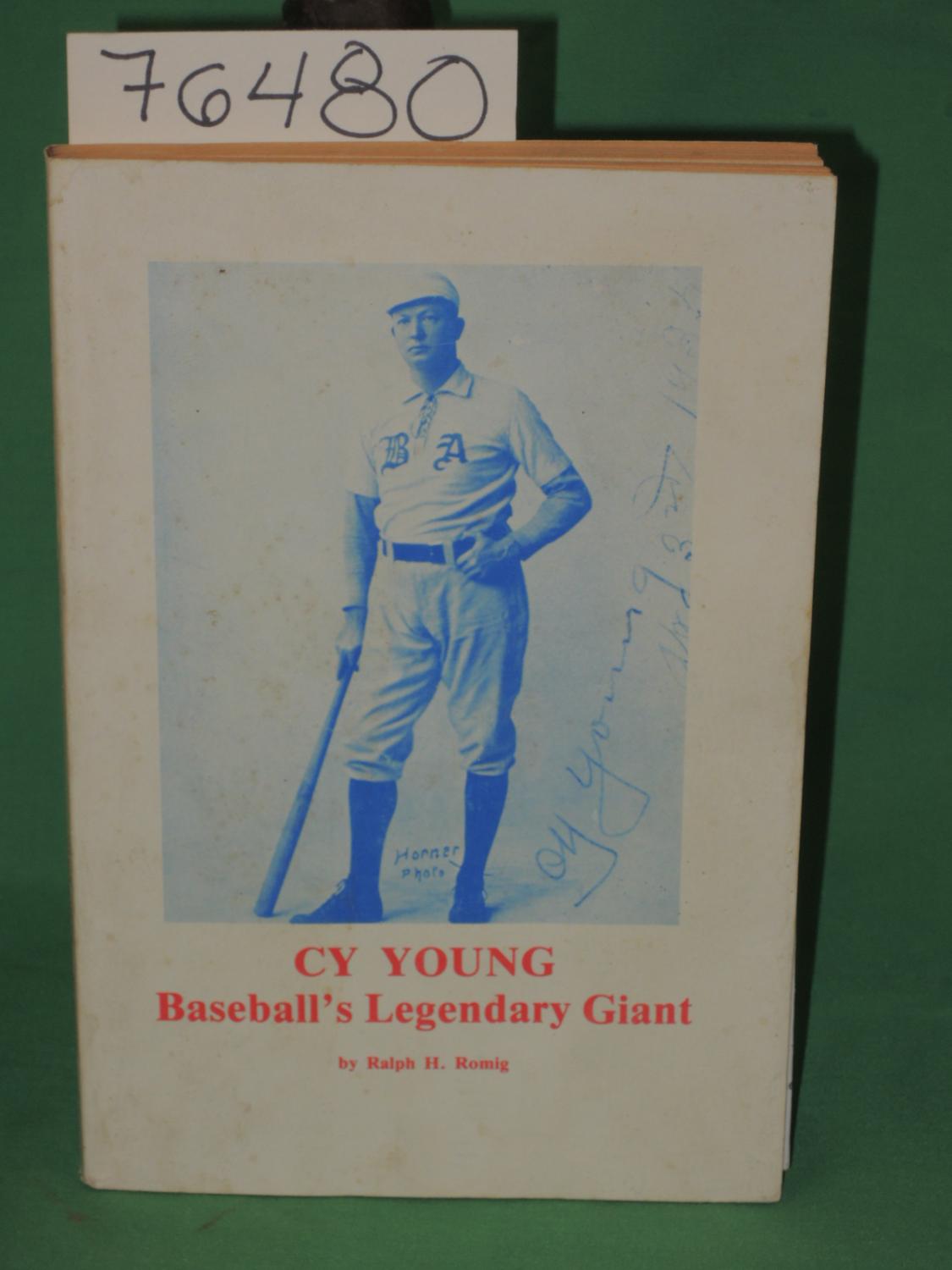
Denton True "Cy" Young remains the most prolific pitcher in the history of Major League Baseball, holding the all-time record of 511 career wins. His legacy is defined by unmatched durability, the transition of the American League (AL) into a premier organization, and a statistical mountain that no modern athlete will ever climb.
The story of Cy Young is more than a list of unbreakable records; it is a narrative of a farmer’s son who transformed the mechanics of pitching during the game’s most volatile era. While modern fans recognize his name through the annual award given to the best pitchers in the American and National Leagues, the "untold" elements of his journey reveal a man who survived radical rule changes, league wars, and the physical toll of throwing over 7,000 innings. As of 2026, his records remain the gold standard of the "Deadball Era," serving as a reminder of a time when a single man could define a franchise for two decades.
The Origins of a "Cyclone": From Gilmore to the Big Leagues
Born in 1867 in Gilmore, Ohio, Denton True Young was raised with the work ethic of a 19th-century farmer. This physical upbringing provided the foundational strength that would later allow him to pitch nearly every other day without the benefit of modern sports medicine. His entry into professional baseball was not the result of a scouting combine but a simple tryout with the Canton independent team in 1890.
The nickname "Cy" was not a family moniker; it was a shortened version of "Cyclone." During his tryout, Young’s fastball was so powerful that it reportedly shattered the wooden fences behind the catcher. Observers remarked that the fence looked as though a cyclone had hit it. The name stuck, and "Cy" Young began a journey that would see him move from the minor leagues to the Cleveland Spiders of the National League within a single year.
His early years in Cleveland were a masterclass in adaptation. When Young entered the league, the pitching distance was only 50 feet. In 1893, the distance was moved to the modern 60 feet, 6 inches to favor hitters. While many of his contemporaries saw their careers end due to the increased strain and loss of velocity, Young adjusted his mechanics. He relied on pinpoint control and a variety of delivery speeds rather than raw power alone, a technical shift that allowed him to remain effective for another 18 seasons.
Legitimizing the American League (AL)
One of the most critical, yet often overlooked, chapters in Young's career is his role in the "League War" between the established National League (NL) and the upstart American League (AL) at the turn of the 20th century. In 1901, Ban Johnson’s American League was struggling to find the star power necessary to compete for ticket sales. Cy Young, then playing for the St. Louis Cardinals (NL), made the controversial decision to jump to the Boston Americans (now the Red Sox) in the new league.
This move was a seismic shift in the sports landscape. By choosing the AL, Young gave the new league instant credibility. He wasn't just a veteran looking for a payday; he was the greatest pitcher in the world. In his first season in the American League (1901), he won the "Triple Crown" of pitching, leading the league in wins (33), strikeouts (158), and ERA (1.62).
His presence in Boston led to the first modern World Series in 1903. Facing the Pittsburgh Pirates, Young was the anchor of the Boston rotation. Despite losing the first game, he returned to win crucial matchups that helped Boston secure the championship. This victory proved that the American League was a legitimate peer to the National League, effectively creating the dual-league structure that remains the backbone of Major League Baseball today.
The Mechanics of Longevity and the 511-Win Peak
To understand the magnitude of 511 wins, one must look at the workload Young endured. In the modern era, a starting pitcher is considered a "workhorse" if they reach 200 innings in a season. Cy Young averaged over 300 innings per year for 19 consecutive seasons. In 1892 alone, he pitched 453 innings.
His durability was not merely a result of physical gifts but of a specialized pitching philosophy. Young rarely threw at 100% effort on every pitch. Instead, he mastered the "waste pitch," using movement and deception to induce weak contact and short fly balls. This preserved his arm for the late innings of games. Furthermore, he was one of the last great pitchers to utilize the "no-windup" delivery effectively, reducing the mechanical stress on his shoulder and elbow.
Comparative Statistics of the Legendary Ace
The following table highlights the career milestones of Cy Young across his most significant tenures. These figures illustrate not just his winning capability but his refusal to leave the mound, evidenced by his staggering complete game totals.
| Statistic | Cleveland Spiders (1890–1898) | Boston Americans/Red Sox (1901–1908) | Career Total (1890–1911) |
|---|---|---|---|
| Wins | 242 | 192 | 511 |
| Losses | 142 | 112 | 316 |
| Complete Games | 323 | 275 | 749 |
| Innings Pitched | 3,346.1 | 2,728.1 | 7,356.0 |
| Shutouts | 31 | 38 | 76 |
| Strikeouts | 1,010 | 1,341 | 2,803 |
The gap between Young and the second-place winner, Walter Johnson (417 wins), is nearly 100 victories. In the context of 2026 baseball, where five-man rotations and strict pitch counts are the norm, Cy Young’s 749 complete games is perhaps the most untouchable record in all of professional sports. For a modern pitcher to reach 511 wins, they would have to win 25 games a year for over 20 years—a feat that is statistically impossible in the current landscape of the game.
The Perfect Game of 1904: A Technical Masterpiece
On May 5, 1904, Cy Young pitched the first perfect game in American League history. This performance is often cited as the pinnacle of his technical skill. Facing a powerful Philadelphia Athletics lineup that included Hall of Famer Rube Waddell, Young retired all 27 batters in order.
What made this "untold" story so compelling was the psychological warfare involved. Waddell had challenged Young to a duel, claiming he was the superior pitcher. Young responded by not allowing a single runner to reach base. During this stretch of the 1904 season, Young pitched 25.1 consecutive hitless innings, a record that stood for over a century. His ability to dominate through efficiency—using fewer than 100 pitches to complete the perfect game—showcased a level of mastery over the strike zone that defined his "Ace" status.
Life After the Mound and the Birth of the Award
Cy Young retired in 1911 at the age of 44. Unlike many modern stars who transition into coaching or broadcasting, Young returned to his roots. He moved back to his farm in Peoli, Ohio, living a modest, quiet life. He remained a figure of reverence in the baseball community, often attending Old Timers' Games and World Series matchups as an honored guest.
However, the "untold" tragedy of his later years involved the loss of his wife, Robba, and the financial difficulties brought on by the Great Depression. Despite these hardships, Young never sold his memorabilia or complained about his circumstances. He remained a humble ambassador for the sport until his death in 1955 at the age of 88.
Immediately following his death, Baseball Commissioner Ford Frick proposed an award to honor the best pitcher in the game. In 1956, the first Cy Young Award was given to Don Newcombe. Originally, only one award was given for the entire Major Leagues, but in 1967, it was expanded to recognize one winner in the American League and one in the National League. This annual tradition ensures that while the man is gone, his name remains synonymous with the absolute peak of pitching performance.
Assessing the Legacy in the Modern Era
As we look at the state of baseball in 2026, the "legendary ace" archetype has changed. Pitchers now prioritize high-velocity "stuff" over the iron-man endurance Young displayed. Yet, Young's influence is seen in the renewed focus on "pitch design" and control. His 511 wins serve as a reminder that the most valuable asset a pitcher can have is availability.
The untold story of Cy Young is not just about the numbers on a plaque in Cooperstown; it is about the evolution of an American pastime. He bridged the gap between the rough-and-tumble 19th-century game and the structured, professional league we recognize today. He was the bridge that allowed the American League to survive its infancy and the arm that carried the sport through its first great era of popularity.
Frequently Asked Questions
Why is the Cy Young Award named after him if he played before it existed?
The award was established in 1956, one year after his death, to honor his status as the winningest pitcher in history. Commissioner Ford Frick wanted a permanent memorial to Young's 511 wins and his impact on the integrity of the game. It was originally meant to elevate the prestige of pitchers, who were often overlooked for MVP honors.
How did Cy Young pitch so many innings without injuring his arm?
Young’s longevity is attributed to a combination of lower league-wide velocity during the Deadball Era and his specific "low-effort" mechanics. He focused on leg strength and a smooth, repeatable delivery rather than "max effort" throwing. Additionally, the lack of emphasis on high-spin rates meant less torque on the ulnar collateral ligament (UCL), which is the primary site of modern pitching injuries.
Did Cy Young ever win a Cy Young Award?
No. Cy Young retired in 1911, and the award was not created until 1956. However, if the award had existed during his career, he likely would have won at least eight to ten of them, based on his league-leading statistics in wins, ERA, and WHIP across his seasons in Cleveland and Boston.
What is considered Cy Young's greatest achievement?
While 511 wins is the headline figure, many historians consider his 749 complete games to be his greatest feat. This means that in nearly 92% of his 815 career starts, he never required a relief pitcher. This level of stamina and responsibility is unprecedented in the history of any professional sport.
How does Cy Young's American League (AL) record compare to his National League (NL) record?
Young was remarkably consistent in both. He won 289 games in the National League and 222 games in the American League. His jump to the AL in 1901 was the catalyst for the league's success, as he proved that the "new" league could attract and maintain the highest level of talent in the country.
Recommendation for Further Exploration
To truly appreciate the "untold" nuances of Cy Young’s career, fans should visit the National Baseball Hall of Fame in Cooperstown, New York, or the Cy Young Museum in Newcomerstown, Ohio. Examining the physical equipment of the era—the heavy wool uniforms and the small, unpadded gloves—provides essential context for his achievements. For those interested in the statistical side, researching the "Wins Above Replacement" (WAR) metrics for the 1901–1905 seasons reveals that Young was not just a volume pitcher, but consistently the most efficient and dominant athlete on the field.