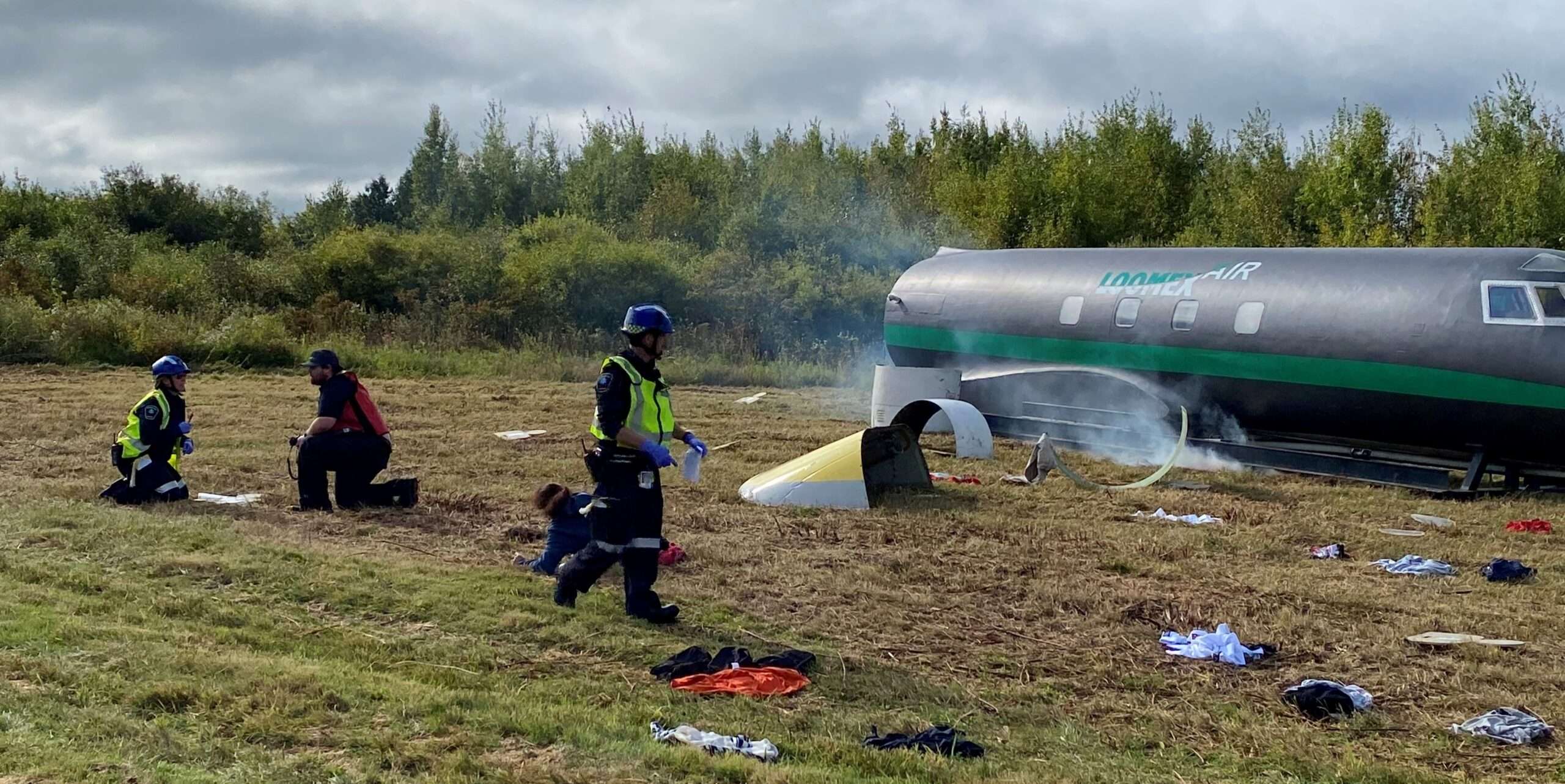
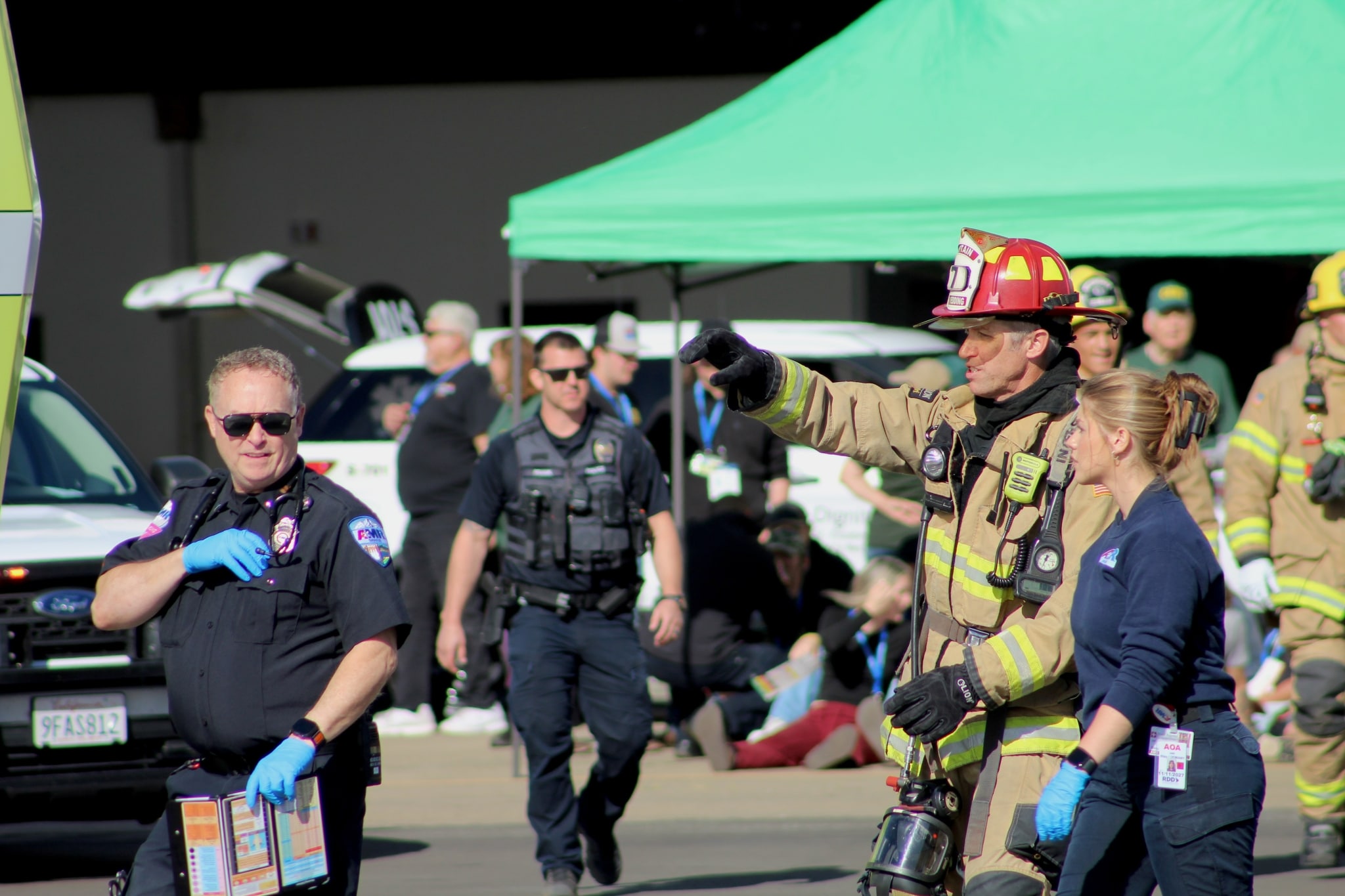
An airport emergency is a critical incident—ranging from aircraft accidents and security threats to natural disasters and medical crises—requiring immediate, highly coordinated intervention by specialized aviation rescue, local emergency services, and federal regulatory agencies to protect human life and restore operational safety.
Navigating an airport emergency requires a precise synthesis of international aviation standards, localized response plans, and multi-agency coordination. Because aviation environments combine high-density passenger traffic, hazardous materials like jet fuel, and complex spatial layouts, incidents escalate rapidly. Understanding how these events are classified, which regulatory frameworks govern them, and how emergency response teams execute their duties is vital for aviation personnel, emergency management professionals, and the traveling public.
Regulatory Frameworks and International Standards
Airport emergency management is not left to ad-hoc decision-making; it is strictly regulated by international standards and national authorities. The primary global benchmark is established by the International Civil Aviation Organization (ICAO), which outlines mandatory safety provisions for member states.
Under ICAO Annex 14 (Aerodromes), every certified commercial airport must establish an Aerodrome Emergency Plan (AEP). This comprehensive document acts as the master blueprint for mitigating the effects of emergencies occurring at or in the immediate vicinity of the aerodrome. National civil aviation authorities—such as the Federal Aviation Administration (FAA) in the United States or the European Union Aviation Safety Agency (EASA) in Europe—enforce these standards through rigorous certification audits and mandatory live-exercise requirements.
National regulations typically mandate that airports maintain dedicated rescue and firefighting capabilities scaled to the airport's size and aircraft traffic volume. These facilities, often known as Aircraft Rescue and Fire Fighting (ARFF) stations, must meet strict response-time criteria, capable of reaching any point on the operational runway within a specified timeframe—usually three minutes under optimal visibility and surface conditions.
Classification and Categorization of Airport Emergencies
Emergency response protocols depend heavily on the nature and severity of the incident. Standard aviation communication and incident command systems categorize emergencies into distinct operational tiers to signal the level of urgency and resource mobilization required.
Aircraft-related emergencies are generally classified into three international standard phases:
- Local Standby: An aircraft is known or suspected to have developed some defect, but the trouble is not normally severe enough to affect safe landing. Emergency services are placed on standby at their respective stations.
- Full Emergency: An aircraft is known or suspected to have developed an abnormal condition that places it in significant danger of an accident. Emergency services deploy to pre-designated strategic positions along the airfield.
- Aircraft Accident: An aircraft has crashed on or in the immediate vicinity of the airport. All external mutual-aid partners, including municipal fire, police, and regional hospitals, are immediately activated.
Beyond aircraft incidents, non-flight emergencies—such as terminal fires, active security threats, hazardous material spills, and severe weather events—follow parallel multi-agency incident management frameworks, separating airside operations from landside public spaces.
The Aerodrome Emergency Plan (AEP) and Command Structure
The Aerodrome Emergency Plan functions as the operational backbone for crisis mitigation. It clearly defines the roles, responsibilities, and communication channels for every participating entity, ranging from airport operations and air traffic control to local police, medical units, and airline representatives.
At the core of this operational structure is the Incident Command System (ICS), a standardized management tool designed to enable coordinated response across multiple jurisdictions. The ICS establishes a unified command post where key decision-makers from different agencies share intelligence and synchronize resource allocation.
| Agency / Entity | Primary Role During an Emergency | Key Responsibilities |
|---|---|---|
| Airport Operations | Overall coordination and airfield management | Communicating with air traffic control, managing surface traffic, and coordinating facility access. |
| ARFF / Fire Services | Initial fire suppression and extrication | Rescuing trapped occupants, mitigating fuel fires, and securing the immediate hazard zone. |
| Medical / EMS | Triage and patient transport | Establishing triage areas, providing emergency medical treatment, and coordinating hospital distribution. |
| Law Enforcement | Perimeter security and crowd control | Securing the accident site, managing traffic flow, preserving evidence for investigators, and handling security threats. |
| Air Traffic Control | Airspace management and alert broadcast | Pausing or rerouting incoming and outgoing flights, and notifying response agencies of incident coordinates. |
| Airlines & Handlers | Passenger and family assistance | Providing passenger manifests, managing uninjured survivors, and coordinating family support centers. |
Inter-Agency Coordination and Mutual Aid Agreements
No single airport entity possesses all the specialized personnel and heavy equipment required to manage a catastrophic aviation disaster. Consequently, comprehensive mutual aid agreements form a critical pillar of airport emergency preparedness.
These legally binding compacts pre-establish operational relationships between the airport operator and surrounding municipal, county, and state agencies. Mutual aid protocols ensure that when an incident exceeds local airport capacity, regional structural fire departments, hazardous materials teams, and additional law enforcement agencies can deploy seamlessly onto the airfield.
Communication interoperability remains a primary focus of inter-agency coordination. Because disparate response organizations often utilize different radio frequencies and digital networks, modern emergency plans rely on shared talk-groups, gateway devices, and designated communication liaisons to maintain unbroken situational awareness between ground firefighters, medical dispatchers, and airport command centers.
Practical Steps in Immediate Incident Response
When an airport emergency is declared, a highly rehearsed sequence of events unfolds across the facility. Understanding this progression highlights how split-second operational decisions protect human life.
First, Air Traffic Control triggers the automated crash alarm and transmits precise spatial coordinates, aircraft type, fuel load, and souls on board to the ARFF station and airport operations center. Second, ARFF vehicles mobilize immediately, positioning themselves along designated perimeter tracks to intercept the aircraft upon landing or to deploy directly to an off-site crash location.
Concurrently, landside emergency services are dispatched via regional 911 dispatch centers to designated gate entry points, where airport security escorts them into the secure airside environment. Triage officers establish casualty collection points upwind and uphill from any potential fire or chemical hazard, ensuring safe processing before transport to designated trauma centers.
Recovery, Investigation, and Post-Crisis Operations
Once the immediate threat has been neutralized and all survivors have been rescued and treated, the focus shifts to site preservation, investigation, and operational recovery.
The secure perimeter remains strictly enforced to protect vital physical evidence, flight data recorders, and wreckage distribution patterns. National transportation safety boards—such as the National Transportation Safety Board (NTSB) or equivalent international bodies—assume legal control of the accident investigation. Airport operators work concurrently to clear debris, repair damaged airfield lighting or pavement, and safely reopen runways as soon as regulatory investigators release the scene.
Concurrently, psychological support teams and family assistance centers are activated. Under international guidelines and national laws, commercial airlines and airport authorities must maintain pre-planned protocols to provide immediate lodging, compassionate communication, and long-term counseling support to passengers, crew members, and their families.
Frequently Asked Questions
What happens to incoming flights during an active airport emergency?
When a full emergency is declared, Air Traffic Control typically halts all arriving and departing traffic on affected runways to ensure unobstructed movement for emergency vehicles. Airborne aircraft holding near the airport are placed into holding patterns or diverted to designated alternate airports until the runway is inspected, cleared, and authorized for reopening by airport operations.
Who is in charge during a major aviation disaster at an airport?
An Incident Commander—usually a senior officer from the airport fire department or municipal fire service—leads the tactical response on the scene. For the broader crisis management operation, a Unified Command structure is established, bringing together representatives from airport management, law enforcement, federal safety regulators, and airline officials to coordinate joint decision-making.
How often are airports required to test their emergency plans?
Regulatory authorities mandate regular testing of the Aerodrome Emergency Plan. Most jurisdictions require airports to conduct full-scale emergency exercises involving all mutual-aid partners at least once every two years, supplemented by tabletop simulations and partial drills conducted annually to evaluate communication readiness and response times.
Are passengers trained on what to do during an airport terminal evacuation?
While terminal passengers do not undergo formal emergency drills, airport terminal buildings are equipped with standardized emergency exit signage, audible public address systems, and automated fire alarm systems. During a landside emergency, trained airport personnel, customer service agents, and security staff guide occupants toward designated assembly points outside the terminal complex.
What is the difference between an airport standby and an accident response?
A standby phase is preventative; it is initiated when an aircraft reports a mechanical anomaly or potential difficulty, positioning firefighters defensively without an active crash. An accident response is reactive and fully mobilized, occurring after an actual crash, structural failure, or catastrophic security breach has already taken place on or near the airfield.
Establishing and Reviewing Emergency Readiness
Airport operators, municipal planners, and aviation stakeholders must continually audit their local emergency infrastructure to maintain compliance and operational readiness. Facility managers should review their Aerodrome Emergency Plan annually, ensuring contact directories for mutual-aid partners, local hospitals, and regulatory oversight bodies remain accurate and up to date. Conducting regular tabletop walkthroughs with police, fire, and medical leadership helps identify communication gaps and resource constraints before a real-world crisis occurs.