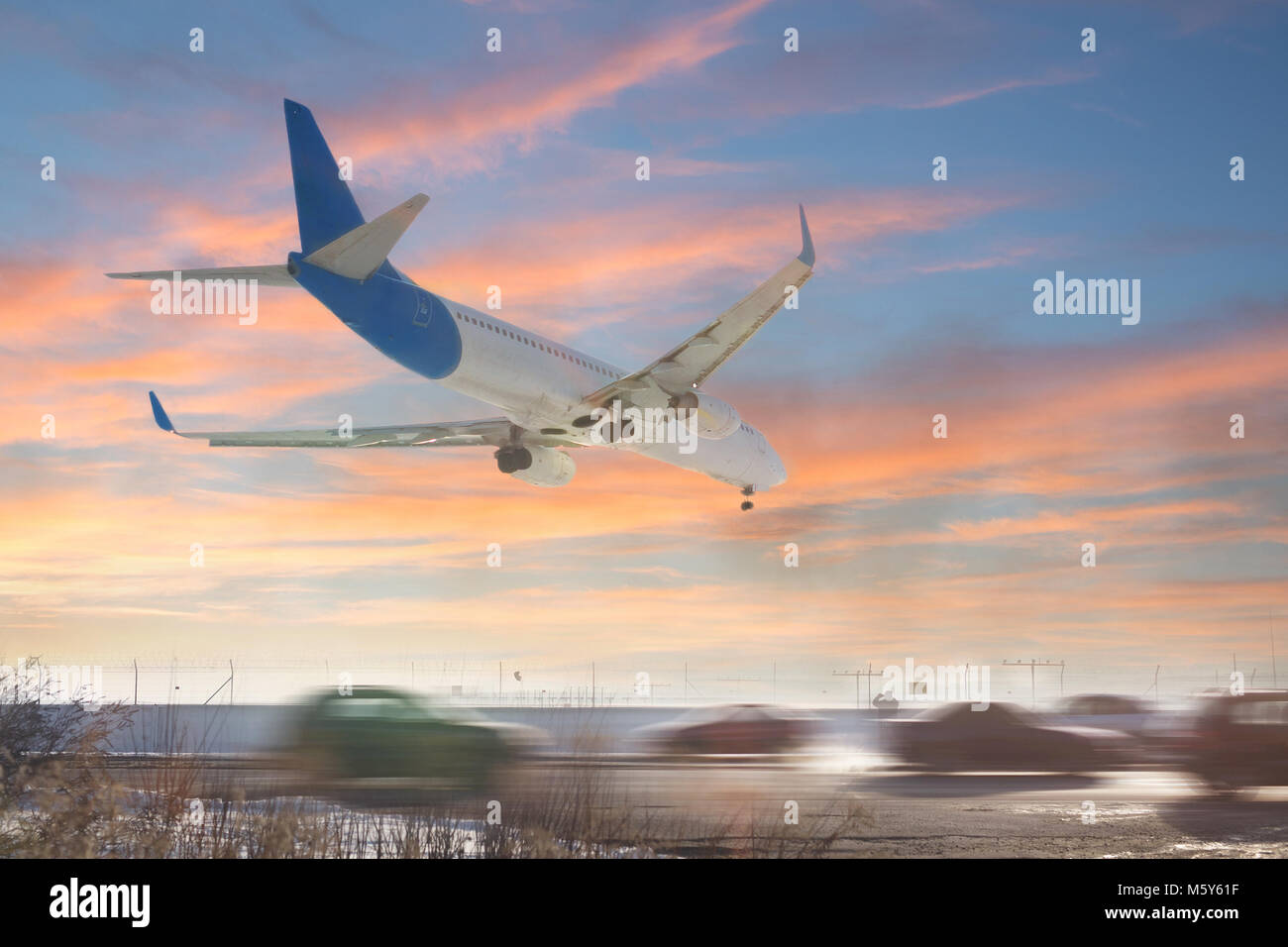
As urban air mobility advances and alternative transportation models evolve, the prospect of personal flying machines altering ground infrastructure introduces fascinating logistical questions. When personal flight becomes common, traditional infrastructure will need to adapt to accommodate vertical takeoff and landing (VTOL) craft, roadable aircraft, and emergency contingencies involving an airplane on a highway.
The integration of aerial vehicles into daily commuting networks does not eliminate ground transport; rather, it transforms how highways, overpasses, and expressways function. While autonomous cars and eVTOL (electric vertical takeoff and landing) aircraft dominate modern transit discussions, the physical reality of hybrid roadable aircraft—vehicles designed to drive on asphalt and fly through the air—forces urban planners, transportation departments, and aviation authorities to rethink highway design. This transition demands a comprehensive examination of regulatory frameworks, infrastructure modifications, emergency safety protocols, and the economic viability of dual-mode transit systems.
The Evolution of Dual-Mode Mobility and Roadable Aircraft
For decades, the concept of a flying car remained confined to speculative fiction. However, contemporary engineering has brought roadable aircraft and light sport aircraft (LSA) capable of short road transit closer to reality. These machines blur the traditional lines between Federal Aviation Administration (FAA) jurisdiction and highway department regulations. Unlike standard commercial airliners, a roadable airplane or personal eVTOL must comply with both airworthiness directives and motor vehicle safety standards.
When evaluating how these vehicles interact with public roadways, engineers must distinguish between true dual-mode vehicles (which drive to a local airstrip to take off) and emergency landings where a conventional airplane touches down on a highway. Both scenarios require distinct regulatory and physical adaptations. Roadable aircraft must feature foldable wings, secure propeller containment systems, and lighting packages that meet Department of Transportation (DOT) automobile requirements while maintaining aerodynamic stability.
Furthermore, the integration of these vehicles changes traffic flow dynamics. A dual-mode vehicle transitioning from flight mode to drive mode cannot simply pull over like a standard automobile. It requires specialized transition zones—buffer areas located near highway off-ramps where pilots can fold wings, secure control surfaces, and switch from aviation instrumentation to ground navigation systems. Without these dedicated transition corridors, urban highways would experience severe bottlenecks caused by vehicles lingering in active travel lanes while performing mechanical transformations.
Highway Infrastructure Adaptation for Aerial Transit
Traditional highways are engineered for rolling friction, gravity drainage, and predictable weight loads distributed across rubber tires. Introducing flying vehicles—whether landing out of necessity or utilizing highway lanes as auxiliary staging zones—requires a fundamental re-engineering of asphalt surfaces and airspace clearances.
Bridges, overpasses, and high-voltage power lines currently present lethal hazards to low-altitude aviation. If highways are to serve as corridors for emergency landings or low-level transit networks, clearance regulations must evolve. Highway departments are evaluating the implementation of electronic geofencing and low-altitude flight corridors running parallel to interstate systems. These designated lanes would act as virtual highways in the sky, keeping aerial traffic separated from traditional ground traffic while utilizing existing right-of-way real estate.
| Feature | Traditional Highway Infrastructure | Next-Generation Transit Corridor |
|---|---|---|
| Surface Material | Standard asphalt or concrete optimized for rolling loads | High-impact composite reinforced asphalt to handle localized landing forces |
| Right-of-Way Clearance | Standard bridge and sign clearances (approx. 14–16 feet) | Extended vertical clearance corridors free of overhead wires and structures |
| Traffic Management | Ground-based sensors, loop detectors, and toll cameras | Integrated UTM (Unmanned Traffic Management) and vehicle-to-infrastructure (V2I) communication |
| Emergency Protocols | Shoulder pull-offs and breakdown lanes | Automated landing pads, clear zones, and rapid-response recovery tow vehicles |
Surface durability represents another critical engineering hurdle. Even light aircraft exert high point-load pressures upon touchdown compared to passenger sedans. Highway foundations must be reinforced with advanced polymer-modified concretes to prevent rutting and structural failure when an aircraft utilizes a highway lane. Additionally, lighting systems must transition from simple nighttime guidance to active directional signaling that can guide both high-speed motorists and descending aircraft simultaneously.
Regulatory Jurisdictions: Aviation Meets Surface Transport
One of the most complex challenges of mixing flying vehicles with highway networks involves jurisdictional overlap. Historically, civil aviation is regulated at the national level by agencies such as the FAA in the United States or EASA in Europe, whereas road networks are managed by state and local departments of transportation.
When a roadable aircraft operates on a highway, it occupies a legal gray area. Is the operator governed strictly by pilot licensing requirements, or must they hold a standard driver's license? Current regulatory frameworks require dual-credentialing: operators must maintain a valid pilot’s certificate (often with sport pilot or private pilot ratings) alongside a standard state driver's license.
| Regulatory Domain | Governing Authority | Primary Compliance Requirements |
|---|---|---|
| Airspace & Flight | National Aviation Authorities (e.g., FAA, EASA) | Airworthiness certificates, flight plans, transponder tracking, medical clearance |
| Road Operation | State/Local Departments of Transportation | Vehicle registration, emissions standards, insurance, motor vehicle lighting |
| Transition Zones | Joint Municipal & Aviation Planning Boards | Zoning compliance, noise abatement, right-of-way access permissions |
Insurance liability during an incident on a highway involving a dual-mode vehicle presents unprecedented legal disputes. Traditional auto insurance policies exclude aviation-related damage, while standard aviation policies frequently exclude damages occurring while operating as a motor vehicle on public roads. Specialty underwriting firms are currently developing hybrid policies that cover both operational spheres, though premiums remain exceptionally high due to the lack of actuarial data.
Emergency Protocols for Forced Landings on Public Roads
Despite advances in propulsion reliability and autonomous flight safety systems, mechanical failures will occasionally force pilots to execute precautionary or emergency landings on public highways. Historically, pilots trained to glide toward open fields or rural stretches of road when engine power is lost. However, modern, congested highway systems change the risk calculus entirely.
Executing an emergency landing safely requires strict adherence to standardized aviation safety procedures adapted for vehicular environments:
- Assess the Glide Path and Traffic Density: The pilot must identify a straight stretch of highway free of heavy traffic congestion, overpasses, and sharp curves while maintaining optimal glide speed.
- Communicate with Air Traffic Control and Ground Services: Transmit a distress call (Mayday or Pan-Pan) while emergency transponder codes are activated to alert local authorities and automated highway management systems.
- Align with Traffic Flow: Whenever possible, the pilot must land in the same direction as vehicular traffic to minimize closing speeds and reduce the kinetic energy differential upon touchdown.
- Deploy Deceleration Aids: Utilize onboard ballistic recovery parachutes or aerodynamic airbrakes to shorten the landing roll, ensuring the aircraft stops before encountering stationary traffic.
- Secure the Aircraft: Power down all electrical and fuel systems immediately upon stopping, deploy hazard markers, and evacuate to a safe position behind a highway barrier while awaiting emergency responders.
First responders—including state troopers, firefighters, and hazardous materials teams—require specialized training to handle downed aircraft on highways. Aviation fuel (such as 100LL avgas or Jet-A) presents extreme fire hazards that differ significantly from standard gasoline or diesel fuel. Furthermore, live electrical systems, high-voltage lithium battery packs in eVTOL variants, and unexpended ballistic parachute rocket systems pose severe safety risks to rescue personnel working near the wreckage.
Economic and Environmental Implications of Urban Air Integration
The integration of flying vehicles into highway corridors carries profound economic and environmental consequences. From an economic perspective, the commercialization of roadable aircraft and urban air mobility promises to alleviate ground-based congestion, reducing billions of dollars in lost productivity caused by urban gridlock. However, the initial capital investment required to upgrade infrastructure—such as installing vehicle-to-infrastructure (V2I) communication nodes, reinforcing asphalt, and establishing vertiports—is staggering.
Environmental concerns center primarily on noise pollution and localized emissions. While electric vertical takeoff and landing craft produce zero tailpipe emissions, their acoustic footprint during low-altitude transit over highway corridors remains a major point of contention for suburban communities living adjacent to major interstate systems. Sound barriers currently designed to mitigate semi-truck and passenger vehicle tire friction are wholly inadequate for managing the directional rotor wash and high-frequency propeller noise generated by flying machines.
To balance economic innovation with environmental protection, urban planners are implementing strict zoning buffers and altitude floors above residential highway stretches. These measures ensure that while highways remain the logical arterial routes for guiding low-altitude transit, surrounding communities are shielded from excessive acoustic disruption.
Navigating the Future of Mixed-Mode Transportation
As technology continues to bridge the gap between aviation and automotive engineering, the presence of flying vehicles alongside traditional transport networks will reshape the built environment. Successfully managing this transition requires deliberate cooperation between federal regulators, state highway administrators, and aerospace manufacturers. By prioritizing robust safety standards, clear jurisdictional boundaries, and resilient infrastructure design, society can safely harness the potential of personal flight without compromising the integrity of public road systems.
Frequently Asked Questions
Is it legal to land a conventional airplane on a highway today?
In an absolute emergency where life or property is severely threatened, Federal Aviation Regulations permit pilots to land off-airport, which occasionally includes public highways. However, doing so outside of a genuine emergency is strictly illegal, constitutes reckless endangerment, and results in severe civil penalties, including the immediate revocation of the pilot's certificate and criminal prosecution.
How do roadable aircraft handle both FAA and DOT requirements?
Roadable aircraft must dual-certify. They require an airworthiness certificate from national aviation authorities proving structural and aerodynamic safety for flight, alongside a motor vehicle safety compliance certification proving they meet lighting, bumper, and tire standards for highway driving.
Who is liable if a dual-mode vehicle causes an accident on a highway?
Liability is determined by whether the vehicle was operating in flight mode or drive mode at the time of the incident. Specialized hybrid insurance policies are required to cover these dual-mode operations, as standard auto and aviation policies contain exclusionary clauses for the opposing operational environment.
What happens to highway traffic when an emergency landing occurs?
Automated traffic management systems and digital highway signage immediately reroute oncoming traffic upstream of the landing site. Emergency response protocols dispatch specialized tow units equipped to handle aircraft removal alongside standard traffic clearance vehicles to restore normal road operations as quickly as possible.
Will flying vehicles eliminate the need for traditional highways?
No. Ground-based transport remains essential for heavy freight, mass transit, and daily ground-level commuting. Flying vehicles and roadable aircraft serve as a complementary layer to existing infrastructure rather than a total replacement for roads and highways.
Securing Your Pathway in Next-Generation Transit
Operators, municipal planners, and logistics professionals investing in emerging dual-mode transit systems should begin by auditing local zoning laws and consulting state department of transportation guidelines regarding right-of-way usage. Prioritize comprehensive insurance consultations to verify policy coverage across both aviation and automotive jurisdictions before operating hybrid vehicles on public thoroughfares.