An aircraft impact event refers to the physical collision of an airborne or ground-traversing aircraft with stationary or moving structures, terrain, or other vehicles, presenting severe structural, thermal, and kinetic challenges that demand specialized engineering analysis, rigorous regulatory oversight, and advanced risk mitigation strategies.
Understanding the Mechanics of Aircraft Impact Dynamics
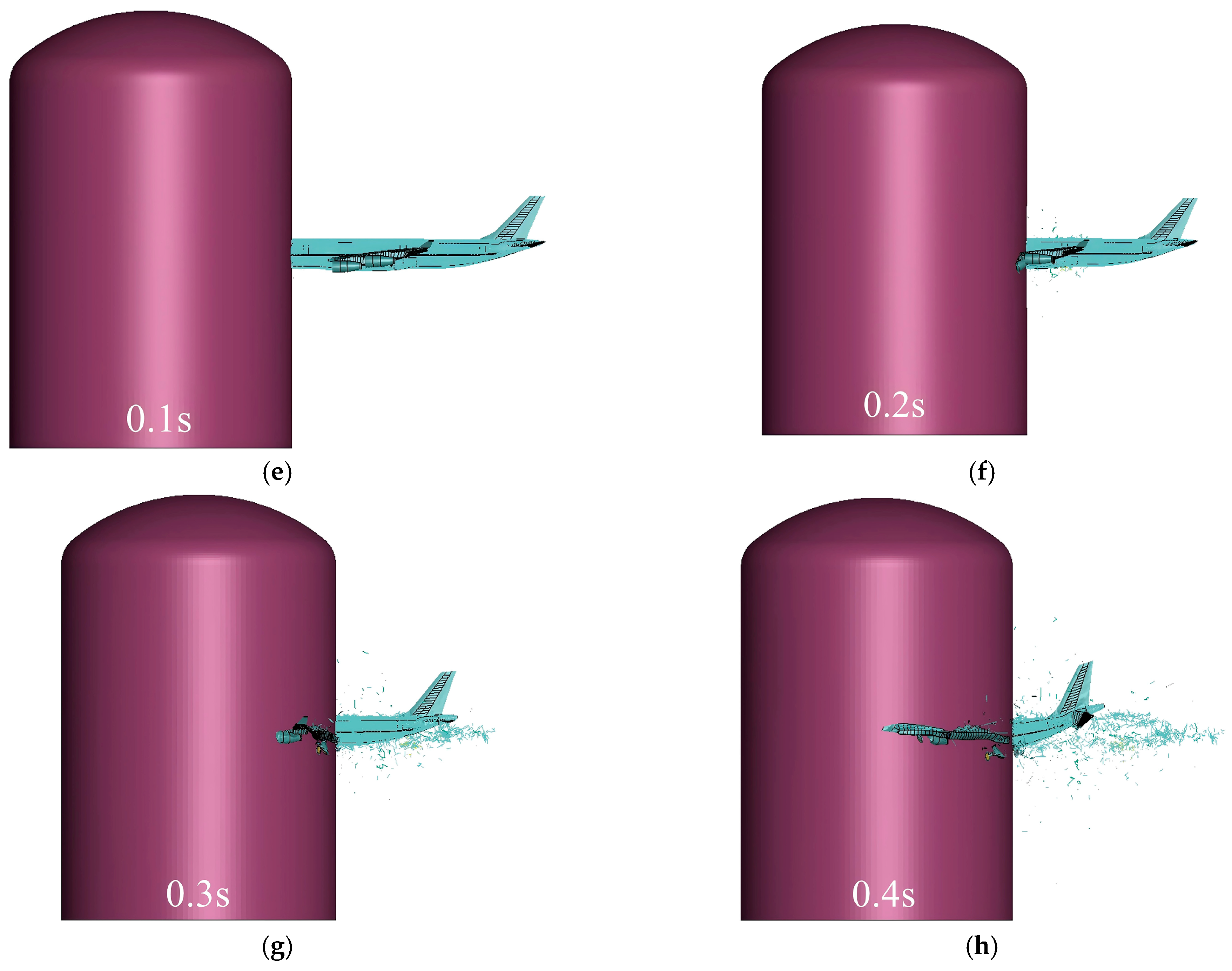
The physical mechanics of an aircraft impact involve an extremely complex transfer of kinetic energy, momentum, and mass over a fraction of a second. When an aircraft collides with a rigid barrier, a building, or another aircraft, the structural components of the vehicle—such as the fuselage, wings, engines, and landing gear—undergo progressive deformation and fragmentation. The severity of the event is dictated by several primary parameters, including the striking aircraft's mass, impact velocity, angle of incidence, and the structural integrity and resistance of the impacted target.
In aerospace engineering and structural mechanics, analyzing these events requires distinguishing between soft-missile and hard-missile impacts. A soft-missile impact occurs when the striking body deforms substantially upon contact, distributing the load over a broader area and dampening peak force transmission. Conversely, hard-missile impacts involve rigid or semi-rigid components, such as heavy engine shafts or landing gear assemblies, that penetrate targets with minimal initial deformation, concentrating intense localized shear and punching loads.
Furthermore, the kinetic energy of the aircraft scales quadratically with velocity ($E_k = \frac{1}{2}mv^2$), meaning that even small increases in impact speed exponentially raise the destructive potential. Structural engineers must evaluate not only the immediate inertial forces but also the subsequent structural instability, progressive collapse mechanisms, and the potential for secondary hazards such as high-velocity debris dispersion and aviation fuel ignition.
Regulatory Frameworks and Structural Design Basis
Modern civil and military infrastructure, particularly critical facilities such as nuclear power plants, chemical processing facilities, and high-security government buildings, must account for potential aircraft impact scenarios during their design phase. Regulatory bodies like the Federal Aviation Administration (FAA), the International Civil Aviation Organization (ICAO), and national nuclear safety regulators establish stringent guidelines for assessing and mitigating these low-probability, high-consequence events.
The structural design basis for resisting an aircraft impact typically involves deterministic and probabilistic risk assessments. Deterministic approaches require engineers to design vital containment structures to withstand specific standardized aircraft categories, such as a large commercial airliner or a fast-moving military jet, impacting at defined velocities and angles. The evaluation framework generally divides the phenomenon into two distinct phases:
- Local Effects: These encompass phenomena occurring immediately at the impact zone, including concrete spalling, scabbing, perforation, and structural shear failure caused by the concentrated kinetic energy of hard components like engine rotors.
- Global Effects: These involve the overall structural response of the building, such as massive bending moments, shear forces, torsional vibrations, and potential overall frame instability or foundation displacement.
To satisfy these regulatory thresholds, civil engineers employ advanced non-linear finite element method (FEM) simulations. These computational models simulate material strain hardening, concrete cracking, rebar yielding, and large-deformation dynamics under extreme loading rates.
| Analysis Parameter | Soft-Missile Component (e.g., Wings, Fuselage) | Hard-Missile Component (e.g., Engine Shafts, Landing Gear) |
|---|---|---|
| Primary Failure Mode | Crushing, buckling, and wide-area load distribution | Localized punching shear, penetration, and spalling |
| Energy Dissipation | High plastic deformation of the projectile | Low projectile deformation; high target damage |
| Simulation Approach | Hydrodynamic pressure-time load functions | Explicit Lagrangian or coupled Eulerian-Lagrangian (CEL) methods |
| Mitigation Focus | Overall structural ductility and frame integrity | Local reinforcement, thick concrete barriers, and secondary catchment walls |
Hazard Assessment and Probabilistic Risk Analysis
Evaluating the likelihood and consequence of an aircraft impact on a specific site requires a comprehensive probabilistic risk assessment (PRA). This methodology integrates historical aviation accident databases, local air traffic density, flight path corridors, runway orientations, and meteorological conditions to calculate the annual probability of an impact.
Air traffic hazards are generally categorized into operational risks associated with nearby airports, airways, military training routes, and general aviation activities. Analysts examine whether a facility is situated within standard takeoff and landing approach zones, where accident statistics indicate a higher statistical probability of off-field landings or controlled flight into terrain (CFIT) events.
When conducting a PRA, risk analysts utilize fault tree and event tree modeling to quantify uncertainties. The process accounts for the effective target area of the structure—which includes its physical footprint as well as a shadow area defined by the aircraft's wingspan, height, and descent angle—and multiplies this geometric factor by regional crash frequency data. If the resulting annual risk exceeds established societal and regulatory safety thresholds, the facility owner must implement structural hardening, operational restrictions, or zoning modifications.
Mitigation Strategies and Engineering Countermeasures
Protecting infrastructure against potential aircraft impacts demands multi-layered engineering countermeasures that balance structural resilience, economic feasibility, and operational functionality. When redesigning or retrofitting facilities for enhanced protection, engineers utilize a hierarchy of controls that begin with spatial planning and site selection.
Isolating high-risk industrial facilities away from major flight paths and airport perimeters remains the most effective preventive measure. However, for existing or unavoidable co-located infrastructure, structural hardening is essential. Key engineering interventions include:
- Reinforced Concrete Barriers: Constructing exterior walls with thick, heavily reinforced concrete matrices designed to absorb high-velocity impacts through distributed plastic deformation.
- Composite Steel-Concrete (SC) Structures: Utilizing modular panels consisting of steel faceplates filled with high-strength concrete, which provide superior resistance against both perforation and spalling compared to traditional reinforced concrete.
- Stand-Off Systems and Perimeter Protection: Erecting independent secondary barriers, robust berms, or heavy fencing positioned at a distance from the main facility to intercept or deflect incoming debris and absorb initial kinetic energy.
- Fire Mitigation and Suppression Integration: Designing automated rapid-response fire suppression systems to manage aviation fuel-induced pool fires, which often present a greater thermal threat to structural stability than the initial mechanical impact.
Frequently Asked Questions
What determines the structural damage severity of an aircraft impact?
The severity of an aircraft impact is primarily determined by the impact velocity, the mass and rigidity of the striking aircraft components, the angle of incidence, and the structural capacity of the target structure to absorb and dissipate kinetic energy through plastic deformation.
How do engineers simulate aircraft impacts on critical facilities?
Engineers utilize advanced non-linear finite element analysis (FEA) software. These simulations incorporate complex material models for concrete, reinforcing steel, and aircraft alloys to evaluate both local penetration effects and global structural stability under high strain-rate conditions.
Are nuclear power plants designed to withstand aircraft impacts?
Yes. Modern nuclear power plants and critical industrial containment structures undergo rigorous regulatory reviews and are specifically engineered with thick reinforced concrete and specialized barriers to withstand the localized and global effects of commercial aircraft impacts.
What is the difference between local and global structural effects?
Local effects refer to damage concentrated directly at the impact zone, such as concrete spalling, tearing, and perforation. Global effects involve the overall response of the entire structural framing system to massive shear forces, bending moments, and dynamic vibrations.
How is the probability of an aircraft striking a specific building calculated?
Probability is calculated using probabilistic risk assessment (PRA) models that combine local air traffic density, proximity to runways or flight corridors, historical accident rates, and the physical effective target area of the structure, including its height and wingspan shadow.
Operational Readiness and Next Steps for Risk Mitigation
Facility operators, structural engineers, and security planners tasked with evaluating vulnerability to aircraft impact events must initiate comprehensive site-specific assessments in coordination with aviation authorities and regulatory bodies. The initial phase requires gathering localized air traffic data, reviewing facility blueprints against current safety criteria, and engaging certified structural engineering consultants specializing in extreme load dynamics. Ensuring compliance with national safety baselines safeguards human life, maintains environmental integrity, and protects critical infrastructure from catastrophic structural failure.