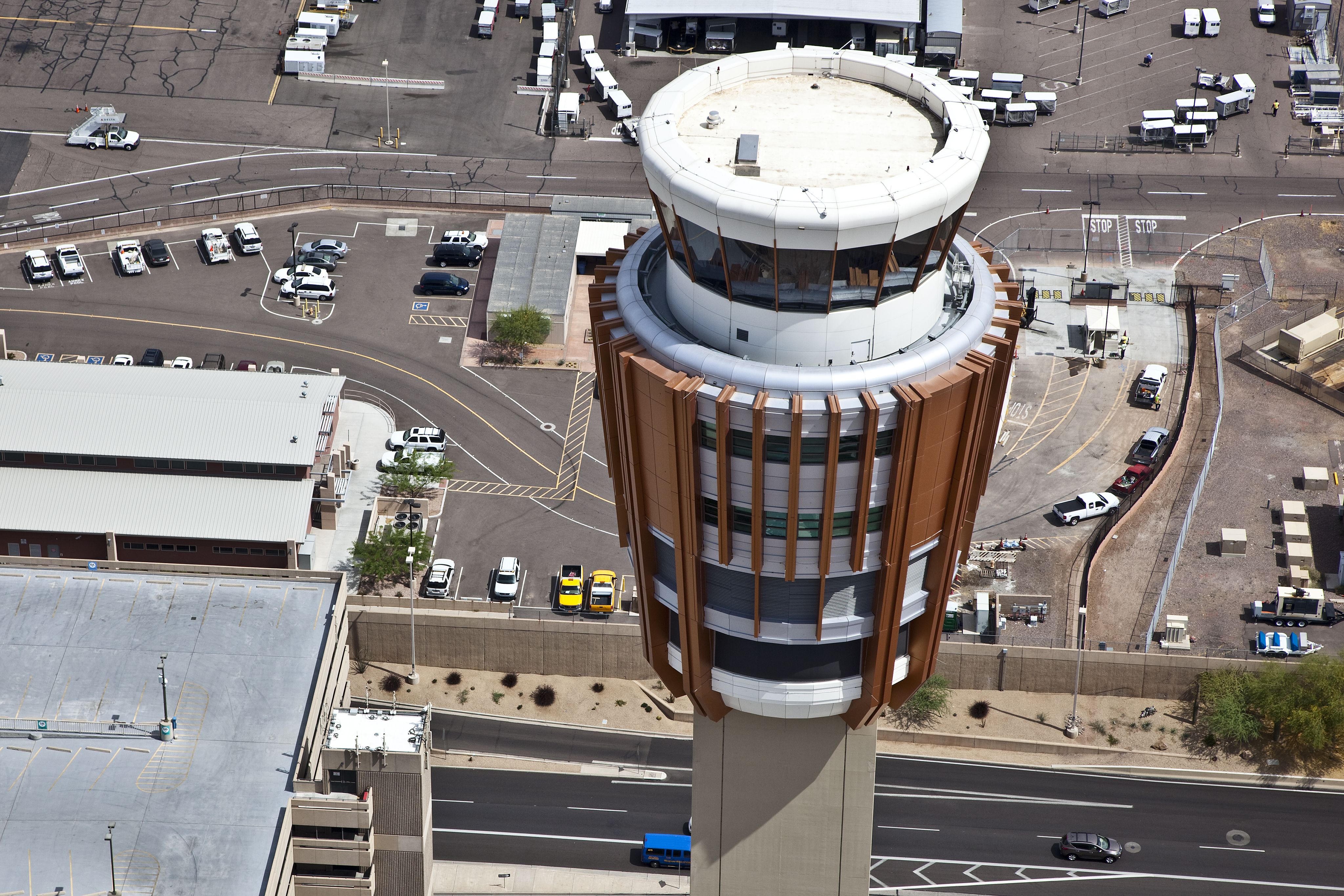
Air traffic control (ATC) crashes and serious incidents are primarily caused by communication misunderstandings, controller fatigue, loss of situational awareness, airport surface incursions, and equipment degradation. To prevent these incidents, modern aviation relies on automated collision avoidance systems, standardized international phraseology, redundant radar tracking, and strict pilot-controller verification loops.
Primary Causes of Air Traffic Control Accidents and Incidents
Air traffic control systems manage thousands of flights simultaneously across vast, complex airspaces. While aviation remains one of the safest modes of transportation, system breakdowns can lead to near-misses, runway incursions, or catastrophic mid-air collisions. Analyzing historical accidents reveals that aviation mishaps rarely result from a single isolated failure; instead, they stem from a chain of operational, environmental, and human factors.
Human Factors, Fatigue, and Workload Strain
Human error remains a major contributing factor in air traffic management safety events. Controllers manage high-stress environments that require continuous vigilance, spatial reasoning, and rapid decision-making.
- Shift Fatigue: Continuous shift work, irregular schedules, and overnight duties can impair cognitive function. Fatigue reduces reaction time, impairs short-term memory, and degrades visual scanning accuracy.
- Sector Overload: High traffic density combined with adverse weather conditions can overwhelm a controller's mental processing capability. When an air traffic controller manages more aircraft than safety parameters recommend, the margin for error shrinks dramatically.
- Distraction and Multitasking: Complex handoffs, training junior controllers on duty, or managing non-routine requests (such as medical emergencies or diversion coordination) can divert attention from primary monitoring tasks.
Communication Failures and Phraseology Errors
Clear verbal communication between flight crews and ground controllers is essential to flight safety. Breakdown in the transmission or comprehension of instructions is a recurring factor in aviation investigations.
- Non-Standard Phraseology: Deviating from established International Civil Aviation Organization (ICAO) standard phraseology creates ambiguity. Colloquialisms or conversational English can lead to misinterpretation, particularly when pilots or controllers are non-native English speakers.
- Readback/Hearback Breakdown: The "readback/hearback" loop requires pilots to repeat critical instructions (such as altitude, heading, and runway clearances) back to the controller, who must then verify accuracy. If a pilot mishears an instruction and the controller fails to catch the incorrect readback, an aircraft may depart assigned airspace or enter an active runway without authorization.
- Call Sign Confusion: When multiple aircraft with similar flight numbers or call signs operate on the same radio frequency, a crew may execute an instruction intended for another plane.
THE READBACK / HEARBACK LOOP
- Controller issues clearance: "Flight 412, climb and maintain FL330"
- Pilot reads back instruction: "Climbing FL330, Flight 412"
- Controller hears & verifies: (Silent confirmation or correction)
Loss of Situational Awareness and Airspace Complexity
Situational awareness requires maintaining an accurate mental model of aircraft positions, trajectories, weather hazards, and operational constraints in four dimensions (latitude, longitude, altitude, and time).
- Radar Blind Spots and Sensor Lag: In oceanic or remote airspace, or during localized radar outages, controllers rely on procedural separation rather than real-time radar surveillance. Delayed position updates increase the risk of route conflicts.
- Vectoring Errors: Assigning incorrect headings or descent clearances can vector an aircraft into terrain (Controlled Flight Into Terrain, or CFIT) or into the path of another aircraft.
- Level Busts: A level bust occurs when an aircraft fails to fly at its assigned altitude, flying above or below its clearance limit and encroaching on adjacent flight levels.
Surface Operations and Runway Incursions
Runway incursions—where an aircraft, vehicle, or person is incorrectly present on the protected runway surface—represent one of the most serious hazards managed by tower controllers.
- Low-Visibility Conditions: Fog, heavy rain, or snow restricts visual tracking from the control tower, forcing controllers to rely entirely on surface movement radar and radio reports.
- Complex Airport Geometry: Airports featuring intersecting runways, taxiway bottlenecks, or non-intuitive layouts increase the risk of ground navigational errors by taxiing aircraft.
- Misunderstood Taxi Clearances: Ambiguous intersection departures or complex taxi routes can cause a pilot to cross an active runway line without proper clearance.
Technical and Procedural Systems Preventing ATC-Related Crashes
To prevent single points of failure from escalating into accidents, modern civil aviation integrates redundant hardware systems, digital data links, automated safety nets, and strict procedural protocols.
- MULTIPLE DEFENSE LAYERS
- PROCEDURAL LAYER: Standard Phraseology, Readback Verification, Strict CRM Guidelines
- GROUND ATC LAYER: Short-Term Conflict Alert (STCA), Runway Status Lights (RWSL)
- AIRBORNE SAFETY LAYER: Traffic Collision Avoidance System (TCAS II) & ADS-B
Traffic Collision Avoidance System (TCAS) and ADS-B
The airborne safety net operates independently of ground-based air traffic control.
- TCAS II Operational Mechanics: The airborne Traffic Collision Avoidance System (TCAS II) queries transponders of nearby aircraft to calculate projected flight paths. If a collision threat develops, TCAS issues a Traffic Advisory (TA) to warn the crew, followed by a Resolution Advisory (RA) commanding explicit vertical maneuvers (e.g., "CLIMB, CLIMB" or "DESCEND, DESCEND").
- Mandatory Rule of Primacy: International aviation regulations dictate that in the event of a conflict between an ATC verbal instruction and a TCAS Resolution Advisory, the flight crew must obey the TCAS RA immediately. This rule directly addresses lessons learned from historic mid-air collisions where conflicting guidance contributed to fatal outcomes.
- Automatic Dependent Surveillance-Broadcast (ADS-B): ADS-B technology enables aircraft to broadcast precise GPS location, altitude, airspeed, and heading to both ground control stations and neighboring aircraft, providing superior accuracy over traditional primary radar scanning.
Ground-Based Safety Nets: STCA and RWSL
Air traffic management facilities rely on automated software alerts to detect potential operational errors before they result in hazardous proximities.
- Short-Term Conflict Alert (STCA): STCA software continually analyzes current radar tracks and flight plans. If two aircraft are predicted to breach minimum separation distances within a set time horizon (typically 60 to 120 seconds), the system triggers visual and audible alerts on the controller's radar console.
- Minimum Safe Altitude Warning (MSAW): MSAW alerts controllers when an radar-tracked aircraft descends below designated safe minimum altitudes relative to terrain and obstacles in a given sector.
- Runway Status Lights (RWSL): RWSL systems integrate airport surface surveillance data with automated red warning lights embedded directly in taxiway and runway pavement. If ground tracking detects an aircraft taking off or landing on a runway, entrance lights illuminate red to inform taxiing aircraft not to cross the hold line.
Standardized Phraseology and Controller-Pilot Data Link Communications (CPDLC)
Human communication is streamlined through strict standardization and digital text transmission.
- ICAO Standardized Phraseology: Every aviation command follows strict linguistic formatting published by international aviation bodies. Specific numbers are spelled out phonetically, and ambiguous terms like "clear" or "OK" are prohibited in general conversation to prevent accidental interpretation as a clearance.
- CPDLC Implementation: Controller-Pilot Data Link Communications (CPDLC) allows air traffic controllers to transmit non-urgent clearances (such as en-route altitude changes, route modifications, and oceanic clearances) directly to the cockpit display via text messages. This reduces radio frequency congestion, eliminates voice distortion, and eliminates phonetic miscommunications.
Comparative Analysis: ATC Risk Factors vs. Modern Mitigations
| Risk Category | Primary Hazard Cause | Primary Prevention System / Technology | Operational Standard / Protocol |
|---|---|---|---|
| Mid-Air Collision | Separation loss due to vectoring error or altitude clearance misinterpretation | TCAS II (Version 7.1), Short-Term Conflict Alert (STCA) | Strict adherence to TCAS Resolution Advisories over ATC verbal commands |
| Runway Incursion | Misunderstood taxi routing or visual impairment in fog | Runway Status Lights (RWSL), Surface Movement Radar (ASDE-X) | Mandatory readback of all runway hold-short instructions |
| Controlled Flight Into Terrain (CFIT) | Vectoring below safe sector altitudes | Minimum Safe Altitude Warning (MSAW), Enhanced Ground Proximity Warning System (EGPWS) | Operational Minimum Vectoring Altitude (MVA) chart compliance |
| Frequency Congestion & Miscommunication | Overlapping transmissions, phonetic ambiguity, language barriers | Controller-Pilot Data Link Communications (CPDLC), Automatic Dependent Surveillance-Broadcast (ADS-B) | Mandatory ICAO standard phraseology and readback/hearback loops |
| Controller Fatigue & Overload | Excessive sector size, short shift rotations, traffic spikes | Dynamic Airspace Configuration, Automated Workload Prediction Tools | Regulatory limits on duty hours, mandatory break schedules, sector splitting |
Essential Safety Tips for Pilots and Air Traffic Controllers
Safety in controlled airspace relies on mutual coordination between ground controllers and flight crews. The following practices help reduce risk and improve operational reliability.
Best Practices for Air Traffic Control Professionals
- Enforce Mandatory Readback Verification: Never treat a silent or partial readback as an implicit confirmation. Verify every key element—call sign, altitude, runway designator, heading, and transponder code—before shifting focus to another aircraft.
- Maintain Active Listening During Peak Workload: Prioritize scanning active frequencies for truncated transmissions or blocked calls. If two pilots transmit simultaneously (a "stepped-on" transmission), immediately command both aircraft to re-verify their clearances.
- Manage Sector Complexity Proactively: Request sector splitting or traffic metering before workload capacity is exceeded. Anticipate traffic convergence during weather diversions rather than reacting after conflict alerts trigger.
- Execute Structured Operational Handoffs: When relief controllers step in, conduct handoff briefings using structured checklists. Clearly identify active conflicts, non-standard aircraft routings, weather anomalies, and equipment degradations.
- Adhere Strictly to Rest Requirements: Manage fatigue by taking mandated rest breaks away from operational consoles and reporting severe fatigue or cognitive impairment through safety reporting channels without hesitation.
Best Practices for Flight Crews
- Apply the "Silence Means Stop" Rule: If an ATC clearance is garbled, incomplete, or ambiguous, do not guess the controller’s intent. Maintain the current altitude and heading (if safe) and request immediate clarification: "Say again."
- Treat Runway Hold-Short Clearances as High-Risk Items: Both pilots in a multi-crew cockpit must visually verify active runway crossings and cross-check taxiway markers against airport diagrams. Never cross a runway hold line without explicit verbal clearance.
- Comply Instantly with TCAS Resolution Advisories: Respond to a TCAS RA immediately upon notification. Pitch the aircraft to meet the vertical speed guidance indicated on the primary flight display, and notify ATC as soon as workload permits: "Control, [Callsign], TCAS RA."
- Maintain Standardized Cockpit Discipline: Use sterile cockpit procedures below 10,000 feet, restricting non-essential conversation during ground operations, taxi, takeoff, approach, and landing phases.
- Use Full Aircraft Call Signs: Avoid abbreviated call signs unless explicitly initiated by the controlling agency. If another aircraft on the frequency uses a call sign phonetically similar to yours, exercise heightened vigilance during all instructions.
Regulatory Standards and International Safety Governance
Civil aviation safety standards are governed by national authorities and international institutions that establish procedural regulations, investigate incidents, and mandate technical upgrades across airspace jurisdictions.
- International Civil Aviation Organization (ICAO): A specialized agency of the United Nations, ICAO establishes global Standards and Recommended Practices (SARPs) detailed within its Annexes. ICAO Annex 11 explicitly defines the management rules for Air Traffic Services, setting standards for airspace classification, separation minima, and air traffic control unit operations.
- Federal Aviation Administration (FAA): Oversees the National Airspace System (NAS) in the United States. Regulations governing air traffic control operations are outlined under FAA Order 7110.65, which specifies precise phraseology, radar separation standards, and handling procedures for emergency scenarios.
- European Union Aviation Safety Agency (EASA) and EUROCONTROL: EASA establishes air safety regulations across European member states, working alongside EUROCONTROL to coordinate the Single European Sky project, aimed at harmonizing traffic management, reducing sector congestion, and streamlining air route architecture.
- Accident Investigation Boards (e.g., NTSB): Independent agencies such as the U.S. National Transportation Safety Board (NTSB) investigate civil aviation accidents, determine root causes, and issue binding safety recommendations to regulatory bodies to prevent recurrence of systemic failures.
Regulatory Limitation Note: Specific separation minimums, taxiway procedures, and phraseology rules vary based on local Aeronautical Information Publications (AIP) and regional regulatory mandates. Aviation personnel must consult current official publications issued by their governing civil aviation authority.
Operational Safety and Protocol Checklist
To maintain safety standards, flight crews and air traffic managers systematically apply operational checkpoints during routine and non-routine phases of flight.
Pilot Verification Checklist
- Pre-Taxi Phase: Verify taxi route against current airport diagram; confirm active runway assignments.
- Clearance Copying: Record complex instrument departures (SIDs) in writing or on electronic flight bags (EFB); perform dual-crew cross-check.
- Readback Phase: Recite altitude limits, headings, altimeter settings, and runway instructions using standard ICAO phraseology.
- Active Runway Entry: Confirm visual line-of-sight clearance, taxiway lighting signals, and clear runway approach path before entering active pavement.
- TCAS Operation: Ensure transponder is set to
TA/RAmode prior to entering active taxiways or runways.
Air Traffic Controller Checklist
- Console Setup: Confirm operational status of radar displays, primary radio channels, backup channels, and STCA/MSAW alert configurations.
- Hearback Auditing: Actively evaluate pilot readbacks for phonetic discrepancies or missing call sign elements before proceeding to subsequent clearances.
- Surface Monitoring: Cross-check ground radar positioning tools (ASDE-X/MSS) against physical visual scans from the tower cab during low-visibility conditions.
- Transfer of Control: Complete standardized handoff protocols with adjacent sector controllers, documenting unassigned altitudes and traffic holds.
Frequently Asked Questions
What is the leading cause of air traffic control errors?
The leading cause of air traffic control errors is human factor breakdown, particularly communication misinterpretation and controller fatigue. Misheard clearances, improper phraseology, missed readbacks, and high mental workload during peak traffic times are key factors behind separation losses and runway incursions.
How does TCAS prevent mid-air collisions if an ATC makes a mistake?
TCAS II operates independently of ground radar stations and human controllers. By communicating directly between aircraft transponders, TCAS computes collision trajectories in real time. If a conflict occurs, it calculates vertical evasion paths and gives the flight crew direct visual and audio commands. By international regulation, pilots must obey TCAS Resolution Advisories over contradictory ATC instructions.
What is the difference between a readback and a hearback error?
A readback error occurs when a pilot reads back an ATC instruction incorrectly (e.g., repeating an altitude of 24,000 feet instead of the cleared 22,000 feet). A hearback error occurs when the air traffic controller fails to notice the pilot's incorrect readback, leaving the wrong instruction uncorrected on the radio frequency.
What happens if an air traffic control radar system fails completely?
Air traffic networks use multi-layered redundancy. If a primary radar unit fails, secondary surveillance radar (SSR), ADS-B tracking, and backup generator systems maintain coverage. If automated systems fail entirely, controllers transition to procedural control methods. Under procedural separation, controllers enforce much larger time and distance buffers between aircraft using manual flight progress strips and mandatory pilot position reports.
What is a runway incursion, and how is it prevented?
A runway incursion is an unauthorized presence of an aircraft, vehicle, or person on a protected runway surface. It is prevented using ground tracking technology like ASDE-X, automated pavement systems like Runway Status Lights (RWSL), strict pilot readback policies for hold-short instructions, and clear visual hold-position markings.
Recommended Next Actions for Flight Crews and ATC Teams
Maintaining safety in air traffic operations requires ongoing training, strict adherence to established protocols, and active reporting of potential safety hazards. Aviation professionals should prioritize the following actions:
- Review Regulatory Updates: Regularly inspect local AIP amendments, FAA Safety Alerts for Operators (SAFOs), and ICAO revisions regarding standard phraseology and surface movement procedures.
- Participate in Crew Resource Management (CRM): Participate in joint pilot-controller CRM workshops to build mutual operational awareness, practice non-standard handoffs, and refine emergency coordination strategies.
- Utilize Non-Punitive Reporting Systems: Report near-miss events, unclear taxi layouts, or ambiguous sector procedures through safety channels like the NASA Aviation Safety Reporting System (ASRS) or local Voluntary Safety Reporting Programs (VSRP) to fix systemic issues before they lead to accidents.
EDITORIAL CATEGORY METADATA: