Air system ownership refers to how a commercial or industrial facility acquires, manages, and maintains its compressed air infrastructure. Facilities can either purchase compressed air equipment directly as a capital asset (CAPEX) or contract for air output through utility-style models like Compressed Air as a Service (CAaaS), balancing balance-sheet control against operational risk.
Defining Air System Ownership Models: Capital Asset vs. Managed Service
Industrial compressed air is often referred to as the "fourth utility" alongside electricity, water, and natural gas. However, unlike traditional municipal utilities, compressed air has historically required manufacturing plants, food processing facilities, and healthcare institutions to design, buy, own, and maintain their own generation and treatment equipment.
Understanding air system ownership requires distinguishing between the primary procurement frameworks available to industrial plant managers, corporate CFOs, and facility engineers.
- Air System Procurement
- Direct Ownership (CAPEX)
- Facility purchases & maintains air compressor assets
- Managed Service (OPEX / CAaaS)
- Service provider owns equipment, sells volume (CFM)
- Direct Ownership (CAPEX)
Direct Capital Purchase (CAPEX)
Under a traditional capital expenditure model, the enterprise purchases rotary screw compressors, centrifugal units, desiccant or refrigerated dryers, air receivers, and piping networks outright. The equipment is recorded as a fixed asset on the company’s balance sheet and depreciated over its useful mechanical lifecycle (typically 10 to 15 years).
The facility assumes total operational control, alongside complete responsibility for emergency repairs, preventative maintenance, electrical power costs, and regulatory compliance.
Equipment Leasing (Operating or Finance Lease)
Leasing allows a plant to acquire compressed air equipment without an immediate, substantial outlay of capital. Title retention depends on whether the lease is structured as an operating lease or a capital/finance lease.
While leasing smooths capital expenditures into predictable monthly payments, the facility usually remains responsible for routine maintenance, oil sampling, filter replacement, and system energy consumption, unless paired with an optional comprehensive service contract.
Compressed Air as a Service (CAaaS) / Utility Contracting
In an outcome-based or managed service model, an external provider retains complete ownership of all physical assets installed on-site. The vendor designs, installs, monitors, and services the entire compressed air plant.
The client facility does not buy machinery; instead, it pays a monthly fee based on guaranteed air availability, pressure, flow volume (measured in cubic feet per minute or cubic meters per hour), and air purity levels. The financial commitment shifts from capital expenditure to operating expenditure (OPEX), transferring equipment obsolescence and downtime risks to the service provider.
Total Cost of Ownership Breakdown for Industrial Air Systems
Evaluating air system ownership requires analyzing the Total Cost of Ownership (TCO) across the operational lifespan of the compressor assets. A common mistake in plant operations is evaluating equipment solely based on initial purchase price. In industrial applications operating continuously, capital acquisition represents only a minor fraction of overall expenditure.
- LIFECYCLE COST OF COMPRESSED AIR
- Capital Equipment Purchase (~10-15%)
- Routine Maintenance & Repairs (~10-15%)
- Electricity / Energy Consumption (~70-80%)
Energy Consumption (70% – 80% of TCO)
Electricity is the dominant expense of generating compressed air. According to data published by the U.S. Department of Energy Advanced Manufacturing Office, a high-duty-cycle industrial air compressor can consume more power in electrical costs within its first year of operation than its initial purchase price.
Because compressed air generation is inefficient—converting roughly 80% to 90% of electrical energy input into waste heat—system efficiency, variable speed drive (VSD) utilization, and pressure control directly dictate financial performance over a 10-year operating horizon.
Capital Outlay and Installation (10% – 15% of TCO)
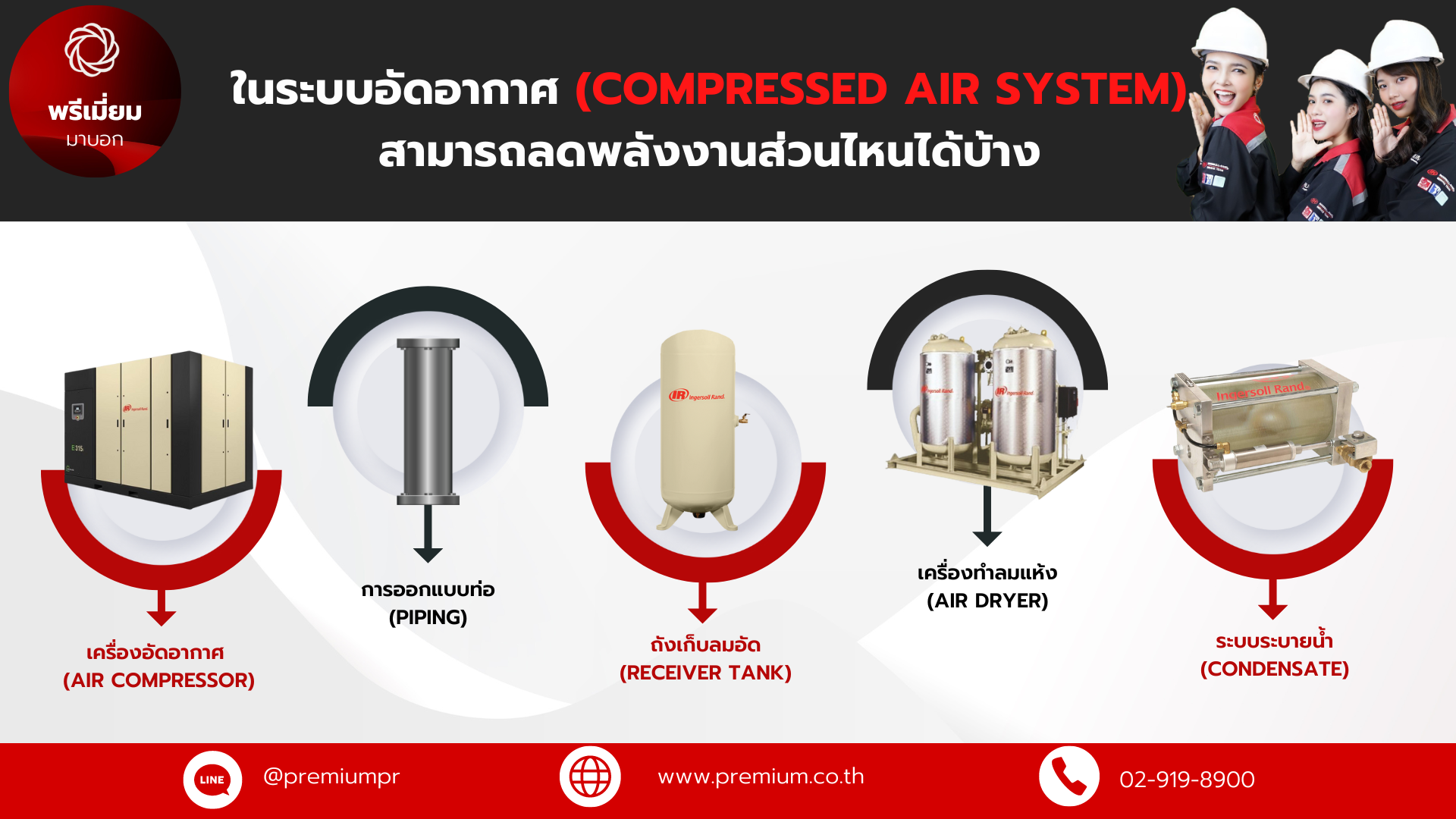
Initial hardware procurement includes the compressor block, electric motor, cooling systems, air treatment (dryers, inline filtration, oil-water separators), master controller systems, and physical installation (piping headers, electrical distribution, ventilation, and concrete pad preparation).
Maintenance, Overhauls, and Consumables (10% – 15% of TCO)
Routine replacement of air/oil separators, oil filters, fluid changes, dryer desiccant replacement, valve rebuilds, and major element overhauls (air-end rebuilds) constitute the remaining operational investment. Under direct ownership, unbudgeted catastrophic component failures—such as a seized air-end—can introduce sudden cash flow volatility.
Financial and Operational Comparison
Choosing between owning physical compressed air assets and subscribing to an air service requires balancing balance-sheet objectives against internal technical resources.
| Feature / Criteria | Direct Ownership (CAPEX) | Operating / Capital Lease | Compressed Air as a Service (CAaaS) |
|---|---|---|---|
| Upfront Capital Required | High (100% of equipment & installation cost) | Low to Moderate (initial down payment or deposit) | Zero to Low (installation often rolled into contract) |
| Balance Sheet Impact | Assets recorded; depreciated over time | Capitalized or off-balance-sheet based on accounting rules | Treated entirely as an Operating Expense (OPEX) |
| Maintenance Responsibility | In-house maintenance team or local service contractor | In-house facility staff or separate service agreement | 100% Provider responsibility (included in fee) |
| Energy Efficiency Risk | Borne by facility (performance degradation increases power bill) | Borne by facility | Shared/Provider-driven (SLA enforces energy performance) |
| System Scalability | Low (requires new capital allocation to upgrade capacity) | Moderate (subject to lease modification terms) | High (provider resizes equipment as demand fluctuates) |
| Risk of Unplanned Downtime | High (facility bears financial cost of lost production) | High (unless backed by strict third-party uptime contract) | Low (backed by contractual Service Level Agreements and penalties) |
Key Responsibilities and Lifecycle Management Under Direct Ownership
When an enterprise chooses direct air system ownership, engineering and facility management teams assume full operational responsibility over several distinct asset management phases.
- Specification & Air Purity
- Piping & Flow Optimization
- Predictive Maintenance
- Heat Recovery Integration
1. Specification and Quality Compliance
Facilities must accurately match compressor types (fixed-speed rotary screw, variable speed rotary screw, oil-free tooth, centrifugal, or reciprocating) to their process demands.
Additionally, system owners must manage air quality levels under ISO 8573-1:2010, the international standard defining purity classes for particles, water (dew point), and oil contamination. Misspecifying dry air requirements can cause product contamination, particularly in pharmaceutical packaging, semiconductor manufacturing, and food processing environments.
2. Piping Infrastructure and System Pressure Drops
Owners are responsible for designing distribution piping networks that minimize pressure drop. Inadequate pipe sizing, sharp elbows, and corroded legacy piping restrict airflow, forcing compressors to operate at elevated discharge pressures. Operating a system just 2 PSI higher than necessary increases overall compressor electrical power consumption by approximately 1%.
3. Predictive and Preventative Maintenance Protocols
Direct ownership mandates a structured maintenance workflow to prevent premature mechanical failure. Critical practices include:
- Vibration Analysis: Monitoring bearing wear within compressor air-ends to schedule overhauls before catastrophic failure.
- Oil Sampling and Fluid Analysis: Testing synthetic lubricants for thermal breakdown, moisture ingress, and particulate concentration.
- Ultrasonic Leak Detection: Conducting routine audits of plant distribution lines. In a typical manufacturing plant, undetected piping leaks can waste 20% to 30% of total compressor output capacity.
4. Heat Recovery Integration
Because compressed air generation generates significant byproduct thermal energy, owner-operators can maximize efficiency by installing heat recovery systems. Capturing hot oil cooling fluid or warm air discharge can redirect thermal energy toward space heating, boiler feed-water preheating, or process water systems, recovering up to 90% of electrical energy input.
When to Choose Compressed Air as a Service (CAaaS)
While direct ownership delivers long-term control over physical assets, Compressed Air as a Service (CAaaS) has emerged as a compelling operational model for industrial facilities under specific operational conditions.
Capital Allocation Restrictions
Companies operating under strict corporate capital budgets or debt covenants often prefer to preserve capital for core production machinery—such as CNC turning centers, robotics, or packaging lines—rather than auxiliary utilities like air compressors. CAaaS allows plants to modernize compressed air infrastructure immediately using operating budgets.
Rapidly Changing Demand Profiles
Facilities experiencing fluctuating production volume, seasonal demand spikes, or uncertain long-term contract lengths benefit from the flexibility of managed air contracts. Service providers can downsize, upsize, or reconfigure compressor rooms without requiring the plant to buy new hardware or write off underutilized equipment.
Internal Maintenance Staffing Deficits
As skilled industrial maintenance personnel become increasingly scarce, many facility operations lack dedicated technicians trained in advanced compressor diagnostics, refrigerant handling, desiccant dryer regeneration, and system master controls. CAaaS transfers routine maintenance, system monitoring, emergency response, and technical upkeep entirely to the third-party provider.
Key Decision Point: If your enterprise views compressed air as a specialized core competency and maintains dedicated utility engineers, direct capital ownership often yields the lowest long-term cost per unit of air produced. If compressed air is viewed purely as a utility input where downtime carries severe financial penalties, CAaaS transfers operational risk off your balance sheet.
Energy Efficiency and Compliance Standards
Whether an organization owns its air equipment outright or contracts for air delivery, compliance with industrial efficiency frameworks is essential for controlling operating costs and meeting environmental standards.
- Efficiency & Quality Frame
- ISO 8573-1 Air Purity Standards
- Mandates thresholds for moisture, oil, & particulates
- ISO 50001 Energy Management
- Drives systematic energy reduction & continuous audits
- ISO 8573-1 Air Purity Standards
ISO 50001 Energy Management
Companies adhering to the ISO 50001 energy management standard must continuously measure, document, and improve energy efficiency across major plant utilities. Under direct ownership, this requires installing calibrated mass flow meters, power meters on individual compressor breakers, and central system controllers that calculate real-time specific power performance (measured in kW per 100 CFM).
Environmental Regulations and Condensate Management
Compressor operation generates substantial liquid condensate mixed with lubricating oil. Environmental protection laws prohibit discharging untreated compressor condensate into municipal sewer systems. Owners must install, maintain, and monitor oil-water separators, retaining disposal documentation to prove compliance during regulatory audits.
Frequently Asked Questions
What does "air system ownership" mean in industrial manufacturing?
Air system ownership refers to the operational, legal, and financial framework used to acquire and maintain compressed air equipment. It encompasses direct asset ownership (CAPEX), equipment leasing, and managed utility models like Compressed Air as a Service (CAaaS), where a plant pays exclusively for air delivery.
How does Compressed Air as a Service (CAaaS) differ from an equipment lease?
An equipment lease is a financing mechanism to purchase hardware over time, leaving maintenance, energy efficiency management, and repairs to the lessee. CAaaS is a utility agreement where the service vendor retains asset ownership, provides all maintenance and repairs, guarantees pressure and purity levels, and charges based on air consumption or fixed service SLAs.
Which compressed air ownership model yields the lowest long-term cost?
Direct capital ownership combined with an aggressive preventative maintenance program and variable speed drive (VSD) technology usually yields the lowest total cost over a 10 to 15-year lifecycle. However, this relies on the facility maintaining high energy efficiency, repairing leaks promptly, and avoiding catastrophic unscheduled equipment failures.
Can an existing plant transition from direct ownership to a managed air service?
Yes. Many service providers offer buy-back options for existing infrastructure. The provider evaluates the current plant equipment, buys functioning assets, replaces obsolete units with modern, efficient machinery, and transitions the facility to a monthly air service contract.
What is the typical useful lifespan of an industrial rotary screw air compressor?
With proper maintenance, oil analysis, and timely air-end rebuilds, a continuous-duty industrial rotary screw compressor typically operates reliably for 10 to 15 years, or between 60,000 and 100,000 operating hours.
Strategic Next Steps for Evaluating Your Facility’s Air System
To select the optimal ownership model for your enterprise, facility leaders should follow a structured evaluation process:
- Conduct a Comprehensive Air Audit: Install data loggers on your existing system for at least seven consecutive days to measure actual CFM demand profile, pressure fluctuations, system leaks, and true energy usage (kW/100 CFM).
- Calculate True Life-Cycle Costs: Compare historical spending—including capital depreciation, electrical power usage, maintenance service bills, emergency rentals, and downtime losses—against quotes for managed service contracts (CAaaS).
- Review Corporate Capital and Balance Sheet Strategy: Consult with corporate finance to determine whether preserving capital for core revenue-generating machinery makes an operational expenditure (OPEX) contract preferable to capital procurement (CAPEX).
- Evaluate Internal Maintenance Capacity: Assess whether your on-site engineering team has the bandwidth, specialized equipment, and diagnostic tools to perform predictive maintenance and maintain air purity compliance under ISO 8573-1 standards.