To become a pilot for Air India in 2026, you must complete one of two primary pathways: the Air India Cadet Pilot Program for ab-initio (beginner) candidates or a direct entry application for valid Commercial Pilot License (CPL) holders. Candidates must have passed 10+2 with Physics and Mathematics, hold a DGCA Class 1 Medical Certificate, and clear a multi-stage selection process involving psychometric tests, technical exams, and simulator evaluations.
The Landscape of Air India Pilot Recruitment in 2026
Under the stewardship of the Tata Group, Air India has undergone a massive transformation, consolidating its position as a global aviation leader. By 2026, the airline has integrated the operations of Vistara and Air India Express, creating a unified recruitment ecosystem. The massive aircraft orders placed in previous years—comprising hundreds of Airbus A320neo family, A350, Boeing 737 MAX, 787 Dreamliner, and 777X aircraft—have created an unprecedented and sustained demand for flight deck crew.
Air India’s recruitment strategy is now divided into distinct streams to ensure a steady pipeline of talent. The airline focuses heavily on its internal "Cadet Pilot Program" to mold fresh talent from the ground up, while simultaneously hiring experienced pilots (lateral entries) to man its expanding wide-body international fleet. For an aspiring pilot, understanding which stream fits their current qualifications is the first step toward a career with the "Maharaja."
Minimum Eligibility and Educational Requirements
The foundational requirements for becoming an Air India pilot are governed by both the Directorate General of Civil Aviation (DGCA) and the airline’s internal corporate standards. While the technical demands are high, the basic educational entry barrier is designed to identify candidates with a strong aptitude for science and logic.
- Academic Qualifications: You must have completed your 10+2 (Higher Secondary) education from a recognized board. The mandatory subjects are Physics and Mathematics. Candidates from commerce or arts backgrounds can still qualify if they complete the required Physics and Math modules through the National Institute of Open Schooling (NIOS) or equivalent state boards. A minimum aggregate score (often 50-60%) is typically required to be competitive.
- Age Limits: For the Cadet Pilot Program, the typical age range is 18 to 30 years. For direct entry First Officers and Captains, the age limit extends up to 35-45 years, depending on the specific experience and the type of contract (permanent vs. transition).
- Nationality: Candidates must be Indian citizens or hold OCI (Overseas Citizen of India) status. Foreign nationals are occasionally hired on FATA (Foreign Aircrew Temporary Authorization) for specific wide-body roles where local expertise is scarce, though the airline's priority remains local talent development.
- Language Proficiency: A high level of proficiency in English (both written and spoken) is non-negotiable. Candidates must eventually achieve an ICAO English Language Proficiency (ELP) Level 4 or higher.
Medical Standards and Physical Fitness
Aviation is a physically demanding profession with zero tolerance for certain medical conditions. Before investing in training, every candidate must secure a Class 1 Medical Certificate issued by a DGCA-approved medical examiner or Indian Air Force (IAF) medical boarding center.
The medical evaluation covers several critical areas. Vision must be 6/6 (corrected or uncorrected), and certain refractive errors are permissible within specific limits defined by the DGCA. Color blindness is usually a disqualifier. Hearing must be perfect, as clear communication with Air Traffic Control (ATC) is a safety requirement. Additionally, candidates are screened for chronic conditions like diabetes, cardiovascular issues, or neurological disorders. In 2026, mental health wellness has also become a more formalized part of the airline’s recurring medical and psychological assessments to ensure long-term flight deck safety.
The Air India Cadet Pilot Program: The Ab-Initio Path
For those starting with zero flying experience, the Air India Cadet Pilot Program is the most streamlined route. This program is a "self-funded" model, but it comes with a conditional Letter of Intent (LOI) for employment upon successful completion of the training.
- Selection Stage: Candidates undergo a rigorous screening process, including the Pilot Aptitude Test (such as CASS or COMPASS), which tests spatial awareness, hand-eye coordination, and multitasking capabilities. This is followed by a group discussion and a personal interview with a panel of airline captains and HR professionals.
- Ground School and Flight Training: Selected cadets are sent to partner Flying Training Organizations (FTOs). In 2026, Air India utilizes its own Flying Academy in Amravati (Maharashtra) alongside international partners in the USA or Europe. This stage takes 18 to 24 months, during which the cadet earns their Commercial Pilot License (CPL) with Multi-Engine and Instrument Ratings.
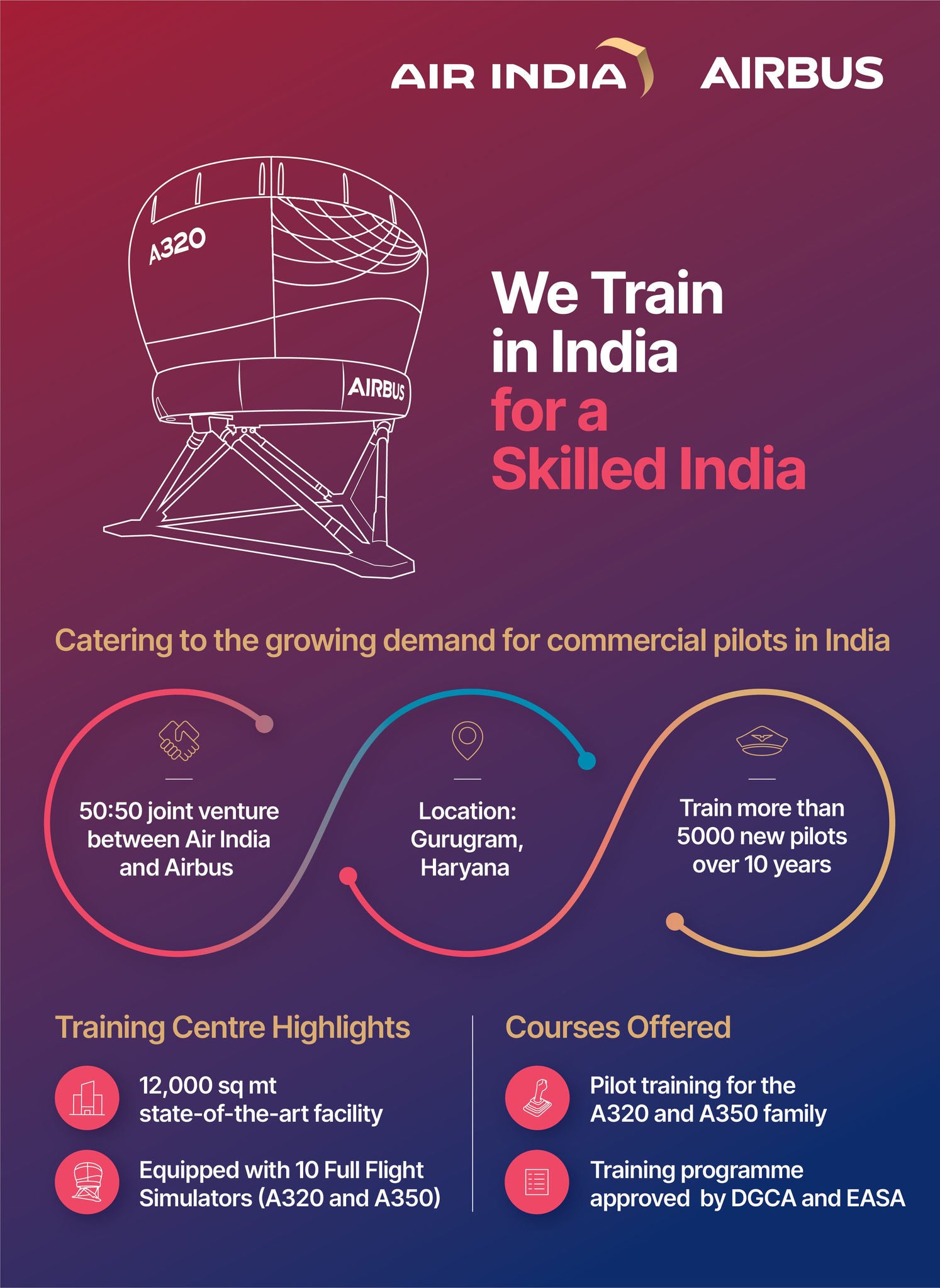
- Type Rating: After obtaining the CPL, cadets undergo "Type Rating" on specific aircraft in Air India’s fleet, such as the Airbus A320 or Boeing 737. This specialized training happens in sophisticated full-flight simulators and prepares the pilot to operate a specific commercial jet.
Direct Entry for CPL Holders and Experienced Pilots
If you have already self-funded your flight training and hold a valid Indian CPL, you do not need the Cadet Program. Instead, you wait for Air India’s "Direct Entry" recruitment drives. These are highly competitive as they draw candidates from various flying schools across the globe.
The requirements for direct entry usually include:
- A valid Indian CPL with a current FRTO (Flight Radio Telephony Operator) license and RTR(A) (Radio Telephony Restricted - Aeronautical).
- A valid Class 1 Medical.
- A minimum number of flying hours (usually 200 hours for freshers, while "Type Rated" roles may require 500+ hours on a specific aircraft type).
The selection process for direct entry involves a written technical exam covering navigation, meteorology, and aircraft systems, followed by a Simulator Proficiency Assessment. In this stage, the airline evaluates your "stick and rudder" skills in a simulated environment to see how you handle emergencies and standard operating procedures.
Comparison of Entry Paths to Air India
| Feature | Cadet Pilot Program | Direct Entry (CPL Holder) |
|---|---|---|
| Initial Experience | Zero / Beginner | 200+ Flying Hours |
| Selection Rigor | High (Aptitude + Psychometric) | High (Technical + Simulator) |
| Training Location | Assigned (India/Overseas) | Candidate's Choice (Prior to application) |
| Employment Security | Conditional Letter of Intent provided | Competitive market application |
| Approximate Cost | ₹80 Lakhs - ₹1.2 Crore | ₹45 Lakhs - ₹60 Lakhs (Variable) |
| Typical Duration | 18–24 Months | Immediate (once licensed) |
Career Progression and Fleet Structure
Once inducted as a Junior First Officer, your career at Air India follows a structured hierarchy. The progression is based on a combination of flying hours, performance, and seniority.
- First Officer: After completing "Line Training" (flying with a training captain on revenue flights), you are cleared as a First Officer. You will typically spend several years in this role, building experience on narrow-body aircraft like the A320neo.
- Senior First Officer: Progression to this stage occurs after reaching a specific hourly threshold (usually around 1,500–2,000 hours) and passing internal evaluations.
- Commander (Captain): To become a Captain, you must accumulate approximately 3,000 to 4,000 flying hours and pass the rigorous "Command Upgrade" process. This includes advanced simulator checks and leadership assessments.
- Fleet Transition: Air India offers unique opportunities to transition from narrow-body (A320/B737) to wide-body aircraft (B777, B787, A350). Flying wide-body aircraft generally results in higher compensation and prestigious long-haul international routes.
Compensation and Benefits
Air India offers one of the most competitive salary packages in the Indian aviation sector as of 2026. A Junior First Officer can expect a starting monthly CTC (Cost to Company) that reflects the high level of responsibility. Beyond the base salary, pilots receive:
- Flying Allowances: Payments based on the number of hours flown per month.
- Layover Allowances: Per diem payments for international and domestic stays.
- Staff Travel: Discounted or free air tickets for the pilot and their immediate family.
- Insurance and Healthcare: Comprehensive medical cover for the pilot and dependents.
- Retirement Benefits: Strong provident fund contributions and gratuity schemes under the Tata Group's corporate policies.
Frequently Asked Questions
Can I become an Air India pilot if I wear glasses?
Yes, you can become an Air India pilot even if you wear glasses, provided your vision is corrected to 6/6 and your refractive error falls within the limits set by the DGCA for a Class 1 Medical. You must carry a spare set of glasses with you at all times while flying.
How much does it cost to become a pilot for Air India?
If you go through the Cadet Pilot Program, the total cost (including ground school, flight training, and type rating) can range between ₹90 lakhs and ₹1.2 crores. If you obtain your CPL independently, the flight training costs approximately ₹45-60 lakhs, but you may still need to pay for your own Type Rating (₹15-25 lakhs) if the airline is not currently sponsoring it.
Does Air India provide educational loans for cadet pilots?
Air India partners with several leading Indian banks to facilitate educational loans for candidates selected for the Cadet Pilot Program. Because the program comes with a conditional employment letter, banks are generally more willing to provide loans covering a significant portion of the training costs, often with a moratorium period.
What is the minimum height required to be a pilot?
While the DGCA does not specify a strict minimum height, you must have sufficient "functional reach." This means you must be able to comfortably reach all flight controls and pedals while having a clear view out of the cockpit windows. Generally, a height of 160 cm is considered sufficient, though candidates are assessed individually during the medical and simulator phases.
How long is the bond or contract with Air India?
Standard industry practice, which Air India follows in 2026, involves a service bond or a "Training Salary Deduction" agreement. This typically lasts between 5 to 7 years. If a pilot leaves the airline before the bond period ends, they are required to pay back the depreciated cost of their specialized training (Type Rating).
Recommended Next Actions
If you are serious about a career with Air India in 2026, your first action should be to verify your educational eligibility. Ensure you have the required marks in Physics and Mathematics. If not, enroll in NIOS immediately to clear those subjects. Simultaneously, visit a DGCA-authorized medical examiner for a "Class 2 Medical," which is the precursor to the Class 1 required for pilots. This will help you identify any potential medical disqualifiers before you make a significant financial investment. Finally, keep a close watch on the official Air India Careers portal for the latest Cadet Pilot Program notifications, as these application windows often open only once or twice a year.