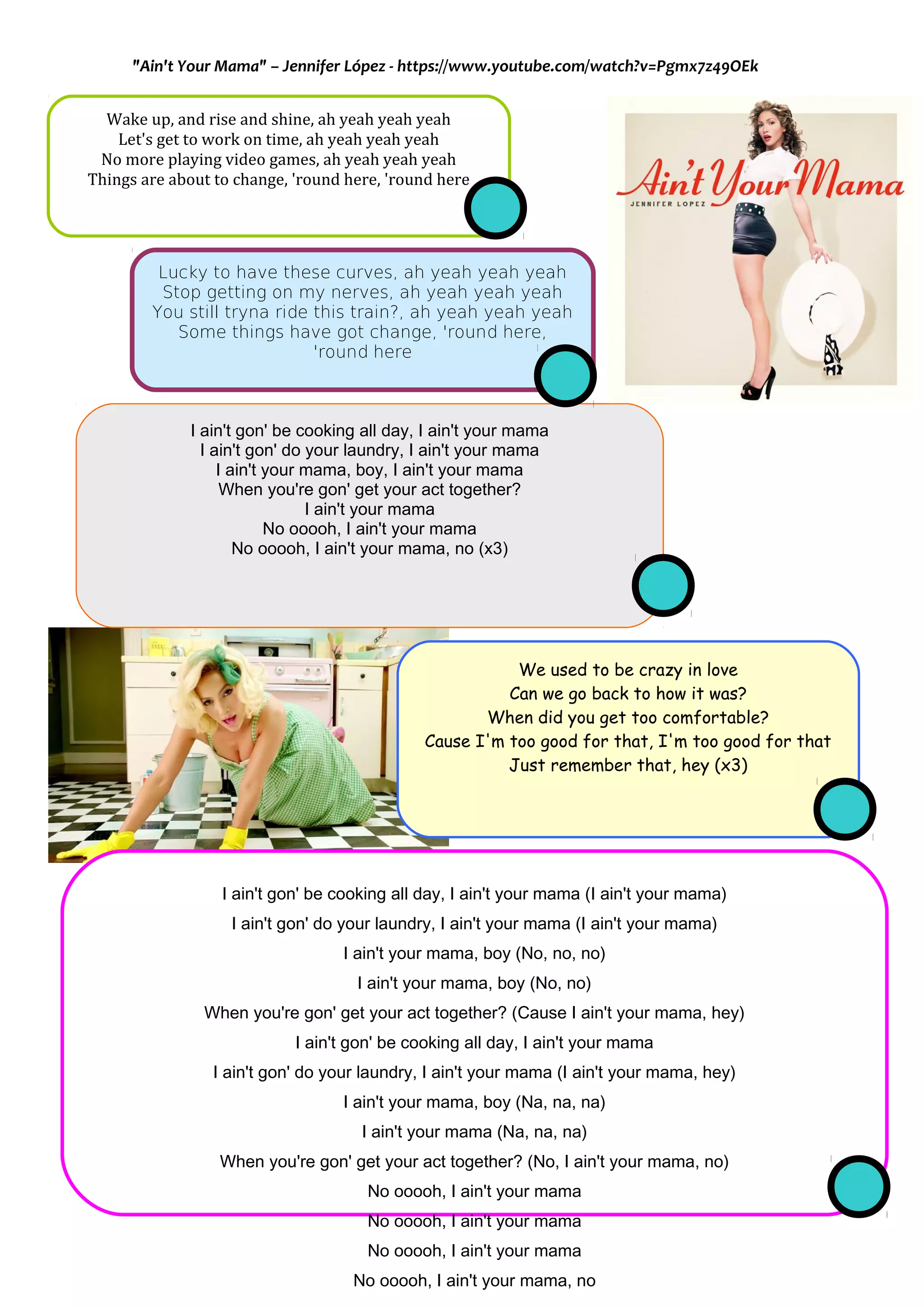
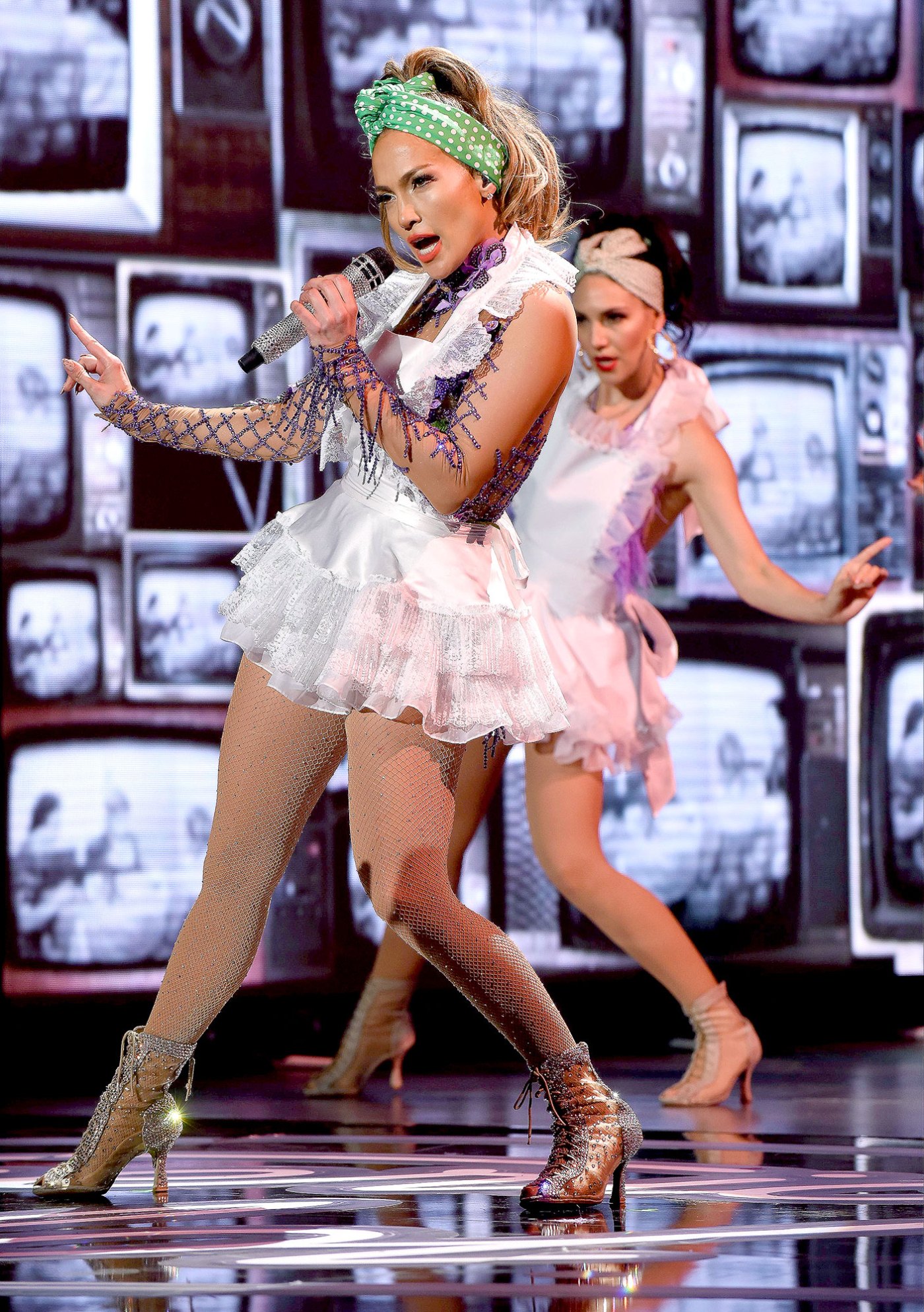
"Ain't Your Mama" is a 2016 pop song by Jennifer Lopez that functions as an anthem of female empowerment and a critique of traditional domestic gender roles. Through its lyrics and accompanying music video, the track challenges the societal expectation that women should serve as perpetual caregivers or domestic servants to their partners, advocating for independence and mutual respect in modern relationships.
The Genesis and Musical Context of "Ain't Your Mama"
Released on April 7, 2016, "Ain't Your Mama" arrived as a high-energy addition to Jennifer Lopez’s long-standing discography. Produced by Dr. Luke and Cirkut, the track is defined by its infectious rhythm, brass-heavy production, and assertive vocal delivery. While the song is rooted in the contemporary dance-pop sound that dominated the mid-2010s, its lyrical substance marked a departure from typical romantic pop tropes, focusing instead on the labor dynamics of heteronormative relationships.
The track gained significant traction during its debut performance on the American Idol series finale. This public debut solidified the song’s intent: a declaration of self-worth delivered to a massive, cross-generational audience. By reclaiming the phrase "ain't your mama," the song serves as a linguistic boundary-setter, drawing a firm line between a supportive partner and an uncompensated domestic laborer.
Deconstructing the Lyrical Narrative
The core message of "Ain't Your Mama" is centered on the cessation of emotional and physical labor performed for free within a relationship. The lyrics explicitly target the imbalance of domestic expectations—specifically cooking, cleaning, and emotional management—that often fall to women, regardless of their own professional lives or personal agency.
Key lyrical components address:
- The Rejection of Servitude: The narrator refuses to accept the role of a traditional housewife or mother figure to a romantic partner.
- The Assertion of Independence: The lyrics demand a shift toward egalitarianism, where both parties are responsible for their own well-being.
- The Economic Undercurrent: By referencing a "check" or "pay," the song highlights the invisible labor performed by women, metaphorically suggesting that such work has a value that is currently being ignored or exploited.
This narrative is not merely a critique of domesticity but an invitation to redefine what a partnership looks like in the 21st century. It critiques the "man-child" archetype, where one partner expects the other to handle life's logistical complexities without reciprocal effort.
Visual Storytelling: The Music Video and Historical Parallels
The music video for "Ain't Your Mama," directed by Cameron Duddy, enhances the song’s message by placing it within a historical timeline of gender roles. The video features Lopez adopting various personas—a 1950s housewife, a corporate worker, a factory employee, and a female anchor—each representing a specific era or sector where women have struggled for equality and recognition.
The video’s most striking sequence involves the integration of archival footage of Hillary Clinton’s 1995 speech at the Fourth World Conference on Women, where she famously declared, "Women’s rights are human rights." By weaving these historical threads into the narrative, the video positions "Ain't Your Mama" not just as a pop song, but as a continuation of a decades-long conversation regarding gender equity in the workplace and the home.
The aesthetic contrast—moving from the greyscale, restrictive gender norms of the mid-20th century to the vibrant, modern-day, high-energy dance sequences—symbolizes the evolution of female autonomy. It suggests that while the medium of protest has changed (from political oratory to pop music), the fundamental struggle for respect remains constant.
Comparative Analysis of Relationship Dynamics
To understand the impact of the song, it is helpful to compare the traditional expectations it rejects against modern relationship standards.
| Expectation | Traditional Role | Modern Egalitarian View |
|---|---|---|
| Domestic Labor | Primary responsibility of the woman | Shared responsibility based on schedule |
| Emotional Support | Woman as the sole nurturer | Reciprocal emotional labor |
| Financial Power | Often centralized with the man | Shared or independent autonomy |
| Decision Making | Often hierarchical | Collaborative and transparent |
The transition from "Traditional Role" to "Modern Egalitarian View" is the central goal discussed in the song. It posits that sustainable relationships require an active rejection of outdated scripts, where one person acts as the manager of the other’s life.
Societal Criticism and Reception
Upon its release, the song sparked a variety of reactions. Critics noted that while the message of empowerment was clear, it was also situated within a commercial product. The irony of a high-gloss pop song critiquing labor dynamics was not lost on cultural commentators. Some argued that the message was simplified for a radio-friendly format, while others praised it for bringing conversations about domestic labor into mainstream pop culture channels.
From a sociological perspective, the song tapped into a broader cultural zeitgeist—a period where discussions regarding the "mental load" of household management were gaining traction in media and public discourse. By giving this sentiment a catchy, repeatable chorus, the song provided a vocabulary for people to address these imbalances in their own lives.
Practical Steps to Addressing Domestic Imbalance
For those inspired by the themes in "Ain't Your Mama" to address imbalances in their own domestic or professional lives, several evidence-based steps can be taken to facilitate healthier communication:
- Conduct a Reality Audit: Take a week to document the division of labor. This includes not just the physical tasks (cooking, cleaning) but the "mental load"—the planning, scheduling, and emotional monitoring of the household.
- Define Expectations Explicitly: Many conflicts arise from unspoken assumptions. Use clear, non-confrontational language to state what you are no longer willing to do without assistance or change.
- Implement Collaborative Scheduling: Use digital tools or weekly check-ins to map out responsibilities. Moving tasks from a mental list to a shared visual tracker can reduce resentment and ensure accountability.
- Prioritize Boundary Setting: Recognize that setting a boundary is not an act of hostility; it is a necessary component of a healthy relationship. If a partner is resistant, it may indicate a deeper incompatibility regarding core values.
- Seek Professional Mediation: If communication reaches a standstill, couples therapy can provide a structured environment to discuss the division of labor with an objective third party.
Frequently Asked Questions
What inspired the lyrics of "Ain't Your Mama"?
The song was written to serve as an empowering anthem for women who feel burdened by the expectation of being a secondary caregiver to their romantic partners. It highlights the frustration of managing another adult’s daily needs at the expense of one’s own time and energy.
Is "Ain't Your Mama" a political song?
While primarily a pop anthem, it incorporates political elements through its music video, which references historical milestones in the women's rights movement. It is best categorized as a piece of cultural commentary that uses entertainment to highlight social inequities.
What is the "mental load" mentioned in the song’s context?
The mental load refers to the cognitive effort required to manage a household, such as remembering appointments, managing finances, and planning meals. The song suggests that this labor is often invisible but taxing, and when it falls solely on one person, it creates an unhealthy power dynamic.
Can men benefit from the message of "Ain't Your Mama"?
Yes. The song encourages a more egalitarian relationship model, which allows men to develop higher levels of self-sufficiency and emotional intelligence. Partnerships thrive when both individuals are active participants in their shared life, rather than one person acting as a proxy parent to the other.
How does the song address the issue of domestic labor?
It addresses domestic labor by framing the refusal to perform excessive chores as a matter of self-respect. It challenges the listener to ask whether their labor is being acknowledged, appreciated, and reciprocated, rather than merely expected as a default role.
Taking Action Toward Balanced Relationships
If the themes in "Ain't Your Mama" resonate with your current life situation, the most productive next step is to initiate a "state of the union" conversation with your partner. Choose a time when both of you are calm and free from immediate stressors. Use the "I" statement approach: "I feel overwhelmed when the division of labor is lopsided, and I would like us to renegotiate how we handle our shared responsibilities." Moving from general frustration to specific, actionable changes is the key to transitioning from a traditional, unbalanced dynamic to a modern, mutually supportive partnership.