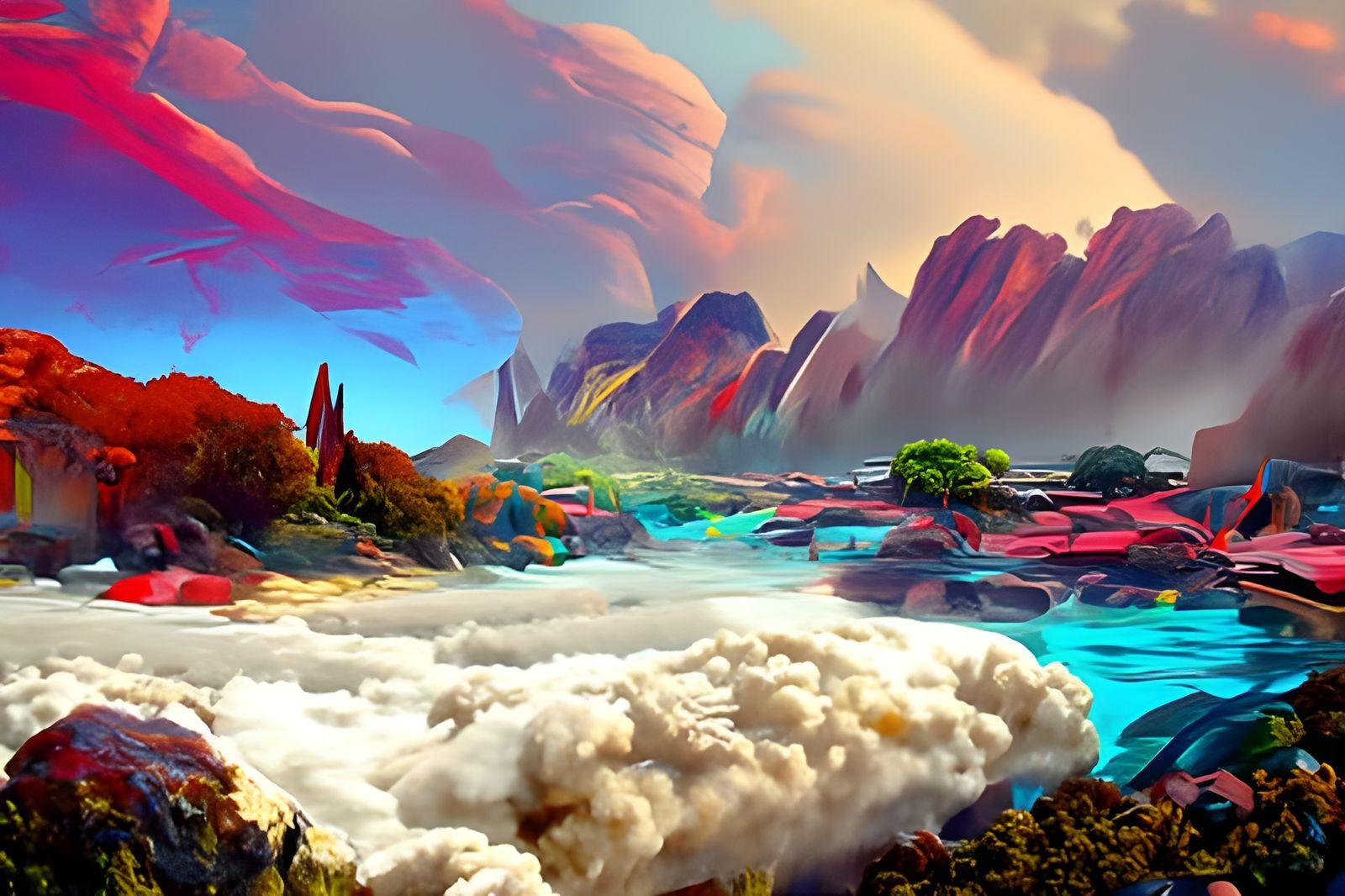
AI images represent digital graphics and visual media synthesized by artificial intelligence algorithms from natural language text prompts or source imagery. This technology transforms creative workflows across industries by converting descriptive user instructions into detailed photographs, illustrations, and conceptual designs within seconds.
Understanding the Technology Behind AI Images
The rapid evolution of artificial intelligence image generation stems from foundational breakthroughs in machine learning, specifically deep neural networks trained on vast datasets of paired images and text captions. Modern generative models do not simply paste together existing photographs or collage internet clippings. Instead, they learn statistical patterns, visual styles, structural anatomy, and lighting physics from billions of reference images. When a user inputs a prompt, the system interprets the semantic meaning of the words and translates those concepts into unique pixel arrangements from random noise.
Diffusion models currently dominate the generative visual landscape. These systems operate through a two-phase process: a forward diffusion phase that progressively corrupts training images with Gaussian noise, and a reverse denoising phase where the neural network learns to remove that noise step-by-step. Guided by the text prompt, the model gradually reconstructs a crisp, coherent visual composition. This iterative refinement allows for exceptional fidelity, precise text adherence, and realistic textures that older architectures, such as Generative Adversarial Networks (GANs), struggled to achieve consistently.
Underpinning these diffusion frameworks are transformer architectures, similar to those powering large language models. These text encoders parse user inputs, understanding modifiers, adjectives, spatial relationships, and stylistic nuances. When a prompt specifies "a cinematic wide-angle photograph of a vintage automobile on a foggy mountain pass at sunrise," the text encoder breaks down every component so the generative backbone can render the correct vehicle typology, atmospheric haze, lighting angle, and landscape topography simultaneously.
Core Capabilities and Popular Generation Models
The ecosystem of generative visual software features several prominent models, each possessing distinct architectural strengths, rendering styles, and user interfaces. Selecting the appropriate platform depends heavily on the intended use case, whether that involves photorealistic product mockups, stylized fantasy concept art, graphic design vectors, or architectural visualization.
OpenAI’s DALL-E series, integrated into ChatGPT, excels at prompt adherence and typography rendering within images. It interprets conversational instructions easily, making it accessible for casual users and marketers who need quick visual brainstorming. Midjourney operates primarily through Discord or its dedicated web interface, renowned for its painterly aesthetics, dramatic lighting, and artistic depth, making it a favorite among concept artists and creative directors. Stable Diffusion, developed by Stability AI, offers an open-weight alternative that developers and advanced users can run locally on high-end hardware, allowing for exhaustive fine-tuning, custom checkpoint training, and integration with specialized plugins like ControlNet for structural guidance.
| Feature / Model | DALL-E 3 | Midjourney (v6) | Stable Diffusion (XL / 3) |
|---|---|---|---|
| Accessibility | Cloud-based via ChatGPT / API | Discord and Web App | Open-weight / Local or Cloud |
| Primary Strength | Complex prompt comprehension & text rendering | High artistic quality & cinematic lighting | Customization, local control, & fine-tuning |
| Hardware Requirements | Cloud-hosted (No local GPU needed) | Cloud-hosted (No local GPU needed) | Dedicated GPU recommended for local runs |
| Licensing / Usage | Commercial usage rights included with paid tiers | Varies by subscription tier (Commercial allowed) | Open licenses with specific community terms |
Practical Applications Across Professional Industries
Visual generation tools have moved far beyond novelty experimentation, becoming integral components of commercial pipelines across diverse sectors. In marketing and advertising agencies, creative teams use synthetic visuals for rapid prototyping, storyboarding, and producing localized campaign assets without organizing expensive photo shoots for every iteration. Brands can generate diverse product placement scenarios in minutes, testing multiple demographic settings and lighting conditions before finalizing a media budget.
In the entertainment and gaming industries, concept artists leverage neural networks to break through creative blocks. By generating dozens of environment variations, creature designs, or architectural layouts rapidly, artists can establish a visual direction much faster than traditional sketching permits. Industrial designers and fashion houses similarly apply these systems to visualize textile patterns, automotive silhouettes, and ergonomic structures early in the development cycle, significantly shortening time-to-market metrics.
However, operational deployment requires careful oversight. While generative tools excel at speed and ideation, they introduce consistency challenges. Maintaining an identical character across multiple narrative frames or ensuring precise engineering dimensions for manufacturing blueprints remains difficult without advanced tools like image-to-image workflows, regional prompting, or custom LoRA (Low-Rank Adaptation) training.
Legal, Ethical, and Copyright Considerations
The widespread adoption of AI images has triggered complex legal and ethical debates concerning copyright ownership, data scraping, and the proliferation of deceptive media. Because generative models learn from massive corpora of internet data—often including copyrighted artwork, photographs, and illustrations without explicit creator opt-in—intellectual property disputes remain active across multiple international jurisdictions.
Copyright offices globally maintain that works generated entirely by artificial intelligence without significant human creative input generally do not qualify for copyright protection. In the United States, the Copyright Office has repeatedly ruled that output lacking human authorship falls into the public domain, though humans who substantially modify, composite, or transform AI outputs through traditional editing software may secure copyright for those specific modifications.
Furthermore, the capability to produce hyper-realistic human likenesses creates severe risks regarding deepfakes, unauthorized celebrity endorsements, and political misinformation. Major platform operators implement strict safety filters, content moderation guardrails, and cryptographic watermarking standards—such as those promoted by the Coalition for Content Provenance and Authenticity (C2PA)—to track provenance and distinguish synthetic media from authentic photography. Users must navigate these regulatory frameworks carefully, ensuring compliance with platform terms of service and regional privacy laws.
Step-by-Step Guide to Crafting Effective Prompts
Producing high-quality results requires structured prompt engineering rather than random keyword stacking. A well-constructed prompt typically combines a clear subject, specific medium, compositional framing, lighting style, and environmental details.
- Define the Primary Subject: Clearly state what should be in the center of the frame, including specific attributes, clothing, species, or objects. Avoid vague nouns.
- Specify the Medium or Style: Indicate whether the output should resemble a 35mm photograph, an oil painting, a 3D render in Unreal Engine 5, a vector illustration, or a charcoal sketch.
- Describe Lighting and Atmosphere: Detail the quality of light—such as golden hour, volumetric studio lighting, neon cyberpunk glow, or overcast diffused daylight—along with weather or atmospheric elements.
- Establish Composition and Camera Angle: Include framing terminology like close-up portrait, drone shot, macro photography, or rule-of-thirds alignment to guide spatial arrangement.
- Refine and Iterate: Review the generated output, adjust modifiers, remove unwanted artifacts through inpainting tools, and scale resolution as needed.
Example Prompt: "A macro photograph of a dew-kissed spiderweb on a fern leaf, early morning light, shallow depth of field, sharp focus, 85mm lens, natural color grading, high detail."
Frequently Asked Questions
Can AI images be used commercially?
Commercial usage rights depend entirely on the specific platform, subscription tier, and regional laws. Major commercial providers like OpenAI and Midjourney grant commercial rights to paying subscribers, but open-weight models may be subject to specific open-source licenses or require legal review regarding training data origins.
How do I prevent AI models from generating distorted hands or anatomy?
Modern models have improved significantly in anatomical rendering, but complex interactions like hands holding objects still fail occasionally. Using precise descriptive language, negative prompts to filter out deformities, and iterative inpainting tools to regenerate specific problem areas helps correct these artifacts.
What is the difference between text-to-image and image-to-image generation?
Text-to-image generation creates entirely new visuals purely from written prompts. Image-to-image generation takes an existing photograph or sketch as a structural baseline and modifies it based on a new text prompt and a denoising strength parameter, preserving the original composition while altering style or content.
Are AI-generated images protected by copyright?
In most major jurisdictions, raw outputs generated solely by a text prompt cannot be copyrighted because they lack human authorship. Copyright protection typically applies only when a human significantly modifies, arranges, or integrates the generated assets into a larger original creative work.
How can I verify if an image was created by artificial intelligence?
Verification involves examining subtle visual anomalies, such as asymmetrical jewelry, illogical background text, repeating patterns, or unnatural skin textures. Additionally, analysts check metadata for cryptographic provenance standards like C2PA watermarks or use specialized detection software designed to spot statistical patterns of neural synthesis.
Next Steps for Integrating Visual Generation
To maximize the utility of visual synthesis tools, begin by selecting a platform that aligns with your specific creative or professional requirements. Experiment with structured prompt formulas, maintaining a personal library of descriptive modifiers, lighting styles, and camera angles that consistently yield strong compositions. As you incorporate these assets into commercial or public workflows, establish a rigorous review protocol for copyright compliance, ethical disclosure, and brand safety to protect your projects from legal and reputational risks.