Agricultural history encompasses the long-term development of human societies through the domestication of plants and animals, the refinement of cultivation techniques, and the socioeconomic transformations necessitated by food production. By transitioning from foraging to sedentary farming, humanity established the foundations of civilization, enabling population growth, urbanization, and the complex logistical structures that define contemporary food security.
The Neolithic Revolution and the Origins of Agriculture
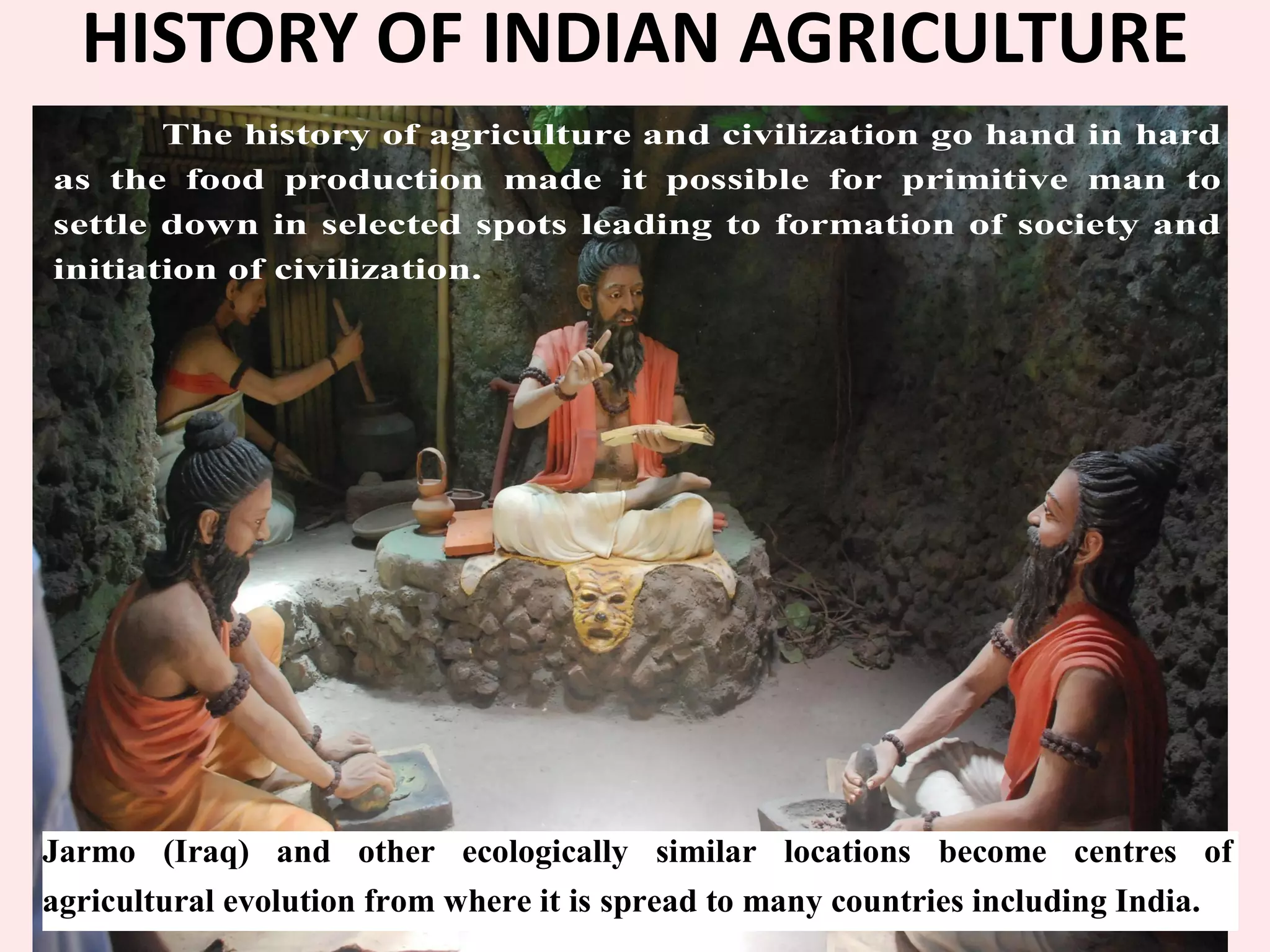
The shift from Paleolithic hunter-gatherer societies to settled agricultural communities, known as the Neolithic Revolution, began roughly 10,000 to 12,000 years ago. This transition did not occur simultaneously across the globe but emerged independently in several "cradles of civilization," most notably the Fertile Crescent in the Middle East, the Yangtze and Yellow River basins in China, and parts of Mesoamerica.
Early farmers practiced "incipient cultivation," which involved the selective propagation of wild grasses such as emmer wheat, barley, and millet. Over generations, these practices led to the genetic modification of crops—often unintentional—resulting in grains that held their seeds longer and yielded more edible mass. The domesticating of animals, including sheep, goats, and cattle, provided not only a consistent protein source but also manure for soil fertility and muscle power for labor, fundamentally changing the human relationship with the landscape.
Expansion of Techniques and the Role of Water Management
As agricultural societies grew, the necessity of securing reliable harvests led to the development of irrigation and soil management techniques. In Mesopotamia, ancient farmers constructed complex networks of canals and dikes to divert water from the Tigris and Euphrates rivers, allowing for cultivation in arid climates. This required collective labor, organizational hierarchy, and the invention of record-keeping systems, which are widely considered the precursors to formal writing and bureaucracy.
Soil health was understood through trial and error, leading to early practices like crop rotation and the application of organic fertilizers. Ancient Egyptian agriculture was uniquely defined by the annual flooding of the Nile, which deposited nutrient-rich silt onto the fields. Farmers throughout the classical world refined the plow, shifting from simple scratch plows to heavy moldboard plows capable of turning deeper, more stubborn soils, which eventually enabled the cultivation of the dense, clay-rich lands of Northern Europe.
Agricultural Shifts During the Middle Ages and Renaissance
The Middle Ages introduced the "three-field system," a massive advancement in land management that replaced the traditional two-field rotation. By planting one field with winter crops (wheat or rye), one with spring crops (oats, barley, or legumes), and leaving the third fallow, farmers increased total productivity by approximately 33% and improved soil nitrogen levels through the inclusion of legumes.
During the Renaissance, the exchange of botanical knowledge across continents—often referred to as the Columbian Exchange—introduced transformative crops such as maize, potatoes, tomatoes, and chili peppers to the Afro-Eurasian diet. The potato, in particular, proved to be an exceptionally efficient caloric producer per acre, which facilitated population booms in Europe. These centuries also saw the refinement of animal husbandry, as selective breeding became more systematic, focusing on specific traits such as milk production, wool quality, or draft strength.
The Industrialization of Farming: The 18th to 20th Centuries
The British Agricultural Revolution of the 18th century served as a catalyst for the broader Industrial Revolution. Innovations such as Jethro Tull’s seed drill and the enclosure movement—the consolidation of small landholdings into larger, more efficient farms—drastically increased output per laborer. This surplus food production was essential to sustain the growing number of people leaving the countryside to work in emerging urban factories.
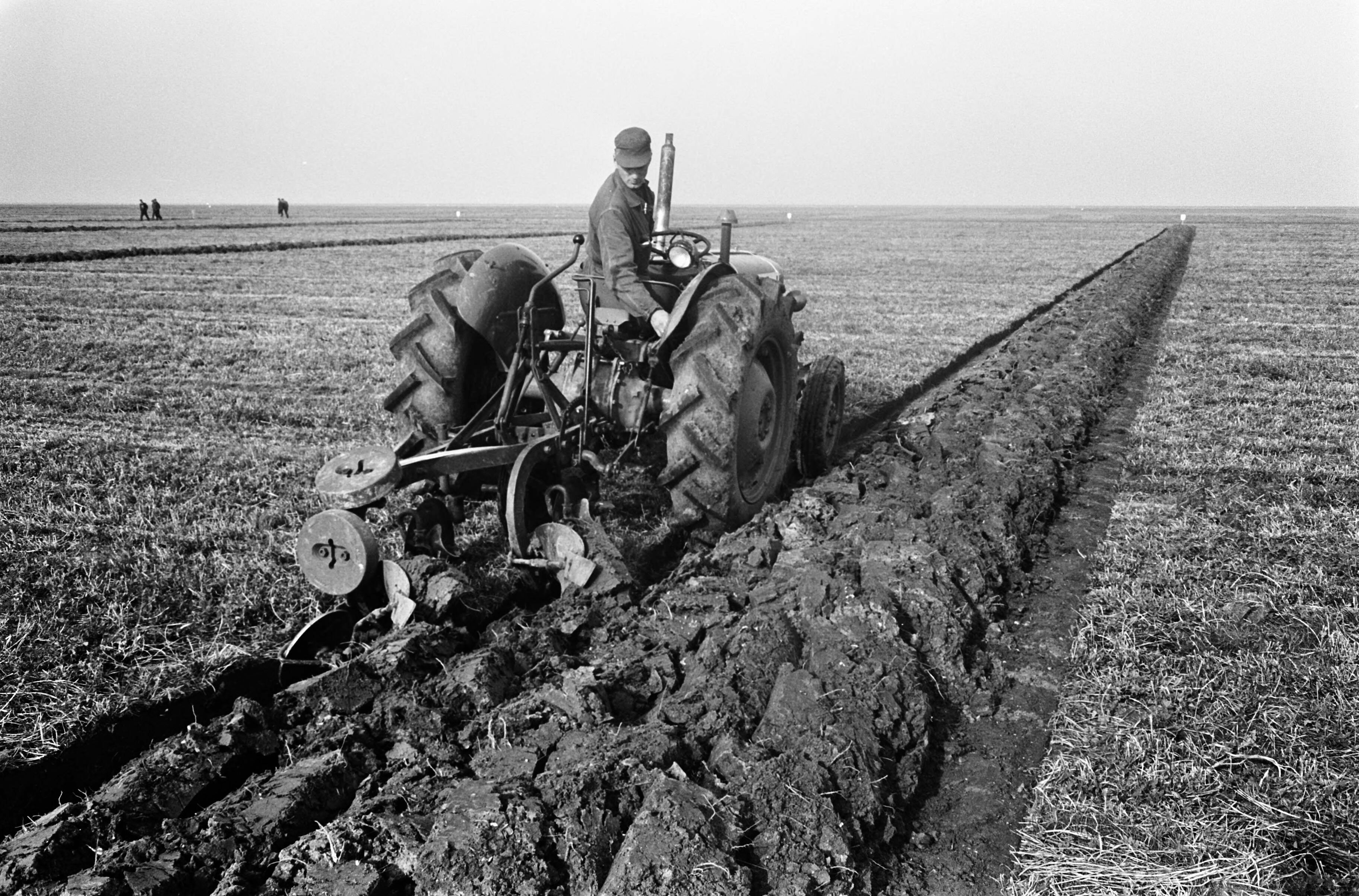
The 20th century marked the most rapid transformation in agricultural history, driven by the Green Revolution. Starting in the 1940s and accelerating through the 1960s, agricultural scientists developed high-yielding varieties (HYVs) of wheat and rice, alongside widespread synthetic fertilizer and pesticide application. These advancements were facilitated by the internal combustion engine, which replaced animal labor with tractors and mechanized harvesters, exponentially increasing the acreage a single operator could manage.
Comparative Overview of Agricultural Eras
The following table summarizes the technological and societal shifts that have characterized the major periods of agricultural development.
| Era | Primary Technology | Labor Source | Main Objective |
|---|---|---|---|
| Neolithic | Stone tools, irrigation | Human/Communal | Subsistence |
| Classical | Iron plow, terracing | Animal/Human | Local surplus/Tax |
| Middle Ages | Moldboard plow, 3-field system | Animal/Feudal | Self-sufficiency |
| Industrial | Seed drill, threshing machine | Mechanized/Human | Market integration |
| Green Rev. | Synthetic inputs, HYVs | Industrial machinery | Global food security |
Contemporary Challenges and Sustainable Practices
As of 2026, the legacy of historical agricultural expansion remains a point of intense focus for policymakers and scientists. Modern agriculture faces the dual challenge of maximizing production to feed a global population while mitigating the environmental degradation caused by intensive, industrial-scale practices. Historical reliance on chemical fertilizers has resulted in soil acidification and watershed contamination, leading to a contemporary shift toward regenerative agriculture.
Regenerative practices often mirror and modernize pre-industrial techniques, such as cover cropping, reduced tillage, and integrated pest management (IPM). These methods seek to restore soil organic matter and biodiversity, which were depleted during the peak of 20th-century intensive farming. Furthermore, the integration of precision agriculture—utilizing satellite data, IoT sensors, and autonomous equipment—allows farmers to optimize resource inputs (water, fertilizer, and seed) with unprecedented accuracy, reducing waste while maintaining high yields.
Frequently Asked Questions
What was the most significant impact of the Neolithic Revolution?
The most significant impact was the transition to a sedentary lifestyle. By producing food in one location, humans developed permanent settlements, which led to the accumulation of material goods, the development of complex social hierarchies, and the eventual formation of organized states and urban centers.
How did the Green Revolution change global farming?
The Green Revolution introduced high-yielding crop varieties and synthetic inputs, which allowed developing nations to achieve caloric self-sufficiency. However, it also created dependencies on fossil-fuel-derived fertilizers and prompted significant concerns regarding the long-term sustainability of the monoculture farming systems it promoted.
Why was crop rotation essential in agricultural history?
Crop rotation was historically essential because it allowed farmers to maintain soil fertility without the use of chemical fertilizers. Legumes were discovered to "fix" nitrogen in the soil, effectively replenishing nutrients depleted by grain crops and reducing the risk of total harvest failure due to soil exhaustion.
How do modern practices differ from traditional agricultural history?
Modern agriculture focuses on maximizing yield per unit of land using high-tech inputs and global supply chains. While traditional history focused on local adaptation and resilience, modern agriculture is increasingly data-driven and globally interconnected, focusing on efficiency and the reduction of labor costs.
What are the main limitations of industrial agriculture today?
The primary limitations include high energy consumption, vulnerability to monoculture diseases, topsoil erosion, and the environmental impact of chemical runoff. Current trends aim to address these issues by combining modern biotechnology with ecological management practices.
Recommended Next Steps for Further Research
To deepen your understanding of agricultural history, prioritize reviewing primary documentation from the archives of national agricultural departments. Specifically, examine regional land-use reports to understand how local climates shaped farming history in your specific geographic area. For those interested in the transition to modern systems, investigate the history of the "land-grant university" system, which codified the intersection of scientific research and practical farming methods during the 19th and 20th centuries.