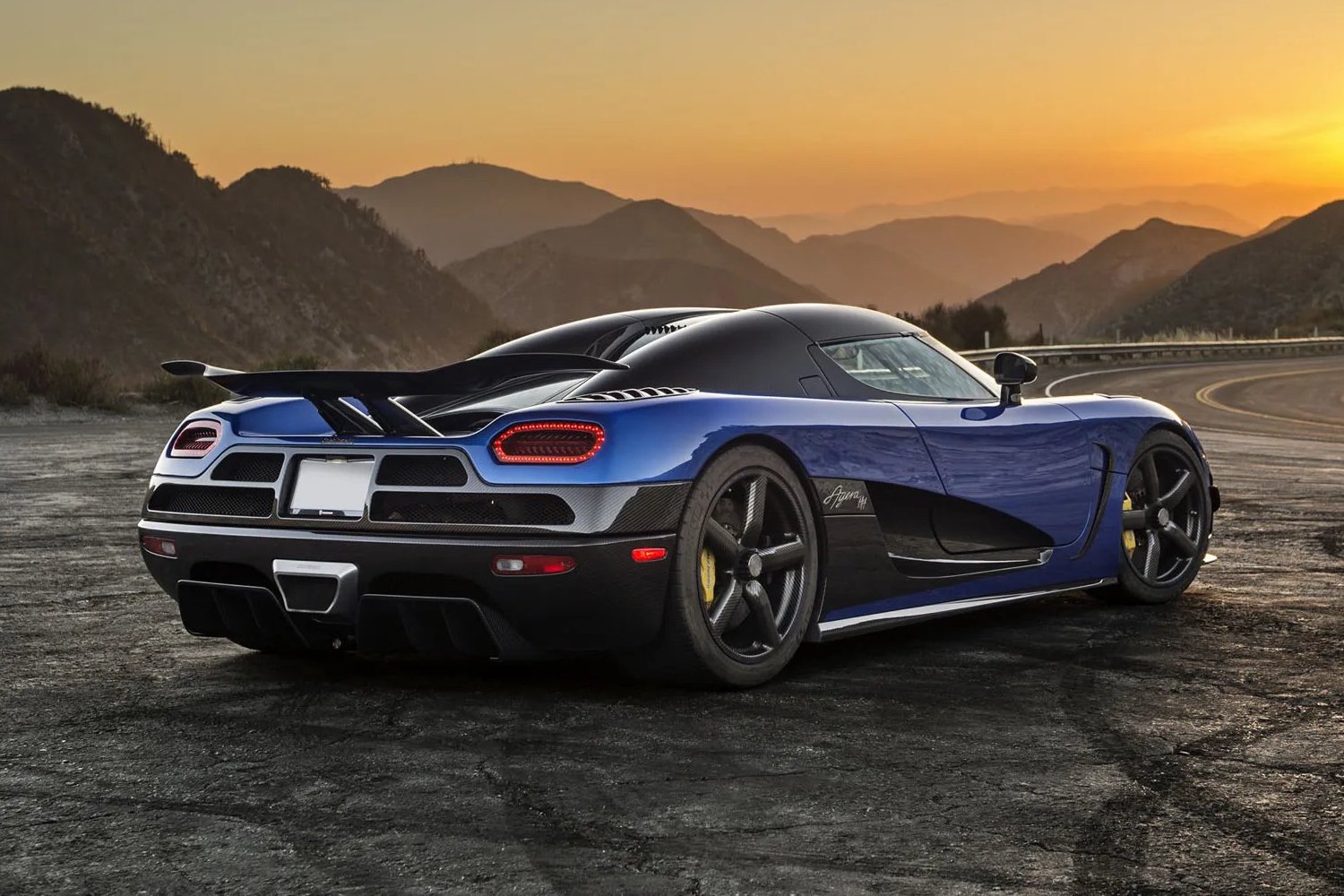
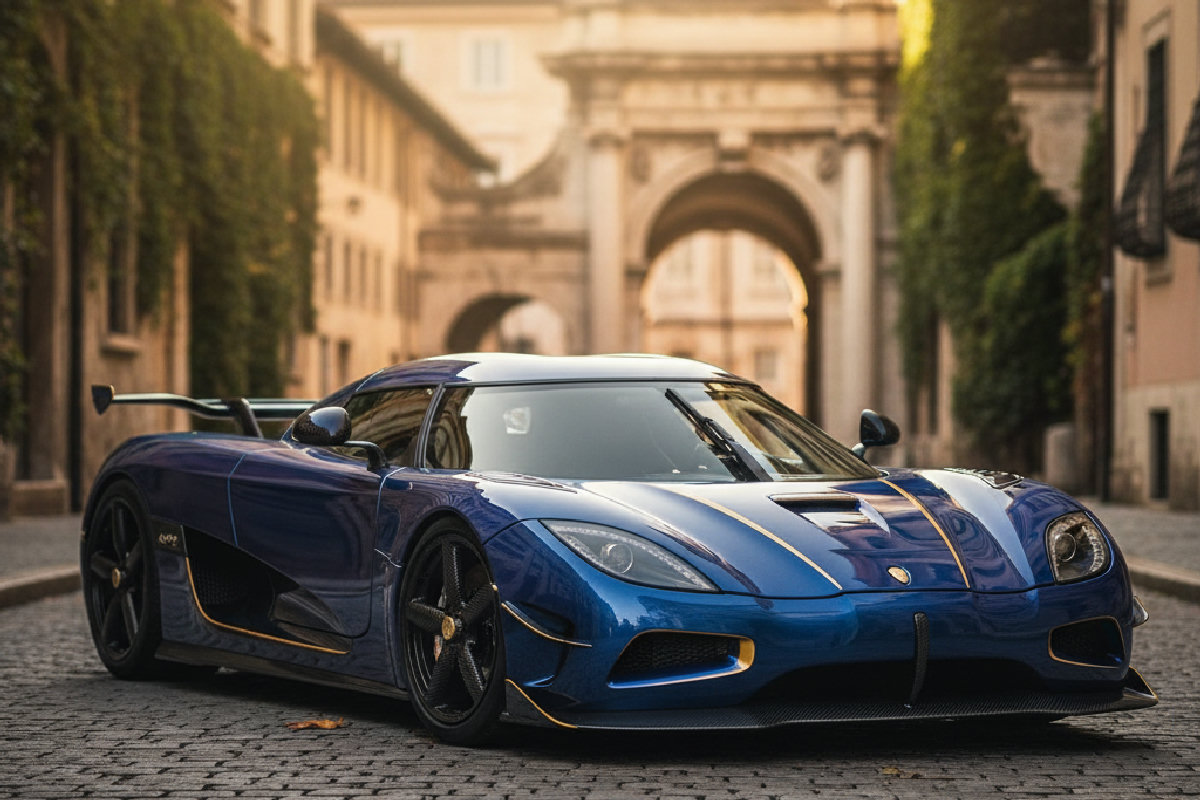
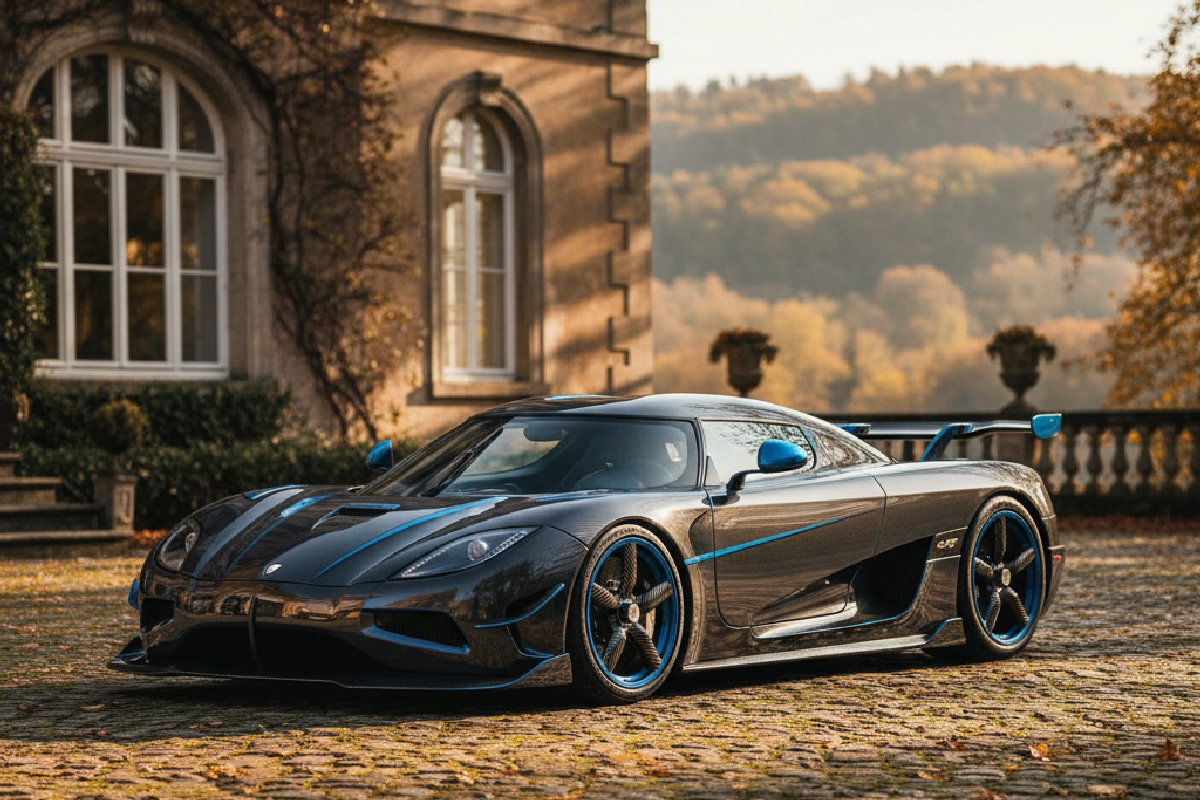
The Koenigsegg Agera RS "Vader" represents the pinnacle of Swedish hypercar engineering, serving as a bespoke iteration of the record-breaking Agera RS line. As a highly sought-after collector's vehicle, it is frequently placed in "ultimate showdowns" against contemporary rivals due to its extreme power-to-weight ratio, active aerodynamics, and historical significance in establishing Koenigsegg as a dominant force in the 300-mph club.
Anatomy of the Agera RS Vader
The Vader is not a separate model line but a bespoke execution of the Koenigsegg Agera RS. When the Agera RS production run concluded, the final three units—dubbed the "Final Editions"—were customized by owners to unique specifications. The Vader, along with its siblings "Thor" and "RS Refined," features exposed carbon fiber finishes, intricate gold-leaf detailing, and specialized aerodynamic components that set it apart from standard production models.
At its core, the Vader utilizes the Koenigsegg 5.0-liter twin-turbocharged V8 engine. Depending on the configuration and the optional "1MW" (one megawatt) package, this engine produces approximately 1,360 horsepower and 1,011 lb-ft of torque. The engineering brilliance lies not just in the raw output, but in the car’s dry weight of roughly 1,395 kilograms (3,075 lbs), resulting in an near-perfect power-to-weight ratio that remains competitive even by 2026 standards.
The Context of Hypercar Showdowns
In the context of automotive enthusiasts and collectors, a "hypercar showdown" involving the Agera RS Vader usually focuses on its performance metrics against contemporaries like the Bugatti Chiron or the Hennessey Venom F5. These comparisons often center on the car’s dual identity: it is both a track-focused weapon and a limited-production artifact.
When analyzing these matchups, industry experts prioritize three specific categories: longitudinal acceleration (0-200 mph), aerodynamic stability at top speed, and physical feedback to the driver. Unlike vehicles built strictly for straight-line velocity, the Agera RS, including the Vader, was designed with a focus on chassis agility and high-speed downforce, allowing it to maintain composure in corners where heavier hypercars might struggle.
Key Technical Specifications for Performance Analysis
To understand why the Agera RS Vader remains a benchmark, one must look at the technical architecture that allows it to hold its own against newer models. The vehicle employs a proprietary C-tub monocoque chassis, which provides exceptional torsional rigidity, and a seven-speed CIMA sequential gearbox that shifts with near-instantaneous speed.
| Feature | Specification Details |
|---|---|
| Engine | 5.0L Twin-Turbo V8 |
| Horsepower | ~1,360 hp (1MW Upgrade) |
| Transmission | 7-speed CIMA Sequential |
| Curb Weight | 1,395 kg (Dry) |
| Top Speed | 277.8 mph (Average of two-way run) |
| Chassis Material | Carbon Fiber/Aluminum Honeycomb |
The inclusion of active aerodynamics is a critical differentiator. The Vader features a dynamic rear wing and independent front flaps that adjust in real-time based on vehicle speed, steering angle, and throttle input. This level of technical sophistication ensures that the car remains planted during high-speed maneuvers, a factor that is often the decisive element in hypercar showdowns against less aerodynamically evolved machines.
Prerequisites for Performance Verification
For owners or analysts attempting to replicate the performance figures associated with the Vader, several strict prerequisites must be met. These are not everyday road cars, and their performance is contingent upon specific environmental and mechanical conditions:
- Tire Specification: The Michelin Pilot Sport Cup 2 tires are integral to the car's handling and speed ratings. Using non-specified or worn tires significantly alters the safety profile and performance capability.
- Fuel Quality: The 1MW engine calibration requires E85 or high-octane racing fuel to reach its peak output. Attempting to run at maximum performance on standard pump gas can lead to engine management intervention or reduced power.
- Professional Calibration: Koenigsegg vehicles require proprietary diagnostic software for maintenance and system updates. Attempting to modify or "tune" the car outside of authorized channels voids the structural and mechanical integrity of the carbon-fiber monocoque and drivetrain components.
Practical Considerations for Modern Collectors
By 2026, the Agera RS Vader has transitioned from a high-performance production vehicle to an blue-chip automotive asset. For those evaluating the car within the context of a market showdown, the financial and logistical requirements are distinct from modern, mass-produced hypercars.
Maintenance is an exclusive process. Due to the limited number of Agera RS units produced, spare parts are often manufactured on-demand. Collectors must account for the logistical challenge of transporting the vehicle to specialized service centers, as there is no widespread dealership network for Koenigsegg vehicles of this generation. Furthermore, the volatility of the hypercar market means that while the Vader remains highly desirable, insurance and secure climate-controlled storage are non-negotiable costs that must be factored into any ownership evaluation.
Addressing Common Comparisons and Myths
The most frequent point of confusion in hypercar discussions is the comparison between the Agera RS and newer models like the Jesko. While the Jesko uses a more advanced "Light Speed Transmission" and a redesigned engine, the Agera RS Vader remains a more "analog" experience.
Critics often mistake the lack of an electric hybrid system—present in many 2026 hypercars—as a performance deficit. In reality, the Agera RS achieves its performance through extreme weight reduction and mechanical efficiency, avoiding the weight penalty that comes with battery packs and electric motors. This makes the Vader a "purist's" hypercar, valued for the direct, unfiltered connection between the driver, the engine, and the road.
Frequently Asked Questions
Is the Agera RS Vader street-legal?
Yes, the Agera RS Vader was built as a road-legal hypercar. However, meeting specific regional requirements—such as those dictated by the National Highway Traffic Safety Administration (NHTSA) in the United States or various European Union emissions standards—varies based on the individual vehicle's initial homologation and registration.
How does the Vader compare to the Bugatti Chiron in a drag race?
In head-to-head scenarios, the Agera RS Vader generally outperforms the Chiron in 0-200 mph acceleration due to its significantly lower curb weight. While the Chiron offers superior straight-line stability and luxury, the Agera RS is consistently faster in transitions and high-speed maneuvers due to its focused, lightweight chassis.
Does the 1MW engine upgrade affect the reliability of the car?
The 1MW upgrade is a factory-authorized performance package that increases boost pressure and timing. When serviced according to the manufacturer’s schedule and operated with the correct fuel, the engine remains highly reliable, though maintenance intervals are more frequent than in standard passenger vehicles.
Can the Vader achieve its 277 mph top speed on public roads?
It is physically and legally impossible to reach the top speed of the Agera RS Vader on public roads. Achieving record-breaking speeds requires closed-course environments, such as the Nevada highway segments used for the original Agera RS certification, to ensure safety and accurate telemetry data.
Where can one see a Vader in person today?
The Agera RS Vader is held in private collections. It occasionally appears at high-profile concours events, such as the Pebble Beach Concours d’Elegance, or specialized hypercar rallies. Public viewing is generally limited to these curated exhibition settings.
What should a potential buyer prioritize when evaluating a used Agera RS?
A buyer must prioritize the service history, specifically verifying that the vehicle has received all factory-required updates from Koenigsegg. A "pre-purchase inspection" on a vehicle of this rarity should be conducted by an authorized Koenigsegg technician to ensure the carbon-fiber chassis and powertrain have not been compromised.
Next Steps for Enthusiasts and Collectors
If you are looking to deepen your understanding of the Agera RS Vader or are involved in the high-end hypercar market, the most practical next step is to consult the verified records maintained by the Koenigsegg Owners Registry. For those considering an acquisition, seek representation from an automotive consultant specializing in limited-production Swedish exotics. Ensure that any evaluation is backed by official service records and a clear, verified provenance report to confirm the vehicle’s specific identity as one of the three "Final Edition" models.