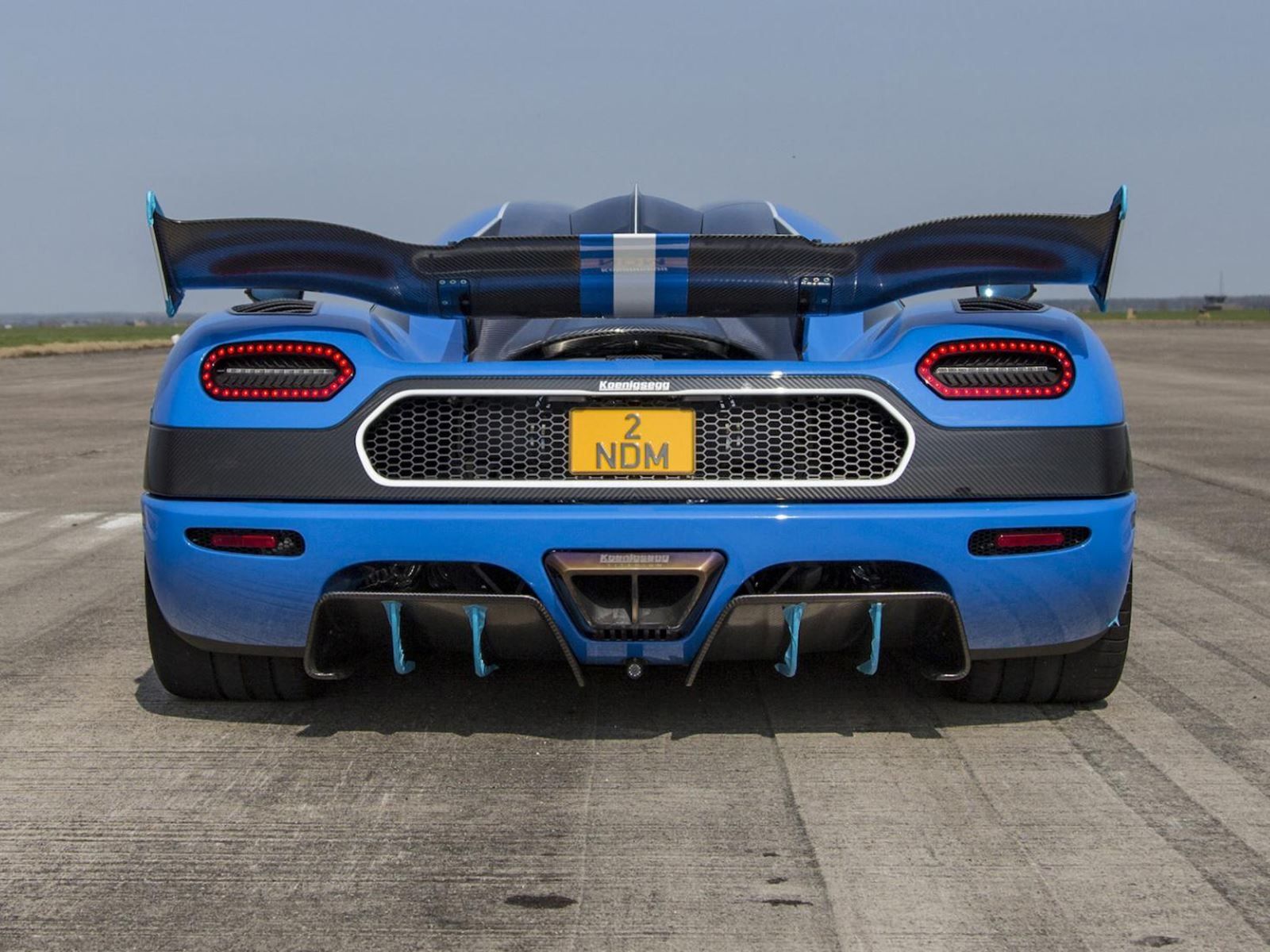
The Koenigsegg Agera R represents a landmark in automotive engineering, designed to push the boundaries of hypercar performance through advanced aerodynamics and forced induction. With a theoretical top speed exceeding 270 mph (440 km/h), the vehicle stands as a testament to Swedish innovation, utilizing a 5.0-liter twin-turbocharged V8 engine capable of delivering immense power on both gasoline and E85 biofuel.
Engineering the Aerodynamic Profile
The pursuit of high velocity requires more than just raw engine output; it necessitates a mastery of airflow. The Agera R is built on a lightweight carbon fiber chassis that integrates a flat underbody and a rear diffuser to generate significant downforce while maintaining a low drag coefficient. This design choice is critical for stability at high speeds, ensuring the vehicle remains planted without sacrificing the ability to reach its maximum velocity.
The "Triplex" suspension system, developed by Koenigsegg, plays a vital role in this stability. By using a horizontal shock absorber and spring between the rear wheels, the car minimizes squat under heavy acceleration and maintains a consistent ride height, which is essential for managing the aerodynamic balance. When traveling at speeds approaching its limit, the car's dynamic wing automatically adjusts to maximize downforce or minimize drag, depending on real-time speed and driver input.
Powertrain Dynamics and Biofuel Integration
The heart of the Agera R is its 5.0-liter twin-turbo V8, an engine designed to adapt its output based on the fuel utilized. When running on E85 biofuel, the engine reaches its peak performance potential, delivering approximately 1,140 horsepower and 1,200 Nm of torque. This flexibility is not merely a convenience but a technical necessity for achieving the power-to-weight ratio required for its extreme performance metrics.
The transition from standard gasoline to E85 requires an engine management system capable of instantaneous recalibration. The Agera R monitors the fuel composition and adjusts ignition timing and fuel delivery to ensure optimal combustion. This adaptability allows the vehicle to produce more power than most engines of comparable size, making it a "beast" that thrives on the higher octane levels and cooling properties inherent in biofuel.
Performance Benchmarks and Real-World Constraints
While the theoretical top speed of the Agera R is often cited as being above 270 mph, achieving this in a real-world setting involves significant environmental and logistical variables. Factors such as road surface conditions, atmospheric pressure, temperature, and tire degradation play a massive role in whether a vehicle can reach its theoretical design ceiling.
Historically, hypercar testing is conducted on closed circuits or long, straight runways such as the Papenburg test track or the landing strips used by aviation authorities. In 2026, owners and enthusiasts must recognize that high-speed testing is strictly regulated. Safety measures, including specialized tire compounds and professional-grade braking systems, are prerequisites for any attempt at high-velocity driving.
Comparison of Performance Parameters
The following table outlines the key technical specifications that contribute to the Agera R’s reputation as a performance benchmark.
| Metric | Specification | Impact on Performance |
|---|---|---|
| Engine Type | 5.0L Twin-Turbo V8 | Massive power-to-weight ratio |
| Horsepower | 1,140 hp (on E85) | High-speed acceleration capability |
| Curb Weight | ~1,435 kg | Agility and handling stability |
| Drag Coefficient | 0.33 to 0.37 | Efficiency at extreme speeds |
| Top Speed | > 270 mph (est.) | Terminal velocity threshold |
The Role of Weight Reduction
The "ultimate performance" of the Agera R is predicated on its extreme focus on mass management. Koenigsegg utilized a carbon fiber monocoque that weighs only 70 kilograms, providing a rigid structure that protects the occupant and provides a stable foundation for the powertrain. This focus on shedding weight extends to the wheels; the Agera R was one of the first production cars to feature hollow carbon fiber wheels, which significantly reduce unsprung weight.
Reducing unsprung weight—the mass not supported by the suspension—improves the vehicle's handling precision and allows the tires to maintain contact with the road more effectively. At 250+ mph, every gram of rotating mass translates into additional strain on the drivetrain. By optimizing these components, Koenigsegg ensures that the engine's power is transferred efficiently to the pavement, minimizing energy loss through vibration or mechanical friction.
Maintaining the Beast: Ownership and Care
Owning a vehicle of this caliber in 2026 requires strict adherence to maintenance schedules. The high-performance nature of the twin-turbo system means that lubricants, cooling systems, and induction components are subject to extreme thermal stress. Regular inspections of the carbon fiber bodywork for stress fractures and ensuring the health of the hybrid fuel system are mandatory for any owner intent on keeping the vehicle in peak operational state.
Due to the specialized nature of these components, service should be handled by authorized centers or technicians trained in Koenigsegg’s proprietary systems. Attempting to troubleshoot or modify the engine software outside of official parameters can lead to immediate loss of performance and long-term damage to the internal components.
Frequently Asked Questions
Can the Agera R reach 270 mph on a standard road?
No. Attempting to reach the Agera R’s top speed on public roads is illegal, dangerous, and physically impossible due to road curvature, surface irregularities, and traffic. The vehicle’s top speed can only be safely explored on purpose-built, high-speed testing tracks with closed access and specialized safety equipment.
How does biofuel affect the Agera R’s performance?
The use of E85 biofuel is essential for achieving the maximum 1,140 horsepower output. The higher octane rating of E85 allows for more aggressive ignition timing and increased boost pressure compared to standard gasoline, which significantly improves the car’s power delivery and peak acceleration.
What is the most critical maintenance aspect for this car?
The most critical maintenance involves the cooling and lubrication systems. Because the engine is forced-induction and designed to push extreme output, ensuring that the intercoolers and oil cooling systems are functioning perfectly is essential to prevent thermal runaway or catastrophic engine failure during spirited driving.
Is the Agera R faster than modern 2026 hypercars?
While the Agera R remains an engineering marvel, hypercar performance has continued to evolve. Newer vehicles in 2026 often incorporate electric hybrid torque-fill and advanced active aerodynamics that may offer superior acceleration or track times. However, the Agera R’s raw mechanical design keeps it relevant in the elite tier of automotive history.
How do I prepare for high-speed track sessions?
Preparation involves a professional inspection of the braking system, tire tread health, and fluid levels. It is also highly recommended to undergo performance driving training to understand how the car behaves at extreme velocities, as the vehicle’s dynamic behavior changes significantly near its aerodynamic limits.
Next Steps for Performance Enthusiasts
For those looking to understand the limits of their vehicle, the recommended next step is to coordinate with a track-day organizer that specializes in high-speed events. Ensure that your vehicle is fully serviced according to the factory manual and that you have verified the tire pressure and structural integrity of the wheel assembly before any high-speed run. Always prioritize safety equipment and professional coaching to ensure that the experience remains controlled and secure.