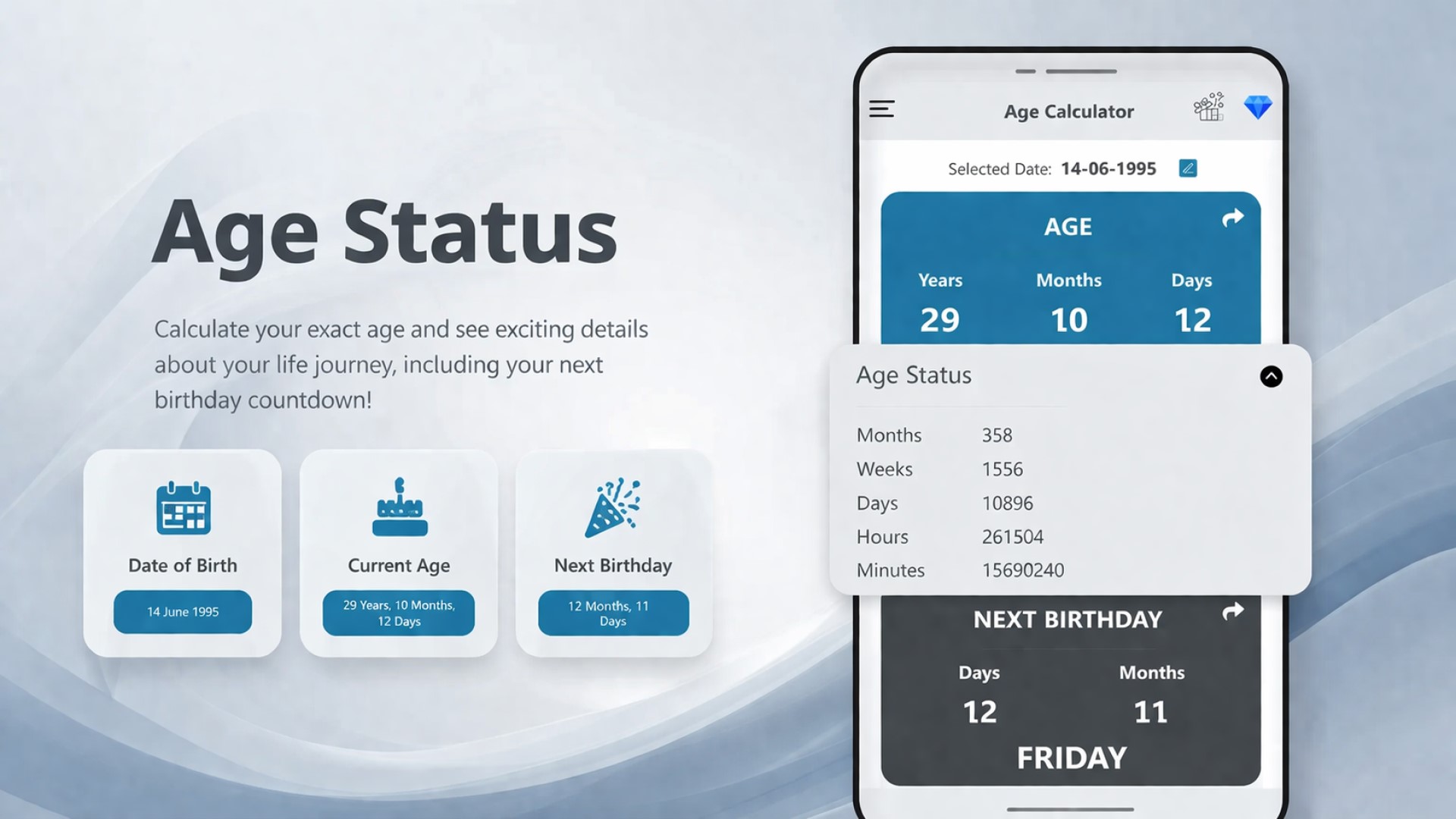
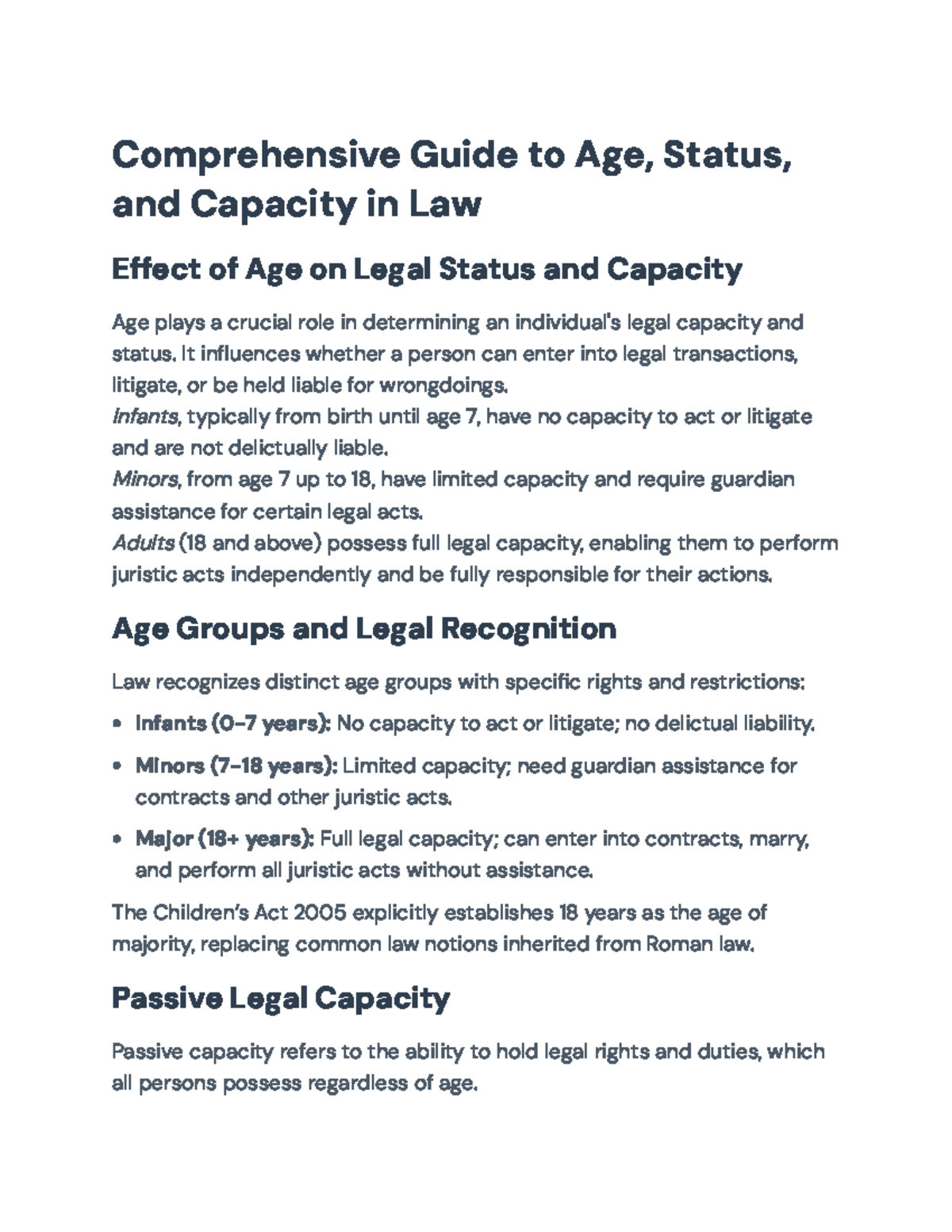
Age status represents the official, legal, or systemic standing of an individual determined by their chronological age within a specific regulatory or institutional framework. It governs eligibility for rights, responsibilities, benefits, and restrictions, ranging from voting and employment to digital platform access and senior services.
Defining Age Status Across Legal and Digital Frameworks
The concept of age status extends far beyond a simple number on a birth certificate. In contemporary administrative, legal, and digital landscapes, an individual's age status serves as a foundational metric that unlocks specific permissions or imposes structural boundaries. Whether evaluated by a government agency, a financial institution, or a digital service provider, age status acts as a binary or tiered threshold determining compliance with local, national, and international standards.
At its core, age status bridges chronological time and institutional policy. Because different legal domains recognize different milestones of maturity and capacity, a person's status is rarely uniform across all aspects of life. For instance, an individual might possess the age status required to sign a binding contract in one jurisdiction while remaining ineligible to purchase specific regulated goods or services. Understanding how these statuses are established, verified, and applied requires a careful examination of the frameworks governing civil rights, commercial transactions, and digital participation.
Legal and Administrative Classifications of Age
Legal systems establish rigid boundaries to delineate childhood, majority, and advanced age, each carrying distinct bundles of rights and duties. These classifications are rarely arbitrary; they reflect societal consensus regarding cognitive development, criminal culpability, and economic independence.
The table below outlines common legal age status tiers and their typical implications across civil and criminal frameworks:
| Age Tier / Status | Primary Legal Rights | Standard Restrictions / Obligations | Common Jurisdictional Variations |
|---|---|---|---|
| Minor (Under 18) | Right to education, protection from labor exploitation, dependency support. | Inability to enter binding commercial contracts, vote, or consent to certain medical procedures independently. | The threshold for majority ranges from 18 to 21 globally. |
| Majority (18–20) | Right to vote, sign contracts, marry without parental consent, military enlistment. | May face restrictions on purchasing alcohol, cannabis, or firearms depending on local statutes. | Some U.S. states set specific consumption thresholds at age 21. |
| Full Adult (21+) | Access to all age-restricted commercial goods, adoption rights in most jurisdictions. | Full tax liabilities, jury service obligations, and criminal responsibility as an adult. | Varies by country regarding adoption and specialized licensing. |
| Senior / Older Adult (60–65+) | Eligibility for social security benefits, senior discounts, Medicare or equivalent national healthcare. | Mandatory retirement provisions in specific civil service or corporate sectors. | Qualifying age for state pensions frequently adjusts based on national legislation. |
The Mechanics of Majority and Emancipation
The transition from minority to majority grants full legal capacity, enabling individuals to manage their own estates, sue or be sued in court, and execute valid wills. However, exceptional legal mechanisms such as judicial emancipation can alter an individual's age status prematurely. Emancipation allows a minor—typically aged 16 or 17—to assume adult responsibilities, such as independent housing and financial management, if they demonstrate self-sufficiency and the court finds it in their best interest. This status alteration severs parental rights and obligations, effectively granting the minor an administrative age status equivalent to an adult for civil purposes.
Senior Status and Welfare Eligibility
At the opposite end of the chronological spectrum, attaining senior or retirement status triggers a complex web of statutory entitlements. Governments tie pension disbursements, senior tax exemptions, and specialized healthcare coverage to precise birthdate milestones. Unlike the uniform threshold of majority, retirement age statuses are increasingly subject to statutory reforms designed to reflect rising life expectancies, creating tiered cohorts within older populations.
Digital Age Verification and Online Status Management
In the digital sphere, age status dictates access to online platforms, streaming media, e-commerce, and financial technology services. Regulatory bodies worldwide enforce strict mandates requiring platforms to verify user ages to protect minors from inappropriate content, financial fraud, and data harvesting.
Compliance Mandates and Privacy Concerns
Platforms operating globally must navigate diverse regional mandates regarding digital age status. Regulations such as the European Union's Digital Services Act (DSA) and various state-level U.S. laws compel platforms to implement robust verification mechanisms. These mechanisms must balance compliance with user privacy rights. Traditional self-reported birth years—where a user merely selects a date from a dropdown menu—are increasingly obsolete for high-risk or restricted services.
Modern Verification Methodologies
To establish verifiable digital age status without compromising user identity, systems deploy several advanced technical approaches:
- Zero-Knowledge Proofs (ZKPs): Cryptographic protocols that allow a user to prove they meet a specific age threshold (e.g., over 18) without revealing their exact birthdate or personal identity.
- Biochemical Estimation: AI-driven facial age estimation tools that analyze facial geometry via a device camera to estimate whether a user is an adult or a minor, followed by immediate deletion of the image data.
- Document Matching: Uploading government-issued identification, which is scanned and verified against issuance databases, often utilizing third-party identity verification vendors.
- Credit Card or Open Banking Verification: Performing a nominal financial transaction or querying an open banking API to confirm that the account holder has cleared adult financial hurdles.
Prerequisites and Verification Documents for Age Status Updates
When an individual needs to formally update or prove their age status for legal, employment, or administrative purposes, standard evidentiary documents are required. Institutions do not accept informal assertions; they rely on authenticated primary source documents.
Primary Identity Documents
The gold standard for proving age status remains government-issued civil registry documents. These include:
- Certified Birth Certificates: Issued by vital statistics offices, containing a seal and registrar signature.
- Passports: Internationally recognized documents containing verified biographical data.
- National Identity Cards: Mandatory or voluntary government-issued smart cards featuring embedded security features.
- Driver’s Licenses: State or provincial permits displaying a validated photograph and birthdate.
Troubleshooting Discrepancies in Official Records
Discrepancies in age status often arise due to historical record transcription errors, calendar system conversions (such as lunar versus solar calendars), or maiden-name variations. Resolving these discrepancies requires filing formal amendments with the issuing vital statistics agency. Petitioners must typically supply secondary evidence, such as census records, baptismal certificates, school enrollment histories, or military service records, to substantiate the correct birthdate before administrative or legal age status can be amended.
Common Challenges and Controversies Surrounding Age Thresholds
The application of rigid age thresholds creates ongoing debates across social, legal, and economic domains. Because human development is a fluid, continuous process, drawing a hard legal line at a specific birthday inevitably produces anomalies.
The Arbitrary Nature of Numerical Cutoffs
Critics of strict age-based milestones argue that chronological age is an imperfect proxy for cognitive maturity, emotional resilience, or physical capability. For instance, neuroscientific research indicates that prefrontal cortex development continues well into a person's mid-twenties, leading some legal scholars to question whether the rigid application of adult criminal culpability at age 18 aligns with modern scientific insights. Conversely, society maintains fixed lines for administrative clarity and enforcement feasibility, accepting that individual variations must yield to standardized rules.
Cross-Border Legal Conflicts
Another significant challenge involves the jurisdictional disparity of age status. An individual classified as an adult in one country may travel or conduct digital transactions in another jurisdiction where the age of majority or the threshold for specific activities is higher. This fragmentation creates compliance complexities for multinational corporations and digital service providers, who must dynamically adjust their service offerings and access controls based on the user's detected geographical location and local statutory requirements.
Frequently Asked Questions
What is the legal definition of age status?
Age status is the official recognition of an individual's chronological age by legal, governmental, or administrative bodies, which determines their legal capacity, rights, duties, and eligibility for specific benefits or restrictions.
How do online platforms verify a user's age status securely?
Platforms verify age status using methods such as zero-knowledge cryptographic proofs, trusted third-party identity document scanning, open banking checks, and privacy-compliant facial age estimation technologies that do not permanently store personal data.
Can an individual change their official age status after a record error?
Yes, an official age status can be corrected if a clerical error exists in the birth registry. This process requires submitting a formal petition to the relevant vital statistics agency along with supporting secondary historical evidence like school or census records.
Why do different countries have different ages of majority?
Ages of majority vary due to differing legal traditions, cultural norms regarding independence, and legislative priorities concerning criminal responsibility, civil liability, and social protection frameworks.
What is judicial emancipation and how does it affect age status?
Judicial emancipation is a legal process through which a minor is granted adult legal status by a court before reaching the chronological age of majority, enabling them to enter contracts and manage their own affairs independently.
Ensuring Accurate Age Status Documentation
To maintain accurate personal records and ensure seamless compliance with administrative, financial, and digital requirements, individuals should routinely audit their primary identification documents. Verify that birth certificates, passports, and digital accounts reflect consistent data. When engaging with platforms requiring age verification, prioritize services that utilize privacy-preserving technologies—such as zero-knowledge proofs or ephemeral facial estimation—to safeguard personal data while fulfilling regulatory mandates.