Age ratings are standardized classification systems used to inform consumers—primarily parents and guardians—about the suitability of media content such as movies, video games, television shows, and mobile applications. These ratings evaluate themes like violence, language, substance use, and sexual content to assign a recommended age tier. By providing context through labels and descriptors, these systems empower users to make informed decisions regarding the media they and their families consume.
The Evolution and Purpose of Age Rating Systems
In 2026, the media landscape is more fragmented than ever, with content spanning traditional cinema, global streaming platforms, massive multiplayer online games, and decentralized app stores. Age ratings serve as the primary gatekeeper and educational tool in this environment. While they vary by medium and geography, their core purpose remains consistent: to protect minors from potentially harmful or inappropriate content while ensuring that adult audiences have access to unrestricted creative works.
Most age rating systems are not strictly "censorship" in the legal sense. Instead, they are often industry-led voluntary initiatives or government-mandated classification schemes designed to provide transparency. For example, in the United States, the movie and video game industries utilize self-regulatory bodies like the Motion Picture Association (MPA) and the Entertainment Software Rating Board (ESRB). Conversely, countries like Australia and Germany employ government-managed boards that carry stricter legal weight regarding the sale and exhibition of media.
The effectiveness of these systems relies on two components: the Rating Icon (the age tier) and Content Descriptors (the specific reasons for the rating). In 2026, descriptors have become increasingly nuanced, now frequently including labels for "In-Game Purchases" or "Interactive Elements" to address modern concerns like loot boxes and online player interactions.
Movie Ratings: The Motion Picture Association (MPA) Standards
The MPA rating system is the most recognized film classification standard in North America. Established in its modern form in 1968, it has undergone several revisions to reflect changing societal norms. As of 2026, the MPA continues to use a five-tier system to categorize films released in theaters and on many major streaming platforms.
The Five Standard MPA Tiers
- G (General Audiences): All ages admitted. This signifies that the film contains nothing in theme, language, nudity, violence, or other matters that would offend parents whose younger children view the motion picture.
- PG (Parental Guidance Suggested): Some material may not be suitable for children. Parents are urged to give "parental guidance" as the film may contain some things they or their younger children might find inappropriate.
- PG-13 (Parents Strongly Cautioned): Some material may be inappropriate for children under 13. This is a crucial middle ground, often indicating more intense violence, non-explicit nudity, or a single use of a "harsh" profanity.
- R (Restricted): Under 17 requires accompanying parent or adult guardian. The film contains some adult material, and parents are urged to learn more about it before taking their children.
- NC-17 (Adults Only): No one 17 and under admitted. This rating does not necessarily mean "pornographic," but rather that the content is strictly for an adult audience due to explicit violence, sexual behavior, or other mature themes.
A critical aspect of the MPA rating system is the "Rating Certificate" found in credits and promotional materials. This box includes the rating and a brief explanation (e.g., "Rated R for strong sequences of sci-fi violence and language"). For parents in 2026, reading these descriptors is often more important than looking at the letter itself, as a "PG" rating for "thematic elements" differs significantly from a "PG" rating for "mild peril."
Video Game Ratings: ESRB and PEGI
Video games require a different approach to ratings because they are interactive. The two primary systems used globally are the ESRB (Entertainment Software Rating Board) in North America and PEGI (Pan European Game Information) in Europe and other regions.
ESRB (North America)
The ESRB utilizes a combination of age-based symbols and detailed content descriptors.
- E (Everyone): Generally suitable for all ages. May contain minimal cartoon, fantasy, or mild violence.
- E10+ (Everyone 10+): Suitable for ages 10 and up. May contain more cartoon or fantasy violence, mild language, or suggestive themes.
- T (Teen): Suitable for ages 13 and up. May contain violence, suggestive themes, crude humor, minimal blood, and infrequent use of strong language.
- M (Mature 17+): May contain intense violence, blood and gore, sexual content, and/or strong language.
- AO (Adults Only 18+): Content intended only for adults, often including prolonged scenes of intense violence or graphic sexual content.
PEGI (Europe)
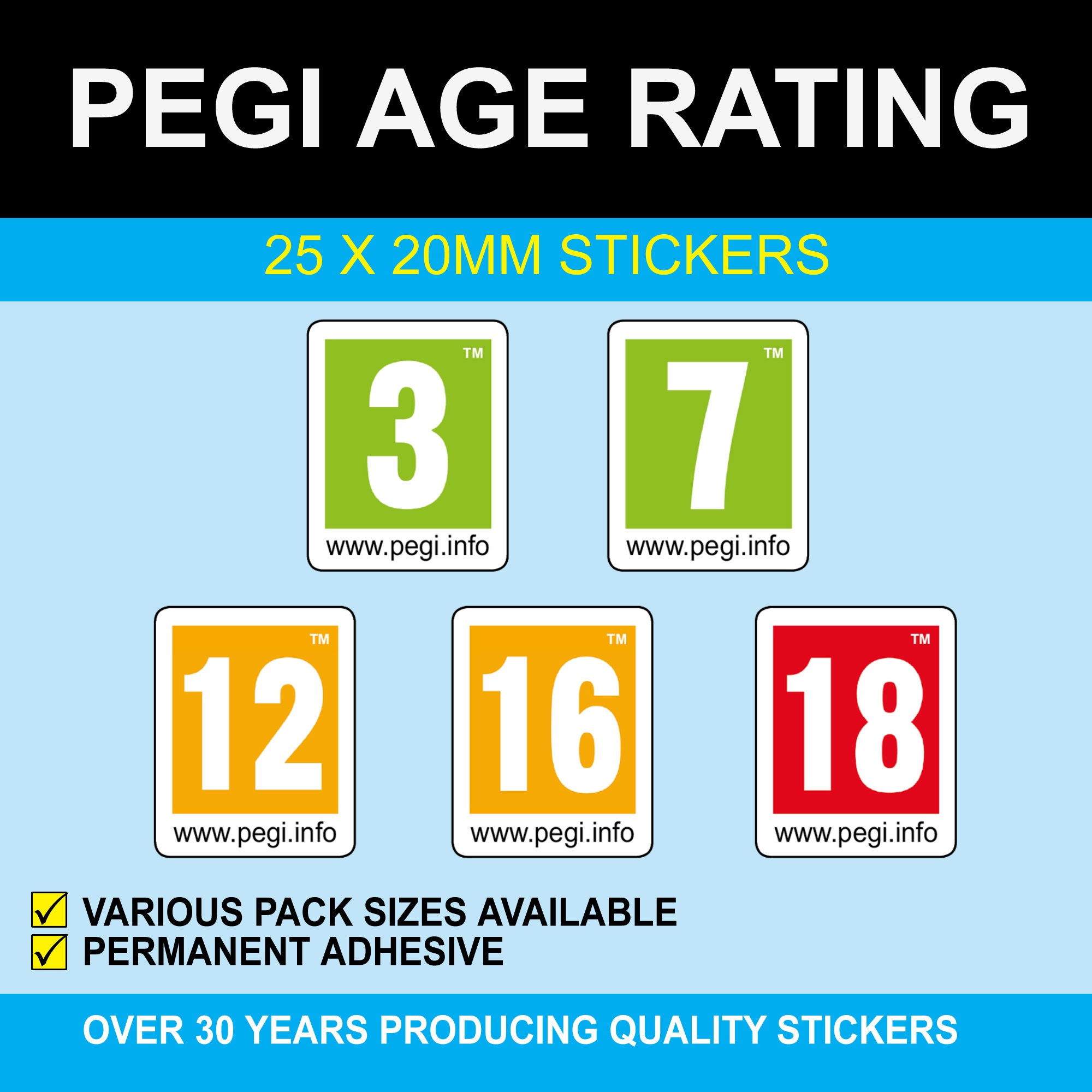
PEGI uses a numeric system that aligns more closely with legal age milestones in European countries. The tiers are PEGI 3, 7, 12, 16, and 18. PEGI is particularly notable for its use of "Content Icons" on the back of packaging, which visually represent themes like "Drugs," "Fear," or "Discrimination."
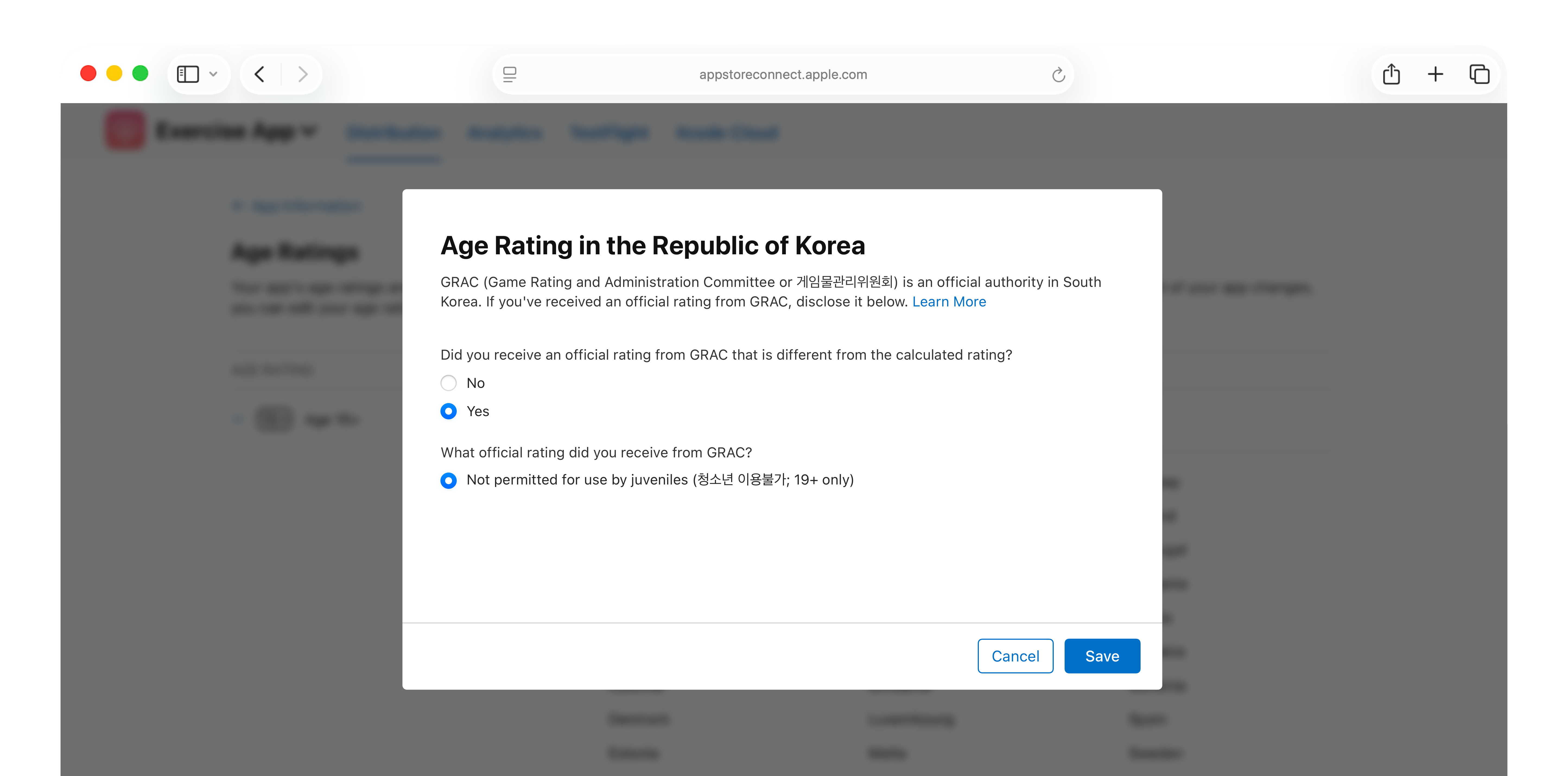
In 2026, both systems have integrated the International Age Rating Coalition (IARC) process. This allows developers to fill out a single questionnaire that generates localized ratings for multiple territories simultaneously, which is essential for the thousands of games released annually on digital storefronts like the Nintendo eShop, PlayStation Store, and Xbox Marketplace.
Ratings for Apps and Mobile Content
The mobile app ecosystem presents a unique challenge due to the sheer volume of content. Unlike movies, which are reviewed by a board of humans, most mobile apps are rated through automated systems managed by the platform owners (Apple and Google) or through the IARC.
Apple App Store Ratings
Apple uses its own proprietary system:
- 4+: No objectionable material.
- 9+: May contain mild or infrequent occurrences of mild violence or "scary" themes.
- 12+: May contain infrequent mature or suggestive themes, and mild or infrequent "bad" language.
- 17+: May contain frequent and intense mature, horror, or suggestive themes, plus strong language and graphic depictions of violence.
Google Play (IARC System)
Google Play utilizes the IARC system, which means that an app’s rating will look different depending on where you live. A user in the US will see an ESRB rating, while a user in the UK will see a PEGI rating for the exact same app. This ensures that the rating reflects local cultural standards rather than a "one-size-fits-all" global metric.
Comparing Global Age Rating Standards
The following table compares the most common age rating systems used in 2026 across different media and regions.
| Content Type | System | Youngest Tier | Intermediate Tier | Mature/Adult Tier |
|---|---|---|---|---|
| Movies (US) | MPA | G | PG / PG-13 | R / NC-17 |
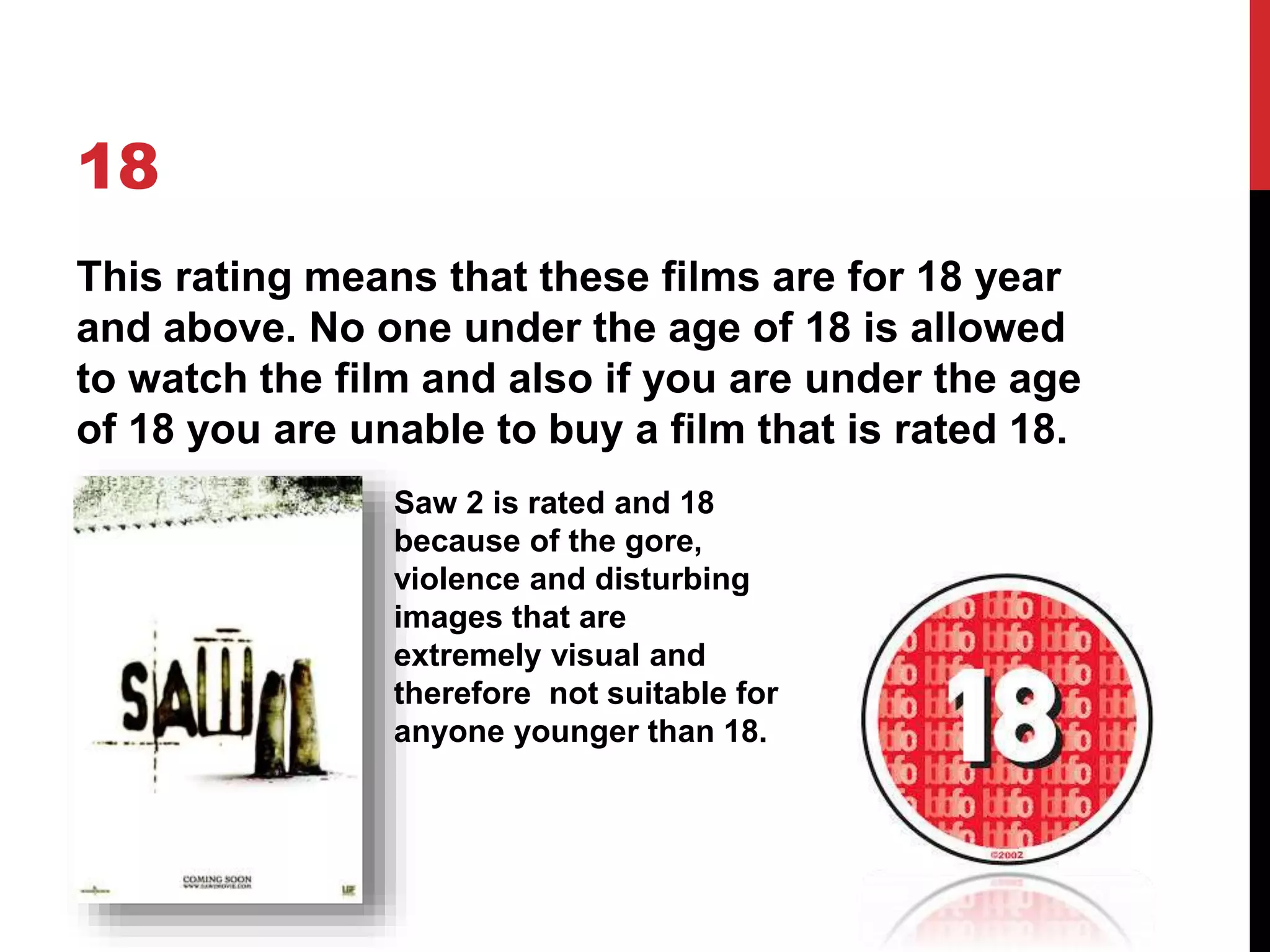
| Movies (UK) | BBFC | U / PG | 12A / 15 | 18 |
| Games (US) | ESRB | E | E10+ / T | M / AO |
| Games (EU) | PEGI | 3 / 7 | 12 / 16 | 18 |
| TV (US) | TV Parental | TV-Y / TV-G | TV-PG / TV-14 | TV-MA |
| Apps (Global) | IARC | 3+ / 4+ | 7+ / 12+ | 16+ / 18+ |
The Role of Descriptors and Interactive Elements
By 2026, the "letter" or "number" of a rating has become secondary to the Content Descriptors. These phrases provide the specific justification for a rating and are essential for nuance. For example, two games might both be rated "Teen," but one is for "Fantasy Violence" while the other is for "Drug Reference."
Furthermore, "Interactive Elements" are now a mandatory part of the disclosure for games and apps. These include:
- In-Game Purchases: Notifies parents that the game offers the ability to spend real-world money on digital goods.
- Users Interact: Warns that the app allows for unmonitored communication between users (chat, voice, or video), which cannot be rated by the board itself because the content is generated by players in real-time.
- Location Sharing: Indicates that the app may share the user's physical location with others.
These descriptors are the foundation of modern digital safety, allowing parents to set technical restrictions on devices based on specific criteria rather than just an age number.
How to Use Age Ratings for Parental Controls
Age ratings are only effective if they are implemented through the parental control settings available on modern hardware. In 2026, most operating systems (iOS, Android, Windows, macOS) and consoles have "Family Link" or "Family Groups" that allow for granular control.
- Device-Level Restrictions: On smartphones and tablets, you can set an "Age Ceiling." For example, if you set the ceiling to "12+," the device will automatically hide or prevent the download of any app rated 17+.
- Streaming Profiles: Services like Netflix, Disney+, and HBO Max allow users to create "Kids Profiles." These profiles use the TV Parental Guidelines or MPA ratings to filter the library. A profile set to "TV-PG" will never show "TV-MA" content in its search results.
- Console Controls: PlayStation, Xbox, and Nintendo Switch allow parents to restrict games by ESRB or PEGI level. Additionally, they allow for the restriction of "Interactive Elements," such as disabling voice chat even if the game itself is rated for the child's age.
- Spending Caps: Since "In-Game Purchases" is now a standard descriptor, most platforms allow parents to password-protect any transaction or set a monthly spending limit of $0.00.
Common Misconceptions About Age Ratings
One major misconception is that an age rating is a reflection of difficulty or quality. An ESRB "E" rating does not mean a game is "easy"; it simply means the content is appropriate for all ages. Some of the most challenging strategy or puzzle games are rated "E." Similarly, a "G" rated movie is not necessarily a "kids' movie"—it is simply a movie that contains nothing offensive to general audiences.
Another misconception is that ratings are legally binding for parents. In the US, the MPA and ESRB systems are private and voluntary. While a movie theater may refuse to sell an "R" rated ticket to a minor based on their own policy, there is no federal law preventing a parent from showing an "R" rated movie to their child at home. However, in other jurisdictions like the United Kingdom, the BBFC ratings for "12," "15," and "18" are legally enforced at the point of sale.
Frequently Asked Questions
Are age ratings legally binding?
In most of North America, age ratings for movies and games are industry-regulated and not federal law. However, retailers and theaters often have strict internal policies that prevent the sale of "M" or "R" rated content to minors. In many other countries, such as the UK, Australia, and Germany, age ratings carry legal weight, and selling "18+" content to a minor is a criminal offense for the retailer.
What is the difference between PG and PG-13?
The PG (Parental Guidance) rating suggests that some material might not be suitable for younger children, but it is generally considered "family-friendly." PG-13 (Parents Strongly Cautioned) was specifically designed to bridge the gap between PG and R. It indicates that the content is significantly more intense and is generally not recommended for children under the age of 13 without significant parental oversight.
How are streaming-only movies rated?
Streaming platforms like Netflix and Amazon Prime Video often use the same MPA standards for their original films to maintain consistency. However, if a film does not have a theatrical release, the platform might use the TV Parental Guidelines (e.g., TV-MA instead of R) or their own internal rating system. In 2026, many streamers have adopted the IARC or similar global standards to ensure their content is appropriately labeled in every territory.
Can a rating be changed after a product is released?
Yes, though it is rare. If a video game update adds new content that exceeds the original rating (such as an added "Casino" mechanic or more graphic violence), the ESRB or PEGI may re-evaluate and issue a higher rating. For movies, a "Director's Cut" or "Unrated Version" released on home media often contains content that was not present in the original theatrical version, effectively nullifying the original MPA rating.
Why do some games have "Rating Pending"?
The "RP" (Rating Pending) label is used in promotional materials before a game has been officially reviewed by the rating board. It serves as a placeholder to let consumers know that a rating is coming. By the time the game is available for purchase, it must have a final rating assigned.
Recommended Actions for Consumers
To make the most of age rating systems in 2026, consumers should look beyond the icon on the front of the box or the corner of the screen. Always check the Content Descriptors found on the back of the packaging or in the "More Info" section of a digital storefront. These provide the specific "Why" behind a rating, which is often more helpful than the "What."
For parents, the best practice is to align device "Parental Control" settings with the ratings used in your region. Regularly reviewing these settings—especially after a child’s birthday—ensures that the filters remain appropriate for their development. Finally, consider using third-party resources like Common Sense Media to supplement official ratings with detailed parent and child reviews of specific content.