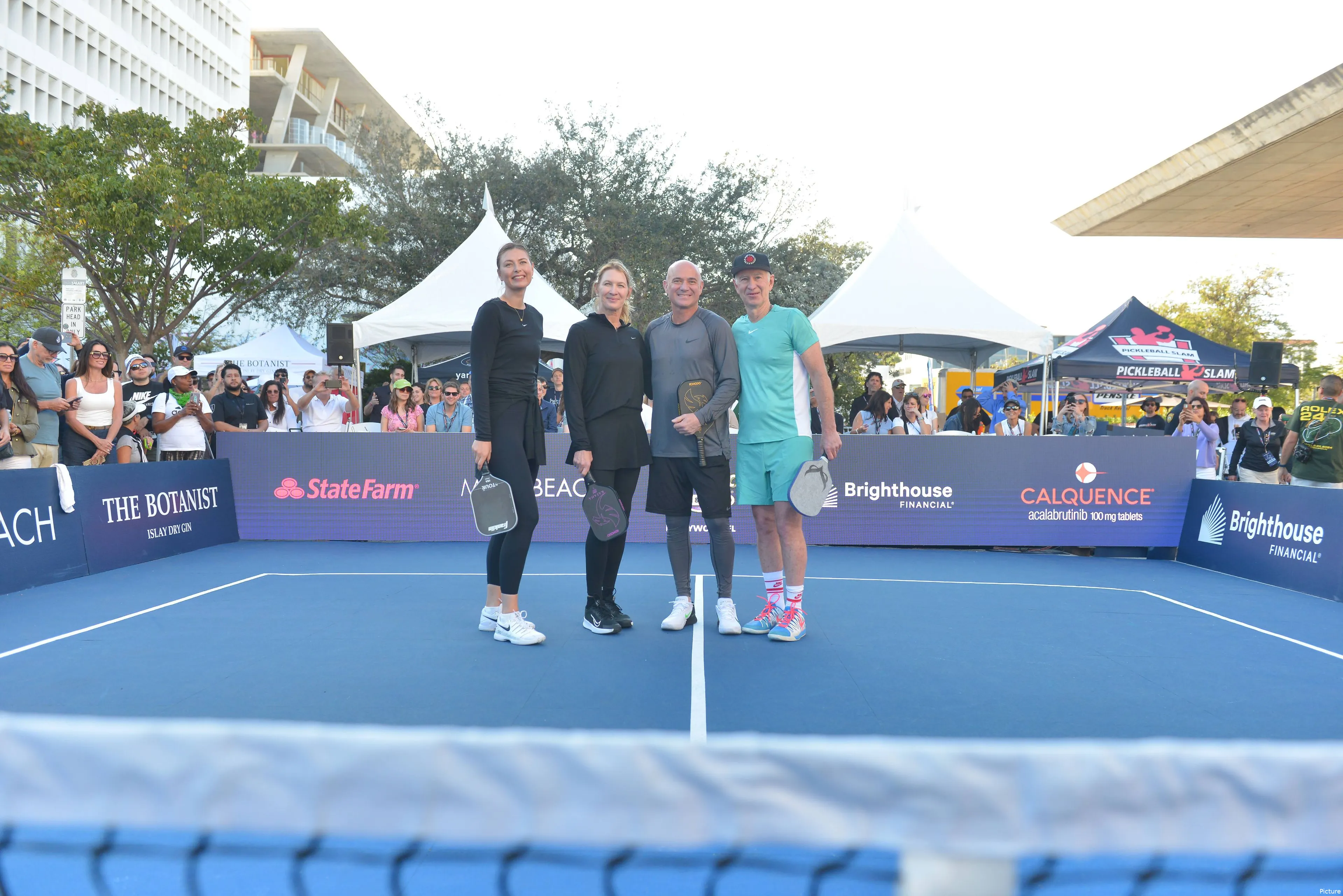
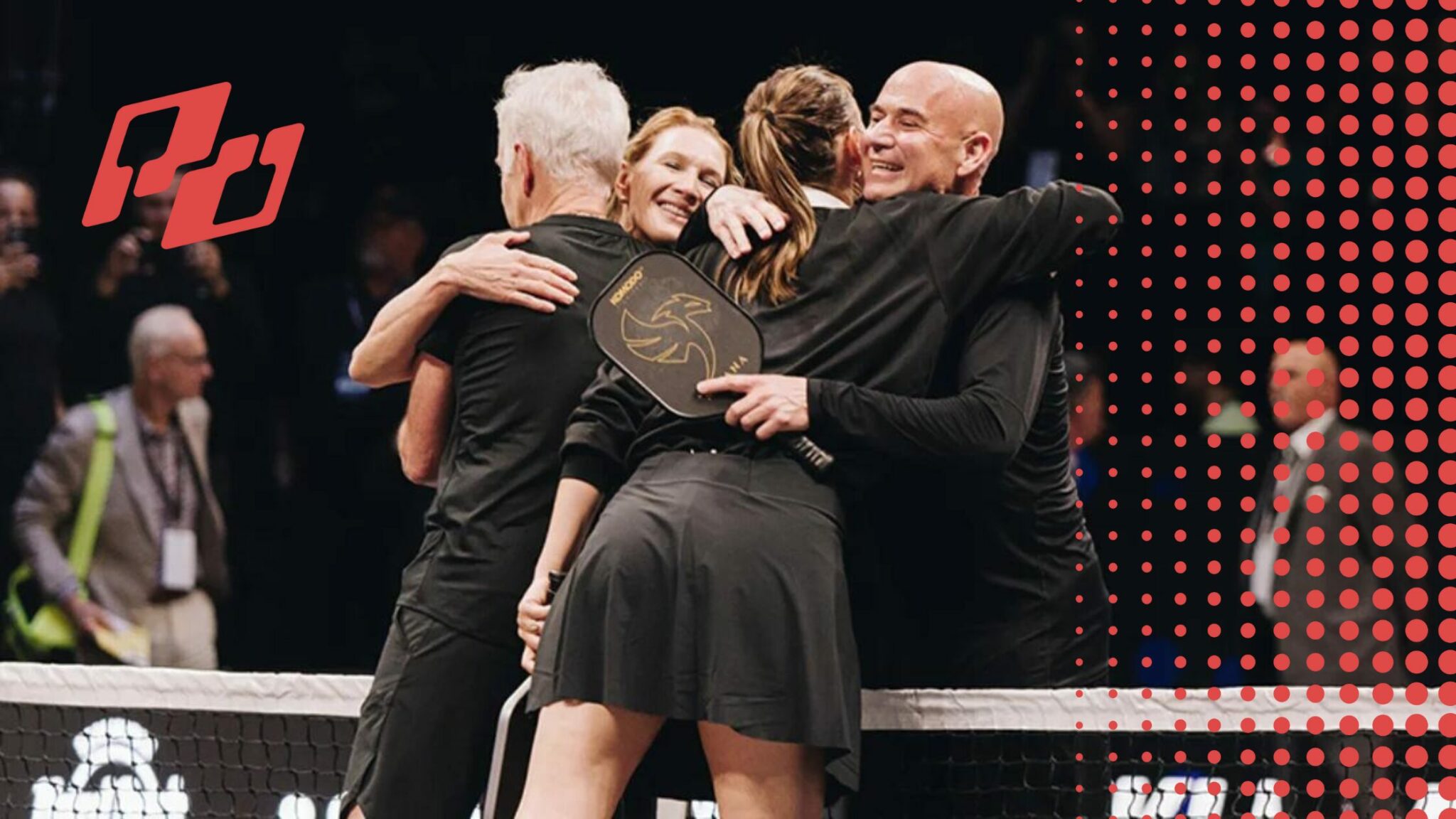
The Agassi Graf pickleball phenomenon represents a high-profile convergence of tennis royalty, celebrity exhibition culture, and the explosive growth of the fastest-growing racquet sport in North America. This showcase brings together Grand Slam champions Andre Agassi and Steffi Graf in high-stakes, broadcast-ready pickleball events that test traditional tennis mechanics against the unique dynamics of a perforated polymer ball and a solid paddle.
Understanding the Rise of Celebrity Pickleball Showdowns
The transition of tennis legends into pickleball exhibitions is not merely a recreational hobby; it is a calculated cultural and commercial movement. Sports entertainment companies and broadcast networks have capitalized on the crossover appeal of legendary tennis couples and rivalries. When icons like Andre Agassi and Steffi Graf step onto a pickleball court, they validate the sport for millions of traditional tennis fans while demonstrating how elite hand-eye coordination translates across disciplines.
Pickleball's smaller court dimensions—measuring 20 by 44 feet for both singles and doubles—fundamentally alter the spatial geometry that tennis players spend decades mastering. Tennis relies heavily on deep baseline rallies, heavy topspin, and expansive court coverage. In contrast, pickleball emphasizes rapid hand speed, strategic dinking at the non-volley zone (kitchen) line, and precise touch. For retired tennis champions, the smaller footprint reduces the grueling physical toll of chasing balls across a 78-foot tennis court while still allowing them to showcase their legendary reflexes, tactical court positioning, and competitive fire.
The Mechanics of Tennis Legends Transitioning to Pickleball
When examining how elite tennis players adapt to pickleball, several technical adjustments become immediately apparent. The equipment differs drastically. Traditional tennis racquets feature strung stringbeds designed to generate massive spin and power through string deflection. Pickleball paddles are solid, typically constructed from graphite, fiberglass, or carbon fiber faces with polymer or Nomex honeycombed cores. This shifts the physics of impact, requiring players to rely on a compact swing path and wrist stability rather than sweeping follow-throughs.
| Technical Parameter | Tennis (Grand Slam Standard) | Pickleball (PPA / APP Standard) |
|---|---|---|
| Court Dimensions | 78 ft x 27 ft (Singles) / 36 ft (Doubles) | 20 ft x 44 ft (Universal) |
| Pitting Surface / Implement | Strung Racquet (27 inches max length) | Solid Paddle (max 24 inches combined length/width) |
| Projectiles | Rubber core with felt cover | Rotomolded polymer with 26 to 40 circular holes |
| Service Rule | Overhand, diagonally crosscourt | Underhand, below the waist, crosscourt |
| The "Kitchen" Rule | No equivalent rule in tennis | Non-Volley Zone prohibits striking the ball out of the air within 7 feet of the net |
Mastering the kitchen rule is frequently the steepest learning curve for tennis champions. In tennis, approaching the net for a volley is an aggressive tactic executed after establishing an advantage. In pickleball, players often start near or at the kitchen line immediately during the return of serve sequence, engaging in tactical dink exchanges. Agassi and Graf, renowned for their exceptional court coverage and baseline dominance during their professional tennis careers, had to recalibrate their instincts to excel in tight, close-quarters exchanges.
Notable Events and Exhibition Contexts
Exhibition events featuring tennis Hall of Famers often occur under high-profile broadcast partnerships, charity fundraisers, or specialized tournament circuits like the Pickleball Slam series. These events are specifically designed to bridge the gap between casual sports fans and hardcore enthusiasts.
- The Pickleball Slam Series: These marquee events have featured tennis greats such as Andre Agassi, Steffi Graf, John McEnroe, and Andy Roddick competing for substantial purse prizes. The format typically combines singles matches, mixed doubles pairings, and tie-break rules designed to maximize broadcast drama.
- Charity and Celebrity Pro-Ams: High-net-worth exhibitions frequently pair tennis legends with amateur investors, corporate sponsors, or entertainment celebrities, driving mainstream media coverage and expanding the sport's demographic reach.
- Broadcast Integration: Modern pickleball productions employ advanced audio tracking, high-speed camera angles, and on-court microphones to capture the strategic banter and competitive intensity between spouses or historic rivals.
These matchups serve an economic purpose beyond pure entertainment. They drive equipment sales, court constructions in residential and commercial real estate developments, and digital streaming subscriptions. When athletes of Agassi and Graf's stature participate, sporting goods manufacturers observe measurable spikes in premium paddle and shoe sales.
Equipment and Gear Choices for Elite Pickleball
The equipment utilized in high-profile legend showdowns reflects the cutting edge of pickleball engineering. While entry-level players often start with inexpensive wooden or composite paddles, elite competitors require specialized gear designed for control, spin generation, and vibration dampening.
Carbon fiber faces have become the gold standard for players transitioning from tennis. The textured surface allows for micro-adjustments in ball trajectory, enabling former tennis pros to impart subtle slice and topspin that mimics their preferred tennis strokes. Furthermore, paddle core thickness—ranging from 13mm to 16mm—dictates the balance between power and control. Thicker cores absorb more energy, providing the exceptional touch required for soft dink rallies, whereas thinner cores offer explosive put-away power.
Footwear is another critical consideration. Pickleball involves explosive lateral movements, quick stops, and rapid pivots. Tennis court shoes with durable rubber outsoles and reinforced lateral support are frequently adapted for pickleball, though specialized pickleball shoes feature tread patterns specifically optimized for the silica-infused acrylic surfaces common on dedicated outdoor pickleball courts.
Frequently Asked Questions
Can professional tennis players easily dominate professional pickleball players?
While tennis legends possess elite hand-eye coordination, exceptional footwork, and supreme competitive composure, they do not automatically dominate seasoned pickleball professionals. The unique nuances of the non-volley zone rule, the distinct bounce and aerodynamic drag of a polymer ball, and specialized dinking strategy require specific, dedicated training that even Grand Slam champions must master.
What equipment do Andre Agassi and Steffi Graf use in exhibition matches?
Agassi and Graf typically use high-end, tournament-legal composite or carbon-fiber pickleball paddles with textured faces for enhanced control and spin. Their exact paddle models often change based on sponsorship agreements and ongoing advancements in paddle core technology and face materials.
How does the scoring system work in major pickleball showdowns?
Most major exhibition events follow a traditional rally scoring or side-out scoring format, often played to 11 points, win by two. In televised showcase formats, matches may feature best-of-three sets with tie-breakers, or modified point systems designed to fit strict broadcast windows.
Where can fans watch Agassi and Graf pickleball matches?
Major showdowns between tennis legends are typically broadcast live on sports networks like ESPN, Tennis Channel, or specialized streaming platforms dedicated to racquet sports. Replays and highlights are also widely available on official tournament YouTube channels and social media profiles.
Strategic Execution and Next Steps for Fans
For enthusiasts inspired by the Agassi and Graf showdowns, translating professional inspiration into practical skill development requires focusing on fundamentals rather than replicating high-risk power shots. Beginners and intermediate players should prioritize mastering the third-shot drop, maintaining a low athletic stance at the kitchen line, and prioritizing placement over sheer velocity.
To begin your own journey or refine your gameplay, assess your equipment to ensure you are using a paddle that matches your playing style—opting for a control-oriented carbon fiber paddle if you favor soft touch and placement, or an elongated power paddle if you rely on aggressive drives. Seek out local dedicated courts, practice cooperative dinking drills with a partner, and study the tactical patience demonstrated by tennis legends as they adapt their courtcraft to the unique demands of the pickleball court.