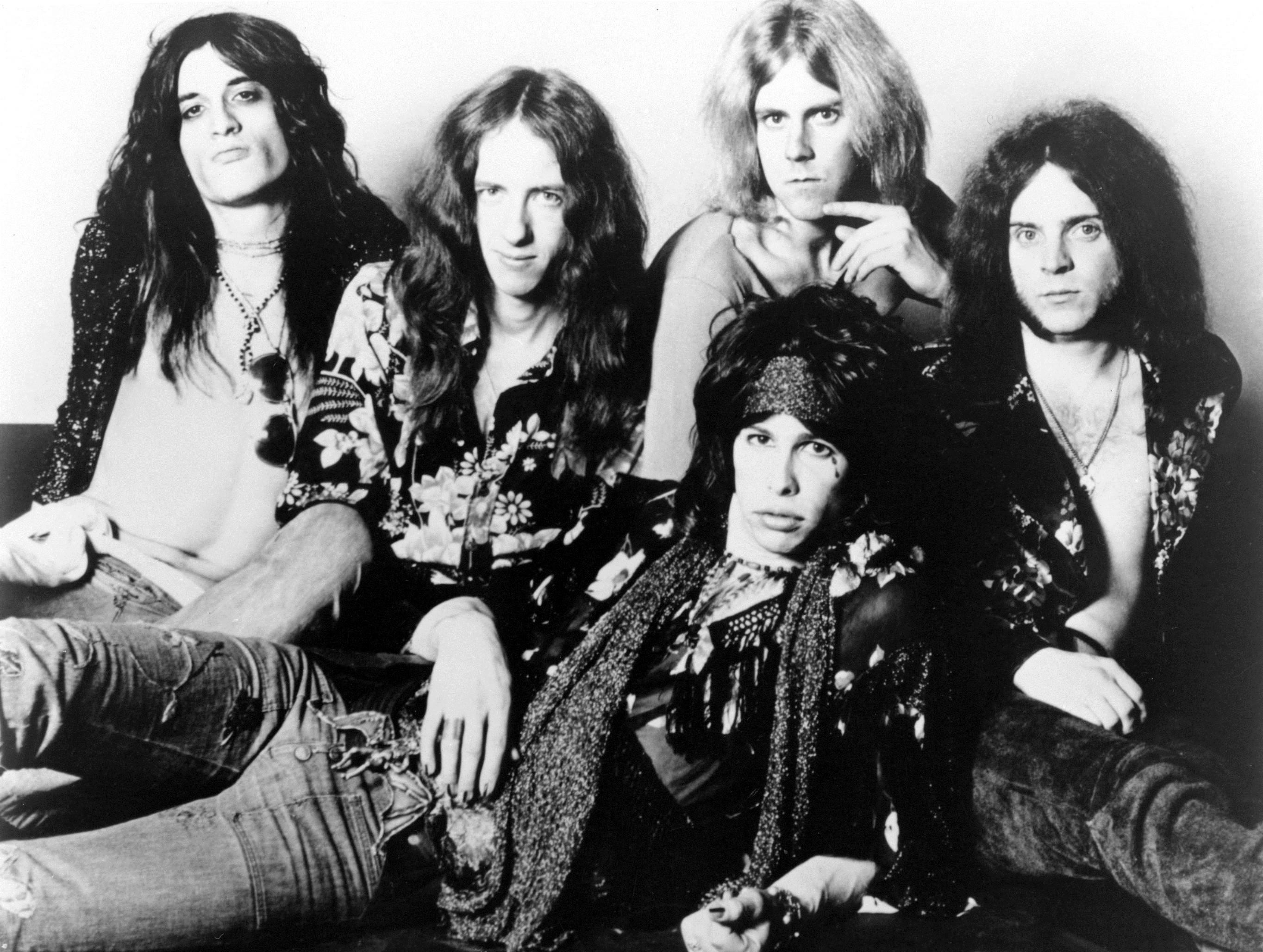
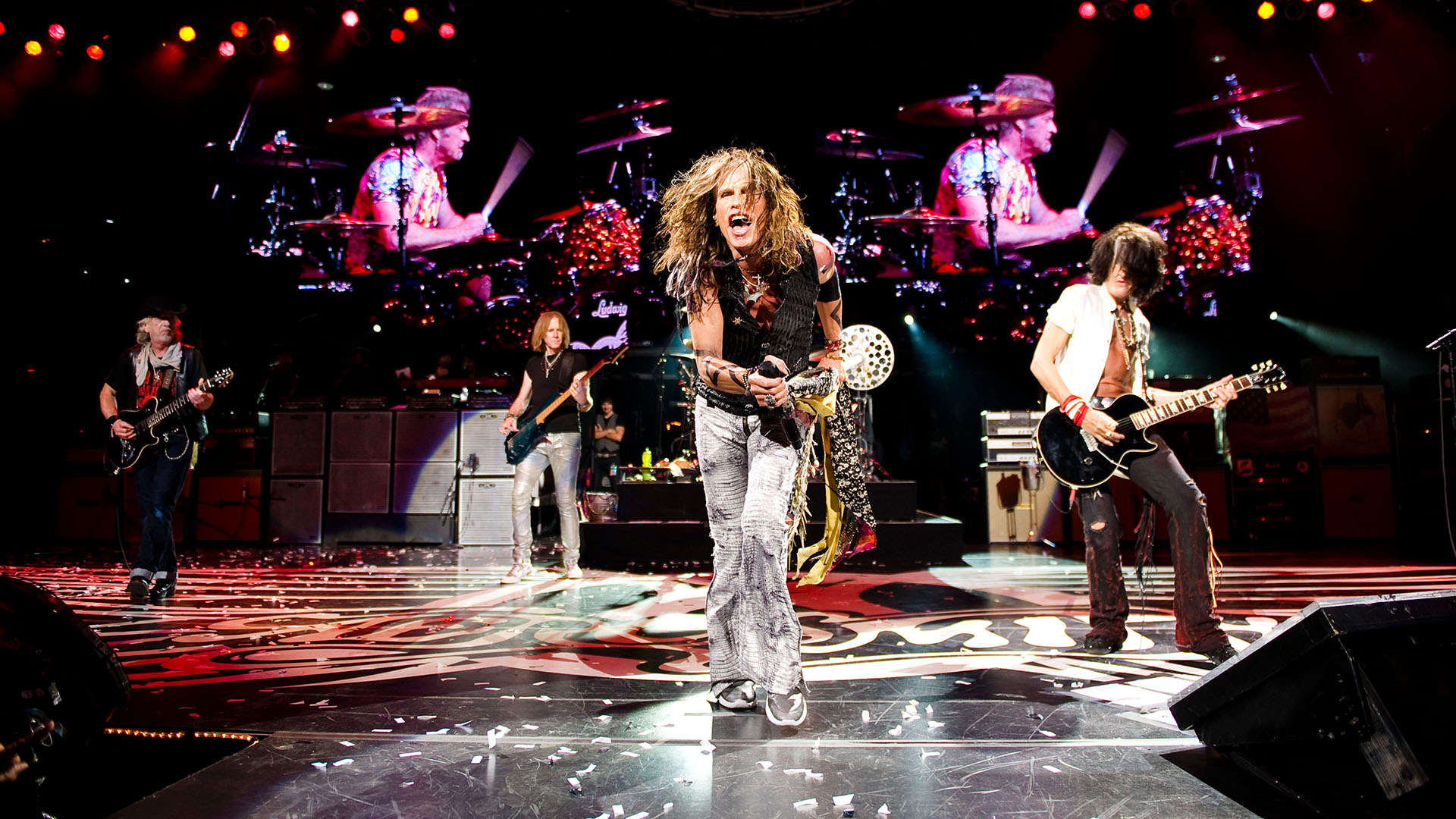
Aerosmith stands as the most successful American hard rock band in history, blending blues-rooted grit with a polished pop sensibility that has defined classic rock for over five decades. With over 150 million records sold worldwide and a legacy cemented by their 2001 induction into the Rock & Roll Hall of Fame, the band remains the gold standard for arena-scale performance and rock-and-roll longevity.
The Foundations of the Boston Sound (1970–1975)
The story of Aerosmith began in late 1970 in Boston, Massachusetts, when vocalist Steven Tyler, guitarists Joe Perry and Ray Tabano (later replaced by Brad Whitford), bassist Tom Hamilton, and drummer Joey Kramer joined forces. Unlike many of their contemporaries who leaned into the psychedelic sounds of the late 1960s, Aerosmith focused on a high-energy, riff-driven style influenced heavily by the British Blues Explosion—specifically The Yardbirds and The Rolling Stones.
Their 1973 self-titled debut, Aerosmith, was initially a slow burner. While it featured the now-legendary power ballad "Dream On," the song did not become a major national hit until it was re-released years later. The album established the band’s core identity: Tyler’s acrobatic vocals and Perry’s raw, swaggering guitar work. This period was defined by a "street" aesthetic that stood in contrast to the more theatrical "glam" movements occurring simultaneously in New York and London.
By 1974’s Get Your Wings, the band began a long-standing partnership with producer Jack Douglas. Douglas was instrumental in refining their sound, moving them toward the heavy, groove-oriented rock that would define their peak. The album provided a blueprint for the "Boston Sound"—a mix of aggressive percussion, prominent bass lines, and dual-guitar harmonies that felt both dangerous and accessible.
Defining the Hard Rock Era: Toys in the Attic and Rocks
If the first two albums were the foundation, 1975’s Toys in the Attic and 1976’s Rocks were the skyscrapers. Toys in the Attic catapulted the band to international superstardom, driven by the rhythmic complexity of "Walk This Way" and the anthemic "Sweet Emotion." These tracks showcased the band's ability to incorporate funk-influenced syncopation into hard rock, a technical feat that set them apart from more straightforward "four-on-the-floor" rock bands of the era.
Rocks, released in 1976, is often cited by critics and fellow musicians—including members of Guns N' Roses and Metallica—as a primary influence on the development of hard rock and heavy metal. The album's production was denser and more aggressive than its predecessor. Tracks like "Back in the Saddle" and "Nobody's Fault" demonstrated a technical proficiency and a sonic weight that few American bands could match. During this window, Aerosmith was undisputed in their dominance of the American touring circuit, earning the moniker "The Bad Boys from Boston."
However, this period also saw the intensification of the internal pressures that would nearly destroy the band. The "Toxic Twins" nickname, given to Tyler and Perry for their notorious substance use, began to manifest in erratic live performances and mounting tensions within the group.
The Fall and the Miraculous 1980s Resurrection
The late 1970s and early 1980s were a period of decline. Following the departure of Joe Perry in 1979 and Brad Whitford in 1981, the band struggled with lineup changes and lackluster releases like Rock in a Hard Place (1982). Many industry observers believed the band’s story had reached its final chapter.
The turnaround began in 1984 with the "Back in the Saddle" reunion tour, bringing the original five members back together. However, the true catalyst for their second act was the 1986 collaboration with Run-D.M.C. on a cover of "Walk This Way." This historic crossover was more than just a hit single; it was a cultural milestone that effectively broke down the barriers between rock and hip-hop. It reintroduced Aerosmith to a younger, MTV-centric generation and proved their sound was timeless.
Following successful stints in rehabilitation, the band entered their most commercially productive era. Under the guidance of manager Tim Collins and producers like Bruce Fairbairn, Aerosmith released a trilogy of massive albums: Permanent Vacation (1987), Pump (1989), and Get a Grip (1993). These records saw the band embracing high-concept music videos and slicker production values, resulting in hits like "Dude (Looks Like a Lady)," "Love in an Elevator," and "Janie’s Got a Gun," the latter of which earned them their first Grammy Award.
Aerosmith’s Essential Discography and Achievement
To understand Aerosmith's impact, one must look at the consistency of their output across different decades. The following table highlights the pivotal releases that defined their career trajectory and technical evolution.
| Album Title | Release Year | RIAA Certification | Key Technical/Musical Contribution |
|---|---|---|---|
| Aerosmith | 1973 | 2x Platinum | Established the power ballad blueprint with "Dream On." |
| Toys in the Attic | 1975 | 9x Platinum | Integrated funk rhythms into American hard rock. |
| Rocks | 1976 | 4x Platinum | Defined the "heavy" sonic aesthetic for future metal bands. |
| Permanent Vacation | 1987 | 5x Platinum | Pioneered the "comeback" model for legacy rock acts. |
| Pump | 1989 | 7x Platinum | Mastered the use of horn sections and complex arrangements. |
| Get a Grip | 1993 | 7x Platinum | Leveraged the MTV era to achieve global pop dominance. |
| Just Push Play | 2001 | Platinum | Experimented with digital recording and modern pop textures. |
Technical Artistry: The "Toxic Twins" Dynamic
While the band is often celebrated for their image, the technical chemistry between Steven Tyler and Joe Perry is the engine of their success. Tyler’s vocal range is legendary, characterized by a "bluesy" rasp that can transition into a glass-shattering "scream" without losing pitch. Technically, Tyler uses a high degree of melisma and rhythmic phrasing more commonly found in soul and R&B, which gives Aerosmith’s music its unique "swing."
Joe Perry, on the other hand, is a master of the "sloppy-but-tight" guitar style. His playing is heavily influenced by the slide guitar techniques of the Mississippi Delta, but filtered through high-gain amplification. Perry’s ability to create memorable, percussive riffs (often in unconventional tunings) provides the necessary grit to balance Tyler’s more melodic inclinations. Behind them, the rhythm section of Hamilton and Kramer provides a "pocket" that is unusually deep for a rock band, allowing the guitars and vocals to stay loose and improvisational.
The Modern Era and the "Peace Out" Legacy
By the turn of the millennium, Aerosmith had transitioned from contemporary hitmakers to elder statesmen of rock. They achieved their first #1 single on the Billboard Hot 100 in 1998 with "I Don't Want to Miss a Thing" from the Armageddon soundtrack, a feat that underscored their ability to adapt to the ballad-heavy landscape of late-90s radio.
In 2001, they were inducted into the Rock & Roll Hall of Fame and performed at the Super Bowl XXXV halftime show, further cementing their status as a national treasure. The ensuing decades saw them balance successful residency shows in Las Vegas with global tours.
As of 2026, the band’s active touring career has concluded. Following the announcement in August 2024 regarding Steven Tyler’s permanent vocal cord injury, the band officially retired from the road. The "Peace Out" farewell tour served as a final celebration of their five-decade run. In 2026, the focus has shifted toward high-quality archival releases, immersive digital experiences, and the preservation of their vast catalog for future generations. Their influence remains palpable in the modern rock landscape, with their catalog generating billions of streams and their style emulated by every new generation of guitar-driven bands.
Frequently Asked Questions
What is considered Aerosmith's "best" album?
While subjective, critics generally point to Rocks (1976) as their greatest artistic achievement due to its raw energy and influence on the genre. Commercially, Toys in the Attic and Get a Grip are their most successful, representing their 70s peak and 90s resurgence, respectively.
Why did Aerosmith stop touring?
The band officially announced their retirement from touring in late 2024. This decision was necessitated by a severe and irreparable vocal cord injury sustained by lead singer Steven Tyler during the early stages of their farewell tour. Despite extensive medical treatment, a full recovery of his touring-strength vocal capacity was not possible.
How many Grammy Awards has Aerosmith won?
Aerosmith has won four Grammy Awards, all in the Best Rock Performance by a Duo or Group with Vocal category. Their wins include "Janie's Got a Gun" (1990), "Livin' on the Edge" (1993), "Crazy" (1994), and "Pink" (1998).
Did Aerosmith ever change their original lineup?
The "classic" lineup consists of Steven Tyler, Joe Perry, Brad Whitford, Tom Hamilton, and Joey Kramer. While Joe Perry and Brad Whitford briefly left the band in the late 70s/early 80s (replaced by Jimmy Crespo and Rick Dufay), the original five members reunited in 1984 and remained the core unit for the rest of their career.
What was the significance of the "Walk This Way" collaboration?
The 1986 collaboration with Run-D.M.C. is credited with saving Aerosmith’s career and mainstreaming hip-hop. It was the first time a rap song achieved significant airplay on rock radio, effectively creating the blueprint for the rap-rock genre that would explode in the late 90s.
Preserving the Aerosmith Legacy: Where to Start
For those looking to explore the legends of classic rock, the best entry point remains the 1993 compilation Big Ones or the more recent Greatest Hits (2023) collection. These sets provide a chronological overview of their evolution from gritty blues-rockers to global superstars. To truly appreciate their technical depth, listeners should seek out the 1970s studio albums on high-fidelity formats, which capture the nuances of Jack Douglas's legendary production.
As the band enters its archival era in 2026, fans should watch for official documentary releases and remastered live concert films that document the visual spectacle of their live performances. Aerosmith’s journey is a masterclass in resilience, artistic evolution, and the enduring power of American rock and roll.