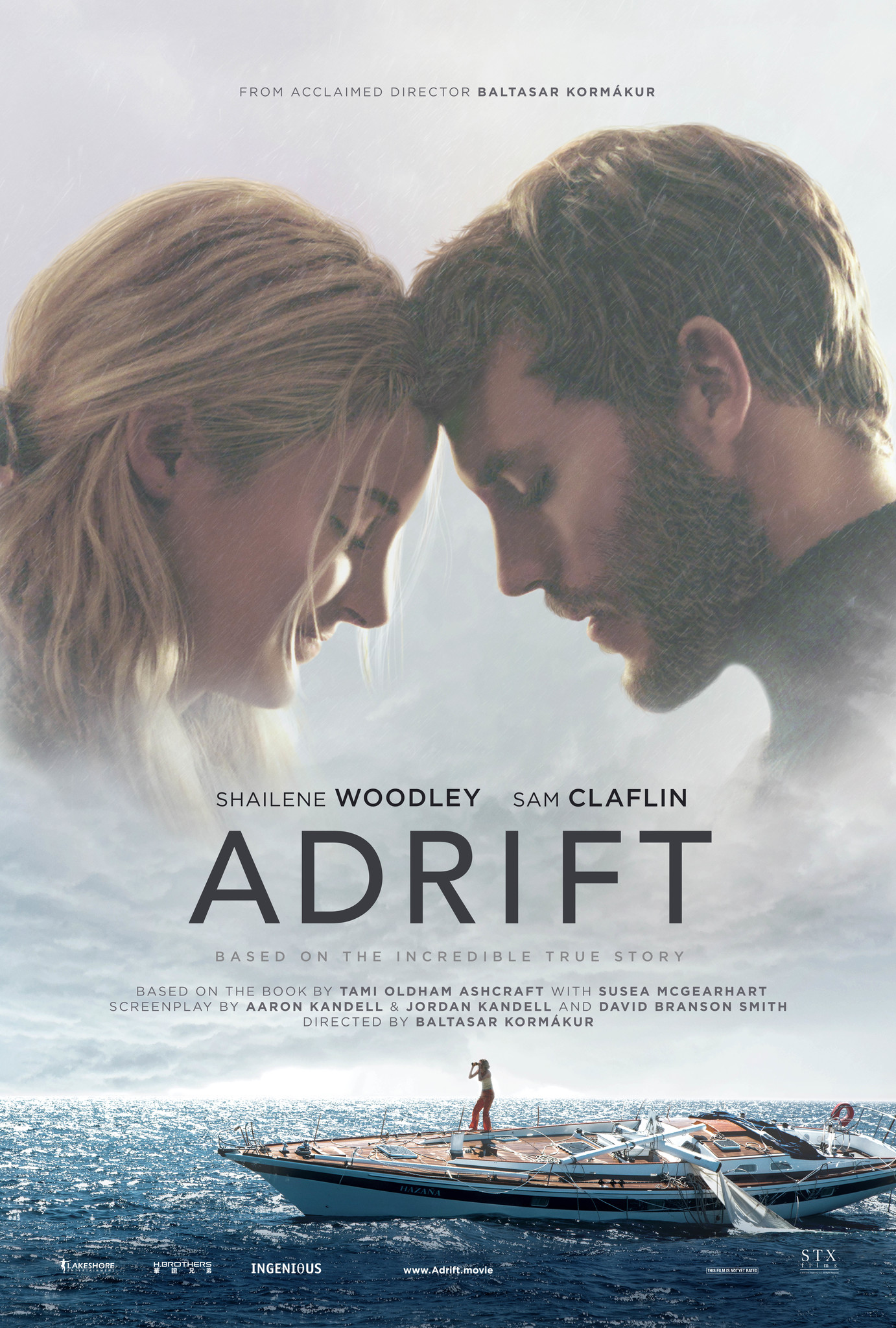
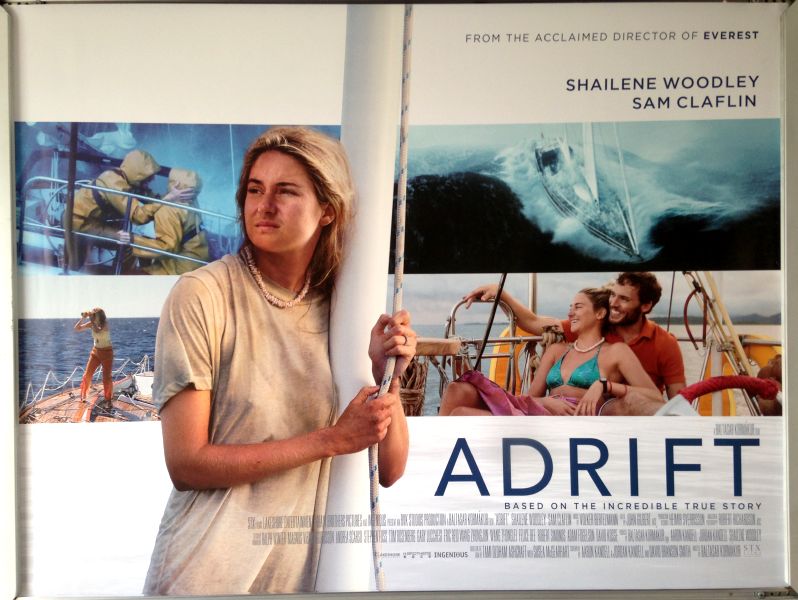
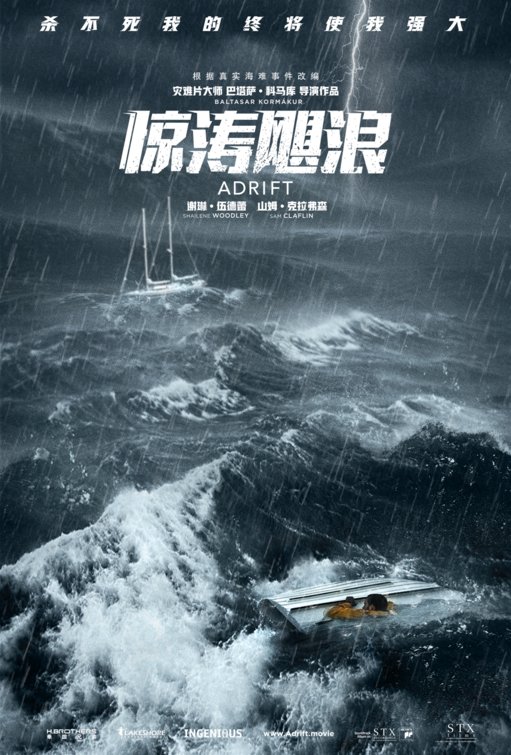
Adrift is a 2018 biographical survival drama film directed by Baltasar Kormákur, based on the harrowing true story of Tami Oldham Ashcraft and Richard Sharp. The film depicts the couple’s 1983 struggle to survive after their yacht was devastated by Hurricane Raymond in the Pacific Ocean, requiring Ashcraft to navigate a crippled vessel across thousands of miles of open sea to reach safety.
The Historical Context of the 1983 Incident
The narrative of Adrift is rooted in a factual maritime tragedy that occurred in 1983. Tami Oldham, aged 23, and her fiancé Richard Sharp were experienced sailors who were hired to transport a 44-foot yacht, the Hazana, from Tahiti to San Diego. Their journey took a catastrophic turn when they encountered Hurricane Raymond. The storm, which possessed sustained winds reaching approximately 140 miles per hour, overwhelmed the vessel.
Unlike fictional survival stories, the events portrayed in the film are based on Ashcraft’s 1998 memoir, Red Sky in Mourning: A True Story of Love, Loss, and Survival at Sea. The historical record confirms that the yacht was dismasted and flooded, leaving the pair stranded in the mid-Pacific. The film preserves the essential logistical challenges Ashcraft faced: the loss of communication equipment, the depletion of food supplies, and the physical exhaustion of managing a damaged craft while experiencing the psychological toll of isolation.
Directorial Approach and Cinematic Adaptation
Directed by the Icelandic filmmaker Baltasar Kormákur, who is known for his focus on man-versus-nature themes—exemplified in his 2015 film Everest—Adrift utilizes a non-linear narrative structure. The film interweaves the timeline of the storm's aftermath with the couple's burgeoning relationship in Tahiti prior to the departure. This approach provides the audience with emotional stakes, anchoring the survival elements in the personal history of the characters.
Shailene Woodley, who played Tami Oldham, underwent significant physical preparation to portray the deteriorating state of a survivor at sea. The production filmed extensively on the water rather than relying solely on soundstages, a decision intended to capture the authentic motion and unpredictable lighting conditions of the Pacific. This commitment to practical environments contributes to the film's reputation as a grounded, technical depiction of maritime survival rather than a high-action Hollywood spectacle.
Technical Realities of Survival at Sea
For viewers interested in the veracity of the film, it is helpful to understand the specific maritime requirements depicted. Ashcraft’s survival depended on basic but critical navigation skills after the yacht's electronic instruments were destroyed.
Essential Survival Factors
- Navigation: Ashcraft relied on a sextant and paper charts to calculate her position relative to Hawaii. Without GPS, determining longitude and latitude requires precise observation of the horizon and celestial bodies.
- Vessel Integrity: After the storm, the Hazana remained afloat due to its construction, but it was severely compromised. Keeping the cabin sealed and managing water ingress were constant, energy-consuming tasks.
- Resource Management: The film highlights the rationing of limited canned goods and the utilization of a solar still or rain catchment for potable water, both of which are standard survival protocols in long-term drift scenarios.
The film successfully conveys that survival at sea is less about dramatic confrontations and more about the monotonous, grueling maintenance of life-support systems under extreme environmental duress.
Comparative Overview of Survival Dramas
Adrift fits into a specific sub-genre of cinema: the true-life survival film. When compared to similar works that focus on isolated individuals facing elemental forces, Adrift is notable for its emphasis on the human connection as a driving force for endurance.
| Film Title | Year | Setting | Core Conflict |
|---|---|---|---|
| Adrift | 2018 | Pacific Ocean | Hurricane damage |
| All Is Lost | 2013 | Indian Ocean | Vessel collision |
| The Perfect Storm | 2000 | North Atlantic | Massive cyclonic storm |
| 127 Hours | 2010 | Canyonlands | Physical entrapment |
Unlike All Is Lost, which features minimal dialogue and a singular focus on technical problem-solving, Adrift functions as both a survival manual and a romantic tragedy. This dual focus defines its pacing and sets it apart from films that prioritize the visceral experience of isolation over character development.
Addressing Common Audience Inquiries
How accurate is the 2018 film to the real Tami Oldham Ashcraft story?
The film is highly accurate regarding the core timeline and the specific survival outcome. While some creative liberties were taken with the pacing of the flashbacks and the way the relationship unfolded in Tahiti, the fundamental events—the storm, the loss of Richard, the 41-day ordeal, and the eventual arrival in Hilo, Hawaii—are verified by public accounts and the original memoir.
Was the filming actually done in the open ocean?
Much of the production was shot on the water near Fiji to achieve realistic lighting and movement. While safety protocols were strictly enforced and portions were shot in tanks for controlled sequences, the cast and crew spent considerable time on vessels in the ocean to ensure the atmospheric quality of the film matched the intensity of the real-world events.
What happened to the yacht after the incident?
Following the ordeal, the Hazana was examined, and Ashcraft continued her life as a sailor. The film does not focus on the salvage or the legal aftermath of the vessel's destruction, as the narrative concludes with the successful rescue and the survivor's return to shore.
Why is the film categorized as both drama and thriller?
The thriller classification arises from the tension of the storm sequence and the ongoing, life-threatening dangers inherent in being lost at sea, such as the potential for capsizing, starvation, or dehydration. The drama classification stems from the emotional weight of the relationship between Tami and Richard, which serves as the emotional anchor for the entire story.
Does the film provide actual survival training?
No. Adrift is a dramatization meant for entertainment and emotional reflection. While it accurately portrays the necessity of celestial navigation and the importance of resource management, it should not be considered a substitute for formal maritime safety training, emergency survival courses, or the acquisition of proper life-saving equipment.
Practical Next Steps for Interested Viewers
If the 2018 film Adrift has piqued your interest in the subject of maritime survival or historical accounts of sea travel, there are several ways to expand your knowledge base:
- Read the Original Memoir: To fully understand the nuance of the experience, read Red Sky in Mourning. It provides extensive detail regarding the psychological state of the survivor that a film can only briefly touch upon.
- Study Maritime Navigation: Organizations such as the Royal Yachting Association (RYA) or the American Sailing Association (ASA) offer courses in celestial navigation and offshore safety, which can provide a deeper appreciation for the skills Ashcraft utilized during her ordeal.
- Analyze Historical Weather Data: Research the actual path of the 1983 hurricane season to understand the scale of the storms that occurred in that region during that era, which provides context for why the Hazana could not avoid the system.
- Examine Safety Regulations: Review the current International Convention for the Safety of Life at Sea (SOLAS) standards, which have been updated since 1983 to improve communication and rescue capabilities for vessels in open waters.
By researching these areas, you can transition from a casual viewer to an informed observer of the realities surrounding one of history's most compelling survival stories.