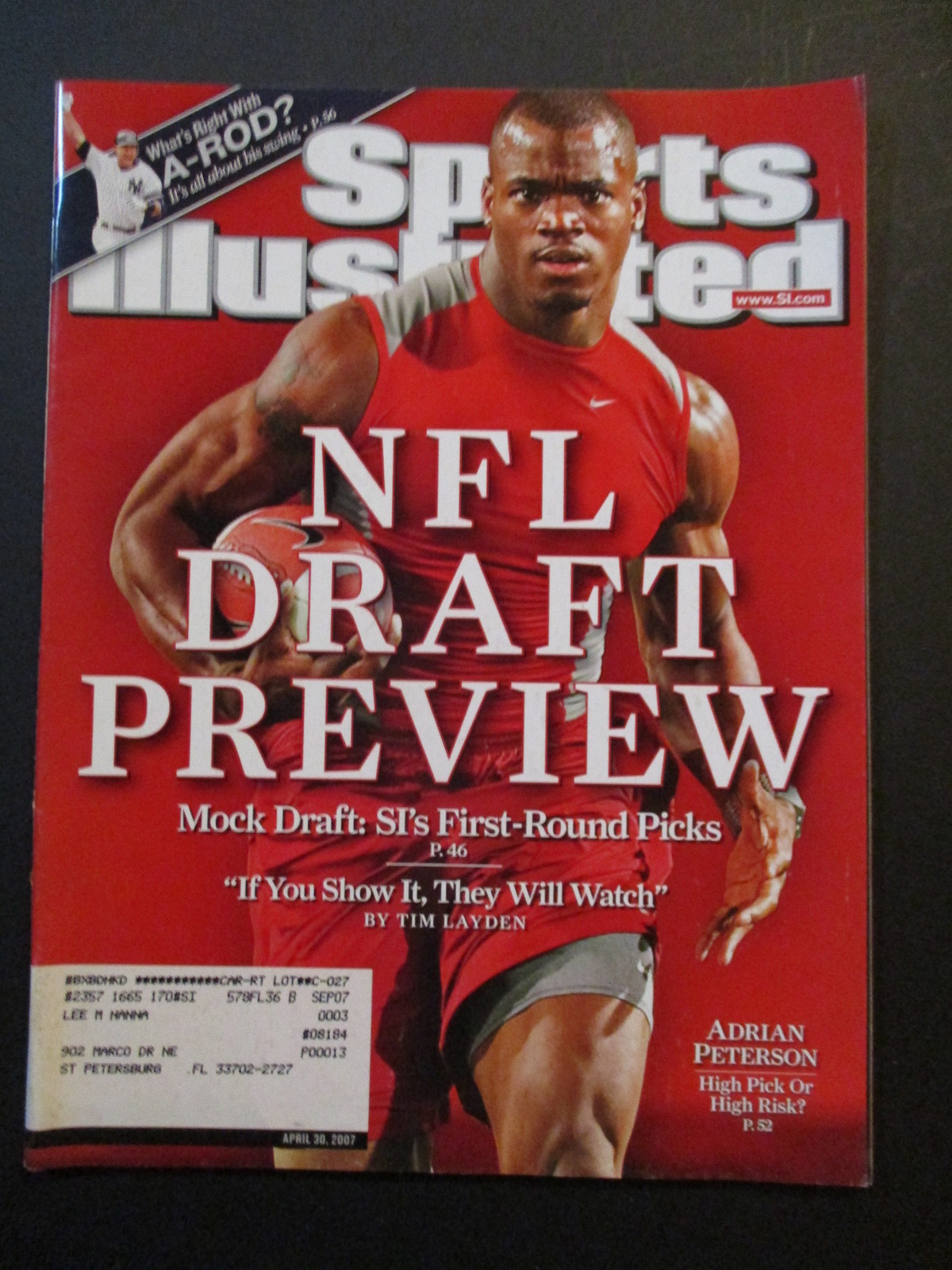
Evaluated widely as a generational prospect ahead of the 2007 NFL Draft, Adrian Peterson combined rare collegiate productivity at Oklahoma with elite physical traits, ultimately building a Hall of Fame career defined by extraordinary rushing longevity and an iconic single-season MVP run.
Pre-Draft Profile and Collegiate Foundation at Oklahoma
Long before entering the professional ranks, Adrian Peterson established himself as a dominant force in the Big 12 Conference while playing for the University of Oklahoma Sooners. Arriving in Norman as a highly touted recruit from Palestine, Texas, Peterson immediately impacted college football by rushing for 1,925 yards as a true freshman in 2004, finishing as the runner-up for the Heisman Trophy. Despite battling various injuries—including a broken collarbone and a severely sprained ankle during his sophomore and junior campaigns—his collegiate tape revealed a runner of unprecedented physical stature.
Scouts evaluating his collegiate body of work noted a rare blend of size, speed, and functional strength. At approximately 6-foot-1 and hovering around 215 to 220 pounds during his pre-draft measurements, Peterson possessed an ideal frame for a feature running back. His style was characterized by extreme vertical explosion, an effortless second gear in the open field, and a punishing running temperament that consistently wore down opposing defenses over four quarters. While concerns lingered regarding his durability due to his missed games in college, talent evaluators agreed that his ceiling as an offensive centerpiece was among the highest in modern draft history.
Detailed Breakdown of the 2007 NFL Draft Scouting Report
Ahead of the 2007 NFL Draft, professional scouting reports presented a remarkably unified front regarding Peterson’s athletic capabilities and technical limitations. Front offices scrutinized every aspect of his game, categorizing his attributes into clear strengths and developmental areas that would shape his transition to the professional level.
Physical Attributes and Athleticism
Evaluators universally graded Peterson’s physical tools as elite. His speed-to-size ratio was frequently compared to historic rushing greats like Eric Dickerson. During pre-draft testing, he demonstrated exceptional explosiveness, validating what scouts saw on film: a runner capable of out-flanking fast secondary defenders and running through arm tackles with equal ease. His lateral agility, while slightly more upright than compact, low-to-the-ground runners, was more than sufficient to make sharp cuts in the hole.
Vision, Patience, and Scheme Fit
The primary debate in draft rooms centered on his running style and scheme compatibility. Analysts noted that Peterson occasionally relied too heavily on his superior athletic traits during his time at Oklahoma, sometimes bouncing runs outside when interior blocking broke down rather than pressing the line of scrimmage. Scouts questioned how he would adapt to more disciplined zone-blocking schemes that required rigid patience. However, in a power-gap or isolation scheme—where his responsibility was to read a primary key, plant his foot, and accelerate through a downhill crease—his projection was flawless.
Receiving and Pass Protection
As a pass catcher and blocker, Peterson entered the league with room for growth. While reliable when targeted in the flat or on swing routes, he was not utilized as a dynamic weapon in the passing game at Oklahoma. Similarly, his pass-blocking technique required refinement, as collegiate running backs often rely purely on effort rather than fundamental leverage and hand placement. These nuances formed the primary checklist for professional coaching staffs upon his arrival.
| Scouting Category | Pre-Draft Grade | Evaluator Notes & Observations |
|---|---|---|
| Speed and Acceleration | Elite (9.5/10) | Rare long speed for size; explosive acceleration through the second level. |
| Contact Balance | Exceptional (9/10) | Absorbs arm tackles well; constantly falls forward for extra yardage. |
| Vision and Patience | Above Average (7.5/10) | Occasional tendency to bounce runs; thrives best in downhill, gap schemes. |
| Receiving Ability | Average (6.5/10) | Capable hands, but underutilized as a pass catcher in college. |
| Pass Protection | Developmental (6/10) | High effort, but requires professional coaching on leverage and technique. |
The 2007 NFL Draft Context and Selection by Minnesota
The 2007 NFL Draft featured several high-profile prospects, including franchise quarterbacks like JaMarcus Russell and Brady Quinn, alongside elite defensive talent like Gaines Adams and Patrick Willis. The Minnesota Vikings held the seventh overall selection and aggressively targeted an offensive catalyst to revitalize their running game. When Peterson slid past early teams—largely due to durability concerns stemming from his collarbone and ankle injuries—the Vikings secured him without hesitation.
Landing in Minnesota placed Peterson in a traditional NFC North environment suited to his downhill running style. The selection immediately shifted the competitive balance of the division, providing the Vikings with a focal point that could control the clock and dictate defensive coverages. His rookie campaign instantly validated the selection, as he rushed for 1,341 yards and 12 touchdowns in just 14 games, earning NFL Offensive Rookie of the Year honors and setting a single-game rushing record with 296 yards against the San Diego Chargers in November 2007.
Defining Metrics of an Iconic NFL Legacy
Over a storied professional career spanning multiple franchises—most notably with the Minnesota Vikings, followed by stints with the New Orleans Saints, Arizona Cardinals, Washington Redskins, Detroit Lions, and Tennessee Titans—Peterson cemented his status as one of the most prolific rushers in football history. His career was defined not merely by longevity, but by historic peaks that placed him in rare statistical company.
His crowning individual achievement arrived during the 2012 NFL season. Coming off a devastating torn ACL and meniscus sustained in December 2011, Peterson embarked on one of the most remarkable rehabilitation and athletic comebacks in sports history. He rushed for 2,097 yards—falling just nine yards shy of Eric Dickerson's single-season rushing record—at an astonishing average of 6.0 yards per carry. This performance earned him the NFL Most Valuable Player (MVP) award, a rare feat for a running back in a heavily pass-dominant era.
Throughout his career, Peterson surpassed numerous historical milestones:
- Accumulated over 14,000 career rushing yards, placing him firmly among the top tier of all-time rushers.
- Secured over 100 career rushing touchdowns, highlighting his consistent efficiency in the red zone.
- Earned multiple First-Team All-Pro selections and Pro Bowl nods.
- Captured three NFL rushing titles (2008, 2012, 2015).
Assessing Production, Injury Resilience, and Playing Style
Analyzing Peterson’s career requires examining how his unique physical gifts intersected with professional durability challenges. Unlike smaller, scat-back runners who avoid direct collisions, Peterson embraced contact, lowering his shoulder into linebackers and safeties. This aggressive style naturally accumulated physical wear, making his ability to return from major injuries all the more notable.
The primary debate regarding his career arc centers on the shifting value of the running back position in modern football. While contemporary front offices prioritize pass-catching versatility and analytical efficiency, Peterson represented the absolute apex of the traditional, workhorse runner. His presence alone forced defensive coordinators to deploy heavy boxes, fundamentally altering game plans and opening opportunities for play-action passing games. His career serves as a benchmark for evaluating future collegiate running back prospects who possess elite physical measurements but face questions regarding scheme versatility and durability.
Frequently Asked Questions
What were the main concerns in Adrian Peterson's 2007 draft scouting report?
The primary concerns centered on his durability history, having missed multiple games in college due to a broken collarbone and severe ankle sprains. Scouts also noted occasional tendencies to bounce runs outside rather than trusting interior blocking schemes.
How did Adrian Peterson perform in his rookie NFL season?
Peterson excelled immediately, rushing for 1,341 yards and 12 touchdowns in 14 games. He earned NFL Offensive Rookie of the Year honors and set a single-game rushing record with 296 yards against the San Diego Chargers.
Why is Adrian Peterson’s 2012 season considered historic?
Peterson rushed for 2,097 yards—just nine yards short of the all-time single-season record—less than a year after suffering a torn ACL and meniscus. This unprecedented recovery and production earned him the NFL Most Valuable Player award.
What offensive scheme best fit Adrian Peterson’s running style?
Power-gap and isolation schemes suited him best. These systems allowed him to read a primary lead blocker, plant his foot, and attack downhill with maximum acceleration, maximizing his vertical speed and contact balance.
Where does Adrian Peterson rank in all-time NFL rushing history?
Peterson finished his career near the top of several major historical leaderboards, amassing over 14,000 rushing yards and more than 100 rushing touchdowns, firmly securing his status as a future Pro Football Hall of Fame inductee.
Strategic Insights for Evaluating Elite Running Back Prospects
For modern talent evaluators and analysts studying historical draft profiles, Peterson’s trajectory underscores the importance of separating physical traits from scheme-dependent habits. When a prospect possesses generational speed, functional power, and contact balance, front offices must weigh whether minor technical flaws or collegiate injuries outweigh fundamental dominance. While the league has evolved toward pass-heavy philosophies, the ability of a singular runner to dictate defensive structures remains a valuable archetype in football evaluation.