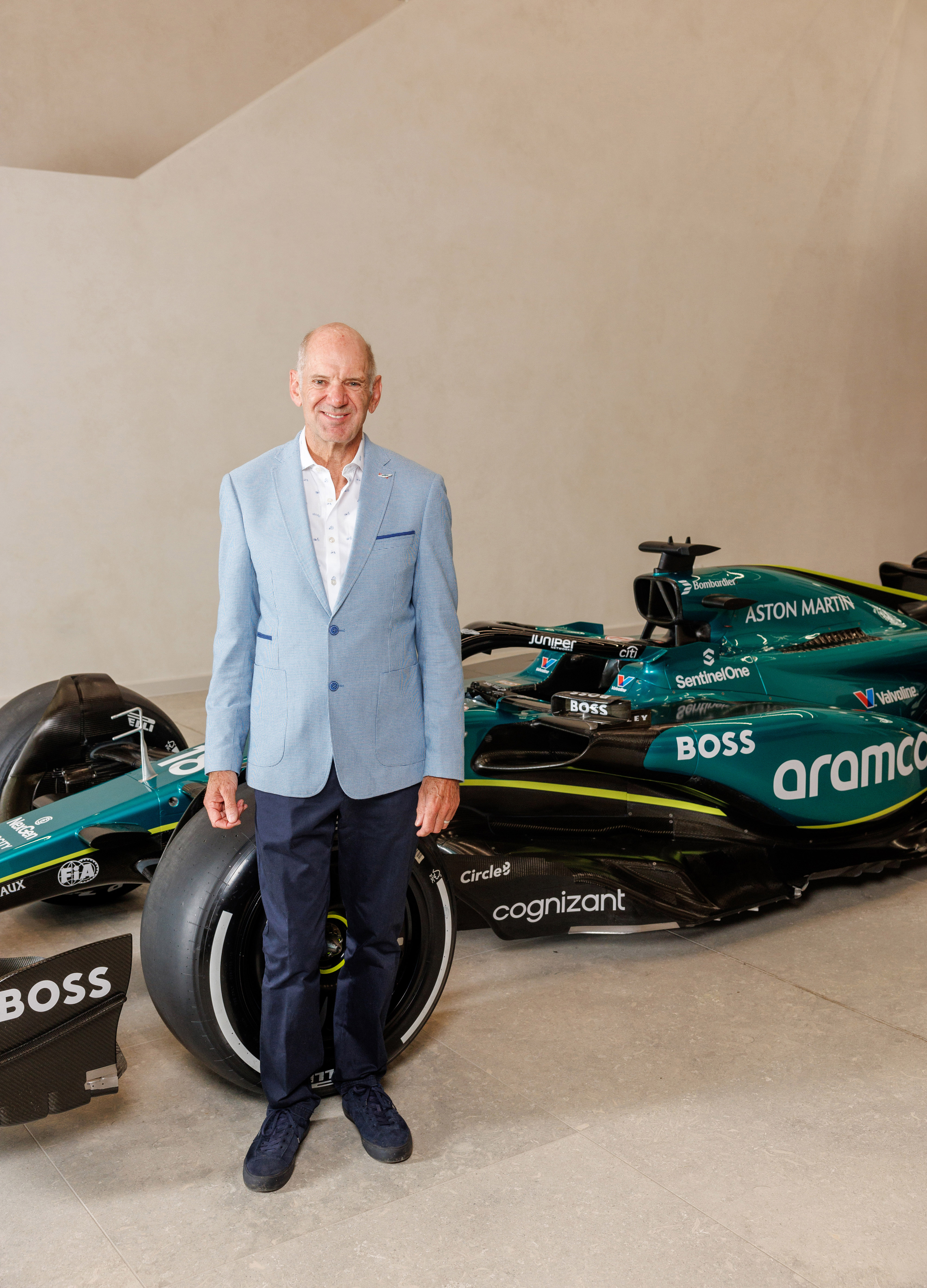
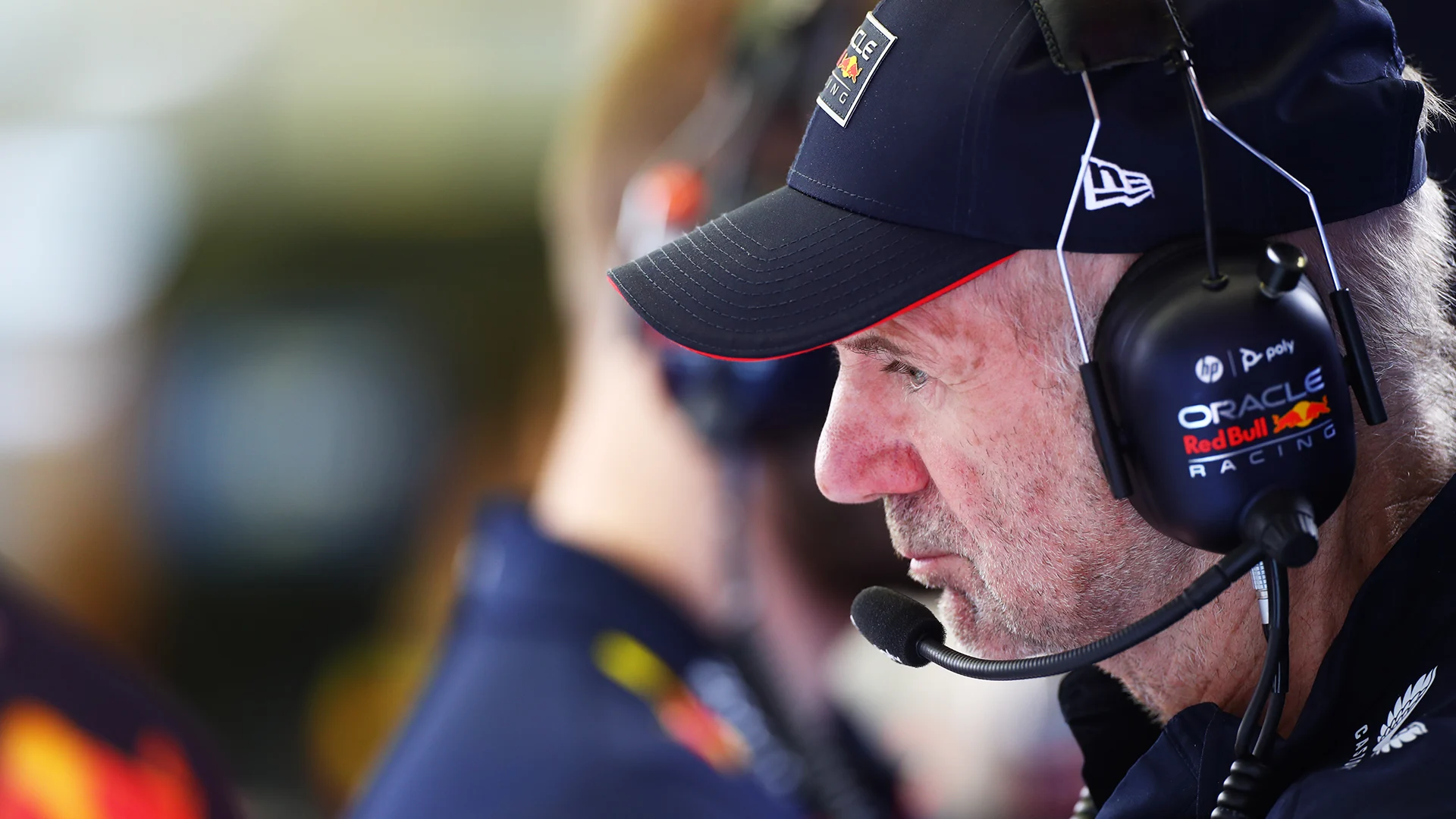
Adrian Newey’s path to becoming the most successful designer in Formula 1 history is rooted in his specialized education in Aeronautics and Astronautics at the University of Southampton. His First Class Honours degree and his groundbreaking thesis on ground-effect aerodynamics provided the scientific framework for his record-breaking career at Williams, McLaren, Red Bull, and now Aston Martin.
The Formative Years: Repton School and Early Tinkering
Long before he was hailed as a "mastermind," Adrian Newey’s education began with a mix of formal schooling and self-taught mechanical exploration. Born in Stratford-upon-Avon in 1958, Newey attended Repton School, a prestigious independent institution. However, his time there was not characterized by academic conformity. Newey was famously more interested in the school’s workshop than its traditional curriculum.
His early education was supplemented by a personal passion for model making and karting. Unlike many of his peers who viewed cars as mere machines, Newey viewed them as aerodynamic puzzles. This period was crucial because it allowed him to develop a "spatial awareness" of airflow—a cognitive trait that would later define his professional life. His time at Repton ended abruptly following an incident involving a headmaster’s stereo system and high-volume music, leading to his departure. While unconventional, this rebellious streak often characterizes the "out-of-the-box" thinking seen in his later car designs.
University of Southampton: The Aeronautics Core
The most significant pillar of Adrian Newey’s education is his time at the University of Southampton. In the late 1970s, when Newey enrolled, Southampton was already established as a global leader in aeronautical research. Rather than pursuing a standard mechanical engineering degree—the typical route for automotive designers at the time—Newey chose Aeronautics and Astronautics.
This distinction is vital. While mechanical engineering focuses on gears, pistons, and structural integrity, aeronautics focuses on fluid dynamics and the interaction between solid bodies and moving air. Newey realized early that as Formula 1 engines became more regulated, the primary frontier for performance would be the air itself.
The Rigor of Fluid Dynamics
At Southampton, Newey was immersed in the physics of lift and drag. He spent countless hours studying laminar flow, turbulence, and the mathematical models used to predict how air behaves at high velocities. This academic rigor gave him a "first principles" understanding of design. He did not just learn how to make a car look fast; he learned the underlying calculus that dictated why one shape was superior to another.
The Thesis That Changed Formula 1: Aerodynamics of Ground Effect
The pinnacle of Newey’s formal education was his final-year thesis, titled "Aerodynamics of Ground Effect on a Sports Car." The timing of this research was serendipitous. In the late 1970s, the "wing car" era was beginning in Formula 1, led by Colin Chapman and the Lotus 79.
Newey’s thesis explored how to use the underside of a vehicle to create a low-pressure zone, essentially "sucking" the car to the track. While his contemporaries were guessing at wing angles, Newey was documenting the scientific data behind venturi tunnels and side-skirt seals.
Understanding the Venturi Effect and Underbody Flow
His research focused on the Venturi Effect, a principle of fluid dynamics where fluid pressure decreases as the fluid velocity increases through a constricted area. By shaping the floor of a car like an inverted wing, Newey proved that massive amounts of downforce could be generated without the drag penalties associated with traditional top-surface wings.
This thesis was so advanced that it served as his "calling card" when he entered the professional paddock. It effectively bridged the gap between a student project and a professional engineering manifesto, proving that he possessed a level of aerodynamic insight that few veteran F1 engineers had mastered at the time.
The Mastermind Transition: From Campus to the Fittipaldi Workshop
Upon graduating with First Class Honours in 1980, Newey did not have to wait long for employment. His education and his thesis caught the attention of Harvey Postlethwaite, then the chief engineer at the Fittipaldi F1 team. Newey’s first job was not as a lead designer but as a junior engineer, where he quickly demonstrated that his university training allowed him to see solutions others missed.
His transition from the classroom to the drawing office was seamless because he understood the "why" behind the "what." In 1981, he moved to March Engineering, where he began applying his aeronautical knowledge to IndyCars and sports cars. The March 881, his first true F1 design in 1988, shocked the paddock by being faster than many turbocharged cars despite having a naturally aspirated engine—a feat achieved almost entirely through superior aerodynamic packaging learned during his Southampton years.
The Last of the Drawing Board Giants: A Unique Cognitive Approach
One of the most remarkable aspects of Newey’s "continued education" is his refusal to abandon the drawing board. While the rest of the Formula 1 world migrated entirely to Computer-Aided Design (CAD) and Computational Fluid Dynamics (CFD) in the late 1990s and 2000s, Newey continued to use a pencil and a manual drafting table.
This is more than a preference for tradition; it is a manifestation of his educational philosophy. Newey argues that drawing by hand forces a deeper mental connection with the airflow. By the time a line is on the paper, he has already "simulated" the air in his mind. This "human-computer" hybrid approach allows him to spot nuances that a digital algorithm might overlook or smooth out. His education taught him the math, but his experience taught him the "feel" of the air.
Education in the 2026 Era: Newey’s Role at Aston Martin
As we stand in 2026, Adrian Newey’s educational background remains more relevant than ever. With the introduction of the 2026 Formula 1 Technical Regulations, which emphasize active aerodynamics and a radical shift in power unit hybridization, Newey’s "first principles" approach is his greatest asset.
Now at Aston Martin, Newey is tasked with interpreting a set of rules that demand a total rethink of how air interacts with a car’s chassis. His degree in Aeronautics and Astronautics serves him well here, as the 2026 cars rely heavily on "moveable aero" to balance the drag-to-power ratio. While younger engineers are tethered to what their software tells them, Newey’s education allows him to question the software’s output and find the "gray areas" in the regulations that others ignore.
Adrian Newey’s Educational and Professional Progression
| Era | Institution / Team | Focus Area | Key Outcome |
|---|---|---|---|
| 1970s | Repton School | Basic Mechanics | Early exposure to car components and spatial design. |
| 1977-1980 | Univ. of Southampton | Aeronautics & Astronautics | First Class Honours degree; deep mastery of fluid dynamics. |
| 1980 | Thesis Research | Ground Effect | Developed the scientific basis for modern underbody downforce. |
| 1980s | March Engineering | Aerodynamic Packaging | Designed the March 881, proving aero could beat raw horsepower. |
| 1990s | Williams / McLaren | Total Vehicle Integration | Created dominant cars (FW14B, MP4/13) using aero-led design. |
| 2006-2024 | Red Bull Racing | High-Rake & Ground Effect | Revived ground-effect dominance with the RB18 and RB19. |
| 2025-2026 | Aston Martin | Active Aerodynamics | Leading the design for the 2026 regulatory overhaul. |
The Impact of Newey’s Academic Rigor on Modern F1 Design
The "Newey way" has influenced an entire generation of engineers. His education didn't just teach him how to build a car; it taught him how to think about a car as an integrated aerodynamic system. In modern F1, every component—from the front wing endplates to the rear diffuser—must work in harmony. This holistic view is a direct result of his aeronautical training, where a plane’s fuselage, wings, and engines must be perfectly balanced for flight.
Furthermore, Newey’s education instilled a sense of technical discipline. He is known for reading the FIA Technical Regulations as if they were a challenge to his intelligence, looking for the gaps between the words. This meticulousness, combined with his theoretical knowledge, is why he has been able to produce championship-winning cars in the 1990s, 2000s, 2010s, 2020s, and now heading into the 2026 season.
FAQ
What degree does Adrian Newey have?
Adrian Newey holds a First Class Honours degree in Aeronautics and Astronautics from the University of Southampton. He graduated in 1980, and his studies focused heavily on the physics of airflow and high-speed aerodynamics.
Did Adrian Newey study mechanical engineering?
While he is an engineer by trade, his formal degree was specifically in Aeronautics, not general mechanical engineering. This specialization gave him a significant advantage in understanding fluid dynamics and ground effect, which are the primary drivers of performance in Formula 1.
Why was his university thesis so important?
His thesis, "Aerodynamics of Ground Effect on a Sports Car," explored the exact technology that was beginning to revolutionize F1 at the time. It allowed him to enter the industry with a level of specialized knowledge regarding underbody airflow that few others possessed.
Does Adrian Newey still use a drawing board?
Yes, Newey is famous for using a manual drawing board and a pencil. While he works alongside teams using CAD and CFD, he prefers to start his designs on paper to maintain a more intuitive and physical connection with the aerodynamic shapes he is creating.
Which university is best for F1 engineering?
The University of Southampton remains one of the top choices, largely due to its wind tunnel facilities and its legacy of alumni like Adrian Newey. Other top institutions include Cranfield University, Oxford Brookes, and Imperial College London.
Pursuing an Engineering Career: Lessons from Newey’s Education
For aspiring engineers looking to emulate Newey’s success, the primary lesson is the importance of specialization. While a general engineering degree provides a broad foundation, Newey’s decision to focus on the niche field of aeronautics allowed him to become an expert in the most critical area of race car performance.
Furthermore, his career demonstrates that academic excellence must be paired with practical curiosity. Newey did not just study textbooks; he built models, tore apart machines, and spent time on the "shop floor." To succeed in high-level motorsport, one must understand the mathematics of the design office as well as the reality of the garage. If you are entering the field in 2026, focus on mastering the fundamentals of fluid dynamics and sustainable energy systems, as these will be the pillars of the next decade of automotive innovation.