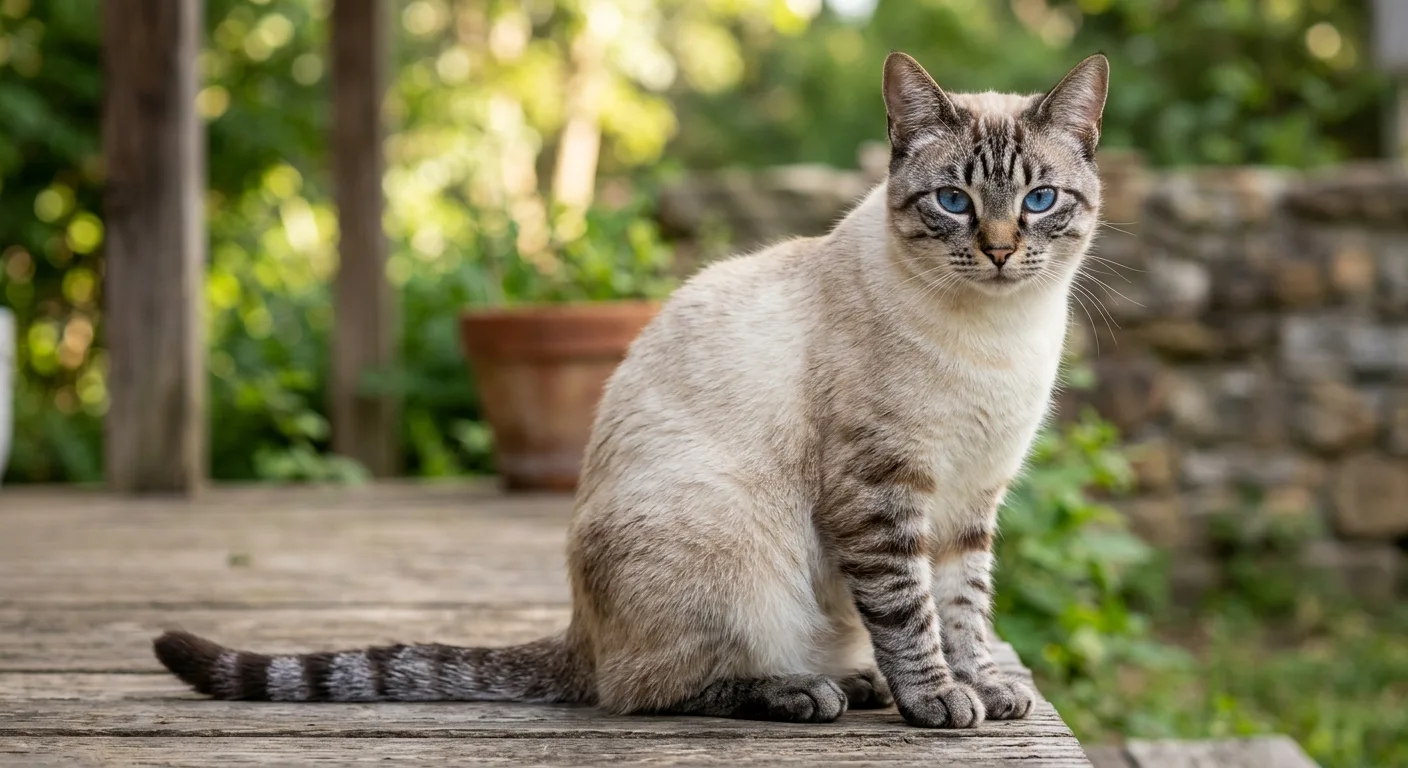
Lynx point tabbies are a striking feline color variation resulting from the crossbreeding of a Siamese cat and a tabby-patterned cat. Characterized by their icy blue eyes, distinctive tabby "M" forehead markings, and striped extremities, these "ear-tufted" cats combine the vocal intelligence of the Siamese with the hardy, friendly nature of the domestic tabby.
The lynx point tabby is not a specific, standalone breed but rather a specific coat pattern found most commonly within the Siamese, Colorpoint Shorthair, and Birman breeds, as well as many domestic mixed-breed populations. In 2026, they remain one of the most sought-after coat variations due to their "wild" look—often accentuated by delicate ear tufts—and their exceptionally social personalities. Whether you are a first-time owner or a long-term feline enthusiast, understanding the genetic nuances and care requirements of these cats is essential for a harmonious household.
Defining the Lynx Point Tabby: Genetics and Appearance
The aesthetic appeal of the lynx point tabby lies in its unique "pointed" pattern. In feline genetics, "pointing" is a form of partial albinism caused by a mutation in the tyrosinase gene, which results in temperature-sensitive color expression. This means the fur is darker on the cooler parts of the body—the ears, face (mask), paws, and tail—while the torso remains a lighter, creamy white or fawn.
What distinguishes a "Lynx Point" from a standard "Seal Point" or "Blue Point" is the presence of the agouti gene. This gene introduces the tabby pattern into the colored points. Instead of solid dark patches, a lynx point tabby displays clear, etched stripes.
The Signature "M" and Facial Mask
One of the most defining characteristics of these cats is the "M" shape clearly visible on their forehead, a classic hallmark of the tabby. Their eyes are almost universally a piercing, vivid blue, a trait inherited from their Siamese ancestry. The mask of a lynx point is usually less dense than that of a solid point cat, appearing as delicate tracings of grey, lilac, or chocolate around the eyes and nose.
Ear Tufts and Furnishings
While the name "Lynx Point" refers primarily to the coat pattern, many enthusiasts prize these cats for their "ear tufts"—the small bundles of hair growing from the tips of the ears, officially known as lynx tips. It is important to distinguish these from "ear furnishings," which is the hair that grows inside the ear canal. While lynx tips are a common trait in wild lynxes, in domestic lynx point tabbies, they are often a result of mixed ancestry involving breeds like the Maine Coon or the Siberian. These tufts give the cat a regal, wild appearance that contrasts beautifully with their domestic temperament.
The History and Origin of the Colorpoint Shorthair
The intentional breeding of lynx point tabbies gained momentum in the 1940s and 1950s. Breeders sought to introduce the vibrant tabby patterns into the elegant, slender frame of the Siamese. This was initially controversial within traditional cat fancy circles, as the Siamese was strictly defined by its solid point colors (seal, chocolate, blue, and lilac).
By the 1960s, organizations like the Governing Council of the Cat Fancy (GCCF) and later the Cat Fanciers' Association (CFA) began to recognize these cats. In the CFA, they are categorized under the "Colorpoint Shorthair" breed rather than the Siamese breed to preserve the lineage distinctions. This classification remains the standard in 2026, though many owners and rescues use the terms "Lynx Point Siamese" and "Lynx Point Tabby" interchangeably.
The popularity of the pattern surged because it offered a "wild" look without the unpredictable temperament or legal restrictions of owning a hybrid wild cat (like a Savannah or Bengal). The lynx point tabby provides a domesticated, gentle alternative for those captivated by the aesthetic of forest-dwelling felines.
Personality and Temperament: What to Expect
If you are looking for a quiet, independent cat that keeps to itself, the lynx point tabby may not be the right choice. These cats are renowned for being "people-oriented" and highly communicative.
- Vocal Communication: Inheriting the "chatty" nature of the Siamese, lynx points often "talk" to their owners. They have a wide range of vocalizations, from soft chirps and trills to the classic, loud Siamese meow. They will often tell you when they are hungry, bored, or simply want attention.
- Intelligence and Trainability: These are highly intelligent cats. As of 2026, many owners successfully use clicker training to teach lynx points tricks like fetching, sitting, or even walking on a leash. Their curiosity drives them to explore high shelves and solve food puzzles.
- Social Bonding: Lynx points tend to form very strong bonds with their primary caregivers. They are often described as "velcro cats" because they follow their owners from room to room. This social nature makes them excellent companions for families with children or other pets, provided they are introduced properly.
- Activity Levels: These cats maintain a playful, kitten-like energy well into their adult years. They require daily interactive play sessions to prevent boredom-induced behaviors, such as scratching furniture or excessive vocalization.
Health Considerations and Longevity
The lynx point tabby is generally a hardy cat, benefiting from the genetic diversity introduced by crossing the Siamese with domestic shorthairs. However, they are still predisposed to certain health conditions common to their ancestral lines.
Common Health Concerns
- Hypertrophic Cardiomyopathy (HCM): This is the most common form of heart disease in cats, where the heart muscle thickens. Regular veterinary check-ups and echocardiograms are recommended for early detection.
- Progressive Retinal Atrophy (PRA): A genetic condition that can lead to blindness. Fortunately, responsible breeders in 2026 utilize DNA testing to ensure their breeding pairs are clear of the PRA gene.
- Gastrointestinal Issues: Some lynx points have sensitive stomachs. High-quality diets with limited fillers are often necessary to prevent chronic vomiting or diarrhea.
- Dental Disease: Like many purebred derivatives, they can be prone to gingivitis and periodontal disease. Annual dental cleanings are a crucial part of their care.
Life Expectancy
With proper indoor care, a high-quality diet, and regular veterinary monitoring, a lynx point tabby can live between 12 to 20 years. Their longevity is one of their most appealing traits for owners looking for a long-term companion.
Care Requirements: Grooming, Diet, and Enrichment
Owning an "adorable lynx point tabby" requires a commitment to their physical and mental well-being. Because they are often shorthaired, their grooming needs are manageable, but their social needs are high.
Grooming and Ear Care
While their coats do not mat as easily as long-haired breeds, a weekly brushing session is recommended to remove loose fur and reduce shedding. This also provides an opportunity to bond. Pay special attention to their ears; those beautiful tufts can trap dust. Use a vet-approved ear cleaner and a cotton ball to gently wipe the outer ear if you notice debris, but never insert anything into the ear canal.
Nutritional Standards
In 2026, the consensus among feline nutritionists, such as those at the Cornell Feline Health Center, emphasizes the importance of high-protein, moisture-rich diets. Since lynx points are active, they require a diet that supports muscle maintenance without leading to obesity. Avoid "free-feeding" dry kibble, as this can lead to weight gain, which puts unnecessary strain on their joints and heart.
Environmental Enrichment
To keep a lynx point tabby happy, you must provide "vertical space." Tall cat trees, wall-mounted shelves, and window perches allow them to observe their environment from a safe height. Because of their intelligence, they benefit greatly from:
- Food puzzles and slow feeders.
- Interactive toys like wand feathers or laser pointers (followed by a physical toy they can "catch").
- Safe outdoor access via a "catio" or harness training.
Comparison Table: Lynx Point vs. Other Variations
| Feature | Lynx Point Tabby | Traditional Siamese | Standard Tabby |
|---|---|---|---|
| Eye Color | Vivid Blue | Vivid Blue | Green, Gold, or Copper |
| Coat Pattern | Pointed with stripes | Solid points | Full-body stripes/spots |
| Vocal Level | High | Very High | Moderate |
| Ear Tufts | Common (Lynx tips) | Rare | Occasional |
| Temperament | Social, Playful | Demanding, Loyal | Independent, Friendly |
| Genetic Base | Siamese + Tabby | Purebred Siamese | Mixed Breed (Moggie) |
Finding and Adopting a Lynx Point Tabby
If you have decided that a lynx point tabby is the right addition to your home, you have two primary routes: adoption or purchasing from a breeder.
Adoption and Rescue
Many lynx point tabbies end up in shelters or breed-specific rescues (like Siamese Rescue organizations). Because the lynx point pattern is common in the general cat population due to the dominance of the tabby gene, you can often find "lynx point mixes" at local humane societies. Adopting a cat not only saves a life but is also a more cost-effective way to bring one of these beautiful animals home.
Selecting a Breeder
If you choose to go through a breeder, ensure they are registered with a recognized body such as TICA (The International Cat Association) or the CFA. A reputable breeder will provide:
- Health guarantees and records of genetic testing for parents.
- A clean, socialized environment for the kittens.
- A contract that includes a "return-to-breeder" clause if you can no longer care for the cat.
Questions for Potential Owners
Before bringing a lynx point home, ask yourself:
- Am I prepared for a cat that will frequently meow for attention?
- Do I have at least 15-30 minutes a day for dedicated interactive play?
- Is my home environment safe for an active cat that likes to climb?
Common Questions About Lynx Point Tabbies
Do lynx point tabbies shed a lot?
Lynx point tabbies have a moderate shedding level. While most have short hair, they do possess a double coat inherited from their Siamese and domestic shorthair ancestors. Weekly brushing significantly reduces the amount of fur found on furniture and clothing. During seasonal changes in 2026, you may notice a slight increase in shedding as they transition their coat for the weather.
Are they hypoallergenic?
No, lynx point tabbies are not hypoallergenic. While some people believe Siamese-based breeds produce less Fel d 1 protein (the primary allergen in cat saliva), this varies significantly between individual cats. If you have allergies, it is recommended to spend time with a lynx point tabby before committing to ownership to see if you have a reaction.
Why does my lynx point's coat get darker over time?
This is due to the temperature-sensitive nature of the Himalayan gene. As these cats age, their circulation may slow down slightly, or their overall body temperature may drop, causing more pigment to develop across the torso. Additionally, cats living in colder climates often develop darker "smudging" on their coats compared to those in warmer environments.
Are lynx point tabbies aggressive?
On the contrary, lynx point tabbies are known for being exceptionally gentle and affectionate. Any perceived "aggression" is usually a result of boredom or "overstimulation." Because they are highly sensitive and intelligent, they require clear boundaries and plenty of mental stimulation to remain well-behaved.
Establish a Routine for Long-Term Success
To ensure your lynx point tabby thrives, establish a consistent daily routine for feeding, play, and rest. These cats crave predictability and the presence of their human companions. By providing a stimulating environment and attentive medical care, you will enjoy many years with one of the most beautiful and engaging "ear-tufted" cats in the feline world.