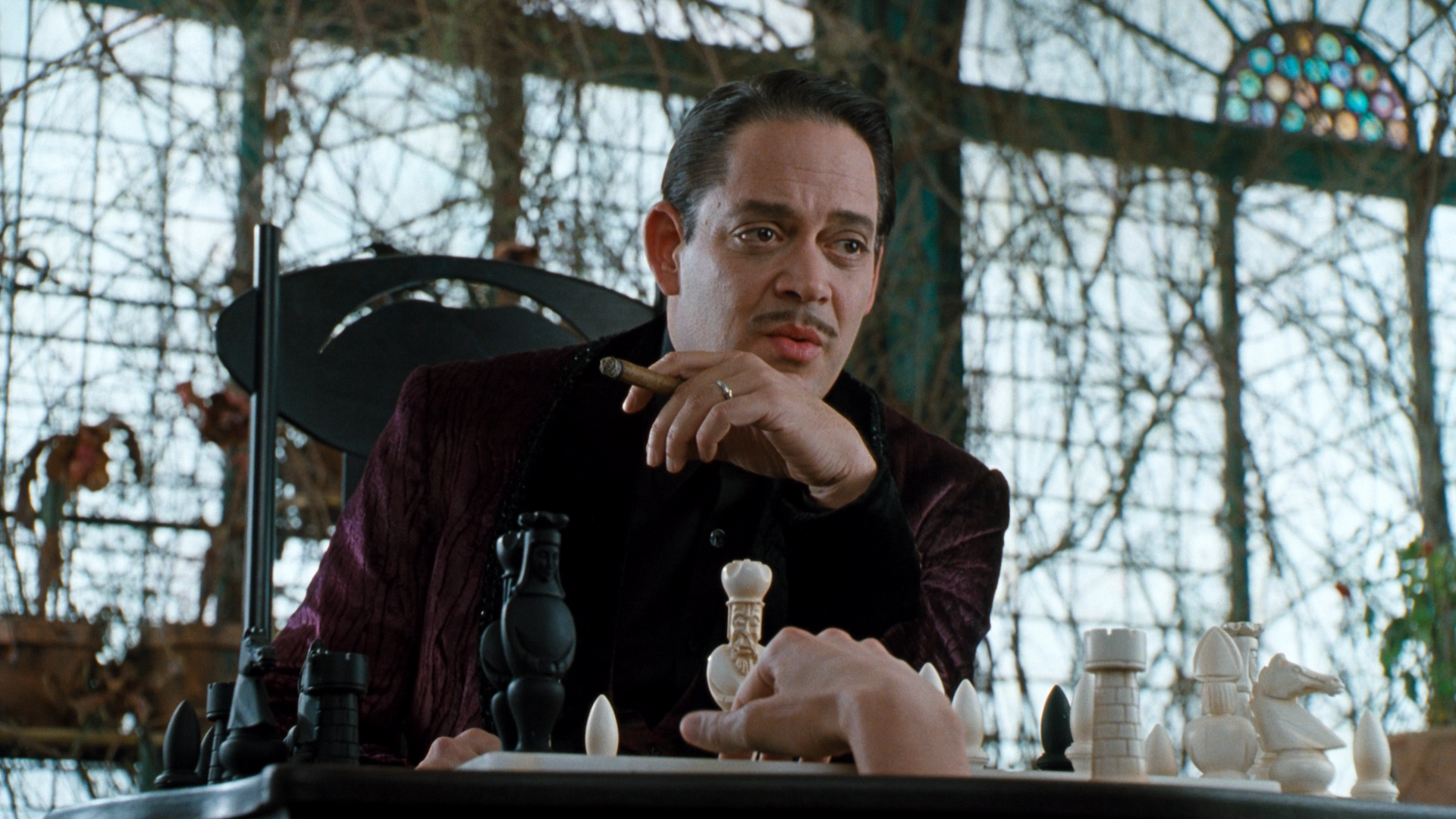
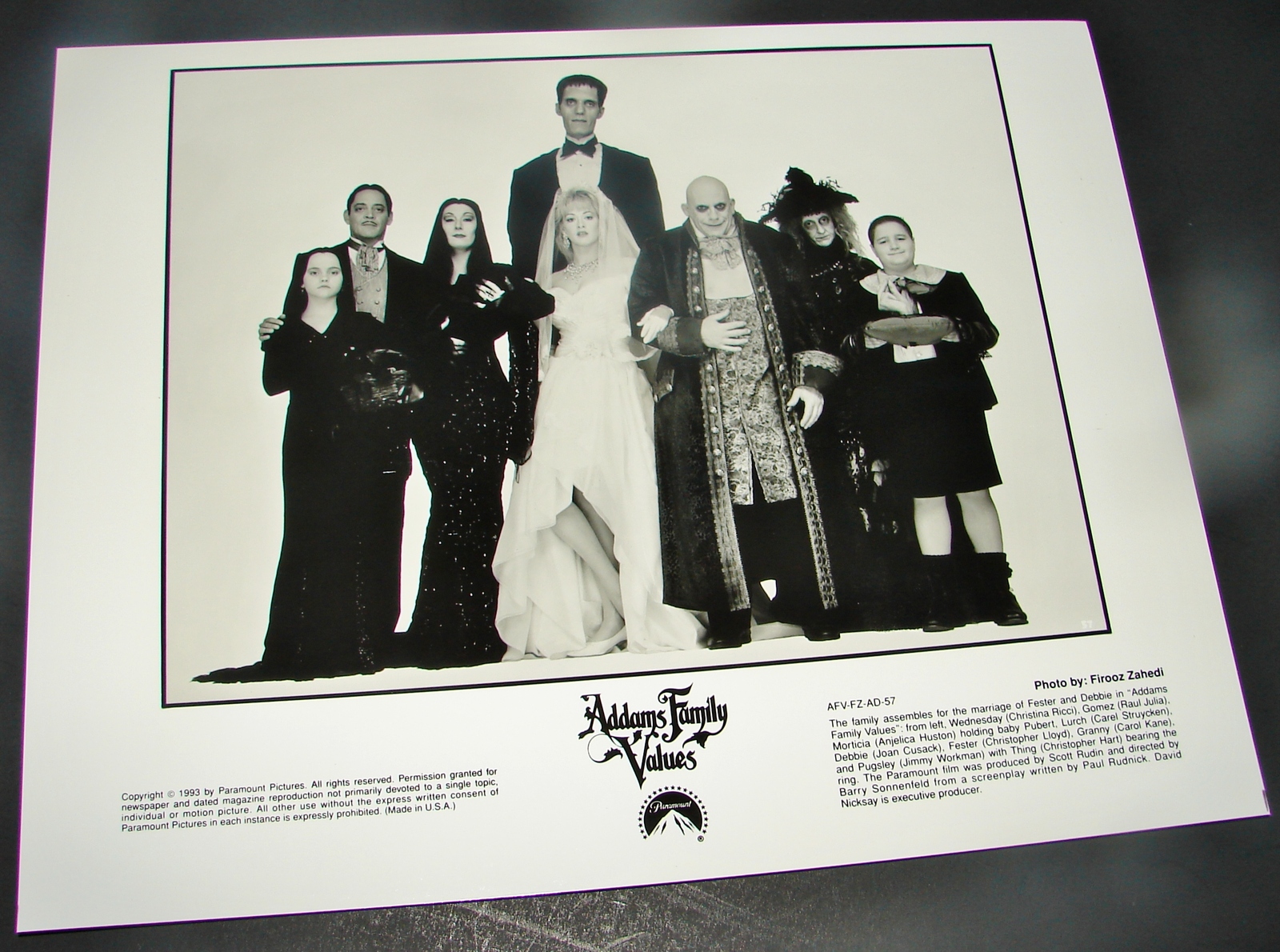
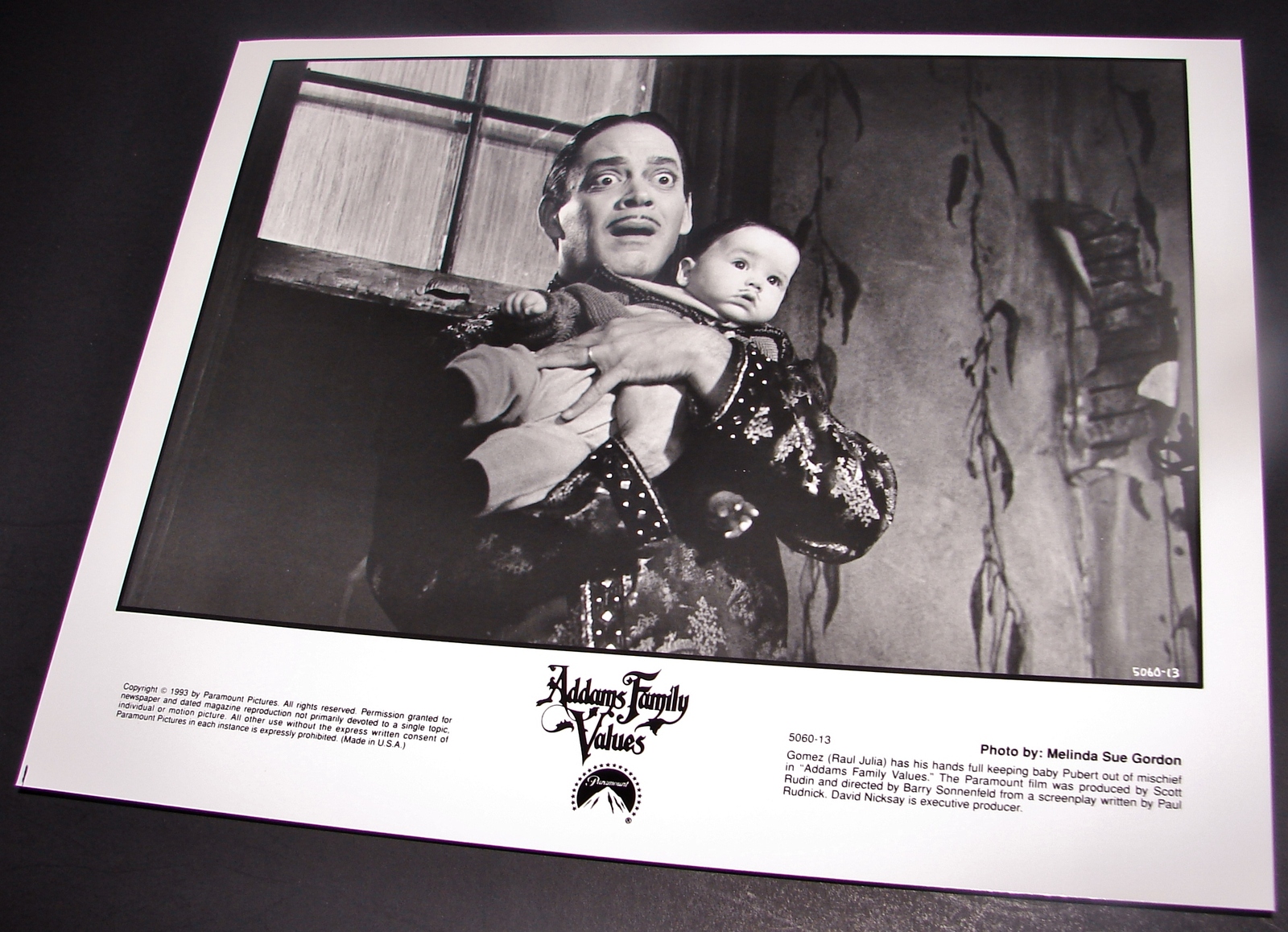
Raul Julia’s portrayal of Gomez Addams in Addams Family Values (1993) remains the definitive cinematic interpretation of the character, blending Shakespearean grandiosity with a subversive, romantic heart. Decades after its release, Julia’s performance is celebrated for its boundless energy, its rejection of Latino stereotypes, and its foundational role in establishing Gomez and Morticia as cinema's most enduring "relationship goals."
The Definitive Gomez: How Raul Julia Redefined a Gothic Icon
When Barry Sonnenfeld brought The Addams Family to the big screen in 1991 and followed it with the superior Addams Family Values in 1993, the production faced the daunting task of reinterpreting characters deeply embedded in American consciousness via Charles Addams’ New Yorker cartoons and the 1960s sitcom. While John Astin’s Gomez was manic and charmingly eccentric, Raul Julia infused the character with a high-theatricality and a palpable, lived-in passion that shifted the character from a "kook" to a romantic hero.
Julia, a classically trained actor who gained fame in the New York Shakespeare Festival, treated Gomez Addams with the same gravitas he applied to Othello or King Lear. This was not a parody; it was a fully realized portrait of a man who loved life, his family, and his wife with a ferocity that bordered on the religious. In Addams Family Values, this is pushed to the forefront as Gomez navigates the challenges of a new baby (Pubert) and the existential threat posed by the murderous nanny, Debbie Jellinsky. Julia’s ability to pivot from slapstick comedy to sincere emotional distress—particularly when his brother Fester is being manipulated—demonstrated a range that few actors in the genre could match.
The legacy of this performance in 2026 is seen in how every subsequent iteration of the character is measured. Whether it is the vocal performance of Oscar Isaac in the animated features or Luis Guzmán’s turn in the Wednesday series, the "Julia Standard" remains the benchmark. He proved that a character could be macabre and "spooky" without losing an ounce of warmth or sophistication.
Chemistry and Charisma: The Partnership of Gomez and Morticia
The success of Addams Family Values rests heavily on the chemistry between Raul Julia and Anjelica Huston. In an era where sitcom tropes often relied on the "bickering couple" or the "bumbling husband and nagging wife," Gomez and Morticia Addams offered a radical alternative: a marriage built on mutual respect, unyielding lust, and total intellectual alignment.
In the sequel, this dynamic is tested by the arrival of a new child, but Julia’s Gomez never wavers in his devotion. His performance emphasizes that Gomez’s greatest strength is his emotional vulnerability where Morticia is concerned. He is a man who is not afraid to worship his wife, and Julia’s expressive eyes and physical language—frequently kissing her arms or leaning into her space—created a blueprint for a healthy, albeit eccentric, cinematic marriage.
This chemistry was not merely a result of good casting but of Julia’s specific acting choices. He played Gomez as a man who was perpetually "in the moment." When Morticia speaks, Gomez is entirely present, his attention never wavering. This intensity made their relationship feel modern and aspirational, even within a house full of traps and monsters. For audiences today, the Julia-Huston pairing remains the gold standard for on-screen romance because it was rooted in the idea that being "weird" together is the ultimate form of intimacy.
Comparing the Portrayals of Gomez Addams
To understand why Raul Julia’s legacy is so enduring, it is helpful to compare his technical approach and characterization with other major versions of the character.
| Feature | John Astin (1960s TV) | Raul Julia (1990s Films) | Luis Guzmán (Wednesday, 2022+) |
|---|---|---|---|
| Primary Tone | Manic, Sitcom-Energetic | Romantic, Shakespearean | Stoic, Protective |
| Physicality | Acrobatic and Bouncy | Elegant, Fencing-Focused | Sturdy and Traditional |
| Vocal Delivery | High-pitched, Fast-talking | Resonant, Operatic | Muted, Gritty |
| Romantic Style | Obsessive and Playful | Devotional and Intense | Tender and Gentle |
| Cultural Identity | Generally Unspecified | Proudly Latino/Hispanic | Explicitly Latino |
Raul Julia’s version occupies a unique middle ground. He retained the manic energy of Astin but grounded it in a sophisticated, Old-World charm that felt timeless. His Gomez felt like a man who could lead a corporation, win a sword fight, and recite 14th-century poetry with equal proficiency.
Cultural Impact: A Pioneer for Latino Representation
One of the most significant aspects of Raul Julia’s Gomez Addams is the subtle but revolutionary way it handled ethnicity. Julia, a proud Puerto Rican, did not hide his accent or his heritage for the role. In fact, he leaned into it, giving Gomez a background that felt worldly and diverse without ever falling into the "Latino lover" or "criminal" stereotypes that plagued Hollywood in the early 90s.
Gomez Addams, as played by Julia, was wealthy, educated, a polyglot, and the head of a stable, loving household. He was the hero of his own story. At a time when Hispanic actors were rarely given the lead in major blockbusters unless the role was specifically written as an "ethnic" part, Julia’s casting was a milestone. He proved that a Latino actor could lead a massive franchise and define a character for a global audience based on talent and charisma rather than caricature.
This part of his legacy is perhaps the most "eternal." By 2026, the conversation around diversity in film has evolved significantly, but Julia’s Gomez stands as a foundational text. He showed that universal themes of family and love could be filtered through a specific cultural lens to create something even more resonant. His Gomez is a reminder that the Addamses are "outsiders" not just because of their love for the macabre, but because they represent a rejection of the bland, homogenized "values" of suburban America.
Technical Brilliance: Theatricity and Physical Comedy
Analyzing Julia’s performance requires looking at his physical technique. Julia was a master of "The Method," but he also understood the requirements of the camera. In Addams Family Values, his physical comedy is precise. Consider the "Mamushka" dance in the first film or the tango in the second; Julia performs these with the rigor of a professional dancer.
His background in theater allowed him to project an enormous personality without losing the nuance of the scene. In the moments where Gomez is despondent—such as when Fester is being "brainwashed" by Debbie—Julia’s performance shifts into a mournful, operatic tragedy. He uses his entire body to convey grief, slumping in his chair or moving with a heavy, lethargic gait that contrasts sharply with his usual nimbleness.
Furthermore, his fencing scenes were not just stunts; they were expressions of the character's zest for life. Julia insisted on doing as much of his own fencing as possible, working with choreographers to ensure that Gomez’s movements felt dangerous yet playful. This commitment to the "craft" of the character is why the performance has not aged. It isn't reliant on 1990s tropes; it is a timeless piece of character acting.
The 2026 Perspective: Why the Legacy Persists
In the current media landscape, Addams Family Values is frequently cited as one of the rare sequels that surpasses the original. Much of this critical consensus is driven by Julia’s central performance. As we look back from 2026, the film’s themes of embracing the "other" and rejecting forced social conformity are more relevant than ever.
Gomez Addams, as portrayed by Julia, represents an ideal of unconditional acceptance. He loves his children, even when they are trying to kill each other. He loves his brother, despite his flaws. He loves his wife for her darkness as much as her light. In a world that often feels increasingly polarized, Julia’s Gomez is a beacon of radical empathy.
The "eternal legacy" mentioned in the subject is also a bittersweet one. Raul Julia passed away in 1994, less than a year after Addams Family Values was released. This film serves as one of his final gifts to cinema—a performance overflowing with life, filmed while he was privately battling illness. That he could project such vitality and joy under those circumstances adds a layer of poignancy to the character. He didn't just play a man who loved life; he used his final professional years to celebrate the act of living.
Frequently Asked Questions
Was Raul Julia the first actor to play Gomez Addams in a movie?
Raul Julia was the first actor to play Gomez Addams in a major live-action theatrical film. While John Astin originated the role on television in 1964 and reprised it in a 1977 TV movie (Halloween with the New Addams Family), Julia’s 1991 performance in The Addams Family was the character's big-screen debut. His interpretation brought a more romantic and theatrical tone to the role compared to the sitcom version.
What happened to Raul Julia after Addams Family Values?
Following the release of Addams Family Values in late 1993, Raul Julia worked on several projects, most notably the TV movie The Burning Season (for which he won a posthumous Golden Globe and Emmy) and the film Street Fighter (1994). He suffered a stroke in October 1994 and passed away shortly thereafter at the age of 54. His performance as Gomez is often cited as his most iconic and beloved role.
Why is Addams Family Values considered better than the first movie?
Critics and fans often prefer Addams Family Values because it has a sharper script (written by Paul Rudnick), more confident direction by Barry Sonnenfeld, and more developed subplots—most notably Wednesday’s time at Camp Chippewa. Raul Julia’s performance is also more nuanced in the sequel, as the character deals with the complex emotions of fatherhood and his brother’s potential betrayal.
Did Raul Julia do his own stunts in the film?
Raul Julia performed many of his own physical feats, including much of the fencing and dancing. Having been a trained stage actor, he possessed the physical coordination necessary for the role’s "theatrical" requirements. While professional stunt doubles were used for more dangerous sequences, Julia’s distinct physicality and facial expressions are present in the majority of the action scenes.
How did Raul Julia’s Gomez influence later versions of the character?
Julia’s Gomez moved the character away from being just a "weird father" to being a "romantic lead." This influence is seen in the 2022 Wednesday series, where the relationship between Gomez and Morticia is portrayed with a similar intensity of devotion. He also established that Gomez should have a worldly, sophisticated air, which has influenced every comic book and animated portrayal since the 1990s.
Practical Recommendation for Fans and Scholars
To fully appreciate the technical mastery of Raul Julia’s performance, viewers should watch Addams Family Values with a specific focus on "reaction acting." While the script provides him with brilliant lines, much of Julia’s legacy is found in how he reacts when he is not speaking. Watch his expressions during Wednesday’s speeches or his silent adoration while Morticia tends to her garden.
For those interested in the craft of acting, comparing his Gomez to his role as Valentin in Kiss of the Spider Woman (1985) offers a masterclass in range. Seeing the same actor move from a gritty, political prisoner to the exuberant Gomez Addams highlights why he is considered one of the greatest actors of his generation. For the casual viewer, the best way to honor his legacy is simply to embrace the "Addams Value" of being unapologetically yourself, no matter how much it frightens the neighbors.