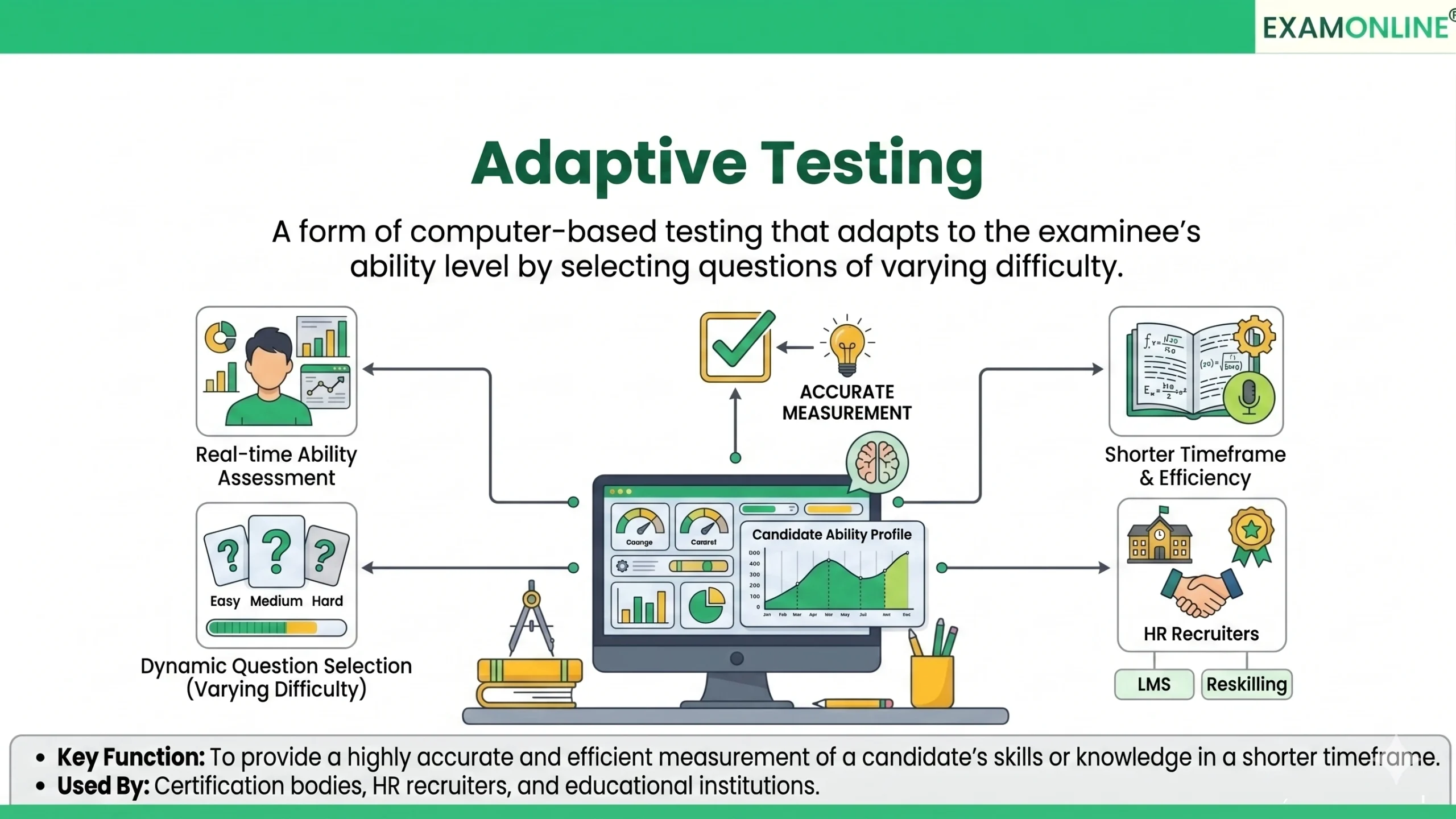
Computerized adaptive testing (CAT) is a sophisticated method of assessment that tailors the difficulty of an exam to the specific ability level of the test-taker in real-time. By utilizing complex algorithms and Item Response Theory (IRT), the system selects questions that are neither too easy nor too difficult, providing a highly precise measurement of a person's knowledge or skills in significantly less time than traditional fixed-form exams.
The Mechanics of Computerized Adaptive Testing
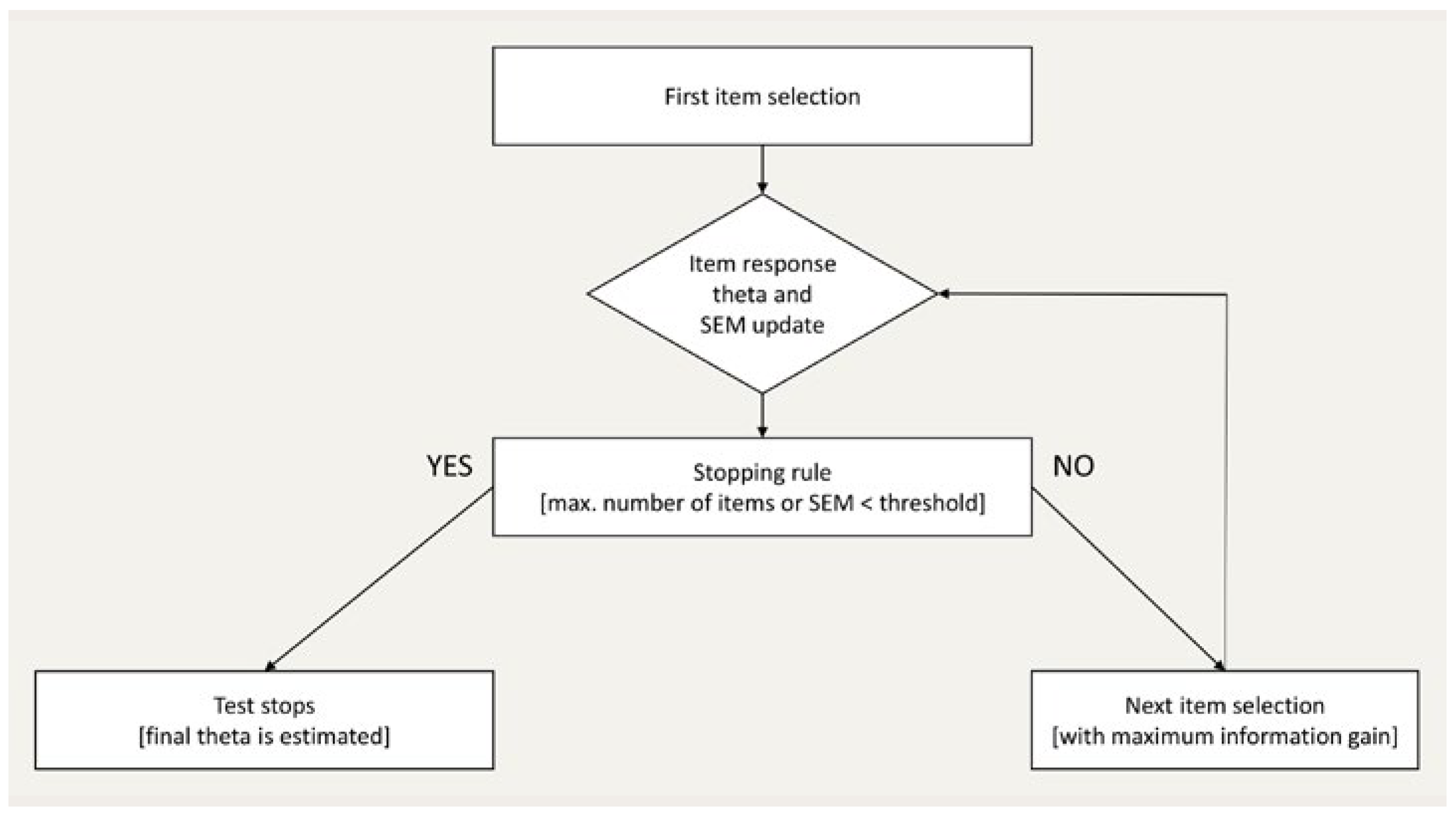
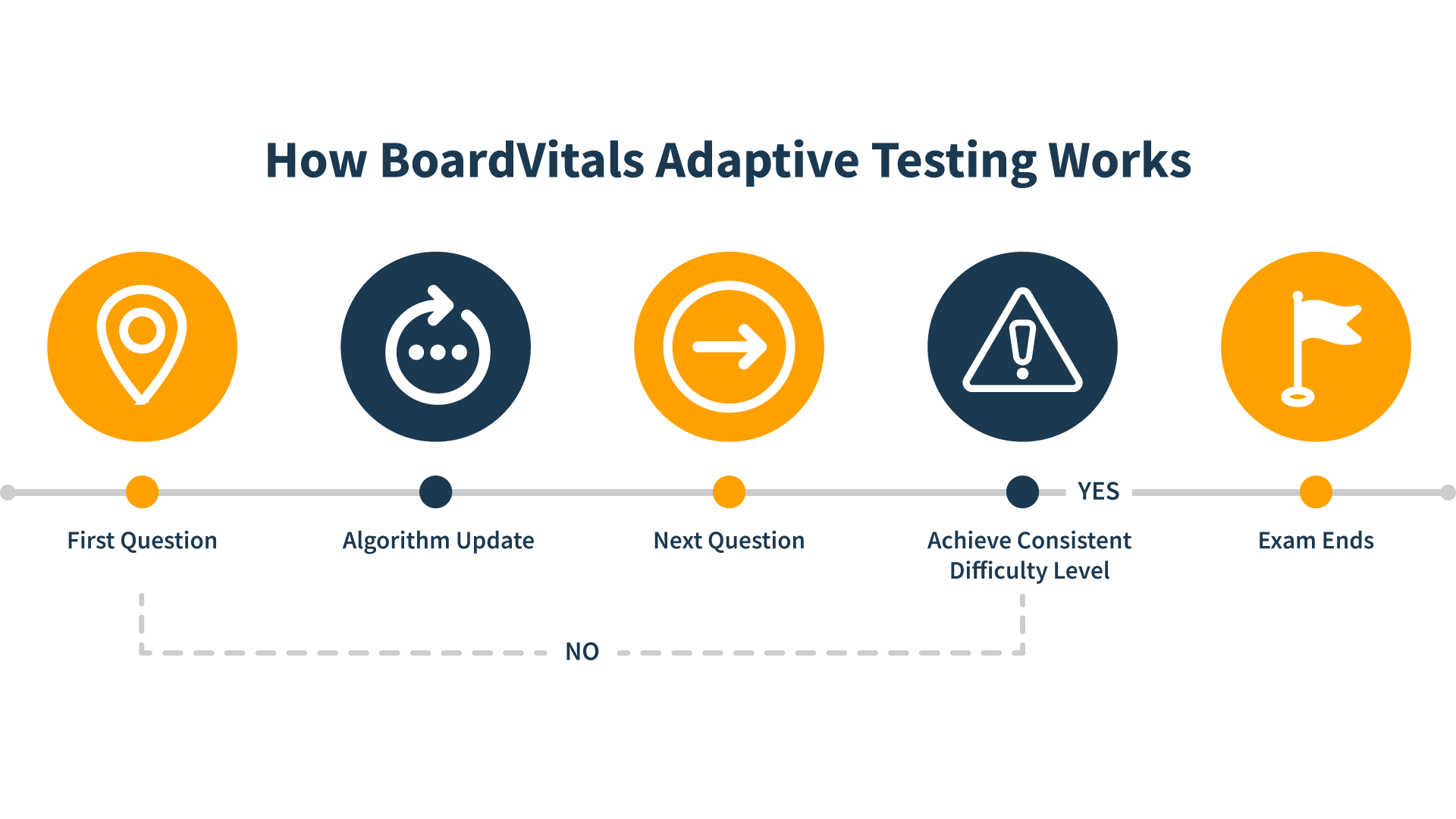
To understand how adaptive testing functions in 2026, one must look beyond the user interface and into the underlying mathematical models. Unlike traditional "linear" tests—where every student receives the same set of questions in the same order—adaptive testing is a dynamic process. It operates as a continuous feedback loop between the examinee and the testing engine.
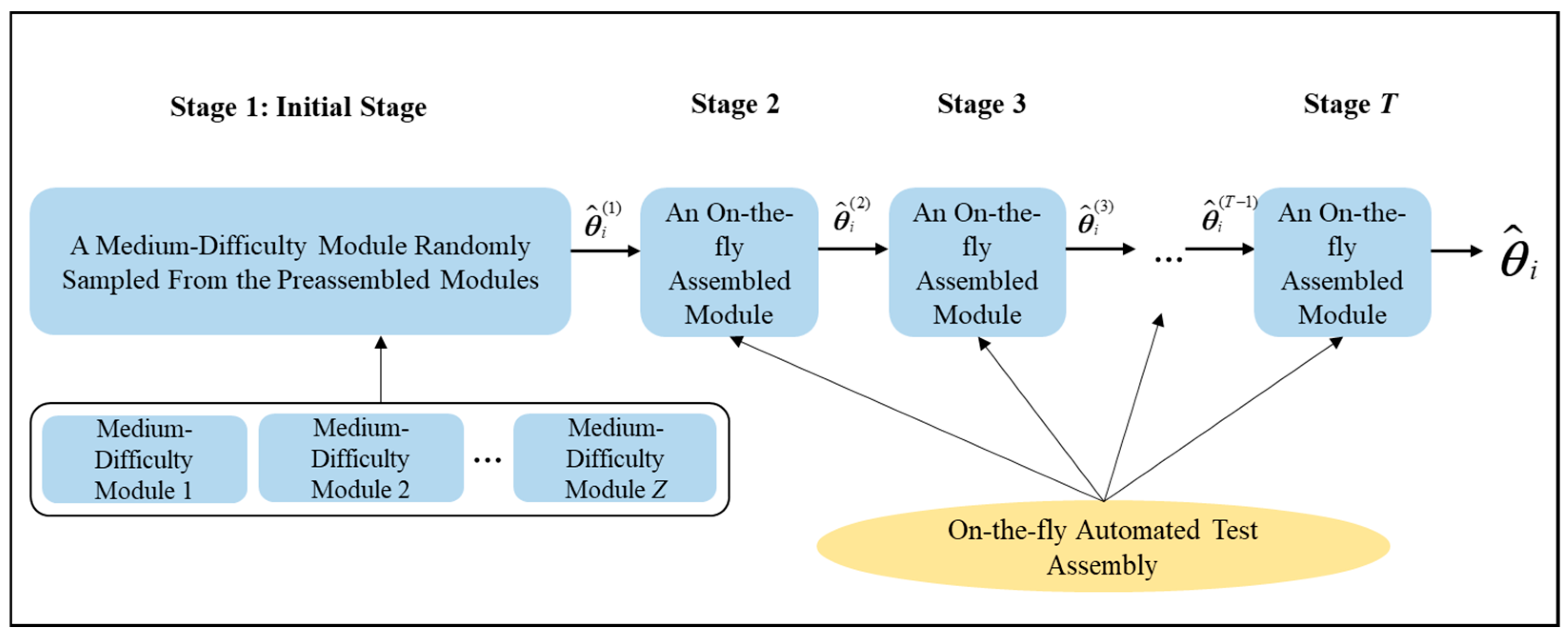
The process typically begins with a question of moderate difficulty. If the test-taker answers correctly, the engine’s estimate of their ability increases, and the next question selected from the "item bank" is more challenging. Conversely, if the answer is incorrect, the system provides an easier question. This "bisection" continues until the algorithm reaches a statistically significant level of confidence regarding the examinee's true ability.
The primary engine driving this is Item Response Theory (IRT). In IRT, every question in the database is not just a piece of content but a calibrated data point with specific parameters:
- Difficulty (b): The location on the ability scale where a test-taker has a 50% chance of getting the item right.
- Discrimination (a): How well the question distinguishes between high-ability and low-ability candidates.
- Guessing (c): The probability of a low-ability candidate answering the item correctly by chance.
By the time we reach 2026, these models have become even more nuanced, often incorporating "Response Time" as a fourth parameter to detect whether a student is over-thinking or perhaps utilizing unauthorized aids.
Core Components of an Adaptive Testing System
For an organization to deploy a successful adaptive test, several technical prerequisites must be met. It is not as simple as putting a standard quiz into an adaptive software wrapper.
The Calibrated Item Bank
An adaptive test is only as good as its library of questions. This library, known as an item bank, must be exceptionally large—often containing five to ten times the number of questions a single student will see. Each item must undergo rigorous "field testing" where it is administered to a large sample of students to determine its mathematical parameters. In 2026, many institutions use Automated Item Generation (AIG) to help populate these banks, using AI to create variations of math problems or logic puzzles that maintain the same difficulty profile.
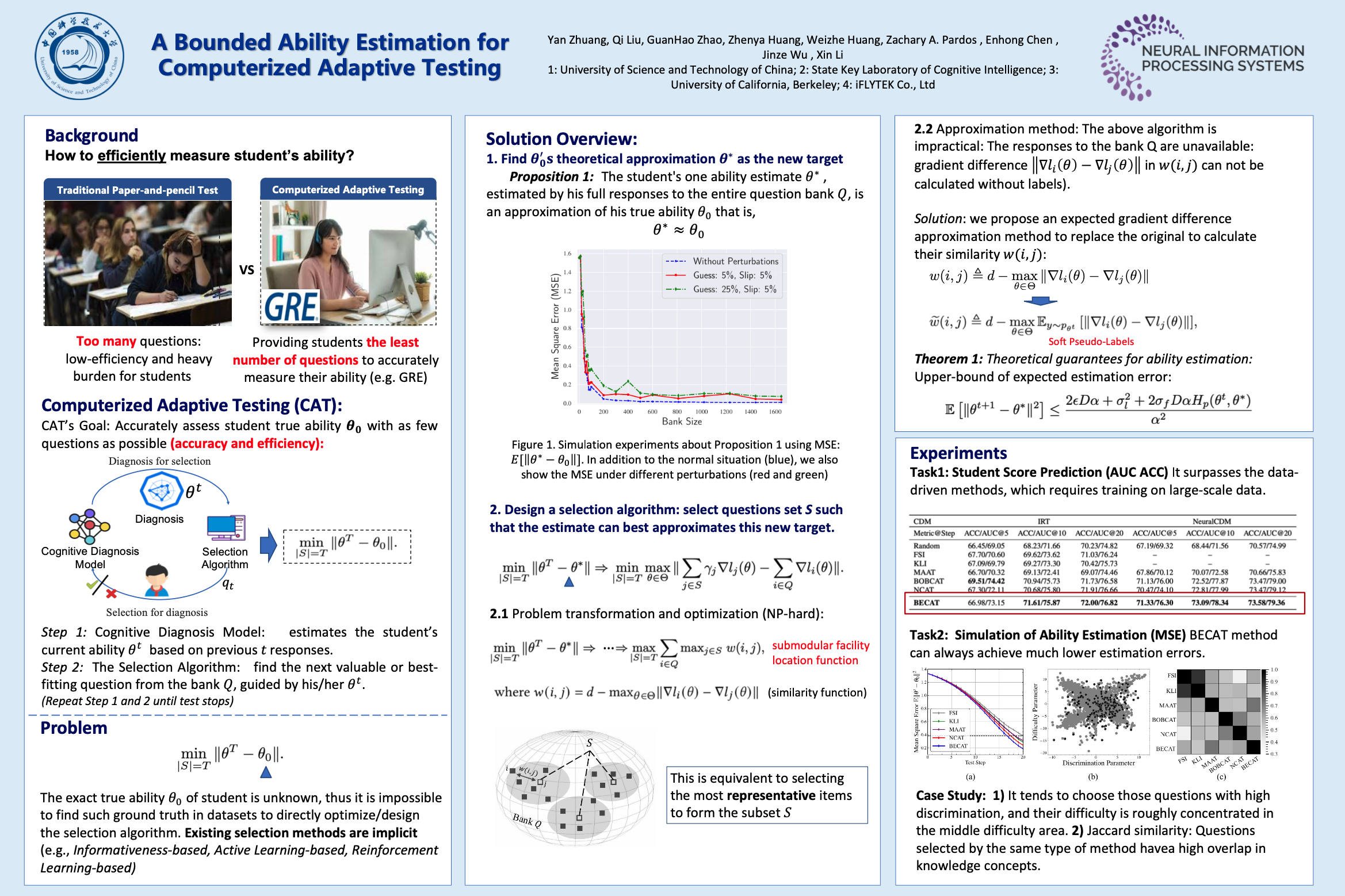
The Selection Algorithm
The algorithm is the "brain" of the CAT. It must balance multiple constraints simultaneously. While its primary goal is to find the most informative question for the user's ability level, it must also ensure "content balancing." For example, if a math test covers algebra, geometry, and calculus, the algorithm cannot simply feed the user only algebra questions just because those happen to be the "best" difficulty match. It must select the best difficulty match within the required content categories.
The Stopping Rule
How does the test know when to end? There are generally two types of stopping rules:
- Fixed-length: The test ends after a set number of questions (e.g., 50 items). The adaptive nature ensures those 50 items were the most relevant 50 items possible.
- Variable-length (Criterion-referenced): The test ends when the standard error of measurement falls below a certain threshold. If the system is 95% certain you have passed or failed, it stops. This is why some candidates for the NCLEX nursing exam finish in 75 questions while others continue to 145.
Comparing Adaptive vs. Linear Testing Models
| Feature | Linear (Fixed-Form) Testing | Computerized Adaptive Testing (CAT) |
|---|---|---|
| Question Set | Same for every test-taker. | Unique to each individual’s performance. |
| Test Length | Long; must include easy and hard items for everyone. | Short; typically 40-60% fewer questions. |
| Precision | Highest at the "average" ability level. | High precision across all ability levels. |
| Security | High risk of item exposure (cheating). | Low risk; no two tests are identical. |
| Scoring | Based on the number of correct answers. | Based on the difficulty of items mastered. |
| Reviewing | Students can usually skip and return to items. | Usually restricted; answers are often final. |
Major High-Stakes Exams Utilizing Adaptive Models
Adaptive testing has become the gold standard for high-stakes licensure and admissions. As of 2026, the following major organizations rely heavily on CAT technology:
- Graduate Management Admission Test (GMAT): The GMAT Focus Edition is a prime example of an item-adaptive test that measures verbal and quantitative reasoning.
- Graduate Record Examinations (GRE): The GRE uses a "section-level" adaptive model. While it doesn't change difficulty question-by-question, your performance on the first section of math determines the difficulty of the second section.
- NCLEX-RN/PN: The National Council Licensure Examination for nurses uses a variable-length CAT model to ensure medical safety and competency.
- Smarter Balanced Assessment Consortium (SBAC): Used in K-12 education across various U.S. states to measure student progress in Common Core standards.
The shift toward these models is driven by the need for "Measurement Efficiency." In a global economy, the ability to certify a professional in 90 minutes rather than four hours provides massive logistical and financial advantages.
Implementation Challenges and Strategic Considerations
While the benefits are clear, the transition to adaptive testing requires significant investment and expertise. Organizations often underestimate the complexity of "item exposure control." If a very high-quality "difficult" question is shown to every high-performing student, that question becomes "leaked" and loses its security value. Algorithms must be programmed to occasionally choose the "second-best" question to preserve the integrity of the item bank.
Furthermore, there is the issue of Examinee Anxiety. In a linear test, students often start with easy questions to build confidence. In a CAT, the test quickly ramps up to the edge of the student's ability. This means the student is constantly facing questions they find "challenging," which can lead to a perception that they are failing, even if they are performing at the top percentile.
Technical Infrastructure Requirements
To run a CAT effectively in 2026, an organization needs:
- A robust Learning Management System (LMS) or Assessment Platform capable of executing IRT calculations in milliseconds.
- High-speed internet stability; while many systems now offer "offline-sync" adaptive models, real-time CAT requires a constant connection to the item parameters.
- Sophisticated data analytics teams to monitor "drift"—the phenomenon where questions become easier over time as the curriculum or student body changes.
The Evolution of Multidimensional Adaptive Testing
By 2026, the industry has moved toward Multidimensional Computerized Adaptive Testing (MCAT). Traditional CAT measures one trait at a time (e.g., just math or just reading). MCAT allows the algorithm to estimate multiple traits simultaneously.
For example, a medical board exam might measure "Diagnostic Knowledge" and "Patient Communication" at the same time. If a candidate answers a question that involves both traits, the system updates the ability estimate for both. This cross-pollination of data allows for even shorter tests and a more holistic view of the candidate's competence. This is particularly useful in corporate settings for "Skill Gap Analysis," where an employer needs to know exactly where a team member needs training across a dozen different software competencies.
Frequently Asked Questions
Can I skip questions or change my answers in an adaptive test?
In most item-level adaptive tests, you cannot skip questions or go back to change answers. This is because the computer chooses the next question based on your current answer. If you were allowed to change a previous answer, the entire "pathway" of the test would become mathematically invalid. However, some section-adaptive tests, like the GRE, do allow for internal section review.
Is an adaptive test harder than a regular test?
It feels harder because the test is designed to keep you at your "threshold." In a linear test, a high-ability student will find many questions boringly easy. In an adaptive test, the system will quickly move past the easy material and keep the student working at the top of their skill level. However, the scoring accounts for this difficulty, so "feeling" like it was hard is actually a sign of a high score.
How is the final score calculated if everyone takes different questions?
Scores are not based on the percentage of correct answers (e.g., 20/30). Instead, the score is based on the "theta" value—the estimated ability level. A person who gets 15 very difficult questions correct will receive a much higher score than someone who gets 15 very easy questions correct. The final score represents the point on the ability scale where you have a 50% probability of success.
What happens if I guess on an adaptive test?
Most modern CAT algorithms use the "3-parameter" IRT model, which includes a "guessing" parameter. The system is mathematically designed to recognize when a correct answer is likely the result of a lucky guess (e.g., a low-ability student correctly answering a very complex physics problem). Generally, guessing is less effective in CAT than in linear testing, but it is still better than leaving an item blank.
Strategic Recommendation for Assessment Professionals
For organizations looking to adopt adaptive testing in 2026, the recommended path is a phased implementation. Do not attempt to launch a fully adaptive high-stakes exam from scratch. Instead, begin with Fixed-Form Computerized Testing to gather a baseline of data. Use this phase to collect IRT parameters for your item bank through "anchor items"—questions that remain consistent across different versions of the test.
Once you have a bank of at least 500-1,000 calibrated items, move to a "Shadow Test" phase. In this phase, the student takes a linear test, but the adaptive algorithm runs in the background, "simulating" what questions it would have picked. Compare the results. Only when the adaptive engine consistently matches or exceeds the precision of the linear version should you go live. This data-driven approach ensures legal defensibility and psychometric validity, which are the cornerstones of professional assessment.