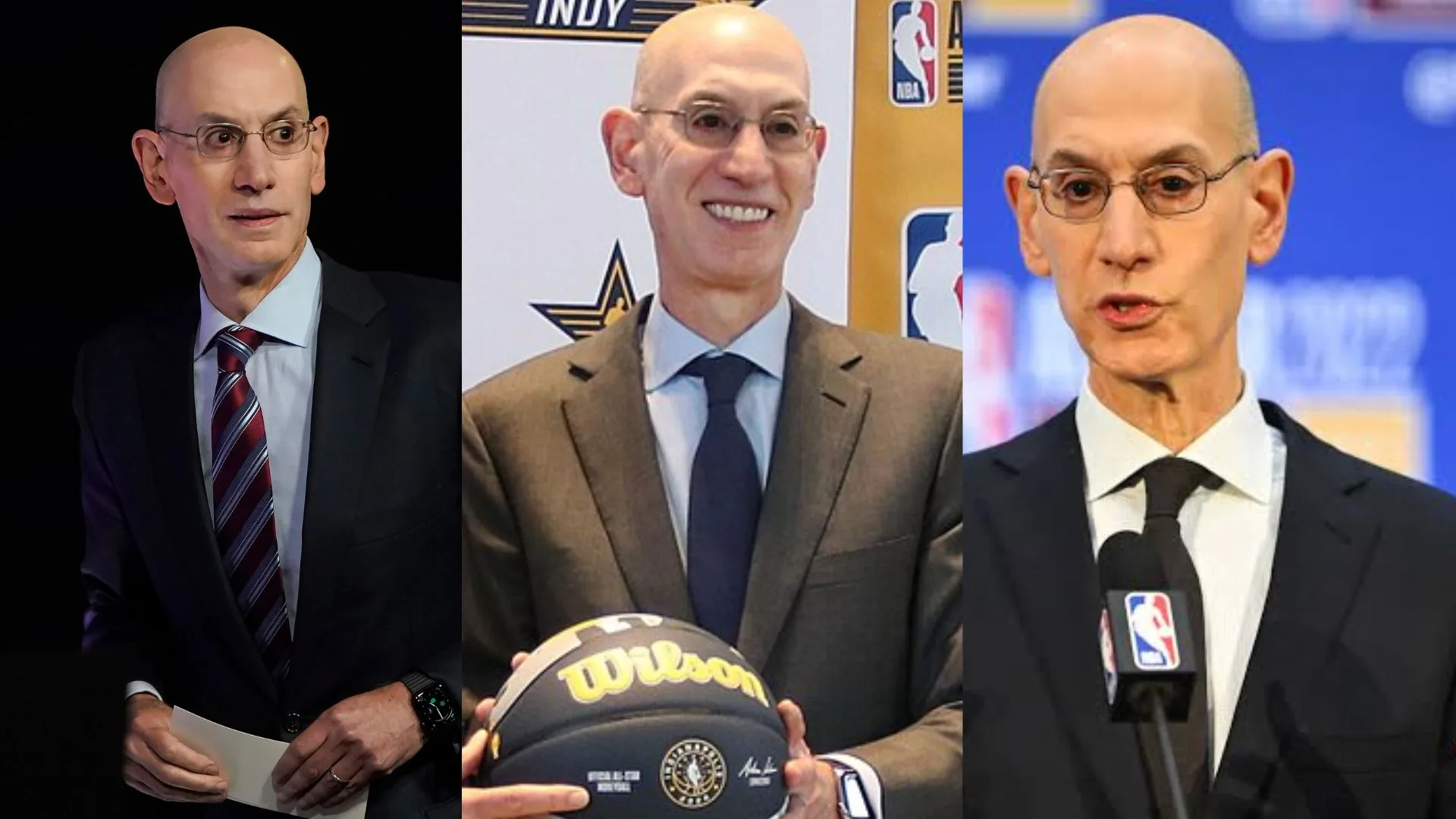
As of 2026, NBA Commissioner Adam Silver has an estimated net worth of approximately $60 million, supported by a lucrative annual salary currently estimated at $20 million. His wealth is a direct reflection of his successful tenure leading the National Basketball Association through transformative media rights deals, global expansion, and the integration of new technologies and revenue streams like legalized sports betting.
The Evolution of Adam Silver’s Net Worth
Adam Silver’s financial trajectory is a testament to his long-term commitment to the NBA. Unlike many high-profile sports executives who jump between different leagues or corporate sectors, Silver has spent over three decades within the NBA’s corporate structure. His net worth has grown steadily as he climbed from an assistant to the commissioner to the league's top executive.
When Silver took over as Commissioner in 2014, succeeding David Stern, his initial salary was reportedly in the range of $10 million per year. However, his performance during critical junctures—most notably the 2024 media rights negotiations and the league's navigation of the 2020 pandemic—led the NBA Board of Governors to secure his leadership through a massive contract extension signed in early 2024. This extension, which runs through 2030, significantly increased his annual compensation and performance-based bonuses.
The bulk of Silver's $60 million net worth is comprised of his accumulated salary, deferred compensation, and personal investments. While commissioners are generally prohibited from owning stakes in teams to avoid conflicts of interest, their compensation packages are often tied to the league’s overall revenue growth. Under Silver’s watch, the NBA’s total annual revenue has ballooned from roughly $4.8 billion in 2014 to over $13 billion by 2026.
Annual Salary and the 2024 Contract Extension
In early 2024, Adam Silver finalized a contract extension that solidified his position as the Commissioner of the NBA for the remainder of the decade. This deal was a strategic move by the team owners to ensure stability as the league entered a new era of broadcasting and global expansion.
While the NBA, as a private entity, does not publicly release the exact figures of the Commissioner's salary, industry analysts and reporting from outlets like ESPN and The Athletic indicate that Silver’s base salary and incentives now total approximately $20 million per year.
Components of the Commissioner's Compensation
- Base Salary: The guaranteed portion of his contract, estimated to be between $12 million and $15 million annually.
- Performance Bonuses: These are tied to specific league milestones, such as hitting revenue targets, successful collective bargaining agreement (CBA) negotiations, and the implementation of new properties like the NBA Cup (In-Season Tournament).
- Incentives for Media Rights: A significant portion of Silver’s 2024 extension was reportedly influenced by the successful execution of the 11-year, $76 billion media rights deal with Disney, NBC, and Amazon.
- Benefits and Perks: Like most top-tier CEOs, Silver’s compensation includes high-end travel arrangements, insurance, and retirement contributions managed through the league’s executive programs.
Major Financial Milestones Under Silver’s Leadership
The growth of Adam Silver’s wealth is inextricably linked to the financial health of the NBA. Several key initiatives have defined his tenure and contributed to the league's—and his own—financial success.
The $76 Billion Media Rights Revolution
The single most impactful event for Silver’s legacy (and the league’s valuation) was the media rights deal finalized for the 2025-2026 season. By shifting away from a traditional cable-heavy model and embracing a hybrid approach that includes streaming giants like Amazon Prime Video, Silver nearly tripled the value of the previous deal. This massive influx of capital has trickled down to players through higher salary caps and to the Commissioner through performance-based escalators in his contract.
Expansion of Legalized Sports Betting
Silver was one of the first major sports commissioners to embrace legalized sports betting. His 2014 op-ed in the New York Times called for a federal framework for sports gambling, a move that was initially controversial but proved prophetic. Today, partnerships with platforms like FanDuel and DraftKings generate hundreds of millions in revenue for the league annually, a revenue stream that did not exist in a meaningful way when he first took office.
The NBA Cup and Modernized Revenue
By introducing the In-Season Tournament (now known as the NBA Cup), Silver created a new "property" that the league could sell to advertisers and broadcasters. This innovation addressed the "mid-season slump" and added tangible value to the NBA's calendar, further justifying his high compensation levels.
Comparing Commissioner Salaries in Professional Sports
To understand whether Adam Silver’s $20 million salary is appropriate, it is helpful to look at his peers across the major North American sports leagues. Historically, the NFL Commissioner has earned significantly more than his counterparts, but the gap is narrowing as NBA revenues climb.
| Commissioner | League | Estimated Annual Salary (2026) | Estimated Net Worth |
|---|---|---|---|
| Roger Goodell | NFL | $65 Million | $250 Million |
| Adam Silver | NBA | $20 Million | $60 Million |
| Rob Manfred | MLB | $17.5 Million | $45 Million |
| Gary Bettman | NHL | $10 Million | $100 Million* |
*Gary Bettman's net worth is higher due to a much longer tenure (since 1993) and historical salary accumulation.
While Roger Goodell remains the highest-paid executive in sports, Silver is often cited by business analysts as providing the highest "value per dollar" given the NBA’s younger demographic and its superior international footprint.
Education and Early Career Path to Wealth
Adam Silver’s path to a $60 million net worth began with a rigorous academic and legal background. He graduated from Duke University in 1984 and later earned his Juris Doctor from the University of Chicago Law School in 1988.
Before joining the NBA, Silver worked as a litigation associate at the prestigious New York law firm Cravath, Swaine & Moore. He also served as a law clerk to Judge Kimba Wood, a federal judge for the United States District Court for the Southern District of New York. This legal foundation was critical for his later success in negotiating complex collective bargaining agreements with the National Basketball Players Association (NBPA).
He joined the NBA in 1992, serving in various roles including:
- VP and COO of NBA Entertainment: Where he learned the media and production side of the business.
- NBA Deputy Commissioner: Serving under David Stern for eight years (2006–2014).
- Commissioner: Assuming the role on February 1, 2014.
Each of these steps provided not only a salary increase but also the institutional knowledge required to manage a multi-billion dollar global enterprise.
The Impact of the 2025 Media Rights Deal on Executive Compensation
In the context of 2026, the NBA is currently in the first year of its landmark media rights agreement. This deal changed the "wealth" conversation for everyone involved in the league. For Silver, the deal served as a validation of his strategy to pivot toward streaming.
The influx of $76 billion over 11 years ensures that the NBA's salary cap will continue to rise by the maximum allowed 10% annually. As player salaries for superstars reach $80 million to $90 million per year, the "management" salaries for executives like Silver are naturally adjusted upward to maintain a logical corporate hierarchy. In the sports world, it is common for the top players to out-earn the CEO (Commissioner), but the Commissioner’s wealth is often more stable and less dependent on physical health or on-court performance.
Philanthropy and Wealth Management
Adam Silver has maintained a relatively private personal life regarding his investments, but he is known to be active in several philanthropic endeavors. He has been involved with the Lustgarten Foundation for Pancreatic Cancer Research and has supported various initiatives related to social justice and education.
From a wealth management perspective, Silver’s portfolio likely includes a mix of diversified equities and real estate. Living in New York City, the league’s headquarters, he maintains high-value residential property, which is a standard component of wealth for top-tier executives in the Manhattan area.
Is Adam Silver's salary public?
No, the NBA is a private organization and is not required to disclose the exact salary of its Commissioner. The $20 million figure is based on insider reporting, comparative analysis of previous tax filings (when the NBA was a non-profit), and industry benchmarks.
How does Adam Silver's net worth compare to NBA players?
While Silver is wealthy, his $60 million net worth is lower than many of the league’s top stars. For example, LeBron James and Stephen Curry have net worths exceeding several hundred million dollars due to their massive playing contracts and even larger endorsement deals with companies like Nike and Under Armour.
What was Adam Silver’s salary when he started?
When he was appointed Commissioner in 2014, his base salary was estimated to be around $10 million. His earnings have doubled over the last 12 years in tandem with the league's revenue tripling.
Does Adam Silver own an NBA team?
No, Adam Silver does not own an NBA team. Commissioner rules generally prohibit the owning of a franchise to ensure impartiality when making decisions that affect all 30 teams, such as disciplinary actions, schedule changes, or revenue sharing.
How long is Adam Silver's current contract?
Silver's current contract extension, signed in 2024, keeps him as Commissioner through the 2029-2030 NBA season.
Future Outlook: Expansion and Valuation
As we look toward the late 2020s, the next major driver of Adam Silver’s "performance wealth" will be league expansion. With Las Vegas and Seattle frequently mentioned as the primary candidates for new franchises, the NBA is expected to command expansion fees in the range of $4 billion to $5 billion per team.
Successfully overseeing the addition of the 31st and 32nd teams will likely trigger significant bonuses for Silver. Furthermore, his ability to navigate the transition of regional sports networks (RSNs) to direct-to-consumer streaming models will be the final pillar of his financial legacy. For those tracking executive compensation, Silver remains a gold standard for how a commissioner can grow personal wealth by consistently increasing the "pie" for players and owners alike.