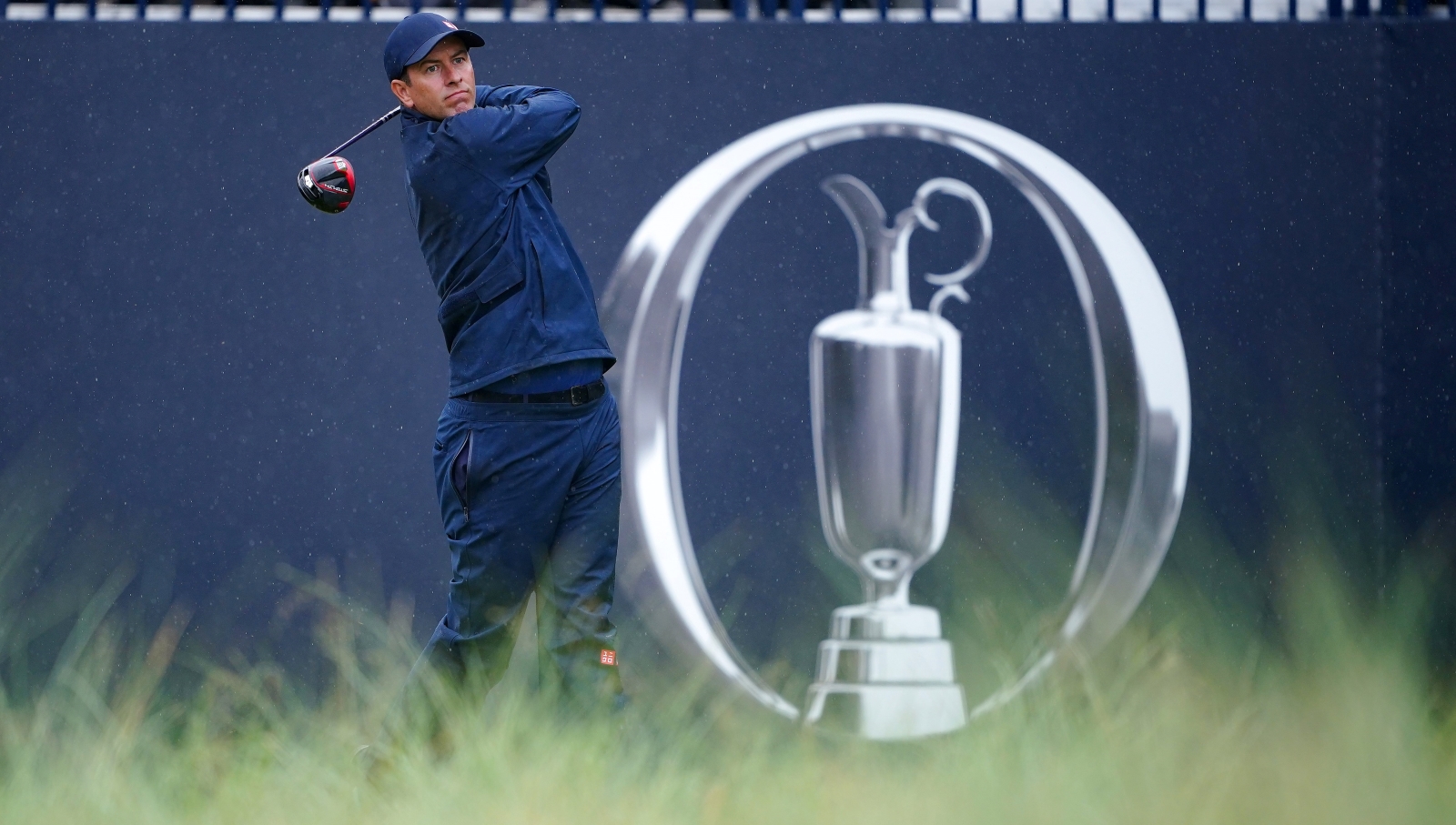
Adam Scott represents the bridge between golf’s classical past and its high-tech future. By maintaining a swing blueprint developed under Butch Harmon in the late 90s and stubbornly adhering to traditional equipment like muscle-back blades, Scott preserves the "Golden Era" aesthetic and shot-making precision that dominated the professional circuit three decades ago.
The Butch Harmon Blueprint: A Swing Frozen in Time
To understand why Adam Scott is considered the ultimate throwback to the 1990s, one must look at the technical architecture of his golf swing. In the late 1990s and early 2000s, Butch Harmon was the undisputed king of swing instructors, having guided Tiger Woods to the most dominant stretch in sports history. When a young Adam Scott emerged from Australia, his swing was almost a carbon copy of Woods’ "Tiger 1.0" model—a swing built on the foundational principles of the late 20th century.
Unlike the modern "Force Plate" era of 2026, where golfers prioritize extreme ground reaction forces and "matching up" unorthodox moves to generate 130-mph clubhead speeds, Scott’s swing is a masterpiece of rhythm and traditional planes. It features a classic high-handed finish, a perfectly on-plane takeaway, and a transition that relies on timing and sequence rather than raw athletic violence.
This mechanical consistency is a direct link to the 1990s. During that decade, the focus was on the "one-plane" vs. "two-plane" debate and the perfection of the "V-GAP." Scott’s swing has remained remarkably static over twenty-five years. While his peers have chased "The Move" or sought to overhaul their mechanics to keep up with younger bombers, Scott has served as a living museum of the era when the swing was an art form as much as a physics problem. This adherence to a classic model allows him to maintain a level of ball-striking that remains the envy of the PGA Tour, even as he navigates the mid-2020s.
The Equipment Paradox: Why Scott Clings to 90s Tech
Perhaps the most visible sign of Adam Scott’s "throwback" status is his choice of equipment. While the 2026 golf market is saturated with artificial intelligence-designed clubheads and multi-material irons that offer massive forgiveness, Scott has famously spent years playing the Titleist 680 MB irons.
Originally released in 2003—effectively the tail end of the 90s design philosophy—these irons are pure muscle-back blades. They feature a thin topline, no offset, and a high center of gravity. In an era where even the best players in the world have moved toward "players’ cavity backs" to help with off-center hits, Scott’s reliance on 680s is a testament to the shot-making values of the 90s.
Why the 680 MB Irons Matter
The 1990s was the final decade where "working the ball" was the primary skill required of a champion. Balata and early solid-core balls spun significantly more than modern balls, meaning players had to control their flight through precise impact. Scott uses these blades because they provide the specific feedback and turf interaction that modern, wider-soled clubs cannot replicate.
Furthermore, Scott’s bag often reflects a 90s sensibility regarding gapping. He has resisted the "driving iron" craze for long periods, preferring the look and feel of clubs that require a traditional, sweeping strike. This commitment to "difficult" equipment is not mere nostalgia; it is a strategic choice to maintain the artisan-level control that defined the greats of the 90s, such as Greg Norman and Nick Faldo.
Defining the "Golden Era" of Golf (1990–1999)
The term "Golden Era" is often applied to the 1990s because it represented a perfect equilibrium in the sport. It was the decade where technology began to accelerate, but had not yet rendered traditional course architecture obsolete. It was an era defined by several key factors that Adam Scott continues to embody:
- The Rise of the Global Star: Following the 1980s boom, the 90s saw the emergence of the "International" player as a dominant force. Scott, an Australian who made his mark globally, follows the path blazed by Greg Norman.
- The Ball Evolution: The decade began with the Liquid-Center Balata and ended with the Titleist Pro V1 (released for testing in late 2000). This shift changed the game forever, but the 90s were the last stand for the high-spin, soft-cover game.
- Aesthetic Professionalism: The fashion of the 90s—pleated trousers, oversized but structured polos, and classic leather shoes—created a specific "look" of professional excellence.
Adam Scott’s personal brand and on-course demeanor are a direct reflection of this period. He carries himself with a quiet, stoic professionalism that contrasts with the high-energy, social-media-driven personas of the modern era. His style—often characterized by tailored trousers and classic knitwear—is a refined version of the 90s "gentleman golfer" aesthetic.
Comparing the Eras: 90s Standards vs. Modern Performance
To understand the magnitude of Scott's "throwback" status, we can compare the technical and cultural hallmarks of the 90s with the current 2026 landscape.
| Feature | 1990s "Golden Era" | 2026 Modern Era | The Adam Scott Approach |
|---|---|---|---|
| Primary Iron Design | Small Muscle-back Blades | AI-Optimized Cavity/Hollow Body | Pure Titleist 680 Blades |
| Swing Philosophy | Plane & Rhythm (Harmon/Leadbetter) | Biomechanics & Ground Force | Butch Harmon "Tiger 1.0" Model |
| Ball Flight | Curvature & Shot Shaping | High Launch, Low Spin (Straight) | Precision Shaping |
| Putter Style | Traditional Blades & Mallets | High-MOI Tech & Arm-Lock | Long Putter (Classic Broomstick) |
| Footwear | Structured Leather / Metal Spikes | Sneaker-style / Spikeless | Classic Structured Profiles |
| Course Strategy | Position & Angle | Distance & Aggression | Hybrid (Length + Classic Angles) |
The Long Putter: A Link to the "Broomstick" Pioneers
While the long putter (or "broomstick") is often viewed as a modern workaround for the yips, its roots in professional golf are firmly planted in the 1980s and 90s. Players like Bernhard Langer and Rocco Mediate pioneered the use of the long putter during the Golden Era to combat the nerves that often ended the careers of great ball-strikers.
Adam Scott’s transition to the long putter in 2011 was a pivotal moment in his career, but his method of using it—unanchored, in accordance with the 2016 rules—is a masterclass in the traditional pendulum stroke. In the 2026 season, as many players experiment with "Lab" putters and "Arm-Lock" configurations, Scott’s upright, sweeping motion with the broomstick remains a visual callback to the specialized putting styles that emerged during the 90s to keep the game’s best "strikers" competitive. It reinforces the idea that he is a player who solves modern problems with classical, albeit specialized, tools.
The Aesthetic of Excellence: Style and Comportment
Adam Scott is frequently cited as the best-dressed man in golf, but his style is more than just fashion; it is a philosophical statement. In the 1990s, the "Uniform of the Professional" was a matter of respect for the game. There were no joggers, no hoodies, and no untucked shirts.
Scott’s partnership with brands like Uniqlo has allowed him to curate a look that is timeless. While he has moved away from the baggier silhouettes of the 90s, he retains the core elements: the classic polo, the perfectly tailored trouser, and the absence of loud, distracting patterns. This visual "cleanliness" mirrors the cleanliness of his game. In an era where professional golf has become increasingly informal, Scott’s appearance is a constant reminder of the era when the Sunday leader-board looked like a collection of business executives competing on the grass.
The Influence of Greg Norman
One cannot discuss Adam Scott as a 90s throwback without mentioning Greg Norman. In the 90s, "The Shark" was the blueprint for the modern golfer—fit, aggressive, and stylish. Scott, who grew up idolizing Norman, took that blueprint and refined it. He kept the athleticism and the "alpha" ball-striking but replaced Norman's volatility with a 90s-era Nick Faldo-like composure. This blend makes him the ultimate synthesis of the 90s’ greatest traits.
Integrating the "Golden Era" Into Your Own Game
For the amateur golfer, Adam Scott’s "throwback" approach offers several actionable lessons. You do not need the latest AI-generated driver to improve; often, looking back at the fundamentals of the 90s can provide more lasting results.
- Prioritize Rhythm Over Raw Power: Modern instruction often focuses on "maxing out" every metric. Instead, emulate Scott’s 90s-style tempo. A swing that is at 80% effort but 100% in-sequence will always produce better results for the non-professional.
- The Value of Feedback: While you might not want to play pure blades, practicing with a more traditional iron can highlight flaws in your strike that "game improvement" clubs hide. Use the "Golden Era" philosophy of using equipment that tells you the truth.
- Master the "Stock" Shot: In the 90s, the best players had a "stock" flight they could rely on under pressure. Scott’s ability to hit a repeatable, high draw is a skill honed in the era before launch monitors told players to just "swing harder."
- Professionalism in Presentation: Adopting a disciplined, professional approach to your attire and on-course demeanor can lead to a more disciplined mental game. Scott’s composure is his greatest 90s-era asset.
Preserving the Legacy in the Modern Age
As we move further into the late 2020s, the "Golden Era" of the 90s risks becoming a distant memory, replaced by a game that is increasingly data-driven and homogenized. Adam Scott stands as a vital counterpoint to this trend. He proves that the classical swing—when maintained with modern fitness—is still capable of winning at the highest level.
His career is a testament to the idea that some things in golf are timeless. Whether it is the flash of a Titleist blade in the sun or the effortless "whoosh" of a perfectly timed transition, Scott provides a window into a time when the game felt more like a craft and less like a science experiment. For those who miss the 90s, watching Adam Scott is the closest we have to a time machine.
Frequently Asked Questions
Why does Adam Scott still use Titleist 680 irons from the early 2000s?
Adam Scott uses the Titleist 680 MB irons because they provide a specific offset and sole grind that modern irons do not offer. The 680s were designed during a period where shot-shaping and turf interaction were prioritized differently. For a player with Scott's precision, the familiar feel and predictable flight of these "old" blades outweigh the forgiveness benefits of modern technology.
How is Adam Scott's swing different from modern "power" swings?
Modern swings often utilize "S&T" (Stack and Tilt) influences or extreme rotational "squatting" to generate speed through ground force. Scott's swing is a "Classic" model, characterized by a more vertical shoulder turn, a full hip rotation, and a rhythmic tempo. It relies on the "X-Factor" (the stretch between hips and shoulders) popularized by Jim McLean in the 90s rather than the vertical-force metrics used today.
Was the 1990s really the "Golden Era" of golf?
Many historians call the 90s the "Golden Era" because it featured the highest level of "pure" competition before technology began to significantly outpace course design. It was the era of Tiger Woods' emergence, the peak of the European dominance in the Ryder Cup, and the last decade where equipment required a high degree of manual skill to operate effectively.
Does Adam Scott use a 90s-style putter?
No, Adam Scott actually uses a very modern "broomstick" long putter, typically a L.A.B. Golf model in recent years. However, the style of long putting is a throwback to the pioneers of the 80s and 90s who used the method to extend their careers. While the head technology is 2026-spec, the upright, pendulum technique is a classic solution to a timeless problem.
Who was Adam Scott's coach during his formative years?
Adam Scott famously worked with Butch Harmon, who is widely regarded as the greatest coach of the 90s and early 2000s. Harmon helped Scott build a swing that mirrored Tiger Woods', focusing on a strong grip, a wide takeaway, and a balanced, high finish. This "Harmon Blueprint" remains the foundation of Scott's game today.