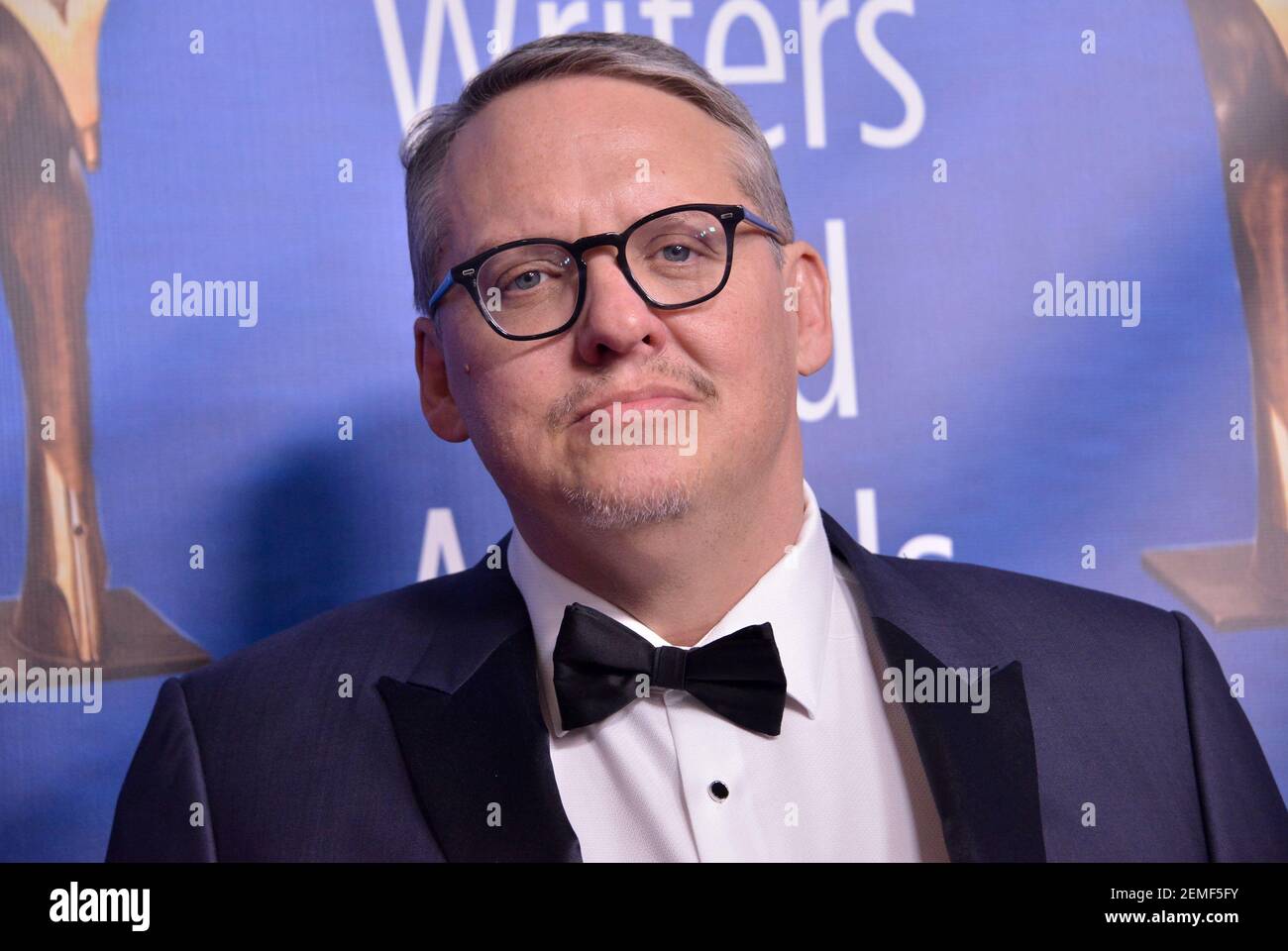
Adam McKay is an Academy Award-winning filmmaker, writer, and producer known for his transition from broad comedies like Anchorman to biting social satires like The Big Short. As of 2026, his prolific career in film and television has earned him critical acclaim and a net worth estimated at $100 million.
The Evolution of a Cinematic Icon: From SNL to Social Satire
Adam McKay’s journey is one of the most unique trajectories in modern Hollywood. Born in 1968, McKay’s early career was defined by his work in improvisational comedy. A founding member of the Upright Citizens Brigade, he eventually moved to Saturday Night Live (SNL), where he served as head writer for three seasons. It was during this time that he formed a legendary creative partnership with Will Ferrell, a collaboration that would dominate the comedy landscape of the early 2000s.
In the first decade of the millennium, McKay was primarily known for "absurdist" humor. His directorial debut, Anchorman: The Legend of Ron Burgundy (2004), became a cultural phenomenon, followed by hits like Talladega Nights: The Ballad of Ricky Bobby and Step Brothers. These films were characterized by improvised dialogue and larger-than-life characters. However, even in these early works, a subtle undercurrent of social commentary was present—critiquing masculinity, corporate media, and American consumerism.
The pivot in McKay’s career occurred in 2015 with The Big Short. This film marked his transition into high-stakes political and economic drama, utilizing a fast-paced, "fourth-wall-breaking" style to explain the 2008 financial crisis. By 2026, McKay is recognized not just as a "comedy guy," but as one of the industry's most influential voices in prestige television and socially conscious cinema. His production company, Hyperobject Industries, has become a hub for content that tackles urgent global issues, specifically climate change and political corruption.
A Definitive Filmography: Major Works and Directorial Style
McKay’s filmography is often categorized into two distinct eras: the Ferrell-collaborative "Blueberry Era" and the later "Political/Societal Era." Understanding this evolution is crucial for any retrospective of his work.
The Comedy Foundations (2004–2013)
During this period, McKay directed some of the most quoted films in modern history. Anchorman and its sequel Anchorman 2: The Legend Continues (2013) served as a parody of 1970s and 80s local news culture. The Other Guys (2010) was an early hint at his future interests, as it concluded with an animated sequence detailing the Ponzi schemes and corporate fraud that led to the Great Recession. This era was defined by a loose, collaborative atmosphere on set that allowed actors to explore the limits of their characters.
The Shift to Prestige Cinema (2015–Present)
With The Big Short, McKay introduced a technical language that became his trademark: rapid-fire editing, handheld camera work, and celebrity cameos (such as Margot Robbie in a bathtub) used to explain complex jargon. This style continued in Vice (2018), a biographical drama about Dick Cheney, and Don't Look Up (2021), a metaphorical look at the climate crisis through the lens of a planet-killing comet. By 2026, his directing style is studied in film schools as a successful merger of information-heavy documentary techniques with traditional narrative storytelling.
Television Production and "Succession"
While his directing is famous, his work as an executive producer is equally significant. McKay played a pivotal role in bringing Succession to HBO. The show, which explored the dynamics of a media dynasty, mirrored many of the themes found in McKay’s films: power, greed, and the decay of modern institutions. His involvement in television has expanded to include various documentaries and limited series that focus on systemic failures within American society.
Major Awards and Critical Recognition
Adam McKay’s trophy cabinet reflects his versatility. His transition from comedy to drama was validated by the highest honors in the industry. His most notable achievement came in 2016 when he won the Academy Award for Best Adapted Screenplay for The Big Short.
In addition to his Oscar win, McKay has received numerous nominations for Best Director and Best Picture. His work on Vice earned eight Academy Award nominations, highlighting his ability to transform controversial political subject matter into compelling cinema. Beyond the Oscars, McKay has been a frequent winner at the Primetime Emmy Awards, largely due to his executive producing role on Succession, which won multiple awards for Outstanding Drama Series.
His awards profile is not limited to the U.S.; he has also received significant recognition from the British Academy of Film and Television Arts (BAFTA) and the Directors Guild of America (DGA). These accolades have solidified his standing as a "triple threat" in Hollywood: a writer, director, and producer who can deliver both commercial success and critical prestige.
Financial Profile: Adam McKay's Net Worth in 2026
As of 2026, Adam McKay’s net worth is estimated to be approximately $100 million. This wealth has been accumulated through several high-revenue streams, ranging from box office backend deals to lucrative production contracts.
- Film Salaries and Backend Participation: For his major directorial efforts like Don't Look Up and Vice, McKay commands a high upfront fee (often in the $10–$15 million range) plus a percentage of the profits. Given that Don't Look Up became one of Netflix’s most-watched films of all time, his "backend" or performance bonuses were substantial.
- Gary Sanchez Productions and Hyperobject Industries: McKay co-founded Gary Sanchez Productions with Will Ferrell. When the duo decided to dissolve the partnership in 2019, the assets and residuals from their massive hits (like Step Brothers) remained a significant source of passive income. His new venture, Hyperobject Industries, has secured multi-year first-look deals with major streamers like Apple TV+ and HBO/Max, ensuring a steady flow of production fees.
- Television Residuals: Succession remains one of the most-watched and most-licensed shows in HBO history. As an executive producer, McKay continues to receive residual checks from domestic airings and international syndication deals.
- Real Estate Investments: Like many high-net-worth individuals in Hollywood, McKay has maintained a portfolio of luxury real estate in Los Angeles and New York, which has appreciated significantly over the last decade.
Detailed Career Metrics and Performance
The following table summarizes the performance and critical reception of McKay’s most influential directorial projects.
| Film Title | Release Year | Primary Role | Key Award/Recognition | Estimated Box Office/Reach |
|---|---|---|---|---|
| Anchorman | 2004 | Director/Writer | Cult Classic Status | $90.6 Million |
| Step Brothers | 2008 | Director/Writer | Multiple Comedy Awards | $128.1 Million |
| The Big Short | 2015 | Director/Writer | Academy Award Winner | $133.4 Million |
| Vice | 2018 | Director/Writer | 8 Oscar Nominations | $76.1 Million |
| Don't Look Up | 2021 | Director/Writer | 4 Oscar Nominations | 360M+ Hours (Netflix) |
The "Hyperobject" Era and Future Outlook
In 2026, McKay is increasingly focused on the concept of "Hyperobjects"—entities (like climate change) that are so vast they defy human comprehension. His production company, named after this concept, aims to make these invisible or overwhelming issues visible through entertainment. This mission has led him toward more experimental projects, including climate-focused podcasts, investigative documentaries, and unscripted content.
McKay’s influence also extends to his advocacy. He has become a prominent voice in Hollywood for climate action, often using his platform to push for more sustainable production practices. This "activist-filmmaker" hybrid model is likely to be the defining feature of his career in the late 2020s. As he continues to produce content that challenges the status quo, his financial and critical footprint in the industry only grows.
Frequently Asked Questions
What is Adam McKay's most successful film?
In terms of cultural impact and "perpetual" popularity, Step Brothers and Anchorman are his most successful comedies. However, from a critical and awards perspective, The Big Short is his most successful film, having won him an Oscar and fundamentally changing his career trajectory. On streaming platforms, Don't Look Up holds the record for his most-watched project.
How many Oscars has Adam McKay won?
As of 2026, Adam McKay has won one Academy Award for Best Adapted Screenplay (The Big Short). However, he has received over a dozen nominations across various categories, including Best Director, Best Original Screenplay, and Best Picture for films like Vice and Don't Look Up.
Why did Adam McKay and Will Ferrell end their partnership?
The dissolution of Gary Sanchez Productions in 2019 was largely due to a disagreement over the casting of the HBO series Winning Time: The Rise of the Lakers Dynasty. McKay cast John C. Reilly in a role that Ferrell reportedly wanted. While the split was a major headline in Hollywood, both have continued to flourish independently, with McKay focusing on political drama and Ferrell continuing in comedy and production.
What is Adam McKay's current production company?
Adam McKay currently operates under Hyperobject Industries. The company has a wide-reaching mandate to produce films, television, and podcasts that tackle complex social and environmental issues. It holds several high-profile deals with major streaming services and traditional studios.
Is Adam McKay still working in comedy?
While McKay has moved toward drama and satire, comedy remains a fundamental tool in his storytelling. Even his most serious films, like The Big Short and Vice, utilize dark humor and absurdism to make their points. He continues to produce comedies through his various production deals, though his directorial efforts have become more focused on social and political themes.
Recommendations for Aspiring Filmmakers
If you are looking to emulate Adam McKay's career path or learn from his success, the primary takeaway is the importance of creative evolution. McKay did not remain stagnant in the genre that made him famous. Instead, he used his success in comedy to build the leverage necessary to make difficult, complex films that others might have deemed "un-marketable."
Aspiring creators should study his use of "Information as Entertainment." By using celebrities and humor to explain boring or complex topics (like subprime mortgages), McKay proved that audiences are willing to engage with "difficult" subjects if the delivery is innovative. For those interested in his financial success, it highlights the value of diversification: being a writer, director, and producer allows for multiple streams of income and greater creative control over the final product.