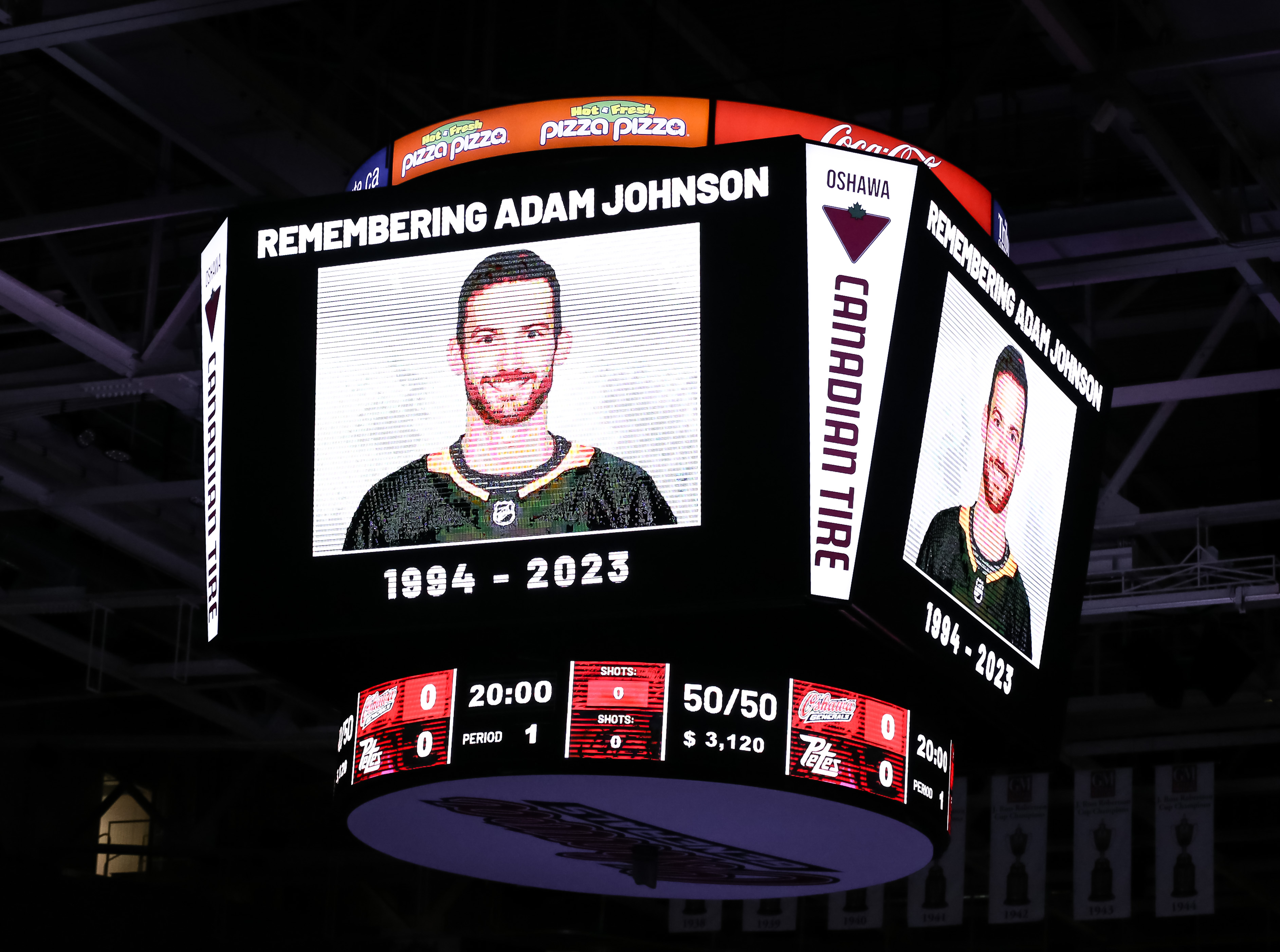
The tragic passing of Adam Johnson in October 2023 from a skate blade injury fundamentally transformed ice hockey safety standards worldwide. His death prompted immediate mandates for neck protection across the IIHF, the English Ice Hockey Association, and various professional leagues. By 2026, neck guards have become standard equipment, reflecting a permanent shift in the sport’s culture and player welfare priorities.
The Life and Professional Career of Adam Johnson
Adam Johnson was far more than the tragic headline that many associated with him following the events of 2023. Born in Hibbing, Minnesota—a town with a deep-rooted hockey heritage—Johnson embodied the "State of Hockey" spirit. His journey through the ranks of the sport was a testament to his speed, technical skill, and perseverance. Before his time in the Elite Ice Hockey League (EIHL) with the Nottingham Panthers, Johnson made a significant impact in the American collegiate and professional systems.
He spent two seasons at the University of Minnesota-Duluth, where he was instrumental in the team’s success, including a memorable overtime goal that sent the Bulldogs to the 2017 Frozen Four. His talent caught the attention of the Pittsburgh Penguins, leading to his NHL debut during the 2018-2019 season. Over the course of 13 NHL games, Johnson recorded four points, including his first NHL goal against the Minnesota Wild—a poetic moment for a kid who grew up in the same state.
Johnson’s career eventually took him to Europe, playing in Sweden and Germany before joining the Nottingham Panthers in the United Kingdom. Colleagues and coaches consistently described him as a quiet, dedicated professional and a beloved teammate. His death was not just a loss for the sport’s safety record; it was the loss of a talented athlete at the peak of his career who was widely respected across the global hockey community.
The Incident of October 28, 2023: A Catalyst for Change
On October 28, 2023, during a Challenge Cup game between the Nottingham Panthers and the Sheffield Steelers at the Utilita Arena Sheffield, Adam Johnson suffered a fatal injury. During a routine play in the second period, a collision resulted in an opposing player’s skate blade making contact with Johnson’s neck. Despite the immediate intervention of on-site medical professionals and subsequent transport to the hospital, Johnson succumbed to his injuries.
The event sent shockwaves through the sporting world, partly because of the visual nature of the accident and partly because it occurred in an era where medical technology and safety gear were thought to be at their zenith. The incident was witnessed by thousands of fans, including many young children, leading to a widespread discussion about the psychological impact of such events and the urgent need to prevent their recurrence.
The immediate aftermath saw an outpouring of grief from the Nottingham Panthers organization and the wider hockey world. Games across the UK were postponed as the league grappled with the trauma. However, the grief was quickly followed by a resolute demand for structural changes in how players are protected on the ice, specifically regarding exposed areas like the neck and wrists.
Regulatory Response and the Global Mandate for Neck Guards
The most significant outcome of Adam Johnson's death was the rapid acceleration of safety mandates that had been debated for decades but never fully implemented at the professional level. Prior to 2023, neck guards were often seen as "optional" or "youth-only" equipment, frequently discarded by professional players who cited heat and restricted movement as reasons for their absence.
In the wake of the tragedy, the English Ice Hockey Association (EIHA), which governs the sport below the Elite level in the UK, was the first to act, announcing that neck guards would be mandatory for all on-ice activities starting in early 2024. The International Ice Hockey Federation (IIHF) followed suit, mandating neck laceration protectors for all levels of competition, including the Olympics and World Championships.
| Governing Body | Neck Guard Mandate Status (as of 2026) | Additional Safety Requirements |
|---|---|---|
| IIHF (International) | Mandatory for all categories. | Integrated cut-resistant base layers recommended. |
| EIHA (United Kingdom) | Mandatory for all players and officials. | Strict enforcement during pre-game checks. |
| AHL (North America) | Mandatory for all players. | Mandated shortly after the 2023 incident. |
| NHL (North America) | Strongly recommended; mandated for new players. | Individual team mandates and grandfather clauses. |
| OHL/WHL/QMJHL (Junior) | Historically mandatory; increased enforcement. | Standardized testing for "cut-resistant" ratings. |
By 2026, the cultural stigma against neck guards has largely evaporated. Manufacturers have responded by developing low-profile, moisture-wicking protection that utilizes Kevlar and Dyneema fibers, ensuring that "comfort" is no longer a valid excuse for bypassing safety.
Technical Innovations in Cut-Resistant Equipment
The demand for better protection catalyzed a wave of innovation in the sports equipment industry. In the years following 2023, the focus shifted from simple padded collars to high-performance, cut-resistant textiles. These materials are designed to be thin and breathable while providing a high level of protection against the literal "razor-sharp" edges of modern hockey skates.
- Kevlar and Dyneema Integration: Modern neck guards in 2026 utilize ultra-high-molecular-weight polyethylene (UHMWPE) fibers. These materials offer exceptional tensile strength, making it nearly impossible for a skate blade to penetrate the fabric under normal game conditions.
- Integrated Base Layers: Instead of a standalone "collar," many players now opt for compression shirts with built-in neck and wrist protection. This prevents the protective elements from shifting during high-speed play, ensuring the carotid artery and jugular vein remain covered at all times.
- Standardized Testing Ratings: The industry now relies on standardized ratings (such as BNQ certification in Canada) to verify the efficacy of gear. In 2026, any equipment labeled as "cut-resistant" must meet rigorous mechanical testing standards to ensure it can withstand the force of a sliding skate.
- Breathability and Ergonomics: New designs feature articulated sections that allow for full head rotation. This addresses the primary complaint of professional goalies and defensemen who require a wide field of vision.
Legal and Ethical Implications of the South Yorkshire Police Investigation
Beyond the equipment changes, Adam Johnson’s death prompted a rare and complex legal investigation. The South Yorkshire Police launched an inquiry into the circumstances surrounding the collision. In November 2023, a man was arrested on suspicion of manslaughter and subsequently released on bail.
This legal action sparked an intense debate within the sports community regarding the "assumption of risk" in high-contact sports. Traditionally, injuries occurring within the flow of a game are handled by league disciplinary boards rather than criminal courts. However, the severity of this incident raised questions about whether certain actions on the ice could cross the line into criminal negligence.
As of 2026, the legal precedents established during this investigation continue to influence how sports organizations draft their "Duty of Care" policies. It has forced teams to ensure that their medical protocols, emergency response times, and equipment checks are beyond reproach to avoid potential liability. The case remains a landmark in sports law, highlighting the fine line between accidental athletic collisions and legal accountability.
The Cultural Shift: Overcoming the "Toughness" Myth
For decades, ice hockey culture was defined by a certain brand of "toughness" that often viewed extra safety gear with skepticism. This was particularly true for neck guards, which were often mocked as being for "kids." The death of Adam Johnson was the tipping point that finally dismantled this narrative.
The shift was led by NHL stars and veterans who began wearing neck protection immediately after the incident as a sign of respect and common sense. When high-profile players like T.J. Oshie and Rasmus Dahlin began wearing cut-resistant gear, it sent a powerful message to youth players worldwide: safety does not compromise skill.
By 2026, the sight of a player without a neck guard is as rare as a player without a helmet was in the 1980s. The hockey community has moved toward a "preventative" mindset rather than a "reactive" one. This cultural evolution has extended to other areas of the sport, including more rigorous concussion protocols and a greater emphasis on the quality of protective padding in the lower body and wrists.
Frequently Asked Questions
What exactly caused Adam Johnson’s death?
Adam Johnson passed away due to a fatal neck injury sustained from an opponent's skate blade during a game. The blade caused a massive laceration that resulted in catastrophic blood loss. Despite immediate medical attention on the ice and at the hospital, the nature of the injury was too severe to be survived.
Are neck guards now mandatory in the NHL?
As of 2026, the NHL has not implemented a league-wide, universal mandate for all veteran players, but many teams have internal requirements. Furthermore, a "grandfather" rule exists where most new players entering the league are required to wear them, and the vast majority of the player base has voluntarily adopted cut-resistant base layers due to improved comfort and safety awareness.
Has anyone been charged in relation to the incident?
Following the incident in 2023, South Yorkshire Police arrested a man on suspicion of manslaughter. He was released on bail, and the investigation involved extensive forensic analysis and expert testimony regarding the mechanics of hockey play. The case focused on whether the actions leading to the contact fell within the "normal" risks of the sport or constituted negligence.
What should parents look for when buying neck protection for youth players?
Parents should prioritize gear that is BNQ certified or meets equivalent international safety standards. Look for "cut-resistant" labels specifically mentioning materials like Kevlar or Dyneema. It is also recommended to choose integrated shirts (base layers) rather than separate velcro collars, as they are less likely to slip or leave gaps during play.
How has the Nottingham Panthers organization honored Adam Johnson?
The Nottingham Panthers retired Johnson’s jersey number (47) and established several memorial initiatives, including a fund to support youth hockey in his hometown of Hibbing, Minnesota. The "Adam Johnson Memorial Trophy" was also created to recognize players who demonstrate the same dedication and sportsmanship that Johnson was known for throughout his career.
Recommended Actions for Players and Organizations
To ensure that the lessons learned from the Adam Johnson tragedy continue to protect athletes, players at all levels should take proactive steps. If you are a player, transition to a cut-resistant base layer that includes both neck and wrist protection. These integrated garments are the most effective way to ensure no skin is exposed to potential blade contact.
For team managers and league officials, the focus should remain on rigorous equipment enforcement. It is not enough to have a rule; it must be checked before every puck drop. Officials should be empowered to remove players from the ice whose safety gear is ill-fitted or missing. Finally, every rink should have an updated Emergency Action Plan (EAP) specifically tailored to major trauma, ensuring that medical staff have the tools and training to manage severe lacerations immediately.