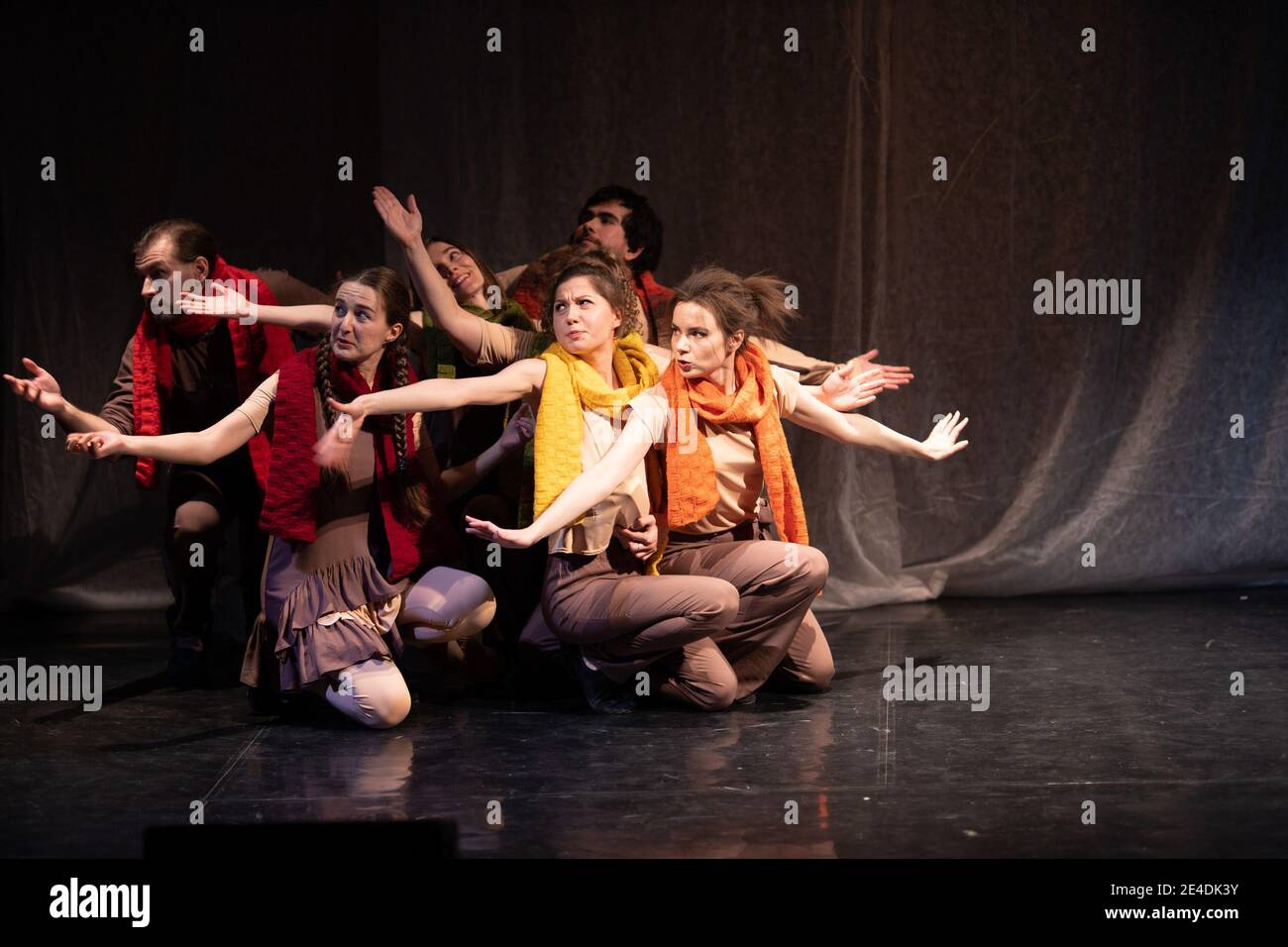
Actress performance encompasses the complex intersection of emotional authenticity, physical discipline, and narrative cohesion within a staged or recorded production. Evaluating this performance requires an objective analysis of how an actor interprets a script, utilizes their vocal and physical tools, and sustains character consistency across disparate production schedules.
The Foundations of Dramatic Performance Analysis
At the core of an actress's performance is the translation of the written word into a living character. This process is not merely the recitation of dialogue but the physicalization of intent. To understand a performance, one must look at three pillars: the internal motivation (the "why"), the physical expression (the "how"), and the vocal delivery.
The internal motivation is often rooted in the concept of "objectives" or "super-objectives," terms popularized by practitioners like Constantin Stanislavski. A high-quality performance is typically marked by an actress who makes clear, actionable choices regarding what her character wants in every scene. When these choices are consistent and defensible within the context of the story, the audience experiences a sense of narrative integrity.
Physical expression involves the control of gesture, posture, and facial micro-expressions. In film, where the camera can capture subtle shifts in the eyes, performance is often characterized by restraint. In stage acting, the performance must be calibrated to reach the back of the house, requiring more expansive physical choices. When analyzing a performance, one should observe whether the actress’s physical choices feel like a natural extension of the character’s emotional state or a forced imitation of a stereotype.
Technical Requirements and Production Constraints
An actress’s performance is heavily influenced by the technical environment of the production. Whether working in theater, television, or cinema, the performer must adapt to specific constraints that dictate how the performance is delivered and perceived.
In cinematic production, the "performance" is a collaborative result of acting and editing. An actress may perform a scene in segments, often out of chronological order. The ability to maintain emotional continuity despite these disruptions is a hallmark of professional expertise. Furthermore, an actress must possess an awareness of the camera frame; a nuanced performance can be lost if the actor fails to work within the depth of field or lighting setup designed by the cinematographer.
Theater acting demands a different technical skillset, characterized by the absence of the "safety net" of editing. Because the performance happens in real-time, the actress must possess high levels of vocal stamina and spatial awareness. The performance must be sustained at a consistent energy level for the duration of the play, necessitating a disciplined approach to physical and vocal warm-ups, as well as an ability to respond to the unpredictable nature of live audience engagement.
Comparative Frameworks for Performance Assessment
Assessing an actress's performance often involves comparing the execution against the established conventions of the genre. A performance in a naturalistic drama, for instance, requires a drastically different approach than a performance in a stylized horror film or a period piece. The following table provides a breakdown of how specific performance metrics shift depending on the production environment.
| Performance Metric | Naturalistic Film | Period Drama (Stage) | Avant-Garde/Experimental |
|---|---|---|---|
| Vocal Delivery | Subdued, conversational | Projected, articulate | Non-linear, abstract |
| Physicality | Micro-gestures, grounded | Heightened, precise | Stylized, symbolic |
| Characterization | Internalized motivations | Externalized social markers | Conceptual or archetypal |
| Constraint | Camera proximity | Projection reach | Narrative ambiguity |
Common Elements of Critiqued Performance
When industry professionals and critics evaluate an actress, they frequently look for markers of craft that transcend personal preference. One of the primary areas of focus is the "listening" component of a performance. A truly effective performance is reactive; it is defined by how the actress responds to her scene partners. If an actress seems to be waiting for her turn to speak rather than listening to what is being said, the performance often feels disconnected or robotic.
Another critical element is the use of the "vocal instrument." This encompasses pitch, pace, volume, and resonance. In 2026, as high-definition audio capturing becomes standard even in independent productions, the fidelity of an actress’s voice can be a make-or-break factor. The ability to vary pitch to convey emotional nuance without sounding artificial is a skill that distinguishes seasoned professionals from novices.
Finally, the concept of "character arc" is vital. An audience expects to see a trajectory of change or discovery. A static performance, unless specifically intended by the script for stylistic reasons, often fails to resonate. An actress who can map out the subtle shifts in her character’s worldview from the beginning to the end of a project displays the structural intelligence required for a compelling performance.
Prerequisites for Professional Evaluation
For those attempting to analyze or critique acting professionally, certain prerequisites are essential. First, one must possess a basic understanding of dramatic structure. Without knowing the difference between the "inciting incident," "climax," and "resolution," it is difficult to determine whether a performance is effectively serving the story’s needs.
Second, an objective analyst must separate the performance from the production values. It is a common mistake to conflate a bad script or poor directing with a bad performance. One must ask: "Did the actress deliver the lines effectively, regardless of how clunky the dialogue was?" or "Did the actress provide a believable emotional state, even if the lighting made the scene look flat?" Distinguishing the performance from the surrounding elements requires a high level of analytical detachment.
Lastly, familiarity with various acting methodologies—such as the Meisner technique, Method acting, or Classical training—provides a framework for understanding why an actress might make specific choices. Recognizing that an actress is utilizing a particular technique can help an observer understand why a performance is leaning toward extreme emotional immersion versus intellectualized, detached characterization.
Managing Ambiguity in Character Interpretation
One of the most challenging aspects of evaluating an actress's performance is the inherent ambiguity in scripts. When a text leaves character motivation open to interpretation, there is no single "correct" way to perform the role. In these instances, the evaluator must judge the performance based on its consistency and conviction rather than its adherence to a perceived "right" way of acting.
If an actress chooses a bold, unconventional path for a character, the performance is successful if she commits to that path fully. A performance that "hedges its bets"—appearing uncertain or wavering between two different interpretations—is almost always viewed as unsuccessful. The audience requires a cohesive vision. As an observer, look for the "through-line" of the actress's choices. Even if you disagree with the creative decision, the performance carries weight if the logic is maintained throughout the entirety of the work.
Next Actions for Aspiring Analysts and Practitioners
To deepen your understanding of actress performance, begin by watching scenes without sound. By removing the audio, you force yourself to focus entirely on the physicality, the facial expressions, and the interactions between actors within the frame. This exercise reveals the level of control the actress has over her body and her ability to convey story through movement alone.
Following this, re-watch the same scene with the audio enabled to observe how the vocal choices layer onto the physical performance. Pay close attention to whether the breath patterns align with the emotional peaks of the scene. Professional actresses often use "breath control" to manage their delivery, and noticing these patterns is a gateway to understanding the technical rigor behind a seemingly effortless performance. Finally, read the source material—the screenplay or play—to see how the text describes the moment versus how the actress interpreted it. Identifying these gaps between the written word and the final execution provides the most significant insight into the artistic contribution of the actress.