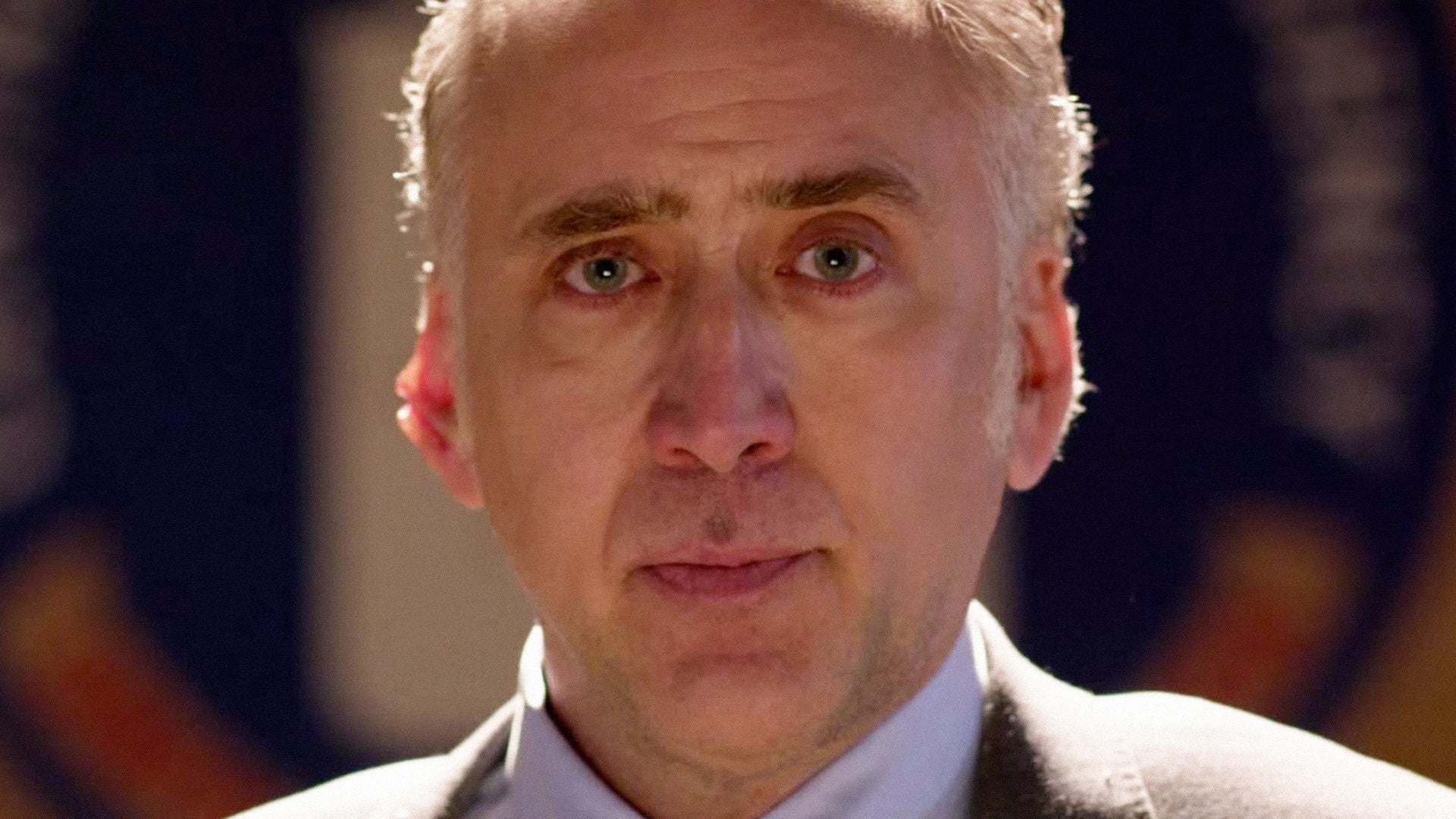
Nicolas Cage possesses one of the most distinctive and expressive faces in cinematic history, characterized by deep-set eyes, a prominent brow ridge, and an idiosyncratic intensity. The search for his doppelgängers has evolved from a niche internet meme into a widespread cultural fascination, encompassing modern actors like Noah Taylor and historical figures that have fueled "immortal" conspiracy theories.
The phenomenon of "Double Trouble" regarding Nicolas Cage is twofold: it refers to the uncanny physical resemblances found in other performers and historical archives, as well as Cage’s own frequent professional habit of playing his own double or doppelgänger on screen. Whether it is a Civil War-era photograph or a contemporary character actor with a shared facial structure, the "Cage-ness" of these lookalikes often stems from a specific combination of melancholy and manic energy reflected in their features.
The Historical Doppelgänger: The 1870s "Vampire" Photo
The most famous instance of a Nicolas Cage doppelgänger is not a fellow actor, but an unidentified man from the late 19th century. In 2011, an antique photo dealer named Jack Mord listed a carte-de-visite photograph from approximately 1870 on eBay. The man in the photograph, hailing from Bristol, Tennessee, bore such a striking resemblance to Cage that the image went viral globally, launching a thousand theories about Cage being an immortal vampire.
The resemblance is mathematically startling. The man in the photo shares Cage's exact hairline, the slope of his nose, and the specific "sad-dog" eyes that have defined Cage’s dramatic roles. Mord jokingly claimed that the photo was proof of Cage’s longevity, suggesting the actor "reinvents" himself every 75 years or so. While logically a case of coincidence and genetic probability, this image remains the gold standard for celebrity doppelgängers. It established the "Double Trouble" narrative—the idea that Cage’s face is a recurring motif in human history.
In 2026, as facial recognition technology has become more refined, digital historians have used this photo as a benchmark for studying how facial features persist across generations. The "Immortal Cage" meme persists because the physical markers—the elongated face and the specific downward tilt of the lateral palpebral commissures (the outer corners of the eyes)—are so uniquely "Cage" that seeing them on another person feels like a glitch in reality.
Noah Taylor: The "Australian Nicolas Cage"
In the realm of contemporary cinema, no actor is more frequently cited as a Nicolas Cage doppelgänger than Noah Taylor. The Australian actor, known for his roles in Shine, Game of Thrones, and Preacher, shares a structural facial DNA with Cage that goes beyond mere skin-deep resemblance.
Taylor possesses the same slender, vertical facial build and the "haunted" gaze that Cage utilized in films like Bringing Out the Dead. While Taylor’s frame is generally more slight than Cage’s, his facial expressions—particularly when portraying characters on the verge of a psychological breakdown—mirror the "Western Kabuki" style that Cage famously pioneered. Critics and fans have often noted that if a biopic were ever made of Cage’s younger years, Taylor would be the only logical choice.
The "Double Trouble" element here is also tonal. Both actors gravitate toward eccentric, high-stakes performances. In 2026, with the proliferation of multiversal storytelling in media, fans have often campaigned for Taylor and Cage to appear as variants of the same character, a testament to how deeply ingrained their visual connection has become in the public consciousness.
Ralph Fiennes and the "Aesthetic" Doppelgänger
While Ralph Fiennes might not be the first name that comes to mind, specific eras of his career have drawn heavy comparisons to Nicolas Cage. During the mid-1990s—specifically around the time of The English Patient—Fiennes exhibited a facial structure and a brooding, intense stare that many fans mistook for Cage in promotional materials.
The resemblance between Fiennes and Cage is most prominent in the brow and the bridge of the nose. Both actors have a way of using their foreheads to convey immense internal pressure. While Fiennes typically occupies more "prestige" dramatic roles and Cage has ventured into more experimental genre territory, the visual overlap remains a point of discussion among cinephiles. This is a classic case of "Double Trouble" where two A-list stars occupy a similar visual space, leading to "Face/Off" style comparisons in the minds of the audience.
Double Trouble on Screen: Cage Playing His Own Doppelgänger
The concept of the doppelgänger is not just something that happens to Nicolas Cage in the real world; it is a recurring theme in his filmography. Cage has built a significant portion of his legacy by playing multiple versions of himself, effectively becoming his own doppelgänger.
- Adaptation (2002): Cage played twin brothers Charlie and Donald Kaufman. This is perhaps the ultimate "Double Trouble" performance, as he had to differentiate two characters who were physically identical but psychologically polar opposites. His ability to create two distinct "Cage" personas in one frame solidified the idea that there is more than one way to be Nicolas Cage.
- The Unbearable Weight of Massive Talent (2022): Cage played "Nick Cage," a fictionalized version of his current self, and "Nicky," a younger, CGI-de-aged version of himself from the Wild at Heart era. Nicky acts as the classic "evil doppelgänger" or the "manifestation of ego," haunting the older Nick.
- Face/Off (1997): While John Travolta is the other actor, the film is literally about doppelgängers and identity theft. The visual "Double Trouble" of Cage playing Castor Troy pretending to be Sean Archer remains a masterclass in physical mimicry.
These roles have conditioned the audience to always look for "the other" Nicolas Cage. It has made the search for real-life doppelgängers feel like an extension of his cinematic universe.
The Anatomy of a Cage Doppelgänger
To understand why certain people look like Nicolas Cage, one must look at the specific anatomical markers that constitute his "look." Forensic artists and fans alike have identified several "Cage-esque" traits:
- The Receding Hairline with a Peak: Cage’s hairline has become an iconic part of his silhouette, often imitated by doppelgängers.
- The Long Philtrum: The space between the nose and the upper lip is relatively long in Cage, a trait shared by many of his most convincing lookalikes.
- The Drooping Eyelids: Often described as "bedroom eyes" or "mournful eyes," this trait is common in people like Noah Taylor and the 1870s Tennessee man.
- The Intense Stare: Resemblance is often about movement. Cage’s "stare" involves a slight tilt of the head and wide eyes, a physical habit that many doppelgängers unconsciously (or consciously) replicate.
Comparative Analysis of Nicolas Cage Lookalikes
The following table compares the most prominent figures identified as Nicolas Cage doppelgängers across history and media as of 2026.
| Figure / Actor | Era | Primary Resemblance Trait | Context of Comparison |
|---|---|---|---|
| The Tennessee Man | 1870s | Hairline, Nose, Eyes | The viral "Vampire Cage" photo. |
| Noah Taylor | Modern | Facial Structure, Vibe | Often called the "Aussie Nic Cage." |
| Max Schreck | 1920s | Sunken Eyes, Intensity | Comparisons drawn between Schreck in Nosferatu and Cage. |
| Ralph Fiennes | 1990s | Brow Ridge, Mournful Stare | Specifically during The English Patient era. |
| Alice Cooper | 1970s-Present | Eye Shape, Manic Energy | The rockstar's theatricality mirrors Cage's "Western Kabuki." |
| David Schwimmer | 1990s | Long Face, Sad Expression | Occasionally cited during the early Friends seasons. |
The Role of AI and Digital Doppelgängers in 2026
As of 2026, the concept of the Nicolas Cage doppelgänger has expanded into the digital realm. Deepfake technology and high-fidelity AI generation have created "Double Trouble" in a literal sense. There are now entire social media accounts dedicated to placing Cage’s face on every other actor in cinematic history.
This has led to a strange cultural inversion: instead of finding people who look like Cage, we are now creating "Cage versions" of everyone else. This digital doppelgänger phenomenon has blurred the lines of the actor's identity. In the 2026 film landscape, the "Cage Doppelgänger" is no longer just a coincidence of biology or history; it is a programmable aesthetic.
Furthermore, legal battles over "digital likeness" have used Cage’s unique face as a primary case study. Because his face is so synonymous with the "memetic" internet, defining where the real Nicolas Cage ends and the "Digital Double" begins has become a significant challenge for intellectual property lawyers in the mid-2020s.
Why Do We Keep Searching for Nicolas Cage Doppelgängers?
The search for a Nicolas Cage lookalike is driven by his status as a "living myth." Unlike most Hollywood stars who maintain a consistent brand, Cage is a chameleon who has embraced the "absurd." When we find a doppelgänger for Cage, it feels like finding a piece of a puzzle. Because he has played so many different types of characters—from the action hero in The Rock to the grieving chef in Pig—his face has become a canvas for the human experience.
The "Double Trouble" fascination suggests that Nicolas Cage is not just a person, but a recurring archetype. Whether it’s a man in a dusty 19th-century photograph or a character actor in a modern streaming series, the appearance of the "Cage Face" triggers a sense of recognition that few other celebrities can command.
How to Identify a True Nicolas Cage Doppelgänger
If you believe you have found a Nicolas Cage doppelgänger, look for the "Trifecta of Cage":
- The Sadness: Do they look like they have just lost something valuable, even when they are smiling?
- The Mania: Is there a flicker of unpredictability in their eyes?
- The Verticality: Is the face significantly longer than it is wide, with a prominent chin and forehead?
If all three markers are present, you are likely looking at a member of the unofficial "Double Trouble" club.
What is the "Immortal Nicolas Cage" photo?
The "Immortal Nicolas Cage" photo is a real Victorian-era photograph from around 1870, discovered by collector Jack Mord. It features a man from Bristol, Tennessee, who looks identical to the actor. The photo became a viral sensation as people jokingly claimed it proved Cage was a time-traveling vampire.
Is Noah Taylor related to Nicolas Cage?
No, Noah Taylor and Nicolas Cage are not related. The resemblance is purely coincidental. However, the similarity is so strong that Taylor is frequently mentioned in casting discussions and fan theories involving Cage’s life or a "Cage-verse" cinematic concept.
Did Nicolas Cage really play his own twin?
Yes, in the 2002 film Adaptation, Nicolas Cage played the roles of twins Charlie and Donald Kaufman. He received an Academy Award nomination for Best Actor for these roles, as he successfully gave each "twin" a distinct personality and physical presence through subtle changes in posture and speech.
Why is Nicolas Cage associated with "Double Trouble"?
"Double Trouble" is a term used to describe the many instances where Cage has either been seen with a lookalike (like the 1870s photo) or has played two roles in the same film. It highlights the recurring theme of duality and doppelgängers that has followed his career for decades.
Are there other historical figures who look like Nicolas Cage?
Besides the famous 1870s Tennessee man, some have pointed to Emperor Maximilian I of Mexico or certain depictions of historical figures in 18th-century paintings as having "Cage-like" features, though none are as uncanny as the Civil War-era photograph.
Documenting Your Own "Double Trouble" Findings
If you are interested in the ongoing study of celebrity doppelgängers, the best next action is to explore digital archives like the Library of Congress or the National Archives. Many individuals have discovered "Cage-alikes" in these public records. When documenting a find, ensure you note the era, the geographic location, and the specific facial markers that align with Cage’s features. As facial recognition tools continue to improve through 2026, the database of historical "Double Trouble" candidates is expected to grow, further cementing Nicolas Cage's legacy as a man whose face transcends time and medium.