An effective active shooter response requires immediate, decisive action centered on the "Run, Hide, Fight" framework. To survive, individuals must prioritize escaping the area (Run), find a secure location to barricade if escape is blocked (Hide), or act aggressively to incapacitate the shooter as a last resort (Fight). Organizations should support these actions through comprehensive Emergency Action Plans (EAPs), regular training, and clear communication protocols with first responders.
Understanding the Active Shooter Incident: Mindset and Readiness
An active shooter is defined by the Department of Homeland Security (DHS) as an individual actively engaged in killing or attempting to kill people in a confined and populated area. These incidents are characterized by their unpredictability and the speed at which they evolve. Most active shooter situations are over within 10 to 15 minutes, often before law enforcement arrives on the scene. Because of this compressed timeframe, the responsibility for initial response falls heavily on those present at the start of the event.
As of 2026, the psychological approach to these incidents emphasizes "situational awareness" and the "OODA Loop" (Observe, Orient, Decide, Act). Developed by military strategist John Boyd, this cycle helps individuals process information rapidly under stress. In an active shooter scenario, the ability to observe the threat—noting the direction of gunfire or the location of exits—and orient oneself to the environment can shave life-saving seconds off the decision-making process.
Preparedness is not merely a matter of reading a manual; it is about cultivating a mindset that accepts the possibility of an emergency while maintaining the calm necessary to execute a plan. This includes identifying at least two exit routes in any building you enter and noticing where heavy furniture or lockable doors are located.
The "Run, Hide, Fight" Protocol: A Deep Dive into Survival Strategies
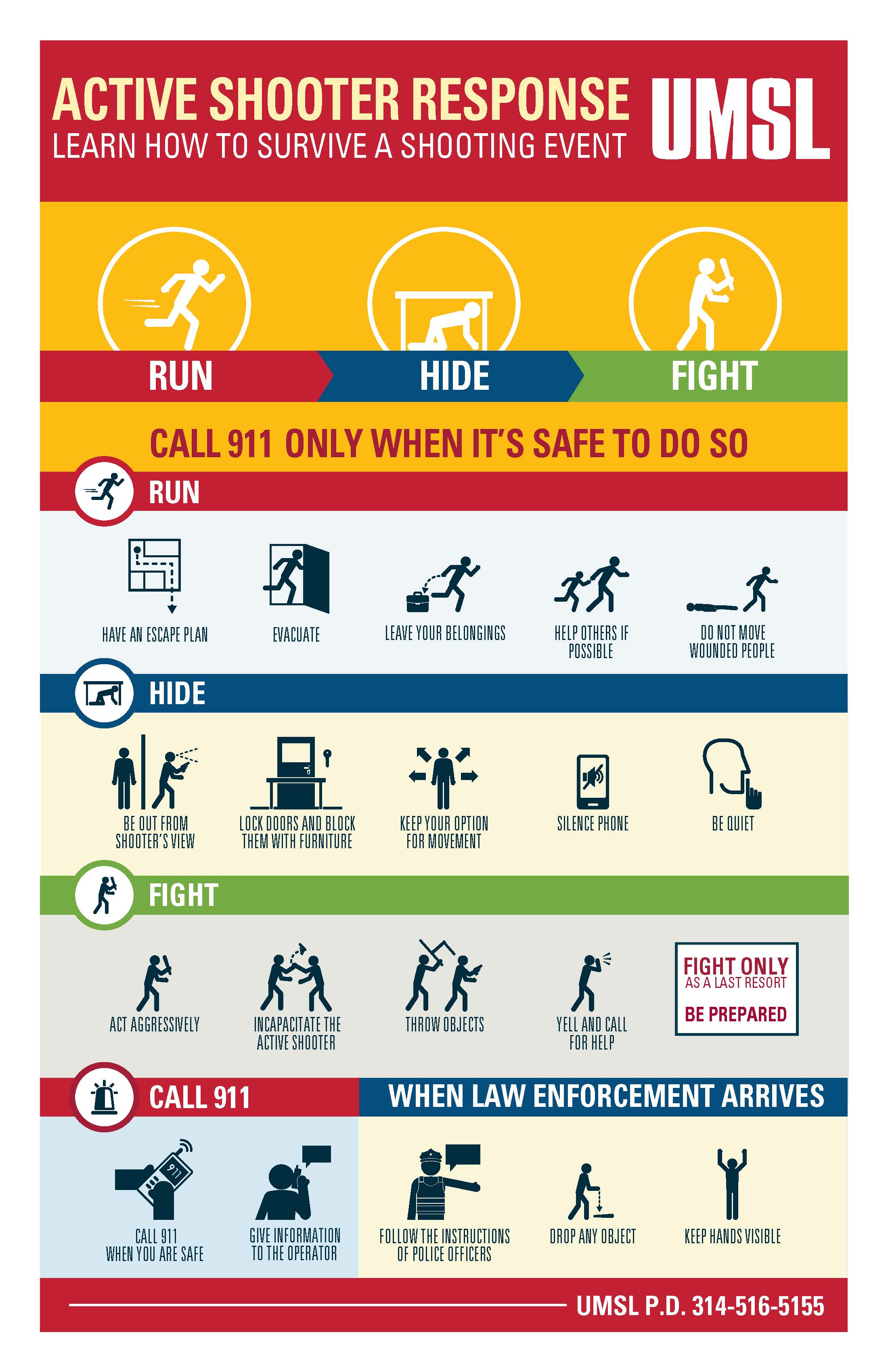
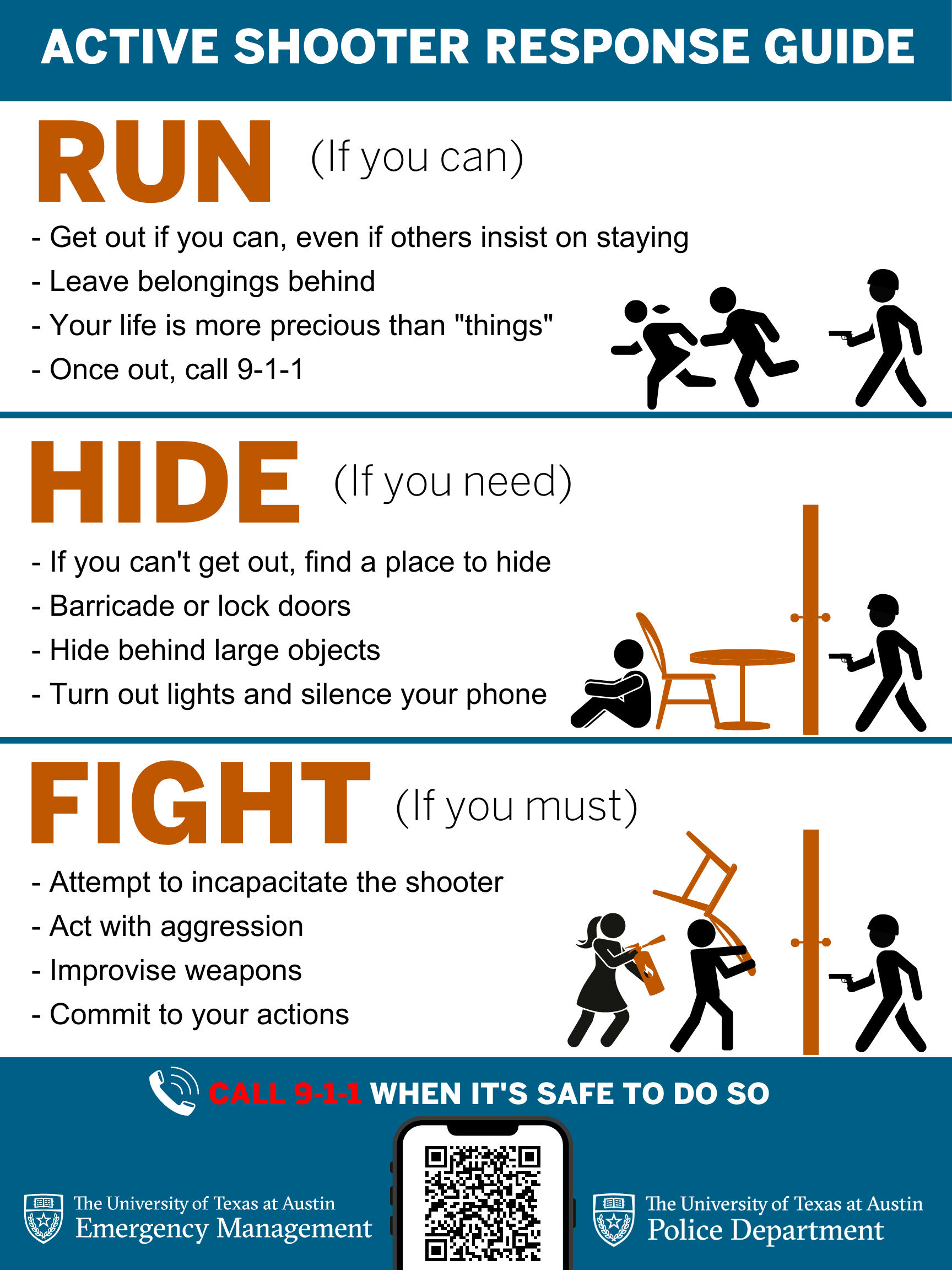
The "Run, Hide, Fight" model, pioneered by the City of Houston and adopted by the FBI and DHS, remains the global standard for civilian response. Each component of this strategy is designed to increase the distance or the barrier between the individual and the threat.
Run: The Primary Objective
If there is an accessible escape path, attempt to evacuate the premises immediately. This is the single most effective way to ensure survival.
- Leave Belongings Behind: Your life is more valuable than a laptop or bag. Attempting to gather personal items delays your exit and may impede others.
- Visualize the Path: Avoid elevators, which can trap you or open onto a floor where the shooter is located. Use stairwells and emergency exits.
- Help Others, But Don't Wait: Encourage others to leave with you, but if they hesitate or freeze in fear, you must continue your evacuation.
- Prevent Others from Entering: Once you are safe, warn individuals you encounter against entering the building, but do not put yourself back in danger to do so.
- Call 911: Only call emergency services once you are in a safe location. Provide the shooter’s location, description, and type of weapons if known.
Hide: When Escape is Impossible
If evacuation is not possible because the shooter is between you and the exit, or the environment is too dangerous to navigate, you must find a place to hide.
- Silence All Devices: This includes turning off the vibrate function on cell phones. In a quiet environment, the buzz of a notification can give away a hiding spot.
- Lock and Barricade: Lock the door immediately. If the door does not lock, use heavy furniture—desks, filing cabinets, or vending machines—to block the entrance. The goal is to make the room appear empty or too difficult to enter quickly.
- Stay Out of Sight: Move away from windows and doors. Crouch behind large objects that might provide "cover" (protection from bullets) rather than just "concealment" (hiding from view).
- Remain Quiet: Do not talk or whimper. If you must communicate with 911, try to use text-to-911 services if available in your jurisdiction, or leave the line open so dispatchers can listen.
Fight: The Last Resort
Fighting is only considered when your life is in imminent danger and neither running nor hiding is an option. This is not a "fair fight"; it is a coordinated, aggressive physical intervention to survive.
- Act with Total Commitment: If you choose to fight, you must do so with maximum aggression. Hesitation can be fatal.
- Use Improvised Weapons: Look for items that can be thrown or used as clubs—fire extinguishers, heavy books, chairs, or scissors. A fire extinguisher can be used both to obscure the shooter's vision and as a blunt force instrument.
- Target Vulnerable Areas: If possible, aim for the eyes, throat, or groin to incapacitate the shooter quickly.
- Coordinate with Others: If multiple people are in the room, develop a plan to swarm the shooter from different angles, focusing on controlling the weapon.
Interacting with First Responders and Law Enforcement
When law enforcement arrives, their primary mission is to neutralize the threat, not to treat the injured. This distinction is critical for survivors to understand to avoid confusion or accidental escalation.
Police officers will likely arrive in teams, potentially wearing tactical gear and carrying high-powered weapons. They may use tear gas or flashbangs to disorient the shooter. To ensure your safety during their arrival:
- Keep Hands Visible and Empty: Raise your hands, spread your fingers, and keep them above your head. Do not carry anything, as a dark object (like a phone) can be mistaken for a weapon in a high-stress environment.
- Avoid Sudden Movements: Do not run toward officers or attempt to grab them for protection.
- Follow Instructions Immediately: Officers may shout commands or push people to the ground for their safety. Comply without question.
- Provide Information: If you have specific details about the shooter's location or appearance, shout it out clearly but briefly.
Once the "contact team" has moved past you to find the shooter, "rescue task forces" (RTFs) consisting of medical personnel and police escorts will follow to begin triage and evacuation of the wounded. Expect to be detained in a secure area for questioning; this is a standard part of the investigation and ensures no suspects are hiding among the survivors.
Organizational Preparedness: Creating an Emergency Action Plan (EAP)
Under the Occupational Safety and Health Act (OSHA) General Duty Clause, employers have a legal and ethical responsibility to provide a safe workplace. In 2026, a robust Active Shooter EAP is considered a fundamental component of corporate risk management.
Essential Components of an EAP
A professional EAP should be a living document, updated annually and shared with all employees. Key elements include:
| Component | Description | Objective |
|---|---|---|
| Communication System | Multi-modal alerts (SMS, PA systems, desktop overrides). | Rapidly notify all staff of a "Lockdown" or "Evacuation" status. |
| Evacuation Routes | Clear maps showing primary and secondary exits. | Ensure employees know multiple ways out of every zone in the building. |
| Safe Rooms | Designated areas with reinforced doors and no interior windows. | Provide pre-identified "Hide" locations for staff and visitors. |
| Emergency Contact List | Hierarchy of notification for management and local authorities. | Streamline reporting and external communication. |
| Training & Drills | Regular walkthroughs and simulated "Run, Hide, Fight" exercises. | Build muscle memory and reduce panic during a real event. |
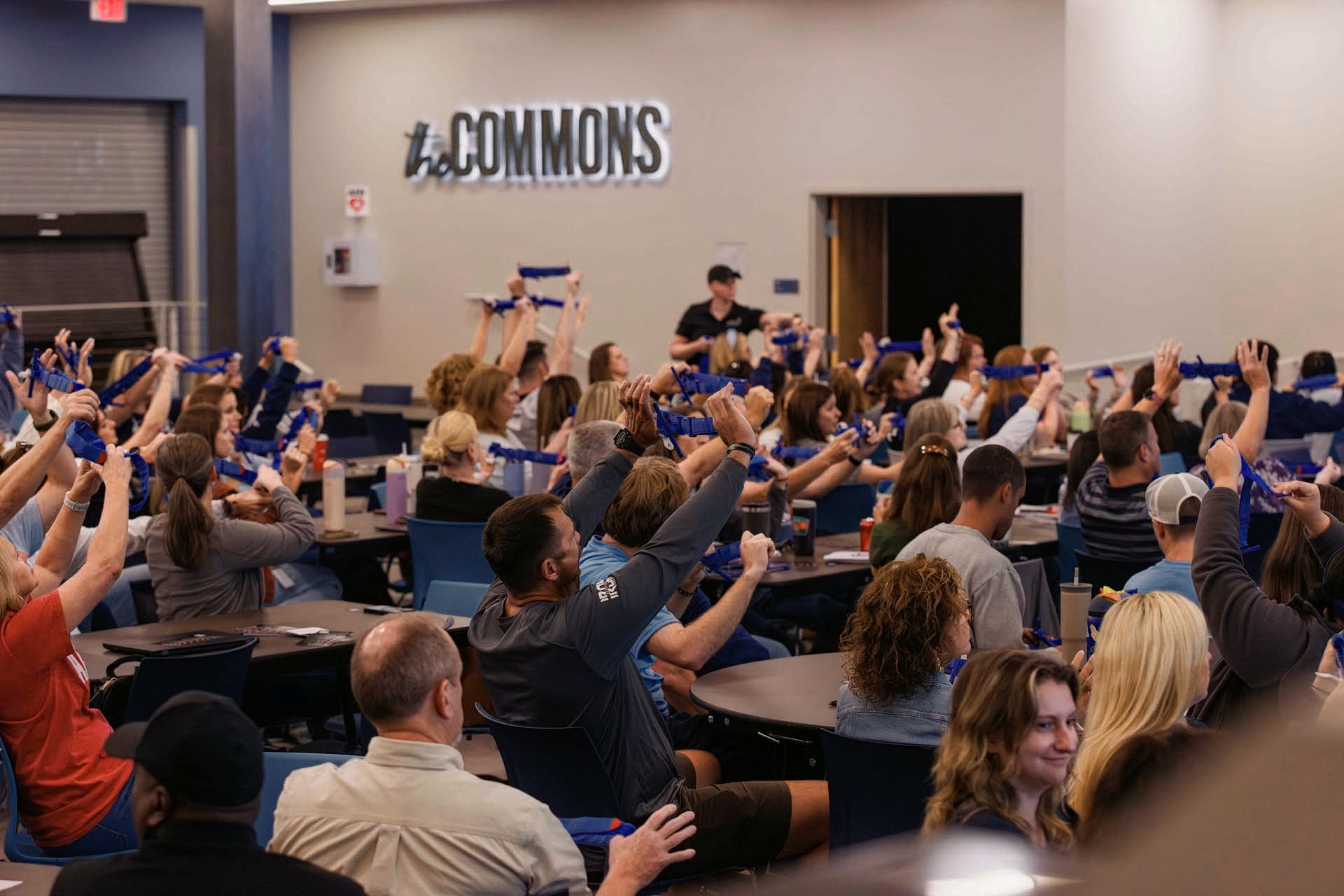
Organizations should also invest in "Stop the Bleed" kits. These kits, which include tourniquets and hemostatic dressings, are vital because the leading cause of preventable death in active shooter incidents is massive hemorrhage. Training staff on how to apply a tourniquet can save lives in the minutes before paramedics can safely enter the "warm zone."
Situational Awareness and Prevention: Recognizing Warning Signs
While response is reactive, prevention is proactive. Many active shooters display "leakage"—the communication to a third party of an intent to harm a target. Identifying these behaviors early can lead to intervention before an attack occurs.
The FBI's Behavioral Analysis Unit notes that shooters often experience significant "stressors" (financial, legal, or romantic) and exhibit changes in behavior such as increased isolation, unusual interest in previous mass shootings, or aggressive outbursts. Organizations should implement "Threat Assessment Teams" (TATs) composed of HR, legal, and security professionals to evaluate these reports. Encouraging a culture of "See Something, Say Something" is only effective if there is a clear, non-punitive channel for reporting concerns.
Post-Incident Recovery and Mental Health Support
The conclusion of the "active" phase of a shooting marks the beginning of a long recovery process. The psychological impact on survivors, witnesses, and the broader community is profound and often results in Post-Traumatic Stress Disorder (PTSD).
- Psychological First Aid (PFA): Immediate support focusing on basic needs, stabilization, and connecting survivors to resources.
- Media Management: Organizations must have a designated spokesperson to handle the influx of press, ensuring that information released is accurate and respects the privacy of victims.
- Continuity of Operations: For businesses, this involves deciding when and how to reopen. In some cases, the physical site may be too traumatizing for employees to return to, necessitating temporary or permanent relocation.
- Long-term Counseling: Providing access to trauma-informed therapy for employees and their families is essential for long-term organizational health.
Active Shooter Response FAQs
What is the difference between a lockdown and a lockout?
A lockdown is used when there is a threat inside the building; everyone hides, silences phones, and stays out of sight. A lockout (often called "secure the perimeter") is used when there is a threat outside or in the vicinity of the building; exterior doors are locked, but internal business may continue as usual, though with increased vigilance.
Should I pull the fire alarm during an active shooter incident?
Generally, no. Pulling a fire alarm can cause confusion. People are trained to evacuate in a fire, which might lead them into hallways or toward exits where the shooter is waiting. Furthermore, the sound of the alarm can mask the sound of gunfire, making it harder for people to locate the threat and for law enforcement to find the shooter.
What should I tell the 911 dispatcher?
Prioritize the "Five Ws": Where is the shooter (building, floor, room number)? What does the shooter look like (clothing, height, race)? What weapons are they using (handgun, rifle)? Who are you (your name and location)? How many victims are there?
If I am in a safe room and the "all clear" is announced, should I come out?
Exercise extreme caution. Shooters may attempt to lure victims out by yelling for help or claiming to be the police. Wait for a recognizable authority figure, an official electronic notification from your organization's emergency system, or for law enforcement to physically enter the room with proper identification.
Next Steps for Personal and Workplace Safety
The most effective next step is the formalization of training. Individuals should seek out FEMA's "IS-907: Active Shooter: What You Can Do" online course, which provides a comprehensive overview of the principles discussed here. For organizations, the priority should be conducting a "Tabletop Exercise" (TTX). This involves key stakeholders sitting down to walk through a simulated scenario to identify gaps in communication, equipment, and policy without the stress of a full-scale drill. Finally, ensure that "Stop the Bleed" training is integrated into your standard First Aid/CPR certifications to provide the medical skills necessary to bridge the gap between the event and professional medical intervention.