An accident overview is a formal, objective summary of an unplanned event that results in injury, property damage, or a "near-miss." Its primary purpose is to provide a clear, chronological account of facts for insurance adjusters, legal counsel, and safety investigators to determine liability, process claims, and prevent future recurrences.
In both personal and professional contexts, the quality of an accident overview can be the deciding factor in the success of an insurance claim or the outcome of a legal dispute. Whether you are documenting a minor fender-bender or a complex industrial mishap, understanding the structured approach to recording incident data is essential for protecting your interests and ensuring compliance with regulatory standards.
The Essential Components of a Professional Accident Overview
A high-quality accident overview serves as the foundational narrative for any subsequent investigation. To be effective, it must transcend a simple description and provide a granular look at the variables that contributed to the event. The goal is to move from "what happened" to "how and why it happened" using verifiable data.
Identification of Parties and Assets
Every overview must begin with the basic "who" and "what." This includes the full legal names and contact information of all involved parties, insurance policy details, and a precise identification of the assets involved (e.g., vehicle VINs, heavy machinery serial numbers, or property addresses). In the 2026 regulatory environment, this also frequently includes digital identifiers, such as telematics ID numbers or IoT sensor logs that were active during the event.
Spatial and Temporal Data
Precision regarding time and location is non-negotiable. You should record the exact date and time (using a 24-hour clock to avoid ambiguity) and the specific location. In 2026, GPS coordinates are the preferred standard for location data, particularly in remote areas or large industrial complexes where street addresses may be insufficient. Environmental conditions—such as lighting, weather, and floor surface status—must also be documented, as these often serve as mitigating or aggravating factors in liability assessments.
The Chronological Narrative
The heart of the overview is the narrative description. This should be written in a strict chronological sequence, beginning shortly before the incident occurred. Avoid jumping back and forth in time. Use objective, descriptive language rather than subjective impressions. For example, instead of writing "The driver was speeding," write "The vehicle appeared to be traveling faster than the posted 35 mph limit based on the length of the skid marks."
Industry-Specific Requirements for Accident Overviews
While the basic structure remains consistent, different sectors require specific data points to satisfy their unique regulatory and operational needs. Failing to include these industry-specific details can result in rejected claims or non-compliance penalties.
Workplace and Industrial Safety
In a corporate or manufacturing setting, an accident overview must align with OSHA (Occupational Safety and Health Administration) or relevant international standards like ISO 45001. These reports must highlight the specific task being performed, the tools or chemicals in use, and whether the involved employees were wearing the required Personal Protective Equipment (PPE). A critical element here is the "Root Cause Analysis" (RCA) section, which seeks to identify systemic failures rather than just individual errors.
Motor Vehicle and Transportation
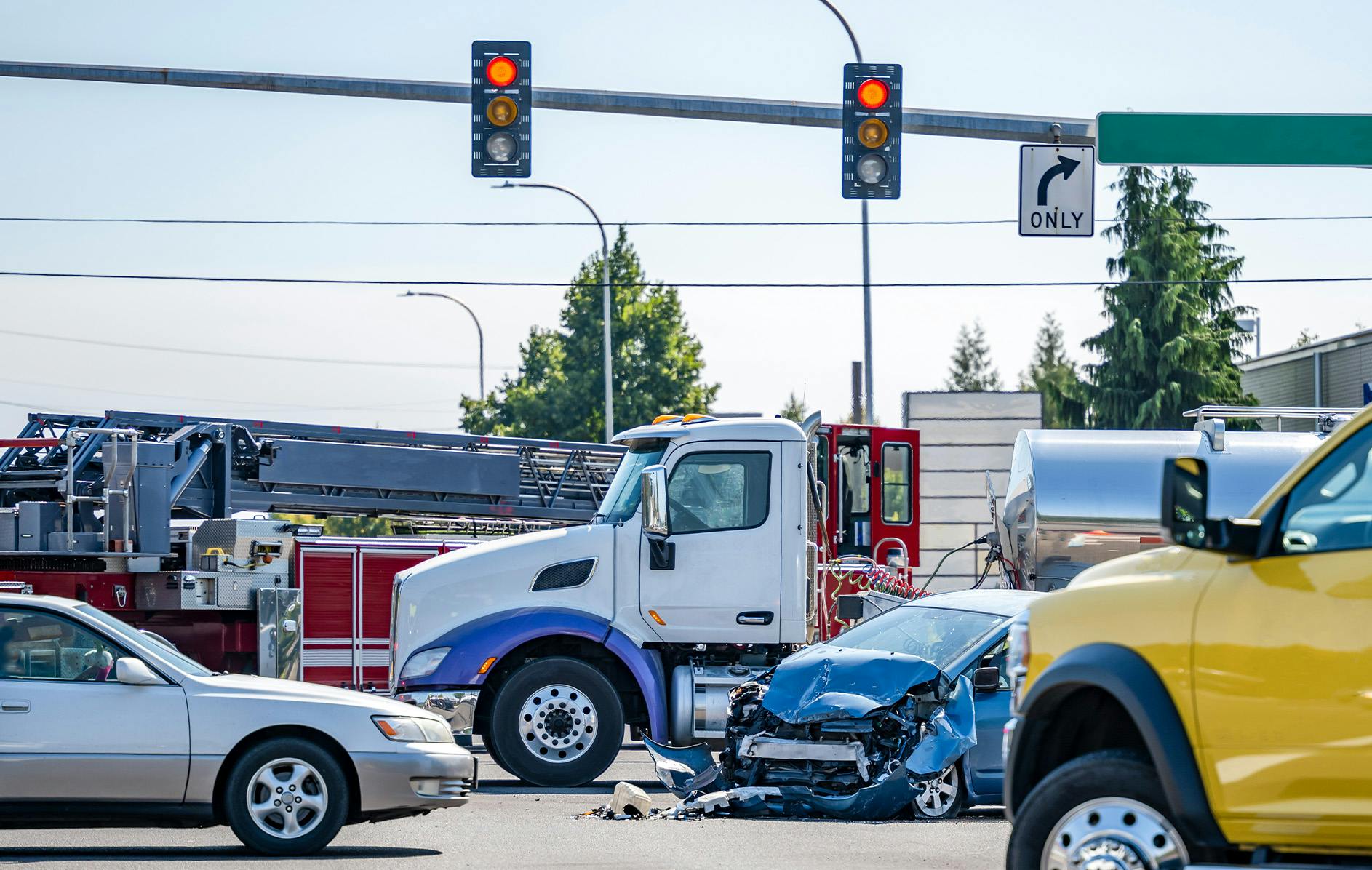
For traffic incidents, the overview focuses heavily on road geometry, traffic signals, and vehicle dynamics. With the prevalence of Advanced Driver Assistance Systems (ADAS) in 2026, a modern accident overview should note whether features like autonomous braking or lane-keep assist were engaged. Documentation of the point of impact and the final resting positions of the vehicles is vital for reconstruction experts.
Healthcare and Clinical Settings
In medical environments, often referred to as "incident reports," the overview focuses on patient safety, medication errors, or equipment malfunctions. These must be written with extreme sensitivity to privacy laws (such as HIPAA) while ensuring that the clinical facts—dosages, vitals, and provider response times—are recorded with absolute accuracy.
Comparison of Accident Overview Types
The following table illustrates the differing priorities and data requirements across the most common types of incident summaries.
| Feature | Workplace Accident | Motor Vehicle Accident | General Liability (Slip/Fall) |
|---|---|---|---|
| Primary Goal | Regulatory compliance & RCA | Liability & insurance recovery | Hazard identification & defense |
| Key Data Point | PPE usage & training logs | Speed, signals, & road conditions | Floor traction & maintenance logs |
| Evidence Type | Equipment maintenance records | Dashcam & telematics data | CCTV footage & witness statements |
| Reporting Deadline | Usually within 8–24 hours | Immediate (for police/insurance) | Varies by state/jurisdiction |
| Recipient | Safety Officer/OSHA | Insurance Adjuster/Police | Risk Manager/Legal Counsel |
A Step-by-Step Guide to Writing an Effective Overview
Writing an accident overview can be daunting in the immediate aftermath of an event when stress levels are high. Following a standardized process ensures that no critical details are overlooked.
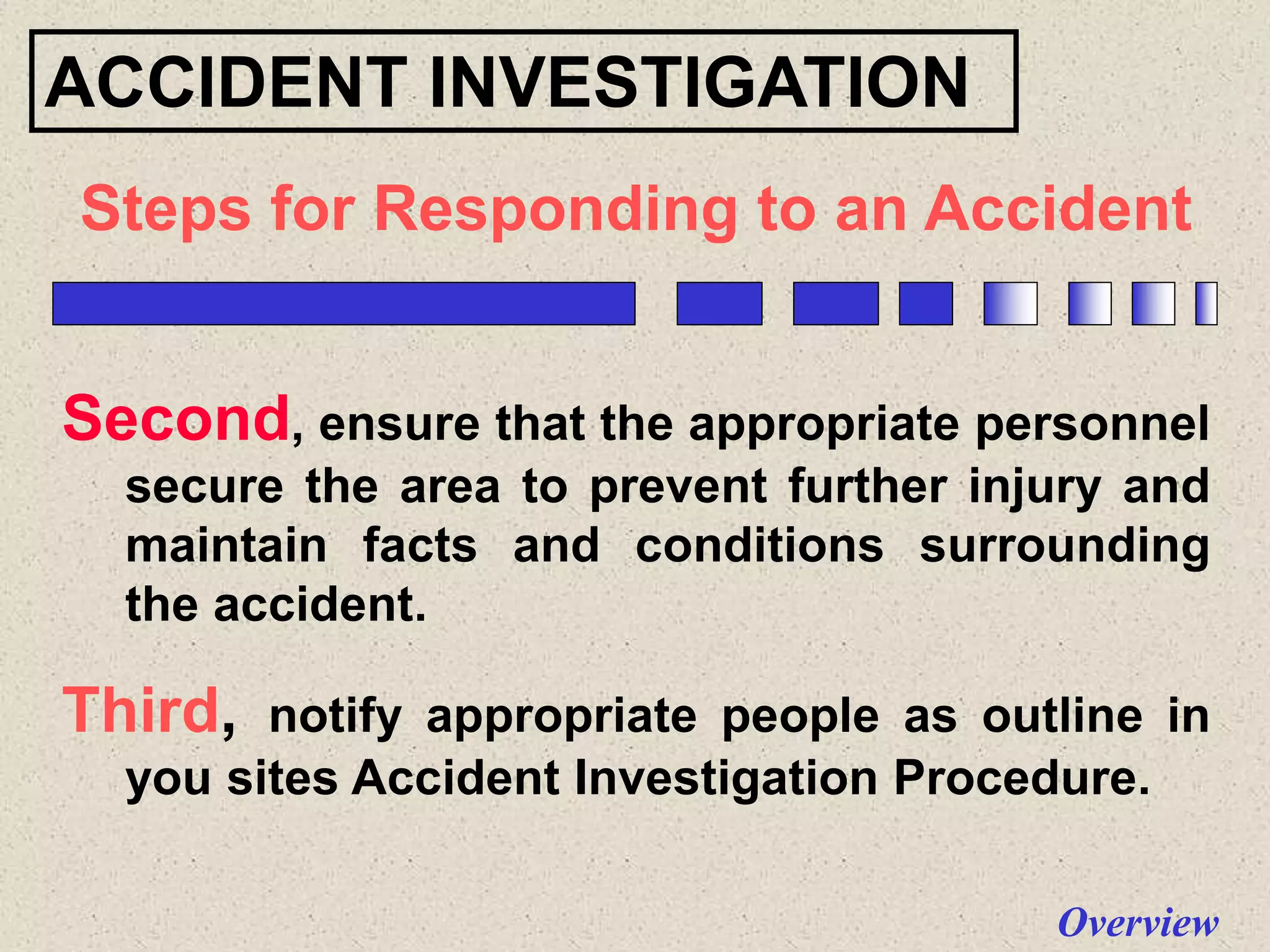
- Secure the Scene and Gather Preliminary Facts: Before writing, ensure the area is safe. Once stabilized, immediately note the names of witnesses and take initial photos of the scene from multiple angles.
- Define the Scope: Determine the boundaries of the report. Are you documenting just the physical damage, or also the business interruption and emotional distress? Defining this early prevents "scope creep" in your writing.
- Draft the Initial Narrative: Write a rough draft of the sequence of events. Do not worry about perfect grammar at this stage; focus on capturing the flow of events while the memory is fresh.
- Incorporate Evidence: Cross-reference your narrative with physical evidence. If a dashcam shows the light was red, ensure your narrative reflects that factual anchor point.
- Review for Objectivity: Read through the overview and remove any "blame" language. Terms like "carelessly," "recklessly," or "fault" should be avoided. Stick to the mechanics of the event.
- Finalize and Distribute: Ensure the document is signed and dated. In 2026, digital signatures with timestamps are standard for maintaining the chain of custody for legal documents.
The Role of Evidence in Supporting the Narrative
An accident overview is only as strong as the evidence that supports it. In the modern era, evidence is multi-modal, combining physical, digital, and testimonial sources to create a "360-degree" view of the event.
Visual Documentation: High-resolution photography is the standard. You should capture "wide" shots to show the context of the environment and "macro" shots to show specific damage or defects. Video walkthroughs are increasingly used to provide a sense of scale and perspective that static images may lack.
Digital and Telemetric Data: In 2026, the "black box" is no longer just for airplanes. Most modern vehicles, industrial machines, and even "smart" buildings record a constant stream of telemetry. Including snippets of this data—such as braking pressure, engine RPM, or door-lock timestamps—adds an indisputable layer of fact to the overview.
Witness Statements: Statements should be collected as soon as possible. Memories fade and can be influenced by subsequent conversations. A strong accident overview will include the verbatim comments of witnesses, clearly distinguished from the investigator's own observations.
Common Pitfalls in Accident Reporting
Even experienced professionals can make mistakes when documenting an accident. Avoiding these common errors will significantly improve the credibility of your report.
- Speculation and Guesswork: If you do not know a specific detail, such as the exact speed of a vehicle, it is better to state "speed unknown" or provide a range based on evidence rather than guessing. Guesswork can be easily dismantled in a deposition or court proceeding.
- Delayed Reporting: The longer the gap between the event and the documentation, the less reliable the report is considered. Many insurance policies and labor laws have strict "statutes of notification" that can void coverage if the overview is not submitted promptly.
- Admissions of Fault: Never include statements like "I'm sorry" or "It was my mistake" in the formal overview. While these may seem like polite gestures at the scene, in a legal context, they are often treated as formal admissions of liability.
- Inconsistent Details: Ensure that the narrative matches the photos and the diagrams. If the text says the impact was on the driver's side but the photo shows the passenger's side, the entire document's integrity is compromised.
Frequently Asked Questions
What is the difference between an accident report and an accident overview?
An accident report is often a specific form required by an agency (like the DMV or OSHA), whereas an accident overview is a more comprehensive narrative summary. The overview provides the context and "story" that often accompanies the raw data found in a standard report.
Should I include photos directly in the accident overview?
Yes, integrating photos or at least providing a clear reference to an attached photo gallery is highly recommended. In 2026, most digital reporting tools allow for "hot-linking" text directly to the relevant image or video file for immediate verification.
How long should an accident overview be?
There is no fixed length, but it must be "sufficient." For a minor incident, one to two pages may suffice. For a complex industrial accident involving multiple injuries and high-value property damage, the overview and its supporting documentation may span dozens of pages.
Can an accident overview be updated after it is submitted?
If new evidence comes to light—such as a previously unknown witness or a newly retrieved data log—the overview should be updated. However, you should never delete the original; instead, issue an "amended report" or an "addendum" to maintain a transparent audit trail.
Who is the primary audience for an accident overview?
The primary audience includes insurance adjusters, legal representatives, and safety managers. Secondary audiences may include government regulators (like the Department of Transportation) and corporate executives who use the data for long-term risk assessment.
Is an accident overview legally binding?
While the document itself is a record of facts, it can be introduced as evidence in legal proceedings. Because it is often signed under penalty of perjury or as a formal business record, the statements within it carry significant legal weight.
Practical Recommendations for Next Actions
If you are currently tasked with producing an accident overview, your immediate priority should be the preservation of evidence. Before the environment changes—before the vehicles are moved, the floor is mopped, or the machinery is repaired—capture as much visual data as possible. Use a standardized template to ensure consistency; many organizations and insurance providers offer pre-formatted digital PDF or mobile app templates that prompt you for all necessary information.
Once the initial overview is drafted, have it reviewed by a neutral third party or legal counsel if the incident involves significant liability. This ensures that the tone remains objective and that you haven't inadvertently included language that could be used against you. Finally, store the completed overview and all supporting files in a secure, redundant digital environment to ensure they are available for the duration of any legal or insurance processes, which in 2026 can often take several years to resolve.